Welcome! I have been busy and there is no time anymore. This isn’t fair. Anyway, here’s this week’s list.
If you got this from a friend and want to subscribe, here’s the link.
1. Your Postcard-Sized Guide to Statistics
I am a big fan of Tim Harford’s views and writing, and in this blog post, he gives a handy list of checks to go through when trying to understand or process a statistic. Humans aren’t very good at thinking statistically or probabilistically, and we definitely need aids.
“So convenient a thing it is to be a reasonable creature,” commented Benjamin Franklin, “since it enables one to find or make a reason for everything one has a mind to do.”

2. Introducing the Audacious Project, a new Model to Inspire Change at Scale
I came across this via the TED Ideas website - TED curator Chris Anderson talks about “The Audacious Project”, which truly is an audacious attempt at ensuring that not-for-profit entrepreneurial projects are able to secure as much funding as for-profit projects. Apparently both nonprofits and private donors are frustrated, so all we need is a method of connecting them, and this is what it is. It sounds promising, and I hope it works out. I don’t know much about this, so if you have something about social ventures, fundraising etc. I would be glad if you passed it along.
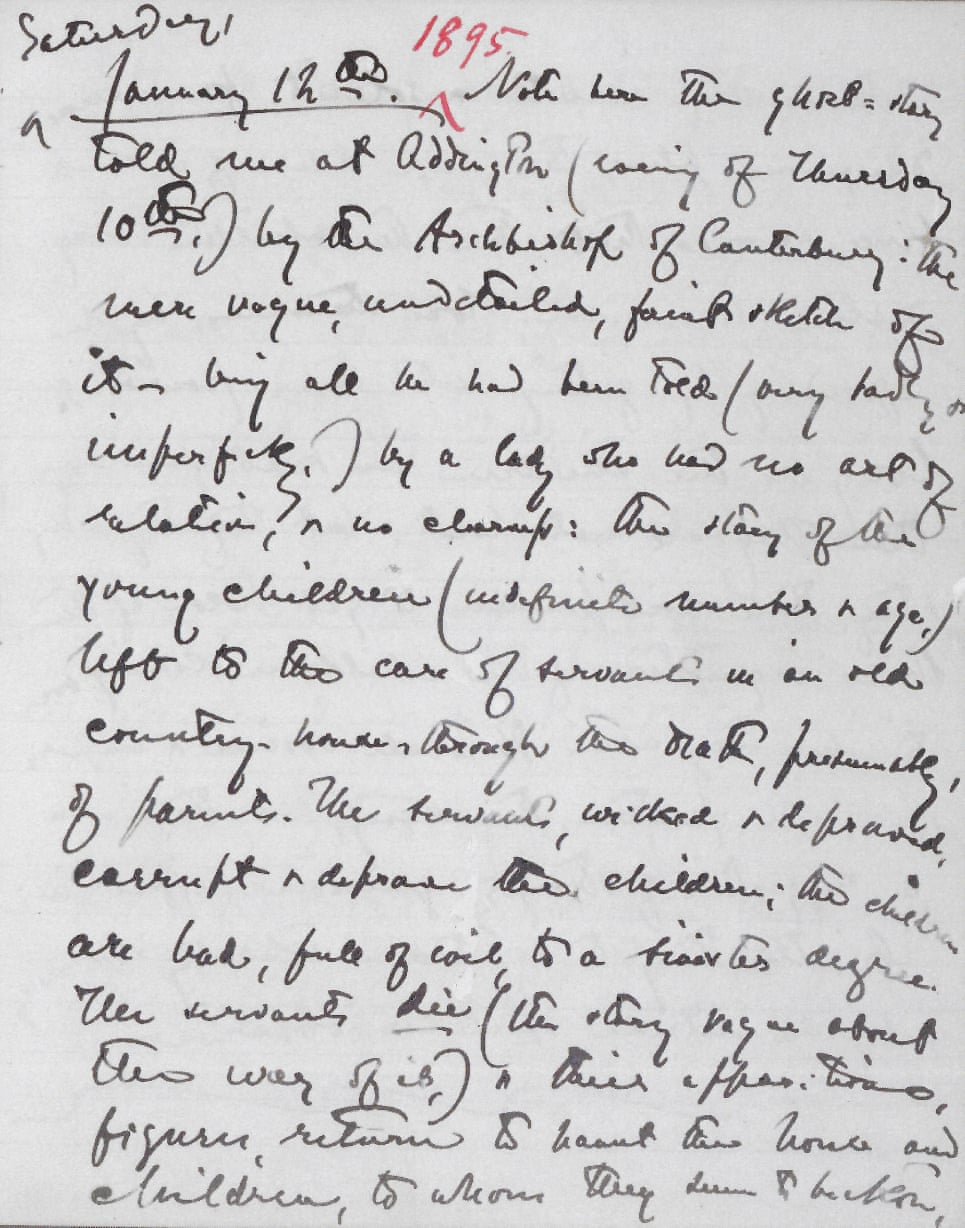
3. ‘Messy Attics of the Mind’: What’s inside a Writer’s Notebook?
Writing physically in a notebook is GREAT, and you know I love it. Here’s a picture of a page from Henry James’ notebook.
4. The Elements in Haiku
Thank you, Ananth, for sending this. I had so much fun - one haiku for each element in the periodic table. Most of them were so apt. Take this one, for Helium:
_Begin Universe.
Wait three minutes to enter.
Stay cool. Don’t react._
5. Argonauts: the Astronauts of the Sea
Cephalopods are very interesting to me - you might know the most famous member of the group as the octopus. This is a lovely profile of the lesser known ones. Here’s a picture of the shell of an Argonauta hians.

6. What Does Any of This Have To Do with Physics?
“Einstein and Feynman ushered me into grad school, reality ushered me out?”
I’m working towards a PhD in physics and it’s impossible to not ask myself many times: “Why am I doing this?”, or “Is it all worth it?”.
“And here came the second surprise of my first research experience: that I could come all the way to a true frontier and still have so little clue where I was. There are terms in our paper (“Virasoro algebra,” “Yamabe problem”) that I could not define for you today, and not because I’ve forgotten. […] I wanted to forge frontiers rather than just following as a tourist, I’d have to keep up, keep moving, and only pause long enough to hack a few vines and clear a few weeds. There was no time to stop just to appreciate the scenery.”
7. Why iPhones Are Being Recycled and Bottles Aren’t
A little FAQ on the global recycling scene. Personally, I try to minimize all the waste I can - by refusing to buy something if it comes in plastic, by always carrying bags around, and by taking my own boxes to stores. I also recycle what I can - and this was a bit of a reality check. Recycling centers just cannot handle plastic sometimes, and they advise people to throw them into the trash. I was shocked, but this was not totally unexpected. Recycling sounds like a thankless job.
8. The Mystery of why some People become Sudden Geniuses
Some people become geniuses simply by being hit on the head. Wouldn’t that be convenient? Unfortunately, we don’t know how exactly this works, and most times we could be causing more harm than good. There are two theories - one says that a concussion or something similar causes synasthesia, which is when two or more of your senses get mixed up, and the other says that an accident might increase the activity of the right brain and reduce the left’s dominance.
9. Why Good People turn Bad Online
This is from Mosaic Science , so you can be assured it will be worth your time to read. I think it’s important to know how social media works on a broad scale, given that you probably use it in one (or more) forms. The essay is a lot about how societies and colonies work - can we use bots to remind people to be nice? What works and what doesn’t?
Our human ability to communicate ideas across networks of people enabled us to build the modern world. The internet offers unparalleled promise of cooperation and communication between all of humanity. But instead of embracing a massive extension of our social circles online, we seem to be reverting to tribalism and conflict, and belief in the potential of the internet to bring humanity together in a glorious collaborating network now begins to seem naive. While we generally conduct our real-life interactions with strangers politely and respectfully, online we can be horrible. How can we relearn the collaborative techniques that enabled us to find common ground and thrive as a species?
and
As Danescu-Niculescu-Mizil points out, we’ve had thousands of years to hone our person-to-person interactions, but only 20 years of social media. “Offline, we have all these cues from facial expressions to body language to pitch… whereas online we discuss things only through text. I think we shouldn’t be surprised that we’re having so much difficulty in finding the right way to discuss and cooperate online.”
10. The Truth About Anxiety That No One’s Told You
Clickbaity title aside, this was something nice to read. It’s a putting together of many things many of us feel and think often.
See you soon. As always, feel free to write back. It keeps me going.