Hello! It’s time for a special issue now, and it’s been a while. I’ve compiled nine nice pieces on literature, and somehow it’s turned out to be mostly just profiles of specific authors and literary figures. I have no problem with that. I hope you don’t either.
The previous literature specials are here:
- #27: December 2016(!)
- #58: May 2017
- #82: September 2017
Wow. (Am I allowed to marvel at myself?)
If you enjoy this, send it to a friend! And if you want to subscribe, here.
1. The Fake Hermit
Thomas Pynchon, the writer of Gravity’s Rainbow , has never given an interview in over 50 years of writing. Nearly nobody knows where he lives, and a Google search will give you only six pictures of him. Understandably, for a man of his import, there is a clan of people that hunt down details of his past relentlessly. It’s crazy. This piece is a series of investigations undertaken to find marks of his past. It ends nicely, though:
If the novelist leaves clues about himself in his fiction, if he talks to the translators, if he has written biographical articles and introductions to friends’ novels, if he follows a mundane routine, what’s the mystery behind him? […] But now I prefer to take the notion of reclusion out of the way. While I was digging into the writer’s career, I realized that knowing more or less about him does not change what I feel when I devour his books. Sincerely, and on this I came to agree with the author, Thomas Pynchon is not all that important for understanding Thomas Pynchon.
2. On the Pleasures of Front Matter
Like the author of this article, I too enjoy reading the front matter of novels and other books. However, she gives a warning: try to avoid the introductions to classic novels since they have many spoilers; I can attest to this.
Good introductions are full of these grand, seemingly unprovable (and undisprovable) proclamations: a near aphorism acts as a self-dare to the author, whose challenge is to back it up with the book. I like to collect them as theories, like perfect lines of poetry that require no evidence other than themselves.
3. Walden Wasn’t Thoreau’s Masterpiece
In this lovely essay from The Atlantic , I learnt a lot more about Henry David Thoreau’s journal - a 2-million-word behemoth. I loved it. I tried searching for a quote to include, but then I’d have to quote the entire piece. He loved nature but also embodied other traits - read both philosophical and scientific texts, etc.
(And oh gosh, I found that Atlantic published some extracts from his journals all the way back in 1905 - here.)
4. Keepers of the Secrets
Apparently the most interesting man in the world is the archivist of the New York Public Library. He sounds amazing. Thomas Lannon doesn’t use gloves because he says they dull his ability to judge the fragility of a page. For some reason, that really stuck with me. I’ve been checking books out from the library these days as opposed to reading on my Kindle, and things seem so much more tangible.
These collections aren’t digitized. The only way to find out what’s inside them is to ask for a particular box — often with just a vague notion of what will be in it — and to hold the old papers in your hands. “I don’t know how one could be interested in libraries and not archives,” Lannon told me. They tell you “the stories behind things,” he said, “the unpublished, the hard to find, the true story.” This, I began to see, is why someone might have been inclined to call Lannon the most interesting man in the world: it’s because he knows so many of these stories himself, including stories that no one else knows, because they are only told here.
5. How Watership Down was Written
Richard Adams wrote Watership Down , a book about rabbits (and other things, of course) that I adore. His granddaughter here talks about the behind-the-scenes, if you will, of the book’s writing and creation. (There are spoilers).
And here is Iris Murdoch defending the book!

6. The Literary Prize for the Refusal of Literary Prizes
Aaah, Ursula Le Guin wrote this in late 2017. The Sartre Prize is awarded to people who refuse literary prizes. And it has attained such a sense of importance that people refuse awards in order to be nominated for the Sartre. Wonderfully written, as is wont with anything by Le Guin.
But I do have sympathy for his distrust of allowing himself to be identified as something other than himself. He felt that the huge label SUCCESS that the Nobel sticks on an author’s forehead would, as it were, hide his face. His becoming a “Nobelist” would adulterate his authority as Sartre.
Which is, of course, precisely what the commercial machinery of best-sellerdom and prizedom wants: the name as product. The guaranteed imprint of salable success. Nobel Laureate So-and-So. Best-selling author Thus-and-Such. Thirty weeks on the New York Times best-seller list Whozit. Jane D. Wonthepulitzer … John Q. MacArthurgenius …
7. What Makes a Great Book Cover?
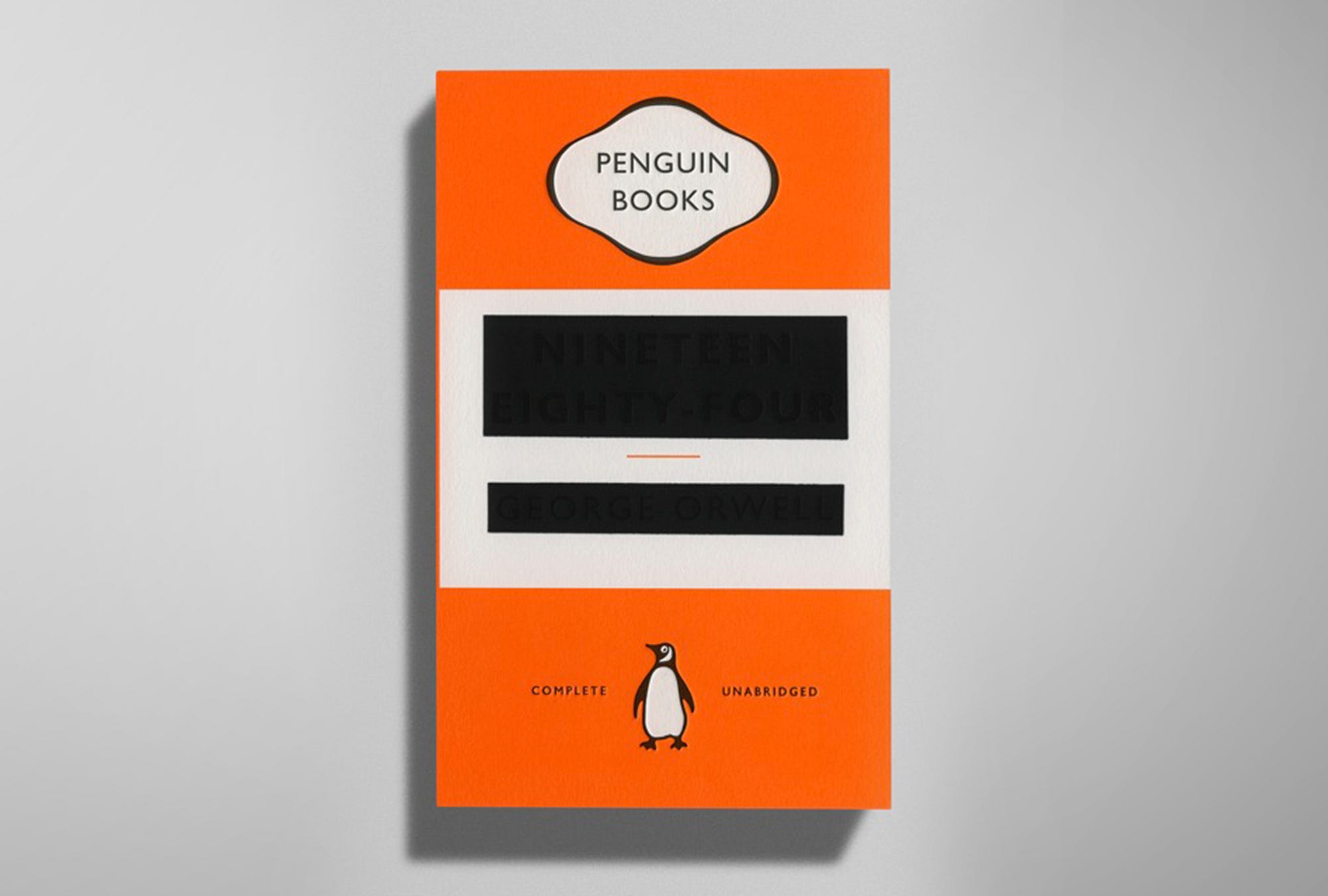
A list of 15 book cover designers nominating the favourite covers that they didn’t create! So exciting. I often do judge books in part by their covers. I don’t judge the quality of the book itself, but the book cover is a distinct art form, I think.
Maybe my favourite of the list, a cover of 1984.
8. Frivolously Empty and Perfectly Delightful
An ode to P.G. Wodehouse. Excellent.
 As for that anti-seriousness, who other than Wodehouse would describe a figure in one of his novels by saying that “if he had been a character in a Russian novel, he would have gone and hanged himself in a barn?” Who but Wodehouse could mock the moral tradition of the English novel in a single phrase by writing in a novel of his own of “one of those unfortunate misunderstandings that are so apt to sunder hearts, the sort of thing that Thomas Hardy used to write about?”
9. Margaret Atwood: ‘I am not a prophet. Science fiction is really about now’
“I’m not a prophet,” she says. “Let’s get rid of that idea right now. Prophecies are really about now. In science fiction it’s always about now. What else could it be about? There is no future. There are many possibilities, but we do not know which one we are going to have.” She is, however, “sorry to have been so right”. But, with her high forehead and electric halo of curls, there is something otherworldly about Atwood.
See you later, then. Write back if anything. I promise to reply.