Hello! When writing out the subject of this email, I wrote Kat’s Kable 199 instead of 119 at first. Wow, soon it’ll be 199, and so on. To boldly go, and so forth, as the saying goes. I hope you’ve had a good week and have been boldly moving forward. I have had a good week and I am excited about this list!
If you got this from a friend and want to subscribe, here’s the link.
1. The Earthquake that will Devastate the Pacific Northwest
This is pretty old - but I love Kathryn Schulz’s writing. She’s talking about the inevitable big earthquake that will soon strike the Pacific northwest, and it is going to be terrifying. Cities and countries are unprepared for it, and the big earthquake is actually a century or so overdue. The essay also has a handy tutorial about tectonic plates: by arranging your hands and fingers accordingly, you can recreate on a tiny scale the process that causes devastating earthquakes.
“The science part is fun,” Goldfinger says. “And I love doing it. But the gap between what we know and what we should do about it is getting bigger and bigger, and the action really needs to turn to responding. Otherwise, we’re going to be hammered. I’ve been through one of these massive earthquakes in the most seismically prepared nation on earth. If that was Portland”—Goldfinger finished the sentence with a shake of his head before he finished it with words. “Let’s just say I would rather not be here.”
2. ‘I Expected to Have a Day Job for the Rest of My Life’
Philip Glass, one of the best known composers of the 20th century, gives this wonderful interview. I’m just going to quote this:
Fadulu: Yeah, you have said that a lot. Why was having your independence when it came to work so important?
Glass: Well, it meant that I controlled how I spent my time. Being a young dancer, a young painter, a tremendous amount of dedication and work goes into developing the skills to accomplish the artistic goals that you set for yourself. I’ve had friends who’ve gone to law school, and one of them will go and complain about how hard they worked, and I just laugh at them. None of them would consider practicing six or eight hours a day, but that’s quite normal for dancers or musicians or painters. Our workdays tend to be more like eight to 10 hours a day, and we don’t take weekends off, and very few people take off holidays. It’s a very work-intensive environment. But the freedom of working that way seems to be preferable.
3. Letter to an Aspiring Intellectual
“You’ve asked me how to become an intellectual. You’re young, it seems (only young people ask questions of that kind), and you think you might have an intellectual vocation, but you can’t see what to do about it. What should you do in order to become the kind of person an intellectual is? What kind of life permits doing what intellectuals do? How can you begin to have such a life? This is what you ask, and these are good, if grandiose, questions.”
The first requirement is that you find something to think about. This may be easy to arrive at, or almost impossibly difficult. It’s something like falling in love.
The advice here is: Don’t follow your loves but, rather, what provokes thought in you. The two may be the same, but they certainly don’t have to be.
4. Decolonise Science - Time to End another Imperial Era
A thought-provoking essay. Science and technology was what enabled, in some sense, the European colonisation of the rest of the world. As colonies were populated, science was spread to them. However, some of that influence remains, and it is not for the best. I’m not really sure what the take-home message of this article is. Apparently some people want to “decolonise” science by getting rid of modern science altogether; I don’t know what to think about that at all.
5. The Game Theory Inherent in Brexit
Phew, something from the Financial Times that isn’t behind a paywall. This was a nice exploration of the possibilities and outcomes in the Brexit negotiations. I learnt a lot of interesting things that are used often in game theory. (h/t Kruti)
6. Does my Algorithm have a Mental Health Problem?
Modern algorithms, many of which are based on machine learning of some kind, are built in our own image, argues Thomas Hills, the author of this Aeon essay. He goes all over the place talking about important things: that we don’t really understand how many of our algorithms work, how we cannot diagnose faults easily, and how easy it is for algorithms to pick up on our own biases. The last raises an interesting question: how can we rid these systems of bias if their programmers, or their input data, are already biased?
7. How Science Fiction feeds the Fuel Solutions of the Future
Another one from Aeon. I really liked this one because I am one of the biggest proponents of the sheer awesomeness and importance of science fiction and fantasy literature. Ideas that start off in books slowly become possibilities to build in the future. I’ll leave this here:
Put another way, our fictions offer a means of fixing the future’s energy technologies in the form of cultural expectations. […] As the science-fiction writer Cory Doctorow put it in 2014: ‘There is nothing weird about a company doing this – commissioning a story about people using a technology to decide if the technology is worth following through on. It’s like an architect creating a virtual fly-through of a building.’

8. Was there a Civilization on Earth before Humans?
If there were an industrial civilization on Earth a few million years ago, would we even know about it? Also, from one of my favourite blogs, If we weren’t the first industrial civilization on Earth, would we ever know?
9. How do we Write Now?
BEST thing I’ve read all week. Patricia Lockwood talks rather exactly about how we write. Very entertaining. A poignant excerpt:
But the pure concentration that you live in when you write a poem is still there, is still just beyond us as the green dimension. It can still be accessed through the door of yourself, you can still swing it open, though the hinges scream.
Because it is a place of pure concentration it can wait forever for you.
I think that we go there when we die, but do not have to wait to die to go there.
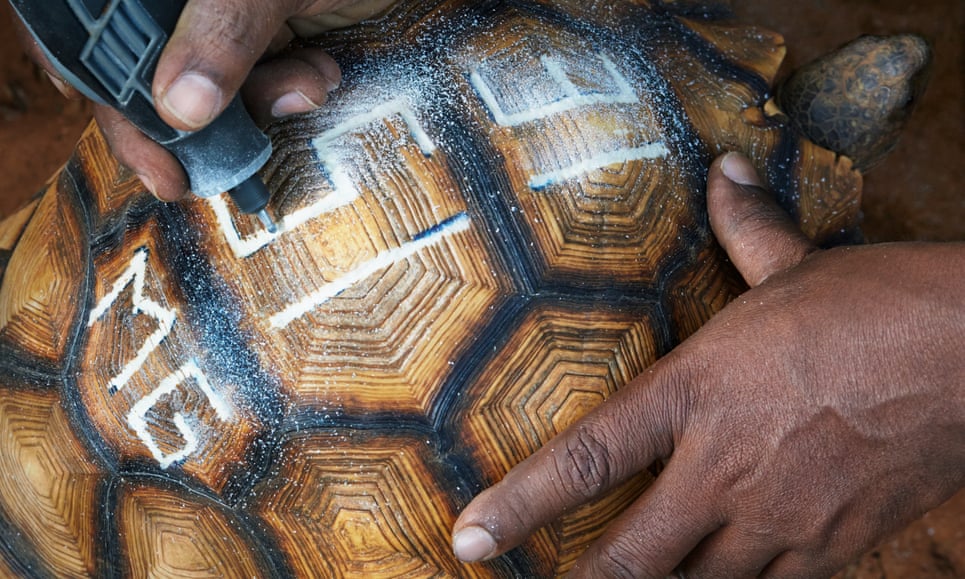
10. In Pursuit of the Tortoise Smugglers
This is sad. Why do people need to smuggle animals? :(
See you soon! - Kat