Hello there. Announcement, first. You may have heard about the new General Data Protection Regulation (“GDPR”), that comes into effect May 25, 2018. I’m not sure if it affects me or you. However, it would be good if you go to the link below and update your settings. Just to confirm that you want to keep receiving Kat’s Kable.
1. The Quest to save Stephen Hawking’s Voice
Stephen Hawking is well known for his distinctive computer-generated voice, which he started using over thirty years ago. The company that made the device that he used, the CallText 5010, stopped upgrading the device or the software. Hawking refused to use any of the new sophisticated voices and softwares, so a team of engineers was tasked to port the old model onto new hardware. Eric Dorsey, the man who wrote the original algorithms in the 1980s, was part of the team too. This is a great story of reconstruction.
2. The Long Knotty World-Spanning Story of String

What an entertaining ode to string! Scientists have found fibers that have been dated to over 30,000 years ago. Am I allowed to use a lot of exclamation points here? Also great pictures.
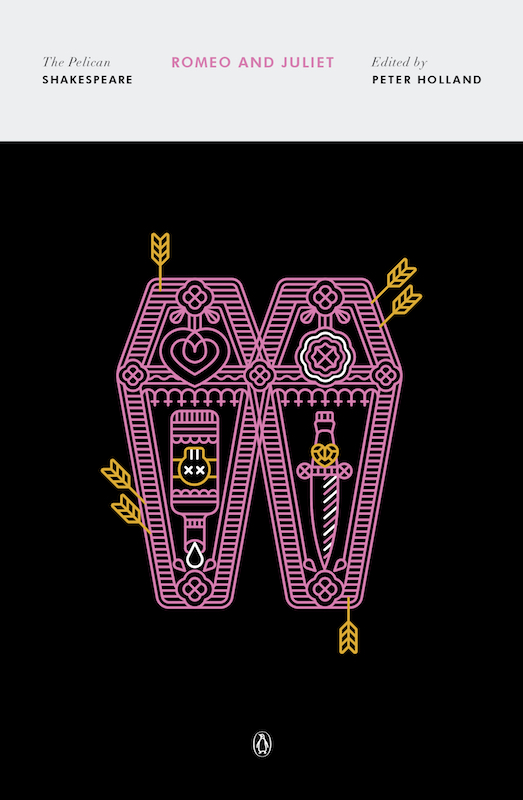
3. Celebrating the Art of the Book Cover
Excerpts from conversations that happened during an exhibition called “Be My Cover”. This was fun to peruse through. I remember sharing another collection of book covers some time ago. Sharing this one which really struck me.
4. How I Rewired My Brain to Become Fluent in Math
The author of this essay, Barbara Oakley, talks about how she treated math and science as the plague as a child but is now a professor of engineering. She says that emphasis on “understanding” precludes real understanding and love of STEM subjects. That’s interesting, but something that I believe in. You have to do to really get things. She compares performing calculations with learning to play golf. Things make sense when explained to you, but you have to do them to gain mastery.
The problem with focusing relentlessly on understanding is that math and science students can often grasp essentials of an important idea, but this understanding can quickly slip away without consolidation through practice and repetition. Worse, students often believe they understand something when, in fact, they don’t. By championing the importance of understanding, teachers can inadvertently set their students up for failure as those students blunder in illusions of competence.
5. Brain Damage Saved His Music
More about brains and more from Nautilus. Pat Marino was a prolific and original jazz guitarist in the 1970s, and then something went wrong. He had brain surgery in 1980 to remove much of his left temporal lobe. He lost much of his mind and brain, but his music stayed! This also merits an exclamation.
Martino has also put on a show for neuroscientists. His case demonstrates neuroplasticity, the brain’s remarkable ability, during development and learning, to “optimize the functioning of cerebral networks,” wrote Hugues Duffau, a professor and neurosurgeon at Hôpital Gui de Chauliac at Montpellier University Medical Center in France, who studied Martino’s case. The guitarist’s recovery epitomizes the ability of the brain to improvise—to compensate for malformations or injuries by wiring new connections among brain regions that restore motor, intellectual, and emotional functions. For an encore, say neuroscientists, Martino’s story is about music and how it helped shape his brain in ways that revived his life.
6. Kenya’s Thirsty Year
The story of Turkana County in Kenya, which suffered from severe drought that was not dealt with because of political turmoil and sheer disinterest to do so. In a cruel twist of fate, the dry season is now done and many parts of the country are actually dealing with flooding.
7. The Economics of Artificial Intelligence
I like this report from McKinsey. My main takeaway was the view on prediction problems. We’re getting to the point where using AI to make predictions, like Amazon predicting what you will buy next, is mainstream, and so we’ll use it more and more.
As the cost of prediction continues to drop, we’ll use more of it for traditional prediction problems such as inventory management because we can predict faster, cheaper, and better. At the same time, we’ll start using prediction to solve problems that we haven’t historically thought of as prediction problems.
8. America’s Greatest Horticulturalist Left Behind a Plum Mystery
I am a new convert to the love of gardening and horticulture. Luther Burbank, at the beginning of the 20th century, developed hundreds of new fruit varieties, and is widely regarded as one of America’s greatest horticulturalists, if not the greatest. However, he did not take good notes. Rachel Spaeth, a PhD researcher at UC Davis, is looking to decipher the various plum varieties that Burbank created. Again, reconstruction and investigation.

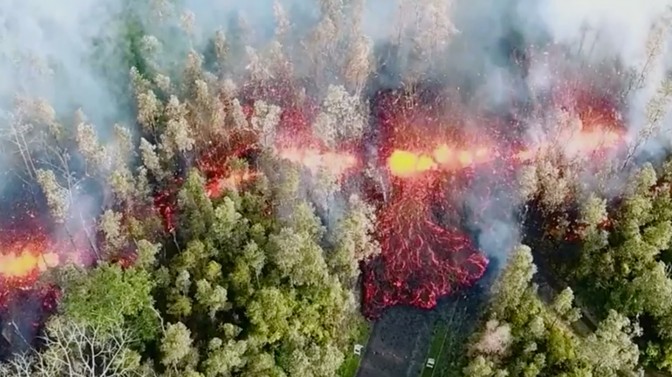
9. A Beginner’s Guide to Hawaii’s Otherworldly Lava
Crash course on lava, volcanoes and Hawaii culture.
“Pele is not just the goddess of lava. Lava is Pele,” Hoʻomanawanui told me. “The lava flows basically reaffirm what our literature tells us—that the land is alive, that Pele is alive. When we talk about the lava being alive, it’s a metaphor for the earth itself being alive. The lava is Pele, the magma is Pele, the lava flow and then when the lava hardens—each you can just replace the word with Pele.”
10. The Impermanence of Permafrost
More from Hakai Magazine. Sharing this article became a whole lot easier because of this paragraph:
“Think of a cup of tea,” Cory suggests. The carbon-rich organic materials the slump is carrying into the lake are too small to be removed with a filter, but substantial enough to impart a tinge of color and even flavor. The water samples collected from the lakes, streams, and rivers here indicate that the brew percolating out of freshly exposed permafrost differs sharply from the steep that comes from shallow layers of soil that thaw and refreeze in accordance with the natural cycle of seasons.

That’s it. As always, write back if anything. Don’t be intimidated, I’m only me! -Kat