I really don’t know what I’ve gotten myself into here. I know next to nothing about fashion, and my sartorial choices are to be laughed at. With some egging and help from my friends, I have put this together: a Fashion Special. It shocks me just to think of it. Whenever I’ve done a special edition in the past, I have had the interest of a serious amateur in all those topics. In this one… let’s just say I’m challenging myself. It has been an education. I’m curious to know what you have to say about it. Any criticism or feedback, feel free to hit reply.
If you got this from a friend and want to subscribe, here’s the link.
1. Is British Fast Fashion too Fast?
This is primarily about a British fast fashion brand called Boohoo. Yes, you read that right. They churn out new lines of clothing every two weeks. It used to be months or years before new styles entered mass-market stores; but no more.
“Speed is absolutely critical to the shopper today,” says Debbi Ball, Boohoo’s buying director. “It used to be that you saw something on the catwalk and it would be available within a few seasons. Now, you can stream these catwalks online and we can deliver products weeks later. People see Kim K. wearing something one day, and they want it the next.”
While competitors Zara and H &M deliver new, trendy collections every six weeks, Boohoo can deliver new product in as fast as two weeks. This is faster than fast fashion as we have come to know it — this is fast fashion in hyperdrive.
Fashion is one of the most polluting industries in the world, with some studies showing it to be only behind oil. A lot of the worldwide clothing industry is also fueled by cheap, possibly unethical and illegal, labour. Fast fashion, then, is boohoo for the environment; maybe that’s what they were trying to tell us from the outset? Fast fashion is clearly not sustainable; and totally unnecessary too. I am happy that there are some people who try to buy sustainably, upcycle and recycle their clothes, and all that. The way I deal with this is to not buy clothes at all unless absolutely necessary, and then to keep wearing them for years and years. I still wear socks out of a 12-pack bought over ten years ago…
2. How Small Will Beat Big and Save the Fashion Industry
This is a nice read to continue the first. It’s an op-ed where the author argues that there really isn’t anything in it for people actually designing clothes anymore. The market is captured by people who can ship “trending” items fast, not the people who actually do the design behind these trends. So what will happen next? Will we have designerless fashion just like we have driverless cars, clothes created by computers and algorithms? The answer, according to the author of this piece, is the rise of small firms that can pioneer new designs, and can scale organically when these designs come into vogue. In the end, someone has to have incentive to design new things. This makes me wonder: how similar is this view with that in music, and other arts? The internet has enabled small ventures that can be started by virtually anybody who knows how to use the internet.
3. Why American Workers Now Dress So Casually
Let’s now go across the Atlantic. A lot of American corporate culture now comes from California and the Silicon Valley, and this influence is still increasing. What I liked about this piece was how it dealt with how women dealt with the increasing adherence to casual dressing. Was it allowed for them? Obviously casting off rigid dressing norms was easier for men than for women.
And in Silicon Valley in the mid-1980s, the people weren’t interested in adhering to old norms. Businesses there put an emphasis on streamlining management decisions and shortening the lag time between planning and implementation. Tech firms were insular, self-regulated, and male-dominated—a fertile combination for discarding norms and celebrating rule-breaking. Restrictive clothing worn for appearances’ sake was inefficient, and Silicon Valley was all about efficiency. Sport coat? Put it on the back of the chair. Places such as Atari, Apple, and Sun Microsystems embraced the 80-hour workweek, and their clothes proved it.
4. Modest Dressing, as a Virtue
As the 21-year-old actress, writer and editor Tavi Gevinson told me, the relative modesty — or lack thereof — of her clothing choices reflects more than her own individual preferences. If she’s going on an audition, she won’t dress in what she called “a frumpy art teacher look” (a look, as she joked during our conversation, that could also be called “Brooklyn mom” or “European baby”). Rather, “I would dress in something that makes my figure look nice, because people are stupid, and most of the time when they say, ‘We want her to come in again,’ what they really mean is ‘Wear something more conventionally attractive.’” In the publishing world, however, when Gevinson wants to be taken more seriously, as a thinker rather than a body, a dowdier look is helpful, so she can seem, she said, “as if I’ve somehow matured past a quote unquote juvenile desire to be perceived as a woman.” The formula, then, is flipped, but not in a way that’s necessarily more freeing.
[…]
As 32-year-old Aminatou Sow, a digital strategist and the co-host of the popular podcast “Call Your Girlfriend,” told me, “if you let women dress for themselves, we’d all be wearing muumuus and caftans.” Sow, who grew up Muslim in Guinea and Nigeria before moving to Europe and then the States, cited the comfort factor of these silhouettes (“anything that looks like a sack is my jam”), but also the sense of inner confidence that they foster, one that she first recognized in the women she grew up among in West Africa. “It’s part of my cultural heritage. … I don’t need to show my shoulders, I don’t need to show my back. I know what I’m carrying underneath this thing,” she said.
5. How I Learned to Look Believable
This is another piece for the New York Times by Eva Fisher, who went through the legal proceedings after deciding to fight against her graduate school advisor for sexual harassment. She talks about her choice of clothing for each specific event she attended – sometimes to show that she wasn’t a camera-ready person, sometimes to show her poverty as a graduate student, and so on.
For that photo shoot I wore the same jacket that I wore to report. I did try to expand my wardrobe, going to J. Crew the day before the shoot. Saying, in the shop, “I need something that looks like I’m destroying the patriarchy,” didn’t lead us in a lot of helpful directions, and, besides, I didn’t want to wear a blazer — particularly not a freshly pressed new one. That would make me look like a rich person, not a beleaguered graduate student. It has been important to show that I am but a simple lowly student. It takes a measure of hapless powerlessness.

6. The Best-Dressed Man on Reddit Is an Expert at Thrifting
Joseph Knowles has been voted the best-dressed man for two years running on the “Male Fashion Advice” subreddit (a noble MFA, one would say). How does he do it? When I reached out to Knowles for an interview, I imagined a conversation about high-end labels, a lavish monthly spending budget, and outfits propped up by gifts from press-hungry brands. But instead, he issued me a warning: “I just want to let you know about 95% of my wardrobe is thrifted,” he wrote. “I buy almost exclusively used clothing from relatively no-name brands and tailor my own stuff.”
What a great man. I loved this entire article. He even thrifted his sewing machine. Obviously. Can’t expect anything else.

7. Confessions of a Costume Curator
There’s something transgressive about touching other people’s clothes—especially dead people’s clothes. Some would even call it spooky. As a costume curator and fashion historian, I have colleagues who swear that they have felt, and even seen, ghostly presences in their museums’ costume-storage areas. It’s easy to get the chills in those cramped rooms, which are climate-controlled to the ideal temperature and humidity for textiles, not for humans. I myself have not encountered any phantom fashionistas, but once I opened a box and a fox stole—complete with eyes, paws, tail, and teeth—seemed to leap out, making me scream so loudly that two security guards came running.
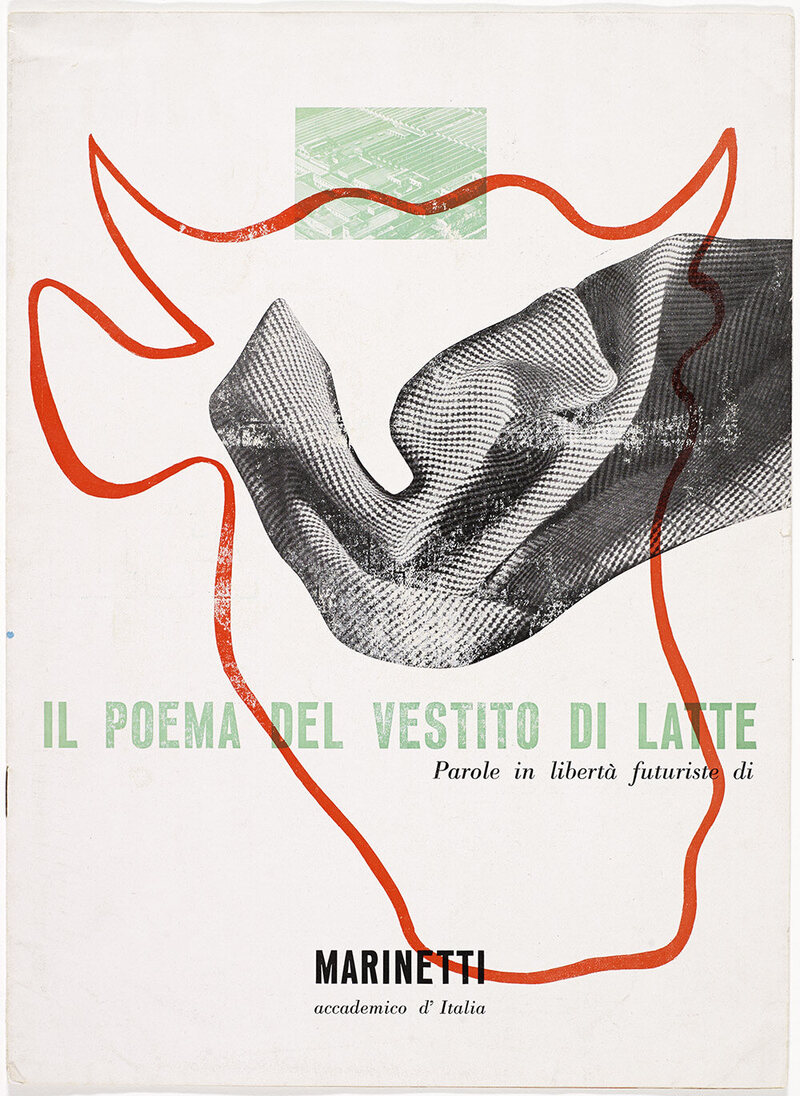
8. How Clothing Made From Milk Became the Height of Fashion in Mussolini’s Italy
Early 20th-century Italy was graced with something called the “Manifesto of Futurist Women’s Fashion”, which in 1920 added milk as a new material from which to make clothes of the Future. The idea is scientifically quite viable, and involves using the milk protein casein to be made into a fibre not unlike wool. When Mussolini in the 30s declared that Italy’s economy be self-sufficient, milk clothing was one path taken. This reminds me of Vinalon, North Korea’s fabric made of stone, shared in issue #115.
9. Project Jacquard Guide: The Lowdown on Google and Levi’s Smart Jacket
This is a piece from almost a year ago, a few days before this Project Jacquard jacket was to be launched. It’s a “connected” jacket, which means that the jacket itself has many sensors that can be used to operate your phone. It’s aimed at cyclists, who will be able to take calls, get feedback from their maps applications, etc., without having to pull their phone out of their pockets. It’s very cool, although I don’t think I would currently be able to use it.

10. StreetStyle: Exploring world-wide clothing styles from millions of photos
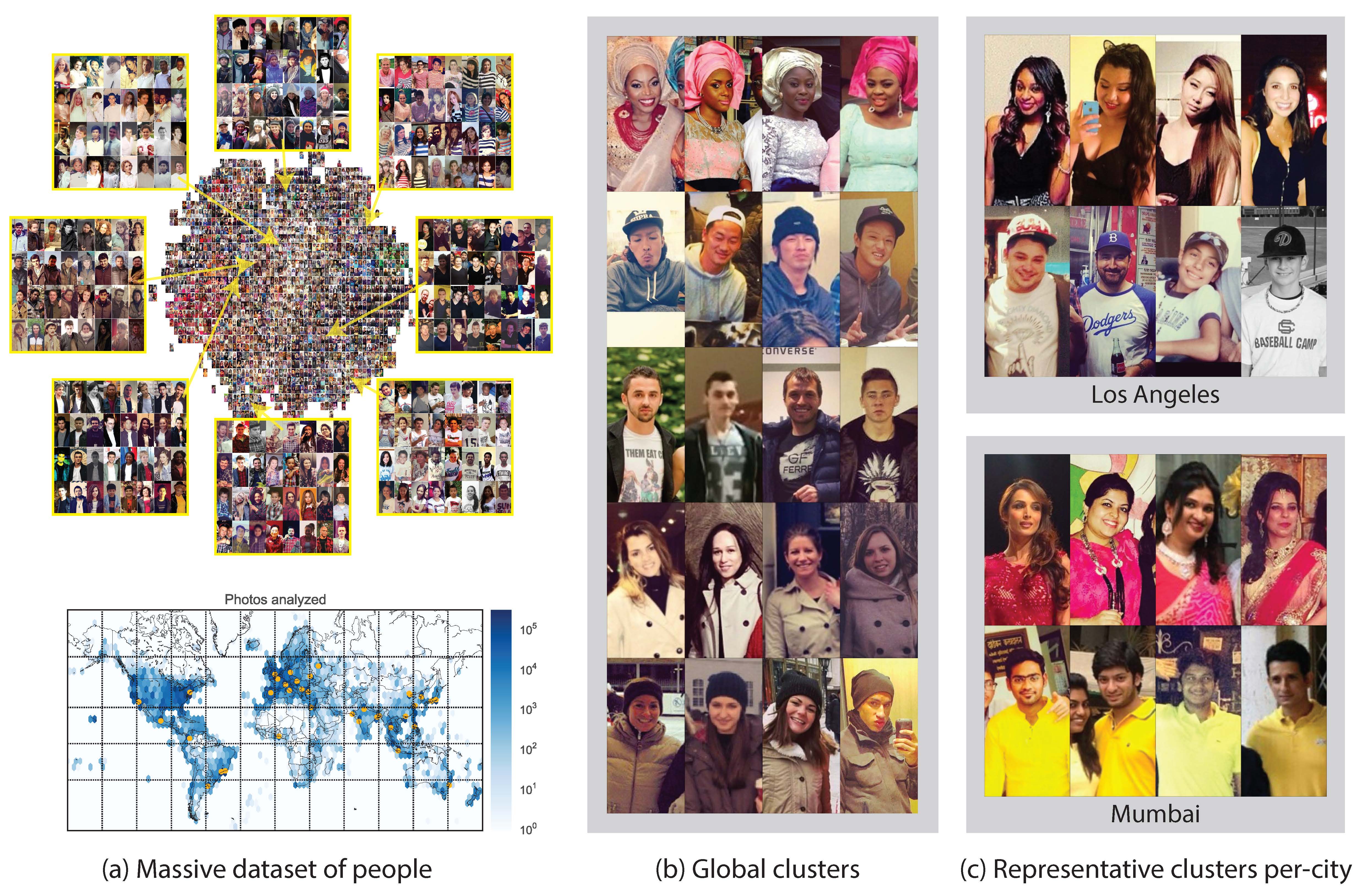
As I was browsing through the list of pieces I’d saved for this special, I forgot what this one was. Surprise! It’s a research paper. The caption of the first figure should have you hooked:
(a) We apply deep learning methods to learn to extract fashion attributes from images and create a visual embedding of clothing style. We use this embedding to analyze millions of Instagram photos of people sampled worldwide, in order to study spatio-temporal trends in clothing around the globe. (b) Further, using our embedding, we can cluster images to produce a global set of representative styles, from which we can (c) use temporal and geo-spatial statistics to generate concise visual depictions of what makes clothing unique in each city versus the rest.
Phew. That took something out of me. I’ll see you this weekend. - Kat