Hello! And welcome back. It’s been a busy period for the newsletter, wot. Two special issues back to back, and who’s to say that won’t continue? This week’s list has some wonderful things: interviewing and the art associated with it, electric buses and the economy, a new theory of REM sleep, cancer detectives, and more. Phew. I also just realized while checking the links that the ten pieces are from ten different outlets! This always makes me happy.
If you got this from a friend and want to subscribe, here’s the link. Also, if any of the links are paywalled and if you don’t want to pay for a subscription, try opening the link in incognito mode in your browser; it usually works. It does for me.
1. Behind the Writing: On Interviewing
This was the best thing I read this week. Sarah Menkedick writes about the art of interviewing in writing non-fiction. She speaks with three authors who are very good at interviewing, and make non-fiction seem like fiction.
To elicit this type of early experience in particular, Markham relied much more on the coefficient of time spent with her subjects than on the expertly crafted interview question. She told me, “I think building real, honest, genuine relationships from your heart with whomever you’re interviewing makes for better journalism and more humane journalism. And of course there have to be boundaries and there has to be the clarity of OK we’re not friends and I’m still a journalist, but you can still be operating from a place of deep compassion and connection with someone.”
This tactic of forgoing the unbroken enchantment of a narrative that reads like fiction for a sense of real people telling stories allows Smarsh to pull off a remarkable feat: Although her book is a memoir, her voice and presence feel secondary to that of her family, and her consciousness, though it is actually writing and constructing the story, does not feel as though it is what drives the book.
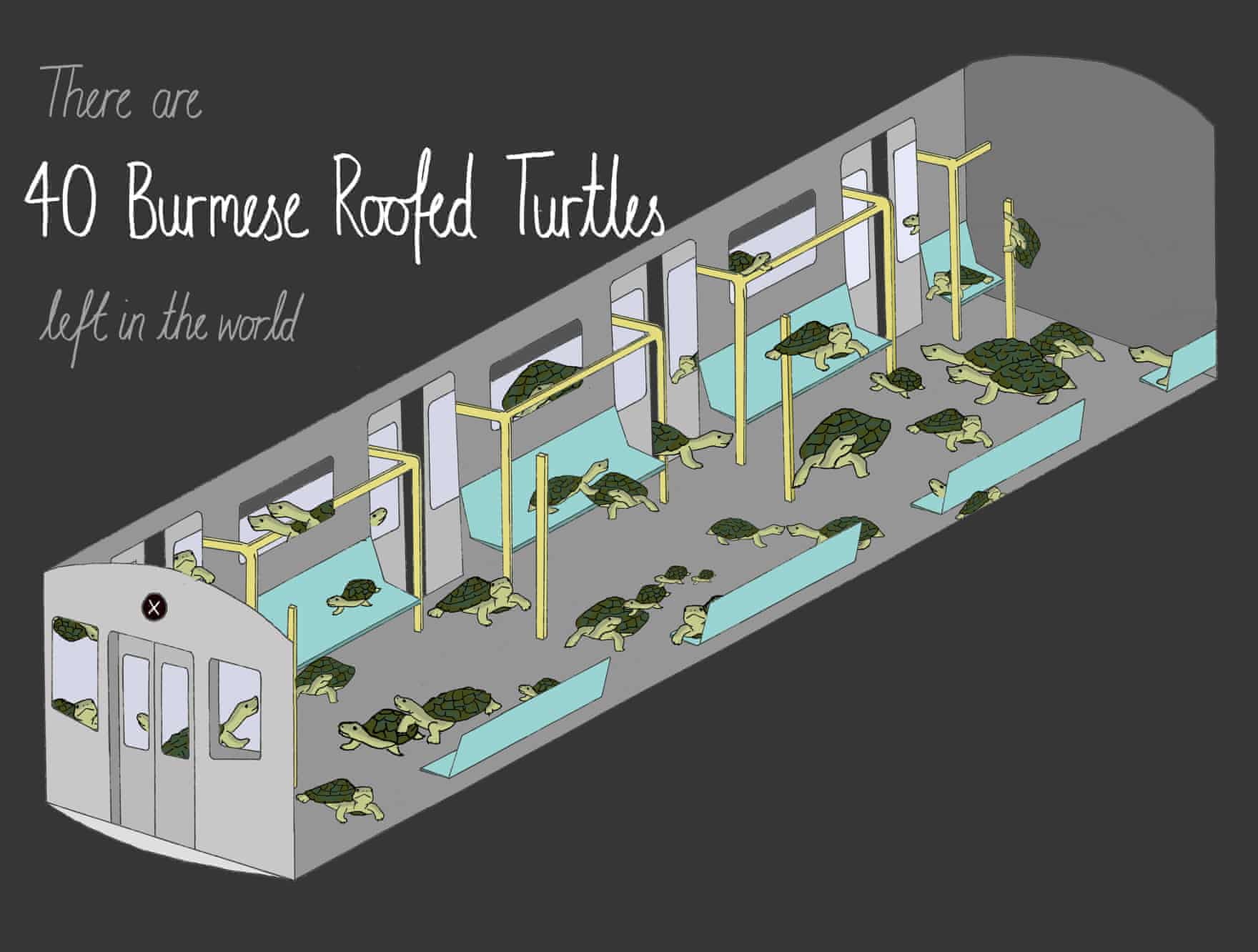
2. Seven endangered species that could (almost) fit in a single train carriage
This is heartbreaking.
3. The Fact-Checkers Who Want to Save the World
“Since the 2016 election, a number of independent media organizations and industrious individuals have set out on an ambitious task: to fix the truth. Can a new wave of fact-checking solve the fake news problem?”
While fact-checking organizations originally sprang up as attempted antidotes to political misinformation and hoaxes, their role has ballooned into ad hoc and woefully incomplete corrections departments for the digital world. Some major fact-checking organizations have entered into asymmetrical relationships with big platforms, which means their efforts at debunking misinformation rely on the same social networks responsible for spreading misinformation. The end result is maddening for anyone trying to figure out where to find trustworthy information. The rise of fact-checking has not resulted in a more orderly or easy-to-understand internet. Right now, fact-checkers fighting lies online resemble volunteer firefighters equipped with pails of water to fight a five-alarm blaze.
4. Many Indians are deciding not to bring children into this overpopulated unkind world
This is interesting, and it got me thinking: all the issues we face… wouldn’t they be less hard to tackle if we just demanded less resources? There are two ways of doing this: by reducing the amount each person consumes, and also by reducing the number of people. This brings me back to what I think about environmental problems. In the end, everything that we do is for us or other humans. Environmental calamities will always have complicit humans, since projects we start are for people. We’re never disconnected from what’s happening anywhere. It also reminds me of a philosophy that I encountered in Eating Animals by Jonathan Safran Foer: every food decision you make is farming by proxy. An extension: Every decision you make is some other process by proxy.
5. China made solar panels cheap. Now it’s doing the same for electric buses.
I learnt that the normal way to strengthen and popularize a technology to scale is to gradually invest in subsidies, tariffs, and wait for economies of scales to develop. China, however, realized that it was in deep trouble with its diesel buses, and it had to something about it quick. So it sidestepped these processes by injecting money into the electric bus market. Now, one in six buses in the country runs on electricity or a hybrid engine. Lots of interesting economics in this piece in general as well as specifically about buses, batteries and the future.
So it decided to make electric buses a thing. How? By dumping a giant pile of money on the problem, subsidizing the purchase of more than 350,000 BEBs (battery-electric buses) in the following four years. Battery and hybrid electric buses went from 0.6 percent of annual bus sales in the country to 22 percent in 2017. They now constitute 17 percent of the nation’s total bus fleet.
Today, of the roughly 385,000 BEBs that BNEF estimates are operating in the world’s cities (13 percent of the global bus fleet), 99 percent — virtually all — are in China. The country has, in a few years, taken electric buses from a niche product to a decent-sized chunk of the global market. Costs are already falling.
6. Saving the Prized Chile That Grows Only in Oaxaca’s Mountains
This is a story about the chile pasilla Mixe, a staple of the Oaxacan diet. In recent times, its value has been uncovered and discovered by various chefs around the world, who value it highly. There exists literally no substitute for it. Farmers were being paid a pittance for it, never knowing that the chiles they grew had worldwide demand. Thankfully, that’s changing now, and they are also growing organically to preserve their soil and crops.

7. Hot Heads: Why Mammals Need R.E.M. Sleep
R.E.M. sleep is shorthand for rapid-eye movement, a period of sleep in which your eyes dart around and your brain emits high-frequency waves, as opposed to its usual lower-frequency ones. It’s been thought that R.E.M. is required for dreams and cognition. Experiments on rats show it. However, a new theory posits that R.E.M.’s use is to keep the brain warm when it’s inactive; fur seals that sleep in water show no signs of it, whereas when asleep on land they show the signs of R.E.M. Fascinating. It’s like “shivering” for the brain.

8. Color or Fruit? On the Unlikely Etymology of Orange
Orange, however, seems to be the only basic color word for which no other word exists in English. There is only orange, and the name comes from the fruit. Tangerine doesn’t really count. Its name also comes from a fruit, a variety of the orange, but it wasn’t until 1899 that “tangerine” appears in print as the name of a color—and it isn’t clear why we require a new word for it. This seems no less true for persimmon and for pumpkin. There is just orange. But there was no orange, at least before oranges came to Europe.

9. The Untold History of Hampi
The city of Vijayanagara, once the most powerful kingdom in South India, is now known as Hampi, and is a quiet dusty tourist destination more than anything else. In its prime, it was one of the most fancy and wealthy cities in the world, the seat of power of a great kingdom.

10. The DNA detectives hunting the causes of cancer
“Cancer rates vary wildly across the world, and we don’t know why. To solve this mystery, scientists are tracking down causes of cancer by the fingerprints they leave in the genome.”
This may be the most interesting detective story you’ll read all week. Different cancers are prevalent in different magnitudes in different parts of the world; why? Can we map mutations in our genome to various cancers exactly? What needs to happen to the mutations for us to say conclusively that, say, smoking causes cancer? The answer is: we need more data! Mosaic science magazine doing what it does best. I love it so much.
That’s it. See you soon (how soon? only time will tell).