Hello there! I write to you an hour or so late, because it has been a busy week! However, what really matters, and is good, is that it has been a good reading week. If you want to share any feedback or just want to say hi, please do. Just reply to this email and I would love to chat.
If you got this from a friend and want to subscribe, here’s the link. Also, if any of the links are paywalled and if you don’t want to pay for a subscription, try opening the link in incognito mode in your browser; it usually works. It does for me.
1. US Supreme Court allows historic kids’ climate lawsuit to go forward
The US Supreme Court has recently upheld the legitimacy of a legal suit filed by a group of youth against the US government. It makes for interesting reading.
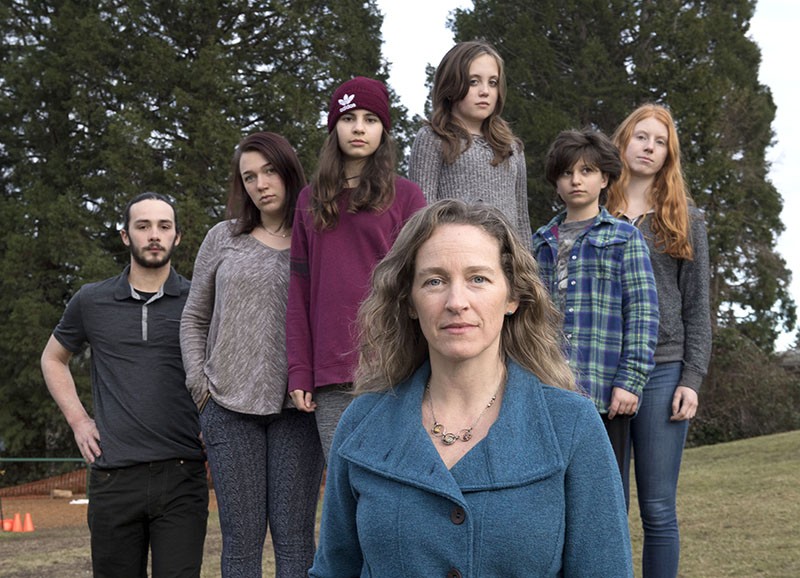
The plaintiffs, who include 21 people ranging in age from 11 to 22, allege that the government has violated their constitutional rights to life, liberty and property by failing to prevent dangerous climate change. They are asking the district court to order the federal government to prepare a plan that will ensure the level of carbon dioxide in the atmosphere falls below 350 parts per million by 2100, down from an average of 405 parts per million in 2017.
2. How A Wizard of Earthsea Made Me a Fantasy Reader
The Earthsea Cycle by Ursula K. Le Guin is one of my favorite pieces of fantasy literature, ever. I’ve written about it in the past. In this article, Molly Templeton talks about this series of books shaped her into a person who loved fantasy literature. What I loved most about her view is the emphasis on the fact that the entire series is about the protagonist, Ged, struggling to find himself and attempting to fix some massive mistakes he’s made and whose effects he unleashed on the world.
People speak of their doorways into reading, but mine, I think, was a doorway out_: I stepped not into a fictional city, a great imaginary library (though how I would’ve loved to meet Lirael, way back then!), a magician’s cave, or a Hobbit hole (that was next), but out into this archipelago, this world of islands and storms. The alchemy was perfect: I recognized the landscape, if not the land, and that gave me the tools to build the rest of it in my mind._
[…]
The fact that this is a story about not being defined or limited by your mistakes took a long time to click for me. Ged is enormously powerful, but power isn’t wisdom, and power isn’t strength. There are no shortcuts to experience, and showing off will get you nowhere. A Wizard of Earthsea , when it comes down to it, is about simply doing the work.

3. How a Month without Computers Changed Me
This was interesting! The author of the piece took a one month “Sabbath” as follows, in his own words: ‘you must not operate any device that stores a programme in its memory’. He had to forgo all modern digital communication as we know it. By his rules, he was allowed to use a watch that had electronics in it as long as it didn’t have a program running behind. Photography became more deliberate and painstaking. The effortless perfection of smartphone or digital cameras was lost, but this I believe was a positive effect. By necessitating more effort in capturing a scene, one spends more energy and brainspace taking everything in.
4. A Powerful New Battery could give us Electric Planes that don’t Pollute
Yay. Electric planes will definitely pollute less greenhouse gases, and the problem for many years has been to create the right battery for one. Battery capacity is not so much the issue as the need for high power output during take-off. The high discharge during the plane’s take-off would essentially fry any standard electric car battery used. Hopefully this will change something in the near future, at least for short distance flights. Looks like we need the upgrade in technology. However, this is all nice and promising, but perhaps the real question to ask is: do we need better plane technology, or better technology to reduce our modern lives’ dependence on air travel?
5. The Elephant as a Person
Aeon has been frustrating recently because of fewer high-quality essays than earlier. However, I enjoyed this one. The author of the essay puts forth an argument, or rather a number of arguments, to consider individual elephants as persons. Of course, this is subject to what your definition of ‘person’ is. The most interesting part to me was that the mere presence of older bull elephants in a geographical area affects the entire societal structure and behavioral patterns of other individuals.
Stand or walk among a herd of elephants, however, and you’ll appreciate how different the experience is. Even the most peaceful group feels electric with communicative action. There’s continuous eye contact, touching, trunk and ear movements to which others attend and respond. Elephants engage in low-frequency vocalisation, most of which you can’t hear, but you can certainly see its effects. If you’re fidgety, for example, all the adult elephants will notice and become uneasy.
6. How the Finnish survive without Small Talk
I learnt from this that the Finnish have a saying that goes like ‘Silence is gold, talking is silver’. Most societies, whether modern or ancient, have developed a systematic inclusion of “small talk” into everyday interactions that serves as a comfort, ice-breaker, and sometimes more. The Finnish, however, don’t have it at all, it seems like. Why? Perhaps it’s because the Finnish lived far away from each other, and there was an incentive to travel quickly and not waste time dilly-dallying around with small talk.
Small talk outside social situations between close friends is virtually non-existent. Interactions with baristas? Limited to the name of the coffee you want to order. Sitting, walking or standing in a way that requires acknowledging a stranger’s presence? Never. (A meme featuring people standing outside a bus shelter rather than under it is an often-posted joke in Finland to illustrate this point.) If you’re a foreigner, congratulations – you’re probably the loudest person on their often (voluntarily) silent public transport.
7. The Joy of Cooking for One
This was wonderful. It’s a piece from the New York Times that talks about the (to me) paradoxical joy of cooking for one. I cook a lot, and generally it is for myself, so I empathize with much of the sentiments in this piece. Cooking for one may seem like a damp metaphor for loneliness, but I’ve found it to be an empowering act of self-care from which I derive much self-satisfaction. One of the interviewees in this article talks about the joy of preparing an exact single portion of a meal and not letting anything go to waste. This is also one of my favorite feelings; almost as good as the slow heating up of water as I decide to take a rare hot-water shower.
8. How Writers Map Their Imaginary Worlds and [Wizards Moomins and pirates:
the magic and mystery of literary maps](https://www.theguardian.com/books/2018/sep/22/wizards-moomins-and-gold-the-magic-and-mysteries-of-maps)
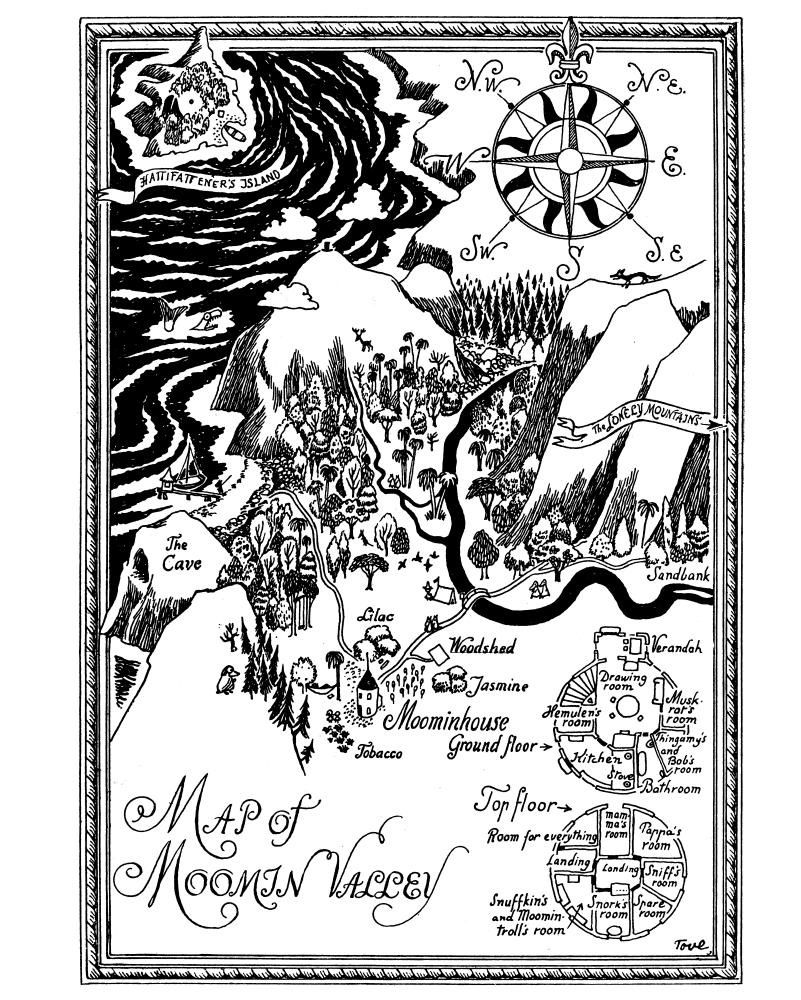
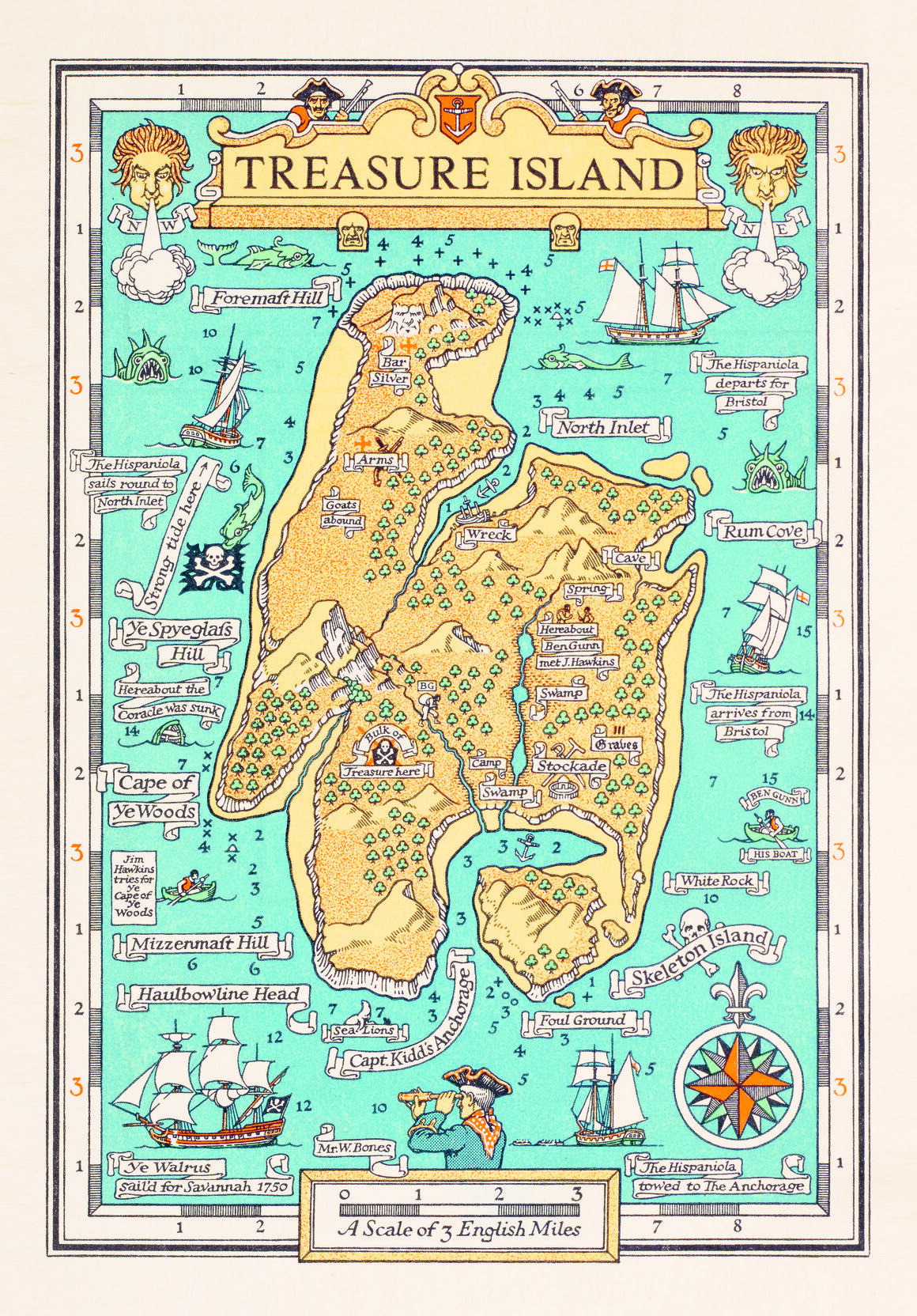
Both of these are about a single book: The Writer’s Map: An Atlas of Imaginary Lands. As a fan of fantasy literature and fiction in general, I love fictional maps. There’s something whimsical and intimate about maps drawn far from a realistic scale for a certain novel or series. If a book has a map at the front or back, it’s hard for me to read an ebook version of it. I find myself staring at the map far too often for me to be able to linearly move forward in the book, the way a ebook restricts me to. Two of my favorites from these articles:
9. How McLaren Learned to Treat Its Pit Crew Like Athletes
Formula One is a sport that I don’t fully relate to or approve of, but I’ve always, always been fascinated by the crew at the pit stops. Close to a dozen people surround a race car for a few seconds to complete a plethora of maintanence activities on the car. I remember that as a young schoolkid I would try to make sense of what each invidual technician was doing to try to keep track of at least one fraction of the blur-like activities. So when I read this piece from Wired talking about how the McLaren Formula One team improved its fortunes by treating its pit stop crew as athletes in their own right, I was hooked. There is a huge amount of science that goes into the pit stop; and the most interesting finding (to me) was that what separated fast crew members from slow ones was the low degree to which their gaze would dart around. I shared a similar piece earlier about athletes needing a ‘quiet eye’.
10. The City That Had Too Much Money
This is a wild story about Vancouver that I had no idea of. Lots of Chinese money was pouring in, and it went into driving up real estate prices. The situation now is crazy. Real estate is so expensive in the city that it’s hard for essential members of society like teachers, nurses, etc. to afford living there. What do you do? How do you handle the money? It’s a complicated situation and I think it will serve as a kind of beacon to other cities to whom this may happen in the future.
That’s it for this week. See you soon. - Kat