Hello there! It’s issue #150, and while it seems like a momentous occasion, I have nothing special lined up. However, I will ask one thing of you, reader: if you like what you’ve been seeing and reading, consider sending this issue to a few of your friends. And as always, I’m happy to receive any feedback or suggestions that you might have. This newsletter is always going to be a work in progress. If you have anything to say, just hit reply to this email. And now, here is the list.
If you got this from a friend and want to subscribe, here’s the link. Also, if any of the links are paywalled and if you don’t want to pay for a subscription, try opening the link in incognito mode in your browser; it usually works. It does for me.
0
Other Newsletters
I was introduced to email newsletters a few months before I started this one, my own. Whether daily, weekly or monthly, they are a wonderful, deliberate and personal way of sharing writing, experiences, and curiosities. I’m currently sharing a few every week as a way of spreading the cheer.
- Austin Kleon’s Weekly Newsletter: Artist and writer Austin Kleon has a weekly newsletter where he talks about art, creating, music, reading, and writing. He has been one of my inspirations when it comes to logging, journaling and blogging. Similar to this newsletter, he sends out ten links/pieces every Friday. This is the latest one.
- The Sunday Letters, by Jana Marie: “A weekly dispatch cataloguing one writer’s journey through the world of contemplative thinking. Now in its third year.” –Jana sends a letter every weekend that is contemplative, meditative and forces you to think more slowly about the world. For all these reasons, I love it. Latest letter.
1. On November 26th, a Mole will land on Mars
The Oatmeal recently put out this feature about the Insight rover that NASA is sending to Mars. It’s due to land in a few hours from when you receive this, and isn’t that magical? I chose to do science for a living and a career, and for all the misgivings I have about technology and science being misused, the fact that as a race, the fact that we’ve come far enough to send a semi-autonomous vehicle to a planet millions of kilometres away is astounding.

2. The Bookish Life
A wonderful essay about all the nice things involved in a “bookish” life. Going to leave you with two excerpts.
A great help in leading the bookish life is to recognize that as a reader, you might be omnivorous, but you can never be anywhere near omniscient. The realization removes a great deal of pressure.
He believed that books were in some ways better than friends. “In reading,” he held, “friendship is suddenly brought back to its first purity.” Unlike with friends, we spend time with books only because we truly wish to be in their company. We never have to ask what they thought of us. Clashes of egotism have nothing to do with the bookish relationship. Perhaps best of all, when we tire of books, unlike tiring of friends, we close them and replace them on the shelf. Friendship with books, Proust felt, though it may be one-way, is nonetheless an unselfish friendship.
3. From Conscious Consumers to Conscious Contributors
I stumbled upon this blog on Tumblr lately, and this particular blog post on it was enjoyable and about something I’m very much invested/interested in. What do/should you look for when trying to buy more sustainable/green products? It starts with a (in my opinion) scathing set of remarks–no matter how hard you try to replace some of your food or domestic products with eco-friendly ones, you’re still consuming them. These decisions are small in the larger scheme of things, and so how can you start giving “back” to the community and environment, instead of constantly taking “from” it?
Anyway, no product can be a 100% green by virtue of it being mass produced…to be consumed by a large number of people. And so, we come to our real problem — of being The Consumer.
More and more people are ‘voting with their food’ — going vegetarian or vegan — but the footprint of the diet changes little if they now eat quinoa from South America instead of local millets.
I’m an organic farmer and even I stopped calling myself an environmentalist. Sure, I compost and know where all my food is grown, but I fly across the world at least once a year, drive a diesel-guzzling car and love a good steak. We can all do our part in sharing what we have and limiting new purchases, but the reality is that we are all still “consumers.”
4. We’ll have Space Bots with Lasers killing Plants: the rise of the Robot Farmer
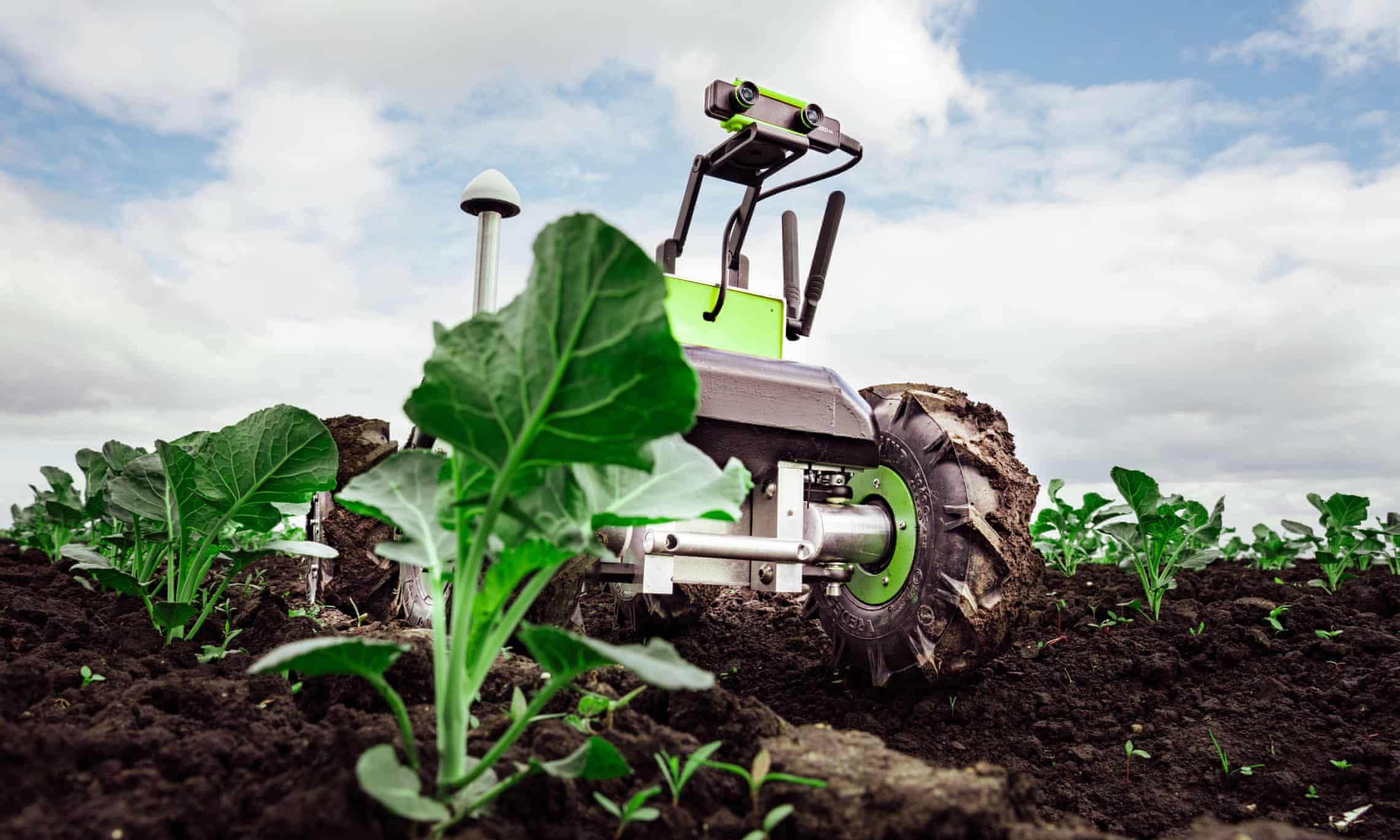
Well, according to the previous article, you could buy organic and local and eat only those things, but you could also encourage your farmers to buy these specialized robots that enable them to effectively do organic farming. One of the major “advantages” of modern mass monoculture farming is that crops can be planted in orderly rows so as to easily enable large machines to process them. With the help of the new robots touted in this Guardian piece, farmers can plant more than one crop on a small field, can adopt the more painstaking and intense techniques that come with organic farming, and do these things well. The first major disadvantage I see with these is that we’ll lose a lot of the expertise that farmers originally start off with, but isn’t that happening already?
5. Overlooked No More: Yamei Kin, the Chinese Doctor Who Introduced Tofu to the West
Yamei Kin was a Chinese-born doctor living in the USA, and in 1917 was tasked to go back to China to study the soybean. However, now it’s grown widely and consumed indirectly by meat eaters all over the world. However, Kin’s major contribution was to first start with “soybean cheese” and then build that up to introduce tofu to Americans. Tofu now is also eaten in many parts of the world, and for vegans, is a major source of protein. A newspaper’s description of her lab in the US:
“On a long table was a row of glass jars filled with what looked like slices of white cheese. It was soy bean cheese. A jar was filled with a brownish paste. It was soy beans. There were bottles filled with the condiment we get with chop suey. That, too, was made from soy beans. Talk about dual personalities! The soy bean has so many aliases that if you shouldn’t like it in one form you would be pretty sure to like it in another.”

6. A Visual Appreciation of Hong Kong’s Bamboo Scaffolding
A fun series of pictures:


7. The Simple Joy of No Phones Allowed
A blog post about a concert by Jack White (who I haven’t ever heard of). It was a normal concert, all except for one difference: no phones allowed. Your phones would be locked into packets and given back to you, so you couldn’t access them when in the concert. I want to use the word dazzling to describe it, but the effect was the actual opposite of dazzling: no phone camera flashes in every part of the audience. The author of this piece says that almost every aspect of the audience changed: they wanted to be there, the conversation they had with their neighbors was calm and normal, and when he tried to take a picture and realized he couldn’t, he felt more relieved than annoyed. No pressure.
Several times, I felt a familiar impulse to take a picture. Each time, when I realized I couldn’t, the feeling I had wasn’t annoyance, but relief. It was a pleasure to realize I didn’t have to balance my enjoyment of the moment with any desire to document that enjoyment. And of course, throughout the show, we still retained all the important powers of our superphones. We just had to politely step into the hallway to use them, and most people seemed to find little reason to do so.
That might have been the most interesting part of this experiment: when you add a small, immediate cost to unlocking your phone (in this case a twenty-second walk to the concourse), it suddenly isn’t worth doing. That says a lot about much we really value most of our impromptu screen sessions.
8. In Defense of Puns
Doing the rounds across the internet, this essay from The Paris Review is a delight. The author makes the case for the act of punning to be a true sign of wit, rather than the most lowly. He connects it to an act called bisociation, which is related to keeping two different interpretations of a concept in your head at the same time. Isn’t that what a pun is?
But puns do not deserve such a bitter appellation. Despite its bad reputation, punning is, in fact, among the highest displays of wit. Indeed, puns point to the essence of all true wit—the ability to hold in the mind two different ideas about the same thing at the same time. And the pun’s primacy is demonstrated by its strategic use in the oldest sacred stories, texts, and myths.
I learnt, to my wild delight, that the fact that Adam and Eve ate an apple was just a …pun. The word for evil is malum , and it’s also the word for apple.
9. Asteroid-mining might actually be better for the Environment
According to a recent paper put out on the open-access server arXiv, it may be beneficial to mine precious and rare metals from asteroids rather than from deep and dangerous mines on Earth. I don’t know what to think of this: bafflement, “you’ve got to go destroy asteroids as well now?” or what? It’s definitely true that the metals on asteroids will be easier to access than those on Earth. But is the cost of transporting a ship up there worth it? And also–would you feel different in the chips in your phone or computer had metals from the asteroid Ceres rather than from somewhere in Africa or China?
10. The Colors We Eat
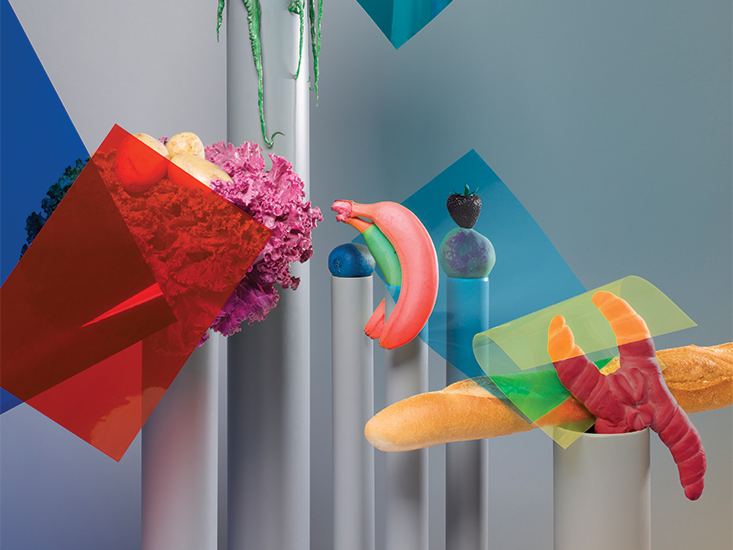
As I navigate through this week’s list, I’m realizing that no two pieces are from the same source, which is always something that makes me happy. This is from Nautilus : most of our sensory input from the world comes through our eyes, therefore the color of food that we eat must influence how we think about it. A series of experiments proves this: if you’re told to distinguish between an orange- and a non-orange-flavored juice, it’s much harder for you to do if neither of the juices are orange in color. I was pretty mind-blown by this. It arises because of the brain’s automatic anticipation “circuits” (for lack of a better word), which start telling you what to expect based on what you see.
Other things I’ve shared earlier on how other sensory experiences can change our perception of food: Why does food taste different on planes? + How Sound Affects the Way You Taste Food on Airplanes, Texture is the final frontier of food science.
That’s a wrap. See you next weekend. - Kat.