Hello there! When I started Kat’s Kable, I wrote it on a platform called TinyLetter from my home in Chennai, India. I’ve stuck to sending it out at 8am Indian Standard Time, and writing from India again now, I’m reliving my old routine of writing this newsletter at 6am on a Sunday morning and getting it ready to send just in time for dispatch time. Why am I saying this? Because it’s announcement time!
I’m taking a break from this newsletter. I feel like both it and I have stagnated in a number of ways, and I could use some time away to think, rest and just ..not have the weekly routine of writing this looming slightly over me. Usually it is fun to scour for articles, read, curate, compile, write, etc., but it’s gotten a little tiresome now. I’ll see you again when I’m back.
If you have any feedback, or something that you think I can incorporate or change, let me know by replying to this email. I like my current format but at the same time am glad to experiment with new and different things.
If you got this from a friend and want to subscribe, here’s the link. Also, if any of the links are paywalled and if you don’t want to pay for a subscription, try opening the link in incognito mode in your browser; it usually works. It does for me.
1. Why the “y’all” line divides the US north from south, not east from west
I currently live in the south of the US, and the orientation program included a tongue-in-cheek guide to when to use the word “y’all” when talking to a group of people. Apparently, you use “y’all” when addressing one person, “y’alls” when addressing up to three people, and “all y’all” when talking to more than that. This link is an article from the Emerging Technology section of MIT Technology Review where they highlight interesting and sometimes quirky new pieces of research. The fact that there is a language divide in the US between the north and the south can be attributed to a number of fascinating reasons, two of which are the fact that colonization in the US took place in an east-west fashion, and that transportation links are much stronger in an east-west direction, both of which result in increasing homogenization along any east-west line.

“Y’all” (blue) versus “you guys” (yellow) usage in the eastern US
2. A Eulogy for a Cow
I read this only last night, and it encapsulates many of my feelings towards the dairy and animal husbandry industries. The author takes a tour of a “culling auction” of cows – when dairy-producing cows are old and sick (mind you, “old” for them is 5-6 years old, and a normal healthy cow’s life span is 20+ years), they are auctioned off by weight to be slaughtered for beef. It’s distressing to me. I’ve spent a large part of the last two years thinking about and asking questions of where my food comes from, and there are disturbing truths to be uncovered in every direction, it seems.
Studying the lives of animals in the dairy industry has prompted more fundamental questions for me about violence, commodification, care, and knowledge production. […] In the case of the dairy industry, violence is normalized by a constellation of economic, political, and social frameworks. The economic logics that render the cow a commodity obscure, through commitments to efficiency and capital accumulation, the violence at the root of practices that are integral to the commodification process that harm the cow, calf, steer, and bull (artificial insemination, impregnation, separation, intensive milking, slaughter). Conceptualizing a life as a commodity limits the way of knowing that life: as a commodity, that life is understood in terms of what and how efficiently they can produce..
3. The Star of Norwegian Knitwear
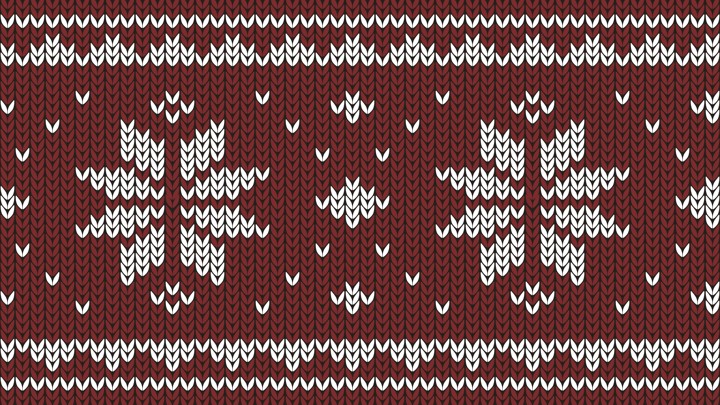
I discovered a series of online essays and books called Object Lessons , and they are catching my eye. Each essay is a deep take “about the hidden lives of ordinary things”. I want to read all their books, but my library doesn’t have them! I’ll have to wait. Anyway, this essay is about a knit pattern called the selburose , which apparently now is synonymous with Norwegian culture. Funnily, it didn’t originate in Norway, but was definitely made globally popular by the cottage industries in parts of Norway that were run primarily by women. I hadn’t recognized or paid much attention to this pattern much earlier, but it was still nice to read about its rise to cultural connotation with all things Norway.
4. The Most Misread Poem in America
I’m assuming that you might have come across, or read, the poem The Road Not Taken by Robert Frost. This article puts forward the case that the conventional understanding of the poem is, in fact, wrong. If you haven’t read the poem, it’s there in the article. I was taught that the poem showcased an optimism, that taking the less-favored path over the well-beaten one can lead you to a bright future where that choice “made all the difference”. I honestly don’t remember what I personally understood when I was taught it eight or so years ago. I wasn’t so enamored by the poem as it seemed like all of literary humanity was. This article says that the poem is about how we can fool ourselves and how we many times attribute our current life situation to certain decisions made at forks, where both paths in view were almost the same.
The poem isn’t a salute to can-do individualism; it’s a commentary on the self-deception we practice when constructing the story of our own lives. “The Road Not Taken” may be, as the critic Frank Lentricchia memorably put it, “the best example in all of American poetry of a wolf in sheep’s clothing.” But we could go further: It may be the best example in all of American culture of a wolf in sheep’s clothing.
5. A Tiebreak Win and the Problem of Draws
Lately I’ve been following an increasing number of blogs written by scientists, and I came across this nice blog post about the recent world championship match in Chess, between Magnus Carlsen and American challenger Fabiano Caruano. The format of the championship is to play twelve chess matches, and if scores are tied after them, to play four “rapid” games as a tiebreak. Is that okay? These can be considered different variants of the same sport, so much so that expert practitioners at one may not be experts at the other. Do we need different formats for this championship match? I don’t know much about chess but it’s always nice to read a well-written (and respectful to the non-expert) sports analysis.
6. The Waiting Time Paradox, or Why Is My Bus Always Late?
This is pretty mathematically involved, but the basic premise is fascinating. Suppose that buses are to arrive every ten mintues at a certain bus stop. If you take this bus a large number of times, you’ll find that you, on average, wait for longer than the five minutes you’d expect to be average. In fact, you’ll wait for an average of ten minutes. Why is that? Because if you arrive at a random interval between buses, there’s a longer time you spend waiting for buses that are late, than you will spend waiting for buses that are on time or early. Mathematically, this is a manifestation of something called the “inspection paradox”. If your bus is late most of the time and you feel frustrated, maybe now you can take out your anger on …math!
7. How Seattle’s public library is stepping up to deal with the city’s homelessness crisis
The previous piece has some nice data analysis done on bus timings in the city of Seattle in the US. This article talks about the public libraries in Seattle stepping up to help homeless people in the city. Libraries give them a roof for the time of the day, access to computers and internet, and also a safe space from which they are not in danger of being evicted. As a big fan of libraries in general, I find this nice and heartening. Of course, it’s not solving the problem that results in the homelessness in the first place, but yay libraries?
8. Scary Squishy Brainless Beautiful: Inside the World of Jellyfish
Every once in a while, National Geographic comes up with a fantastic infographic piece. This one is about Jellyfish, and if not for anything, stay for the pictures. Jellyfish are fascinating creatures, because they seem to defy the minimum requirements for life. They have no nervous system, no skeletal system, and have rudimentary sensory organs. Still, some of them can live forever by turning young when old. Now, show me a human that can do that.

9. Games and the Design of Optimal Human Experience
Charles Chu (I recommend his newsletter!) here writes about what makes games so easy to spend large quantities of time on. I didn’t game a lot as a younger kid, but I did recognize the power of games to hold people’s attention spans for hours at a time. Many young people, in times of puberty and fidgetiness, find solace in video games and are able to express themselves there. Why? Because games represent an ideal learning environment. We find it easy to get into a “flow” when we do something we like, and gain increasing mastery over it. My PhD currently may be taxing and energy-sapping, but it is something I genuinely enjoy and learn from, which gives me the boost I need to be able to spend a large fraction of my time on it. Thus I enjoyed the ideas that this piece brought up.
“One of the subtlest releases of [reward] chemicals is at that moment of triumph when we learn something or master a task. This almost always causes us to break into a smile. After all, it is important to the survival of the species that we learn–therefore our bodies reward us for it with moments of pleasure. … Fun from games arises out of mastery. It arises out of comprehension. It is the act of solving puzzles that makes games fun.“
10. 12 Mind-Bending Perceptual Illusions
We’ll end on a slightly light note. Optical illusions are fascinating, and exploit quirks of certain automatic steps that our eyes and brains take for us.

All the circles are acually of the same color.
This was fun to write, and I’m glad to begin a break with a good feeling. See you soon, hopefully. - Kat.