Hello! How are you? I am having a bit of a rollercoaster of a week, but writing today’s newsletter has been a good way to end my Saturday. I personally treat Saturday as the last day of the week, where I hardly work and am free to waste all the time I want to. I have ten thousands tasks to complete, though, so I will leave you with this week’s list and hope you enjoy it. As usual, if anything, feedback, suggestions, or if you just want to tell me that I’m awesome (of course), reply to this email.
I send out another infrequent (usually monthly) email with excerpts from books that I read; if you are interested, please sign up over here. I just send it out via Gmail on a bcc list; your email is safe with me unless I get hacked.
If you got this from a friend and want to subscribe, here’s the link. Also, if any of the links are paywalled and if you don’t want to pay for a subscription, try opening the link in incognito mode in your browser; it usually works. It does for me.
0. Other Newsletters
I was introduced to email newsletters a few months before I started this one, my own. Whether daily, weekly or monthly, they are a wonderful, deliberate and personal way of sharing writing, experiences, and curiosities. I’m currently sharing a few every week as a way of spreading the cheer.
- Dear Reader: I came across Deepanjana Pal’s newsletter when both of us were featured in The Hindustan Times. Now we are newsletter friends, and I thoroughly enjoy Deepanjana’s book reviews and recommendations in equal measure. The last thing that I read that she recommended, Nevermoor delighted me and I’m about to start the second book tonight.
- Sunday Letters: Jana Marie’s weekly dispatches are exercises in mindfulness and meditation. She writes short, heartfelt missives about how she’s doing, what she’s thinking about. I listened to her talk about it on a podcast episode and she comes off as a deep, thinking individual with a soothing voice – both in the podcast and in her emails.
1. On the Experience of Entering a Bookstore in Your Forties (vs. Your Twenties)
This was full of witty paragraphs that I want to share in full but can’t for reasons of space. If, like me, you’re under 40 years old, you might find this a bit somber and a reminder that what you read now will shape who you are twenty (or two hundred) years hence. If you’re over 40 years old, well, I’m curious to know if you feel the same way the author of this piece does.
The bookstore is a liminal space. Even if like me you don’t have the cash to buy a box of new titles and reinvent yourself week to week, you have the moment of the choosing and everything it tugs upon.
I could gain knowledge from such cold classifications but it wasn’t the same as standing in some open mountain meadow, flowers teeming with wings, crickets under every rock. What I needed was the quality of attention the writers I loved brought to the page, their fidelity to translating perception into sequences of language that edified me for losing (and finding) myself in them. If I wanted to understand crickets, I had to become like the grasses in the meadow soaking up every call.
2. To Save the Sound of a Stradivarius, a Whole City Must Keep Quiet
I remember going to a quiz four years ago (I’m old) where they asked what historical event made the Stradivarius violins sound as good as they do. They were made in the 17th and 18th centuries, and apparently the little ice age we had then stunted trees, and thus the wood used made the violins’ sound irreproducable. Of course, these instruments will slowly decay and deteriorate over time, so the Italian city of Cremona is trying to record the sounds of the violins they have. What does this mean? The entire city has to stay quiet.

3. New Feelings: Selfish Intimacy
This was an interesting piece, much unlike the usual kind of things that I share on Kat’s Kable. The author is of my generation or thereabouts, and her mom and her have radically different notions of privacy. As someone who uses Instagram and Facebook and Twitter, I don’t belong to the large cohort of my generation that shares everything. I don’t geotag my photos, hardly ever share pictures of myself in them, etc. I think we should all think about this; what’s okay to share? Even aside from the fact that the big tech companies are collecting all this data, is it okay to broadcast to our friends and followers details about so much of our surroundings and lives, especially when it involves other participants who are not aware of being in the stories or pictures we put up?
When she first explained this to me, I didn’t get it. I remembered a performance I saw years ago by the Trachtenberg Family Slideshow Players, a mom, dad, and daughter who collected strangers’ old snapshots and made up songs about them. As a teenager I thought this was a neat schtick, and a nice gesture, a way of honoring the humble people traced by old Polaroids. Now I think of how I’d feel were the artifacts of my life used as fodder for someone’s art project, and it makes me very angry.
4. Some stuff about Richard Feynman
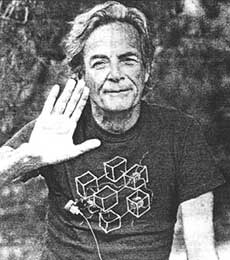
I sometimes have these interludes in the middle of the issue where I share a bunch of pieces connected by a single theme. I’ve been reading a number of good things written about Richard Feynman, which I thought I’d share here. Last week, I shared Surely You’re a Creep, Mr. Feynman. This week I have What Impossible Meant to Feynman written by Paul Steinhardt. Coincidentally, Steinhardt was at my university two weeks ago to give two talks, both of which I attended.
I also read this interesting and inspiring paper that Feynman wrote: The Value of Science. I discovered it via Fermat’s Library, whose weekly newsletter is almost always a delight.
Lastly, Richard Feynman and The Connection Machine which I apparently read two years ago and shared with my friend Rishi, who kindly reminded me of my failing memory. Anyway, it’s a good peek into Feynman’s thought process and approach to a problem.
5. Andy Murray Deserves a Better Farewell
OK, now when I look at what else I have lined up for this week, clearly I’m cheating. This, and the following two pieces, are about tennis. This one is a tribute to Andy Murray and hardly gets into technicalities about the game itself, unlike the next two which are tennis analysis pieces. I feel conflicted about Andy Murray having to retire this year on account of a hip injury. Clearly, this injury was inflicted upon him by himself because of his style of play. Still, a sad story and I wish he played for longer.
My favorite Murray memory? In 2017 a journalist mentioned to him that Sam Querrey was the first American semifinalist in a grand slam since 2009, he responded with “first male player”. It’s insulting to have forgotten the Williams sisters and Murray put the journalist in his place.
It’s no secret that high-level sports runs on fantasy and delusion. The level of self-belief required of elite athletes, who have to not just hope but know that they will make the impossible shot, crush the overhead volley, drill the last-second 3-pointer, overcome all obstacles, and obtain the golden object, verges on the psychotic. Rafael Nadal, for instance, is truly convinced, fiercely and earnestly convinced, that he can come back from two sets and two breaks down in a major final to beat the best players in the history of the game. Spend any time around professional sports and you realize that the armature of cliché by which athletes tend to describe their experience is mostly a survival tactic. The athletes aren’t stupid. They’re simply trying to shore up the resources to compete in an unforgiving environment. If nuance is a tool of doubt and doubt is fatal, you eliminate nuance. You simplify. Say anything often enough and you believe it. Clear eyes, full hearts, can’t lose.
6. Ivo Karlovic’s Survival and the Key to Aging in Men’s Tennis
Ivo Karlovic is a legend and an outlier in professional tennis. For years he was the tallest person on the men’s tennis tour, then was overtaken by John Isner when he showed up. Karlovic didn’t give up, though. He continued growing tall and overtook Isner again. I mean, if that doesn’t make you a legend, what does? He’s almost 40 years old, and can still play. Vintage.
7. The Djoker Return and [Novak Djokovic Went Back To His Old Serve — And Back To No. 1](https:
//fivethirtyeight.com/features/novak-djokovic-went-back-to-his-old-serve-and-back-to-no-1/)
Novak Djokovic played one of the best matches I have ever seen to beat Rafael Nadal in the finals of the Australian Open last weekend. One of the keys was his serve. Coming back from an elbow injury, it turns out he had to go back to his old and trusty serve, which also meant going back to his old and trusty coach. One of the best things Djokovic said all month?
Djokovic said that he was impressed by how Nadal, after all these years, could so wildly improve his serve. “At the same time,” Djokovic said, not arrogantly but simply speaking cold hard truth, “it’s quite different playing against me.”
8. Book Review: The Structure Of Scientific Revolutions
I have been so late on the bandwagon when it comes to reading the internet blog Star Slate Codex. Scott Alexander writes about so many things and in such depth and with clarity; it’s a pleasure. Here he reviews Thomas Kuhn’s book The Structure of Scientific Revolutions , and does exactly what a review should do: ackowledge and appreciate the merits of the book, and systematically criticize what’s not to like in it.
9. Crafting a Life
I again must apologize for being so America-centric when I share such pieces, but I rather enjoyed this one. It’s about why a number of people are turning to crafts and artisanal jobs and hobbies. I understand why it is appealing, since I bake my own bread every week too.
Craft producers are selling, among other things, their expertise, which they invite their customers to share. […] As knowledge has replaced glitz as a mark of status, so connoisseurship has taken on a new life. Once reserved for old elite pursuits, such as collecting art and wine, it has spread to every corner of the artisanal economy. Hang around the professional haunts in the world’s big cities, and you will meet people who can talk at length about chocolate or coffee, olive oil or bread, chillies or turntables. They are the artisans or the artisans’ customers, and they are as proud of their knowledge as an aristocrat is of his title.
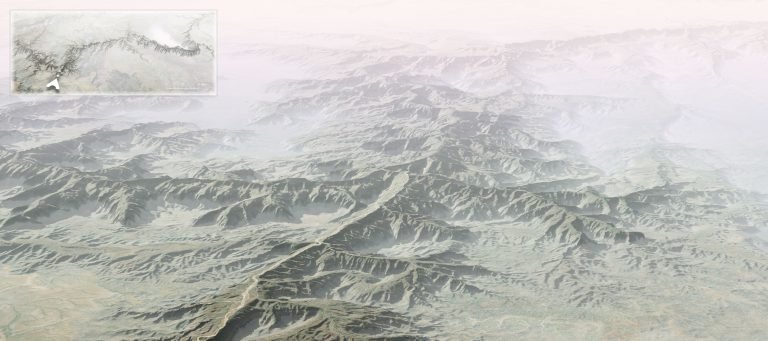
10. Understanding the Grand Canyon by Turning It Inside Out
Beautiful pictures.
Phew. Kudos to you if you got this far! Long emails seem to be the norm these weeks. See you next week. - Kat.