Hello! What’s on my mind right now is a piece of advice I’m taking away from Ann Hadley’s newsletter issue on how to write a good newsletter email. She says, The most important part of a newsletter is not the ‘news,’ but the ‘letter.’. This makes perfect sense, of course, so here I am. My week’s been alright; work is up-and-down in a roundabout unproductive way, but I have been reading so much. It seems like all my leftover energy is channeled either into cooking new things or reading new things, or running. Neither of these are bad in any way. I read a few children’s books this morning after reading Brain Pickings’ 2018 best children’s books list. Be Still, Life by Ohara Hale was lovely. We all need to be a little more patient, slow and willing to observe. Take this gem:
_Now what do you smell if you stop and take a whiff?
Can you smell this book’s pages, or the scent of dog lips?
Dog lips!?_
Once done writing this newsletter, I’m about to head into the kitchen to knead my bread dough, plan out my baking for tomorrow, and sauté some vegetables to eat with whatever grain I choose to boil for dinner. Of course, there is work (there is always work) but since there is always work it gets boring to keep mentioning it.
Of course, as a stereotypical graduate student, I should sing ballads and write paeans for free food. I can’t do those, but I can write a limerick. I’ve been experimenting with the Edward Lear-type limerick scheme where the first and last lines end with the same words. Here:
we’ll always wait for free food
long lines won’t keep us subdued
i’ll write a long ballad,
for the pasta salad,
ah, for more seminars with free food.
A funny story from last Friday, at a talk as part of a conference. The speaker was Italian and he was talking about the recent paper he wrote that had a number of authors:
Italian Speaker: “I am happy to announce that the first author is dead today, and we are very lucky, the second author was dead last week.”
Audience: (Horrified stunned silence, everyone wonders why a serial killer is giving the talk)
Particular audience member: “Do you mean ‘DEAD’ or ‘DAD’!?”
Speaker: “Dead! Like, father!”
That’s all. Putting the letter in newsletter, it seems. I just rambled on a lot. How’s your week been?
If you got this from a friend and want to subscribe, here’s the link. Also, if any of the links are paywalled and if you don’t want to pay for a subscription, try opening the link in incognito mode in your browser; it usually works. It does for me.
0. Other Newsletters
- Warren Ellis: Warren Ellis is a writer (most well-known for his graphic novels) who writes a fun, rambling and often poignant newsletter every weekend. It’s fascinating to read the newsletters of actual writers (unlike me) because they have other Serious Writing to do, and their newsletters are just piecemeal status updates.
- Robin Sloan: Another author who does a fantastic job of maintaining a newsletter is Robin Sloan. I’ve read two books of his, Sourdough and Mr. Penumbra’s 24-Hour Bookstore. His latest newsletter is brilliant (and references Warren Ellis’ latest newsletter too). I quote below: Warren Ellis, in his latest newsletter, wrote:
Something else for my to-do list is to retune my internet. I’ve been taking five minutes here and there, but I need to give it a couple of hours soon. Here are the rules. Facebook is for misery, so don’t use it, at all. Twitter is for news, so just read it. Instagram is for joy, for as long as Instagram lasts, so filter it well. RSS is for information, good writing, music and the Isles of Blogging.
His cadence there made me think somehow of the rhyme from Susan Cooper’s great The Dark Is Rising books:
Iron for the birthday; bronze carried long;
Wood from the burning; stone out of song;
Fire in the candle ring; water from the thaw;
Six signs the circle and the grail gone before.
Or even Tolkien!
Three Rings for the Elven-kings under the sky,
Seven for the Dwarf-lords in their halls of stone,
Nine for Mortal Men doomed to die…
So now I can’t get it out of my head that we need a new prophetic rhyme for a new era, something like:
Twitter for the news-hounds, always out of breath
RSS for the old ones, who follow unto death
Facebook for the barrow-wights, etc., etc.
1. Fascinating twitter thread on climate opinions
A series of interesting opinions on the climate and on the Green New Deal that’s being proposed and brokered in the USA right now. Of course, a single country’s effort won’t be enough, but an interesting point that the author Ramez Naam makes is that a push by one large country can change the global economics. China has brought down prices of electric buses globally, and European (especially German) subsidies have made solar and wind power more affordable.
2. She gave her body to science. Her corpse became immortal.
This is an in-depth long feature from National Geographic about Susan Potter, who agreed that her corpse would be turned into a “visible human”. What does this mean? It means that the cadaver of Susan Potter will be slowly sliced, ground and photographed. I don’t totally understand why, but apparently this will give doth established and in-training doctors a far better understanding of how the human body actually works in real life. I spent almost an hour reading this piece and looking at the pictures in it, and it’s part inspiring, part creepy.
3. To Smolder, Burn Slow
Glorious essay about firefighting in the state of Washington, USA. It’s full of pictures and echoes the actual life of a firefighter.
While firefighters are limited in the work they can each accomplish, fire grows exponentially. Although counterintuitive, a controlled burn is often the quickest and most efficient method of halting a fire’s growth, allowing a small group of experienced firefighters to secure miles of fire perimeter during a single shift. Our most intimate interactions with fire occur during controlled burns. We are, in a literal sense, fighting fire with fire: using torches filled with a mixture of gasoline and diesel to herd flames.

4. How We Lost Our Ability to Mend
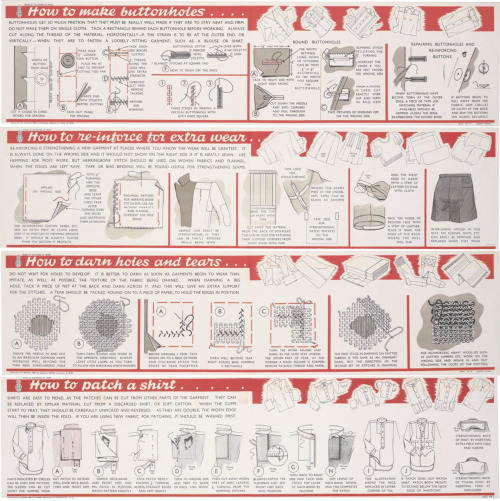
5. How behavioural economics helped me kick my smartphone addiction
I enjoy Tim Harford’s writing, and I’m grateful for him putting his articles up on his own website even though they’re published in the Financial Times. This is an interesting one that you may relate to: how do you effectively convince yourself to use your phone less often? Step one is a break from using your phone at all.
We like what we have, and these experiments suggest that we have no better reason for liking what we have other than that we have it: the disadvantages of choosing something else often loom larger than the advantages. As a result, we are reluctant to relinquish what we have — including the digital tools we’ve grown accustomed to using.
6. Periodic Table
Another fun infographic/visualization thing. It’s apparently the international year of the Periodic Table and so Science magazine has put together this aesthetically pleasing timeline of the development of the table. As we’ve discovered and used more and more chemical elements, the size of the table has increased. Major advances in scientific understanding marked a re-_orienting_ of the table itself. Even today, after it has become a commonplace(ish?) fact, I admire Dimitri Mendeleev for his insight in the 1860s and his prediction of the elemnts gernamium, scandium and gallium. All of that out of pure pattern recognition!
7. The best-loved player
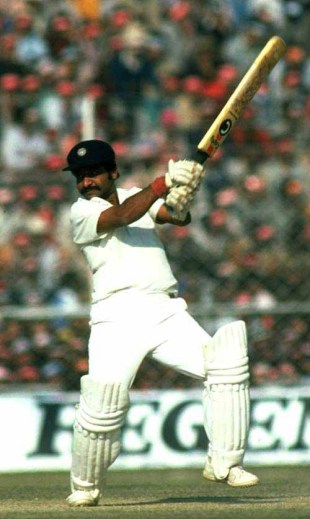
It was also Indian cricketer GR Viswanath’s birthday on the 12th of February. He played in the 1970s and 80s, so I never got to see him, but I thoroughly enjoyed this piece by Ramachandra Guha (from 2009) about him.
This universal love, in an age where international cricket is marked by bitter national rivalry and the clash of personalities, is truly remarkable. It has something to do with his character, which is quietly dignified, and above all true. It has also something to do with his stature, for as the giant Greig’s cradling of Viswanath in the Bombay Test of 1973 so well symbolised, it was a wonder how such a little man could do so much. And it has something to do with the quality of his batsmanship, to which we must now briefly turn.
8. Is Email Making Professors Stupid?
The primary point of this essay is that modern technology makes it just easy enough for a professor (or even other professional) to manage all aspects of his or her work. From scheduling meetings to booking travel plans to filing expenses, all these tasks that can very well be taken care of by dedicated other professionals are being done by non-experts. These things take time away for the professsional/professor to do actual high-level thinking. And email does the same thing. Personally, I like to stay on top of everything, but I do things in batches: I try to check email only once every few hours, and keep track of other things sporadically. The real question, however, is this: why are we expected to keep tabs of every part of our lives, both personal and professional?
9. “I Was This Era’s Cassandra All Along”: A Q&A with Warren Ellis
Warren Ellis, whose newsletter I recommended at the beginning of this week’s newsletter, is a prolific comic/graphic novel creator. When I read his work Transmetropolitan , I was hooked. This was back in my undergrad days, when every night would be accompanied by a turn-off-the-lights, rotate-laptop-by-90-degrees and read-a-graphic-novel for thirty minutes. This is a fun and wonderful interview he gives.
I think we can separate “the internet” from “social media.” Social media kind of exposed all the sloppy thinking about “emergent democracy” in the digital space at the top of the century. I still find the internet extraordinarily useful and generally a benefit to my life, and there are any number of ways it’s benefited many sectors of the world population, some broadly and some local. The thing is not conflating “the internet” with “Facebook.”
The trick is to attempt to evolve as a fat bald old white male human while not letting it distort characters or world building. Characters can be parts of you, but they should never be most of you. Closely-held views of society transposed into fiction become polemic, and, unless you’re very good, tracts get boring fast. So I’m kind of directly not answering the question, because providing keys to elements of stories is close to authorial interference. Leave me alone and let me live in my cave.
10. How Space and Time Could Be a Quantum Error-Correcting Code
Interesting idea! I was at a talk in January that spoke about this. The way we think about space and time in physics is via general and special relativity: we think of spacetime together (as one word) as a fabric on which everything resides. Heavy things curve the fabric of spacetime. This is gravity. When trying to merge quantum mechanics and gravity, we face massive mathematical difficulties. One insight we’ve gotten, however, is this: it’s possible, and likely, that the entirety of spacetime is a “code” (something that prevents errors from propagating) onto which quantum stuff is mapped.
Bye. See you next weekend. -Kat.