Hello! A few hours late today, but better to be late than to not send an issue. I will leave you with the links because I have to go and plant bush beans. Summer is coming soon to where I live now, and summer here is a great time to grow vegetables.
If you got this from a friend and want to subscribe, here’s the link. Also, if any of the links are paywalled and if you don’t want to pay for a subscription, try opening the link in incognito mode in your browser; it usually works. It does for me.
1. The Cult Japanese Retailer Making Billions Breaking All the Rules
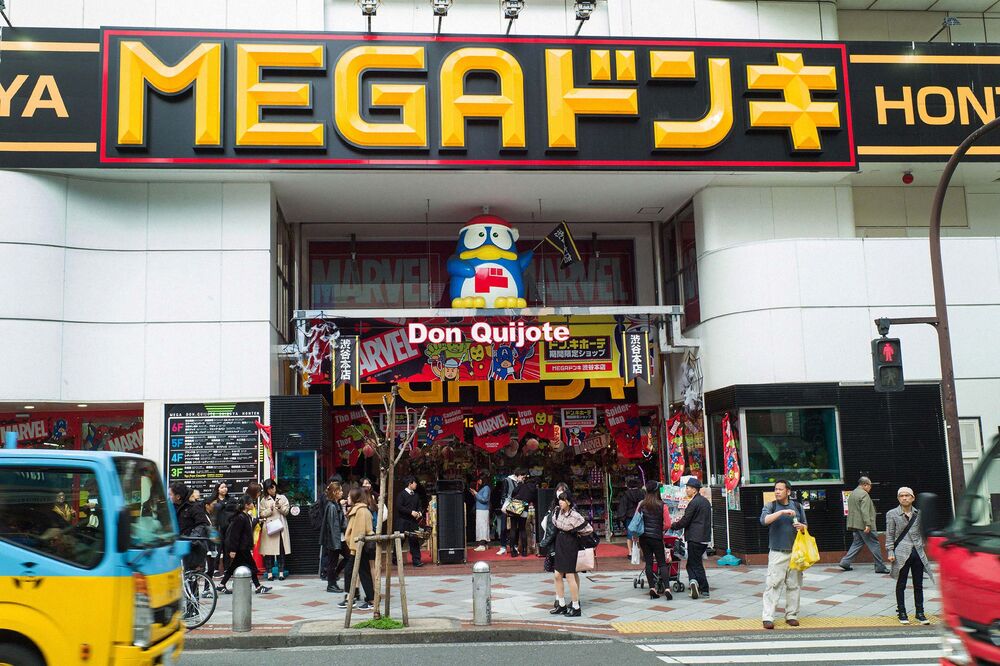
I learnt about Don Quijote (not a typo), one of Japan’s biggest and most eclectic retailers. Apparently it’s chaotic, with shelves filled to the point of sagging forward and almost tipping over. The most interesting point, however, is that individual store managers are given a lot of autonomy to make their own decisions. This lets them adapt their store to their particular neighborhood. One of the stores has a full-blown rollercoaster.
2. The Machine Stops
I’m a huge fan of Oliver Sacks, and one of the things I want to do in 2019 is to re-read his autobiography, On the Move. Here is an essay from his last collection, and it’s about the Machine; how we’re becoming part of, and subjugate to, the machine of computers and phones and social media and all that. It’s a bit harsh, in my opinion, but it’s important and well-written. Here’s an excerpt from the piece, which is an excerpt from an E.M.Forster story.
He says to his mother, who is absorbed in her hectic, meaningless life, “We have lost the sense of space. . . . We have lost a part of ourselves. . . . Cannot you see . . . that it is we that are dying, and that down here the only thing that really lives is the Machine?”
3. This scientist thinks she has the key to curb climate change: super plants
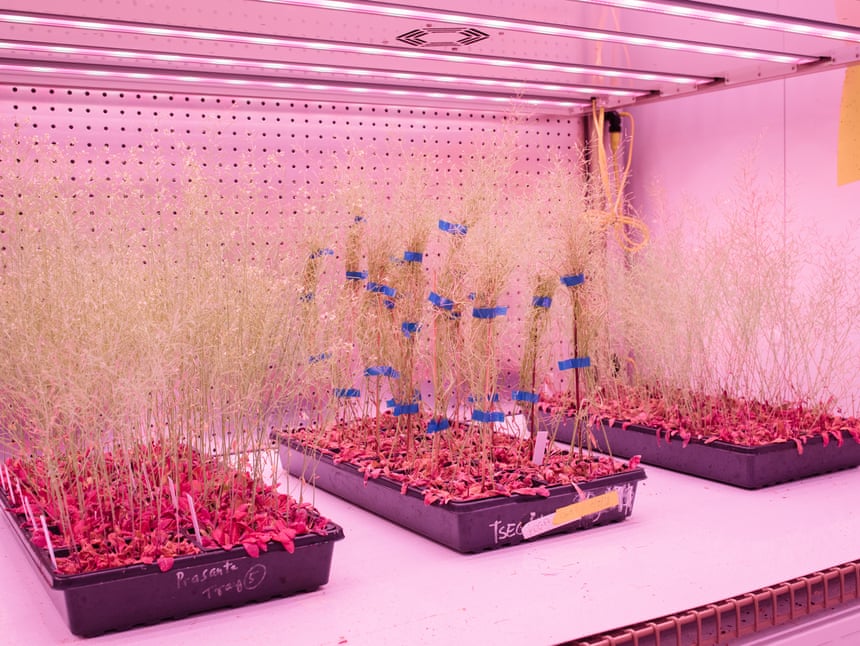
This is an inspiring story about Joanne Chory, a researcher at the Salk Institute. She’s coming up with modified plants (via traditional hybridization as well as CRISPR) that can store large quantities of carbon dioxide in their roots. She also has Parkinson’s disease, which makes it even more inspiring.
4. The world is on fire and that makes for good #brand #synergy between a fashion brand and The New York Times
Is the title self-explanatory? A nice exposition by Nieman Lab.
And like the Times, Everlane sells its goods via a handful of aspirational values — transparency, ethics, environmental responsibility, capital-t Truth. And it makes the narrative of the consumer good’s path from Ho Chi Minh City factory to your UPS guy an intrinsic part of the packaging. (Times Insider is the newspaper’s equivalent of “We source our Grade-A cashmere from Inner Mongolia.”)
5. How Corning Makes Fiber-Optic Cable
Fiber Optic cables are a marvel of modern technology, and you’re probably readiing this email because it was delivered to you by one. Corning is a glass-making company that makes fiber optics too. It’s an amazing technology, and I thoroughly enjoyed getting a vicarious factory tour.

6. Working as a librarian gave me post-traumatic stress disorder symptoms
I like sharing stories of libraries and librarians. At some point, I thought being a librarian would be a fulfilling job for me. Here, the author of this piece,Amanda Oliver, says that working as a librarian gave her PTSD. Unsafe situations, dealing with homeless people and the police, and more. No wonder.
There were days I lost my temper, days I felt extreme anger toward particularly difficult patrons, and days I sat in the back room and cried. I certainly never hung out in the bathroom with patrons, and I definitely never gave anyone a wad of cash out of my pocket as Estevez’s character does at one point. And yet, to work in a library I also had to be a social worker and a first responder, an advocate for the underserved, and a human with very thick skin.
7. Downsized dwellings: Inside Tokyo’s tiny living spaces
This is amazing. Small houses in Japan. Tiiiiny. They are small, but have tall ceilings. Generally, you will have one room to work, read, cook, and entertain guests in, and you sleep in the loft. An example:

8. The Next Wellness Trend Should Be Google Spreadsheets
A love letter to spreadsheets as a way to get your life together, keep track of things, maintain your habits and more. I wholeheartedly agree. Spreadsheets are easy to use and live on top of a powerful capability to analyze the data contained within them.
9. The Dam Problem in the West
The author of this Nautilus piece says that dams, while evil, are a necessary evil. They enable the survival of many cities all over the world. But at what cost? Stopping a river in its tracks has disastrous consequences.
Healthy is a tricky, subjective word, couched in expectation and endgame. It means something different to people who live in Rock Springs than it does to the fish biologists, and none of them are wrong. And the longer I spend on the river, balancing those expectations, and giving them all weight, feels like the hardest, most important part.
10. Photographing the New York City Subway Cars That Retired as Artificial Reefs
This is called “Abbey Road”:

See you soon. - Kat.