Hi. Today’s introduction is going to be longer than usual because I’m feeling much more than my usual dose of existential crisis with regard to the climate and the planet. I feel upset, terrible, and wrangle my hands because what can I possibly do? If you have any strategies you use to take action, or just cope with climate anxiety/depression, please share. Are there communities I can join? I try to do what I can, but I realize that as someone who takes one transatlantic plane journey per year (to visit home), it’s hypocritical if I tell anyone to do anything.
The deforestation of the Amazon has been going on for decades, but it is nice that it finally gets some international news coverage. Frankly, it’s annoying and maddening when I see hashtags like #PrayForAmazon trend. Praying for the rainforest does nothing. What can you do, then?
First, find out what’s going on. This is not a wildfire. It’s a deliberately set fire that’s being used to deforest vast tracts of land for human agriculture. OK, what are they going to do with that land? A lot of it is being used to grow soy, and to raise cattle. Only 7% of soy being cultivated in the world is for direct human consumption. The rest is animal feed. Beef is one of the worst meats you can possibly eat when it comes to environmental impact and greenhouse gas emissions.
Brazil’s right-wing president Jair Bolsonaro is terrible for the global environment. He’s been taking several steps to deforest the Amazon rainforest in favor of large agribusiness.
OK, what can you do? This article from The Cut is a good resource. In short: donate to organizations, attempt to buy an acre of rainforest (thru said organizations), attend protests (if possible), eat less beef/dairy, and so on. Consuming less beef or dairy is possibly the single-most impactful thing that you can do. One of the aspects of living in a globalized economy is that your decisions will have an effect (even if tiny) on things on the global scale (Brazilian beef is exported to a number of countries).
Other reminders:
- In case you needed it: Despairing about the Climate Crisis? Read This.
- The reddit community /r/ClimateActionPlan is also a good space to learn about positive news.
- Try to do what you can, but remember that a lot of the screwups are caused due to large corporations being negligent/outright toxic and using individual guilt to draw attention away from their actions.
- Be (healthily) critical of other people’s actions but don’t use that hypocrisy as an excuse for yourself.
- Please keep yourself educated.
- The Cautious Case for Climate Optimism Well, here’s the list for this week.
1. How Removing One Maine Dam 20 Years Ago Changed Everything
Dams around the world are constructed to provide hydroelectric power to industries. This may be a good thing for them, but it is generally terrible for almost all aquatic life in the river that’s being dammed. In Maine, USA, a dam was breached for the first time ever (in the USA) in 1999. It swiftly brought back so much aquatic life. Water, you see, flows. Water that’s been dammed up… does nothing. It does not have enough oxygen. It is used as a dump. I wish we were more careful and less rash when approving the construction of dams around the world.
2. The Quiet Renaissance of India’s Community Cookbooks
I enjoyed this piece, which suprisingly, is from LitHub (I don’t see many India-centric pieces from them). It’s about cookbooks that are less about homogenizing food around the world, and more about celebrating and preserving local and (arguably) indigenous traditions. Most of them are published by small and independent presses (yay for these presses), but the article notes that big publishing houses are also now beginning to publish cookbooks that are more attuned towards regional cooking. Also not surprising: these great cookbooks are mostly written by women.

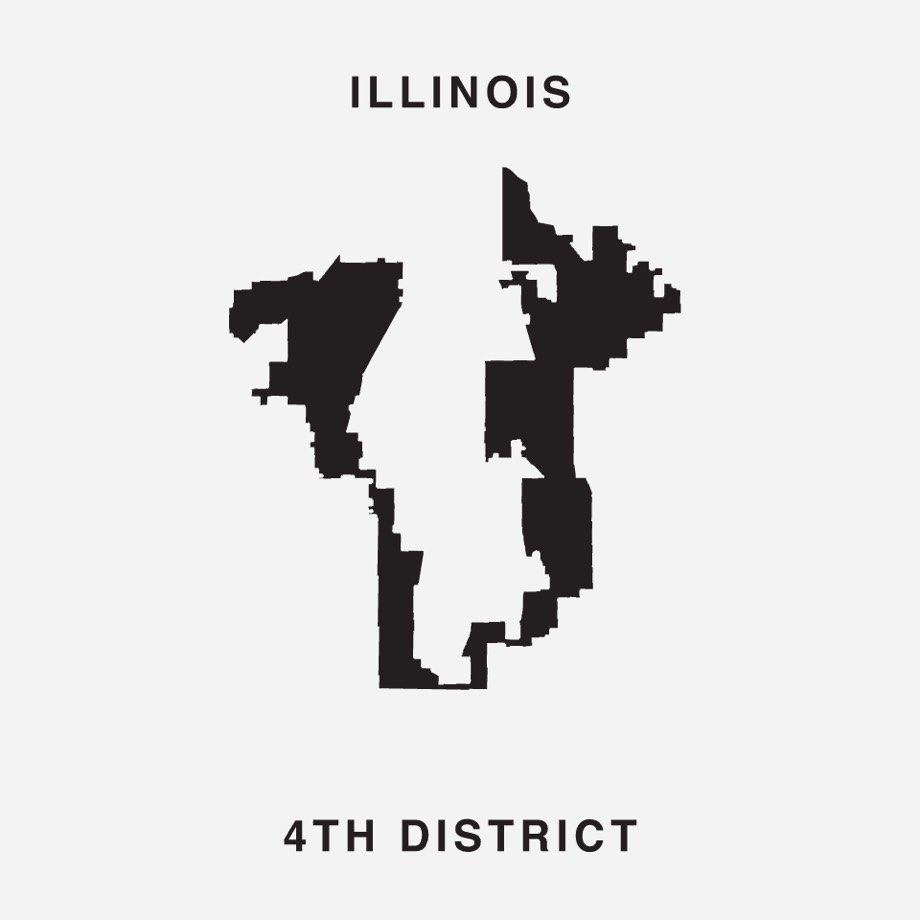
3. The Gerrymandered Font
Oh man. This is both hilarious and sad. Gerrymandering is the practice of manipulating district boundaries to gain some political advantage. Turns out that you can create an entire font using the shapes of gerrymandered districts in the USA.
4. Whatever Your Classroom, Please Teach More Living Poets
I enjoyed this piece, also from LitHub. Get poetry into high schools, if possible.
Joy and curiosity are refreshing reasons to bring poetry in the classroom. Smith teaches AP Literature, a poetry-heavy course and exam (poems appear as passages for multiple-choice questions, and there is a poetry analysis essay as well). Those students fear misinterpretation: a misreading of tone or meaning can lead to a bad score. Smith’s approach required a willingness to learn with her students. I think such vulnerability is important when teaching poetry—perhaps the genre we go to when we want to express ourselves at our most vulnerable.
5. Baking With the Bread Whisperers of Paris
Lovely. Food writer Alexander Lobrano talks about working for a short while at a Parisian bakery. To me, baking bread is a lesson in humility and patience. There is no rush – one cannot rush when baking bread. It is easy to think that one is in control, but the true masters are the bacteria and yeast that slowly colonize your dough. This is the only acceptable type of colonization. You cannot bake good bread at your pace; it has to baked at the bread’s pace.
But as I began my 30th year in the country, I realized that my relationship with French tastes had changed. I no longer wanted to be seated and waited on; I wanted to be standing and doing something generous and essential. Something like baking bread. For me, this was the most sincere homage I could possibly pay to the country that had adopted me.

6. What the Seas Will Swallow
Alex MacLean has taken a number of pictures of places in the USA that are set to be underwater soon, as sea levels rise around the world. The pictures are beautiful, but also remind you that …these places will soon be gone. Also, a few of these are nuclear power plants… so we’d better be careful.

7. A Once and Future Beef
I don’t know what to say about this. The piece is about the history of the American beef industry, and it’s a worthwhile study of the history of the “red meat republic”. It’s contextual, in the sense of being connected to deforestation around the world. The reason I say I don’t know what to say is that, in my mind, it’s clear that everyone going vegan will be great. However, I have read about, and recognize, that part of what’s at fault is the system , not people. Capitalism led to this profusion of meat and other animal products, it seems. I don’t know where exactly I stand on this, so I’ll leave this as good reading if you would like to understand the issue better so you can form your own opinion.
8. How Swarming Insects Act Like Fluids
Amazing! My science-loving brain absolutely loves this. You can model a swarm of insects as a fluid, and the math works! It can predict and explain their motion. The same math that describes the flow and viscocity of a liquid/of air can also describe flying insects. Isn’t that wacky?
9. The 2019 Audubon Photography Awards Winners
Fun fun. Award-winning pictures of birds – what more do you want?

10. The plastic backlash: what’s behind our sudden rage – and will it make a difference?
Our obsession with plastic has registered. In the much larger battle over climate change, the plastic backlash could end up being a small but energising victory, a model for future action.
This means facing up to how interconnected the problems are: to recognise that plastic isn’t just an isolated problem that we can banish from our lives, but simply the most visible product of our past half-century of rampant consumption. Despite the immensity of the challenge, when I spoke to Richard Thompson, the oceanographer who coined the term microplastic, he was upbeat. “At no time in the past 30 years have we had a convergence like this, with scientists, business, and government,” he said. “There’s a real chance to get this thing right.”
That’s all. -Kat.