Hello there. Not much of an introduction this time. There will be no Kable next week on account of the global strike for climate on Friday the 20th of September. There’s no protest/strike in my city, so shutting down the newsletter for a week seems like the least I can do. Please go to a strike if you can. Or make your voice heard somehow. If you want something to make you feel marginally better, watch Greta Thunberg on the Daily Show with Trevor Noah.
If you got this from a friend and want to subscribe, here’s the link. Also, if any of the links are paywalled and if you don’t want to pay for a subscription, try opening the link in incognito mode in your browser; it usually works. It does for me.
1. The Commuting Principle That Shaped Urban History
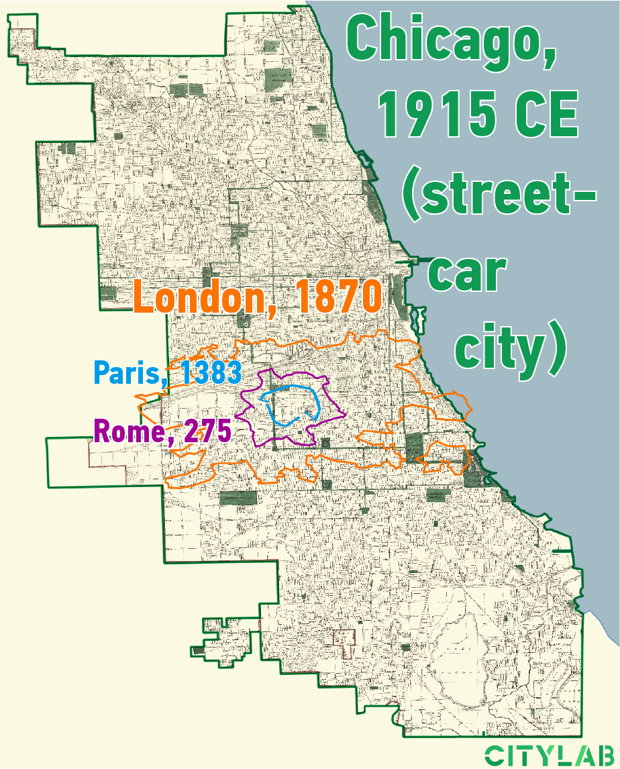
This piece is about the idea of “Marcetti’s constant”, which is basically the fact that on average, people are willing to commute for half an hour one way to their workplace. Depending on the mode of transportation of the time, this has been the defining feature for the size of cities. It’s a simple idea, really, but it encapsulates quite a lot.
2. The war to free science
This is a good article from Vox about the monopoly that a small number of publishers have over academic publishing. I’ve shared things about this earlier, but it’s a serious problem and merits some more visibility. The crux is that the agencies funding research pay people to do research, then pay journals so that other people can read the research they’re funding. And if you want to publish in an “open-access” journal, you have to pay. The value that publishers and journals bring don’t justify the costs they demand.
3. Cory Doctorow: DRM Broke Its Promise
In other words, we were told that we must reject the promise of unfettered digital in favor of locked-down digital, and in return, we would enter a vibrant marketplace where sellers offered exactly the uses we needed, at a price that was reduced to reflect the fact that we were getting a limited product. We got the limited product, all right – just not the discount.
4. Tech C.E.O.s Are in Love With Their Principal Doomsayer
Principal doomsayer being Yuval Noah Harari. I found this article a bit amusing; Harari, who is concerned about tech enabling a totalitarian regime with a large “useless” class of workers under it, finds it amusing too that the people who are cast as enemies in his work cozy up to him so much.
5. “If you want people do to something, make it easy.” Richard Thaler has Lunch with the FT
Thaler cultivates a happy-go-lucky persona, a man whose own weaknesses help him understand the weaknesses of others. “You assume that the agents in the economy are as smart as you are,” he once told Robert Barro, one of the pillars of the economics establishment, “and I assume that they’re as dumb as me.” Barro was happy to agree with that.
6. The Joy of Watching Diego Schwartzman
Lovely writing about Diego Schwartzman, who in some sense is the David to taller tennis players’ Goliath.
We write about these things because they’re relatable, and so much of what we see from athletes feels beyond the realm of possibility. Schwartzman, though—he’s the little guy, and we can all relate to that. Even the tall among us have, at some point, felt small. When Schwartzman plays tennis, he tears down our preconceptions of plausibility. He shows that it doesn’t take a giant to slay one.

7. Twelve Words
This was lovely and heartbreaking. Brian Trapp, the author of this long personal essay, had a twin brother who was born with a number of ailments, which impaired his life from the get-go. The title of the essay refers to his brother’s, Danny, vocabulary of only twelve words.
My brother just happened to have twelve. Rather than making him a freak or an alien, his disability helps us see the essential human truth of all our communication acts: We all construct other minds through this imperfect mediation of language. No one speaks on their own. We are all twins—we all finish each other’s sentences.
8. On Restaurant Day in Helsinki, Anyone Can Open an Eatery
So fun!
In fact, the city actually came on board. Grasping the appeal of Restaurant Day, Helsinki’s tourism website now features it as an attraction. Which is a pretty extraordinary achievement for an event that deliberately side-steps the law. (It helps that there have been no known instances of food poisoning stemming from Restaurant Day, according to Elisabeth Rundlöf, a marketing manager for the City of Helsinki.)

9. Chicago Finds a Way to Improve Public Housing: Libraries
Who would’ve thought? If you know me at all, you know that I believe that public libraries improve everything and are the only unsullied public institution in the USA.
10. The grandmaster diet: How to lose weight while barely moving
This is so fascinating. “21-year-old Russian grandmaster Mikhail Antipov had burned 560 calories in two hours of sitting and playing chess – or roughly what Roger Federer would burn in an hour of singles tennis”. I once did an internship where my advisor played Go, and he once said that over a weeklong tournament, he lost 3 kilograms despite eating fine. Brains really do use up a lot of energy.