Hello! Finally, finally, I am writing the Kable a few hours before my self-enforced deadline. It’s a good feeling, because now I will spend the rest of my evening relaxing, drinking tea and scoffing sweets. How are you?
Recently I’ve been thinking about “feeding the earthworms”. I’ve developed an interest in regenerative agriculture, and the focus here is not on the immediate “tons per acre” yield, but on the more subjective health of the soil. Instead of doing whatever it takes to produce more, instead try to do what makes the soil more healthy. An increase in yield will then be an auxiliary benefit. Bring earthworms to your soil, and you can be sure that your soil is good.
I’ve tried to incorporate some of these things into my life: instead of just trying to get more done, I’m focusing more on getting myself in good positions and mindsets, and hoping that the good work will just fall into place. So far, I haven’t really done anything concrete except switch off all my weekday alarms. I’ve decided that even if I’m awake for less time, I’d rather be awake when I want to.
If you got this from a friend and want to subscribe, here’s the link. Also, if any of the links are paywalled and if you don’t want to pay for a subscription, try opening the link in incognito mode in your browser; it works sometimes. If that doesn’t work, you can access the website using a different browser on the same device, or use a different device altogether.
1. The Thrill of Defeat
In academia, being “scooped” means that someone else published and/or announces that they have solved a problem that you have been working on. When choosing projects, the possibility of being scooped is a major consideration, and it can lead to both healthy and unhealthy notions of competition. This piece from Nautilus is about Francis Crick and Sydney Brenner getting scooped by Marshall Nirenberg regarding cracking the encoding of information in DNA. I found it instructive. (This despite that I harbor misgivings towards Crick and Watson, for not giving Rosalind Franklin her due share in their earlier discovery of the double-helix structure of DNA).
It’s at least as easy to lose a result today as it was in 1961. We try not to do research that’s redundant. But multiple scientists are often motivated by the same questions, so we sometimes can find ourselves racing each other. And losing a race has consequences. Funding can be endangered. Careers can be derailed. We can feel the tension, on occasion, between what’s good for the individual scientist and what’s good for the progress of science. Crick and Brenner’s reaction stands as an exemplar for me, as it should for all scientists. As Brenner told me by way of parting advice: “Do the best experiments you can, and always tell the truth. That’s all.”
2. How the UK Security Services neutralised the country’s leading liberal newspaper
This was …sobering. It’s an account of how various agencies in the UK acted in such a way so as to “neutralize” The Guardian ’s aggressive stance regarding the surveillance state. I’ve always thought of the The Guardian to be a bastion of true/fearless reporting, but this is a bit unbelievable. If no major newspapers can tell us about things, then who can?
3. ‘The way universities are run is making us ill’: inside the student mental health crisis
And in what may seem like irony, this piece is indeed from The Guardian. It’s common to see an increase in mental health issues in universities around the world, and if you’re in the global West, you will probably notice that it’s combated by mostly useless and showy things like bringing in therapy dogs and cats, and not hiring more professionals to help the students. What’s more, sometimes it feels like the entire system is out to get you (Luckily I haven’t felt that way), and one can’t help but start to feel helpless, anxious and depressed.
4. Flawed Algorithms Are Grading Millions of Students’ Essays
Hoo boy. Continuing on that theme of education, here we see what happens when grading institutions (which themselves are circumspect in their legitimacy) decide that human graders are too “expensive”, and therefore have algorithms rate essays instead. It’s well known now that modern machine learning algorithms learn human biases from the data that they are fed, and these grading algorithms are no different.
5. I Worked at Capital One for Five Years. This Is How We Justified Piling Debt on Poor Customers.
This was just sad.
6. I’m a travel writer, but I’m not going to fly any more
Yay. A lot of climate-related things are hard to deal with and think about, because they lead to and cause a great deal of cognitive dissonance. Here, Michael Kerr, a travel writer for The Telegraph contends with the effects of his profession on global air travel. Of course, it’s not fair for one person to tell another not to fly, or not to do something else. However, it’s good, almost necessary now, that each of us think about the largest shares of our own carbon footprints.
7. The meaning of Hashim Amla
Hashim Amla is one of my favorite cricketers, but I didn’t know much about him or his story at all until I read this profile of him. It was heartening to hear him say that racism in South Africa was less prevalent in sport, but sad to know that he was still treated as an outsider and sometimes as a “quota” player. One thing I remember best is his decision to not wear the South African men’s cricket team’s sponsor logo on his shirt because it was of a beer company. I’ve rarely seen other cricketers take such a stance.

8. How Penn State Is Cutting Greenhouse Emissions In Half — And Saving Money
Yay. Some good news. Reducing greenhouse gas emissions does not necessarily mean increased expenditure. Pennsylvania State University is trying to be a model institute in monitoring, auditing and reducing its total emissions.
Students calculated greenhouse emissions from specific buildings, looked at technical alternatives and gave the university mostly poor grades for its environmental performance. “In a sense, we’re using the university culture,” Uhl says. “It’s data that will speak to an academic institution, not, you know, ’You should do this.’
9. What Does It Mean To Be Moved?
I enjoyed this meandering and sensual delve into wind, and why we are “moved” by it.
[…] wind is fundamentally important because we cannot see it or even depict it. You can paint lightning and rain, but the wind has to be visualized in relation to the things it touches. If you do a Google image search for wind in paintings, you’ll find boats overturning, leaves swirling in the air, women holding onto their hats, small children losing their balance. “There are no photographs of the wind,” he tells us. And for Watson, this is what makes wind the sourcebook for all feelings, beliefs, and other investments in the intangible.
10. The Recovery I Needed
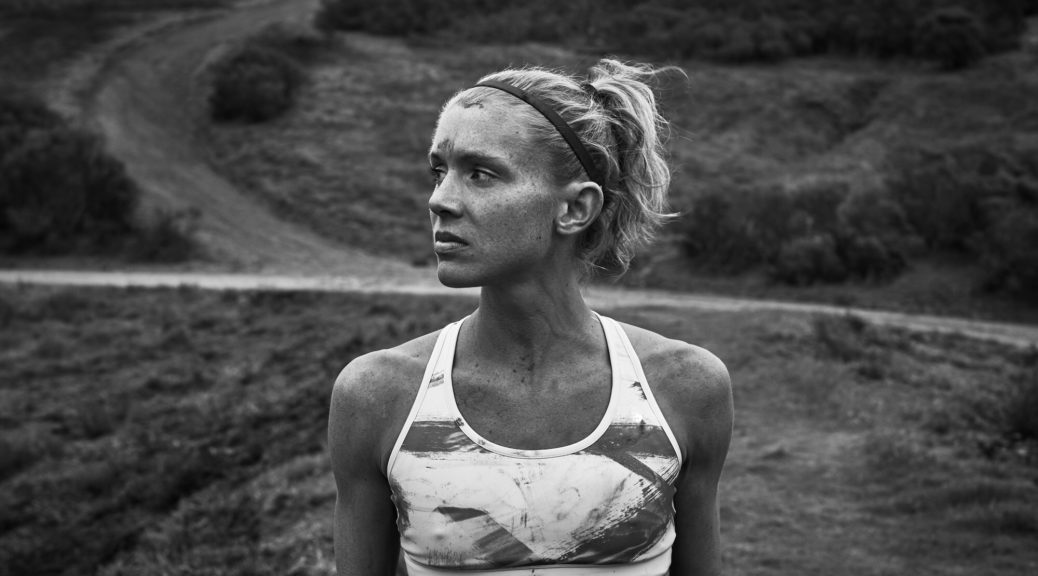
Wow, this was amazing. It truly is wonderful, warm and inspiring when celebrities and athletes open up about their struggles. Here, Amelia Boone, an American obstacle racer, talks about her struggles with her eating disorder. Despite being an elite athlete succeeding at difficult events that most of us cannot even dream of completing, she struggled throughout with an eating disorder that bogged her down and eventually led to physical injuries like stress fractures. In the end, the best thing to do by her was to stop racing, check into rehab and recovery, and commit to it. Also, she writes so well.
The truth is that I’ve been “managing” a delusion: I’ve EXCELLED at white-knuckling my way through the world of eating disorders, and I probably could have done so for the rest of my life. But it would have been a miserable, hollow, existence. More than just sport, the disorder had taken a toll on every aspect of my life: my relationships, my ability to connect, and hell – even my ability to feel my feelings. I had a sense that there was more that could be had from life, and I needed to take a leap of faith to do it – one that required stepping out of my life for the short term in order to re-engage in it fully in the long term.
That’s all. Bye. Hope you have a good week ahead. And Happy Diwali! -Kat.