Hello there. How are you doing? My time at home has been nice and relaxing. I do still have work to do, which I’m doing at a slow pace. I recommend it. Living slowly is underrated.
It’s the first issue of 2020, but that changes nothing. May we see a decade of good journalism, lesser paywalls (not really), and fewer annoying advertisements.
If you got this from a friend and want to subscribe, here’s the link. Also, if any of the links are paywalled and if you don’t want to pay for a subscription, try opening the link in incognito mode in your browser. This works if the website has a “soft” paywall. If that doesn’t work, you can access the website using a different browser on the same device, or use a different device altogether.
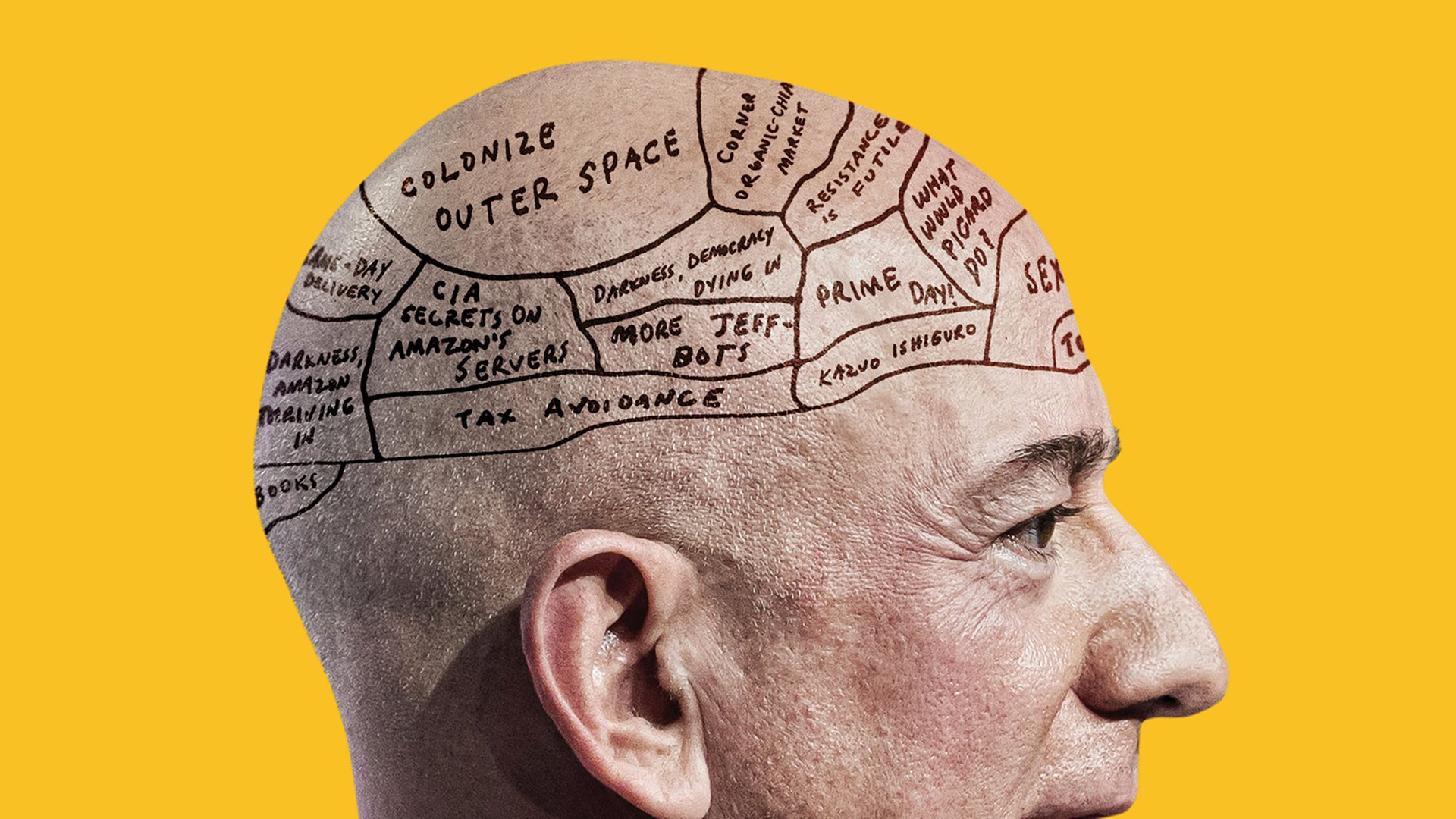
1. Jeff Bezos’s Master Plan
(paywalled: The Atlantic)
I enjoyed reading this (rather long) profile of Jeff Bezos’ recent plans. He’s become such a large figure in our world now that his plans for himself will have an impact on so many people in many countries around the world.
2. The impact of direct air carbon capture on climate change
I’m a fan of Michael Nielsen’s projects, and feel no differently about this one. He discusses “direct air carbon capture” (DAC), which is a method of sucking CO2 out of the air as a retroactive technique to reduce atmospheric carbon. Nielsen argues that a tenfold decrease in the cost (per ton) of DAC could make it a very reasonable solution to increasing CO2. What’s more, that tenfold decrease in price may not be that far off.
3. Novelist Cormac McCarthy’s tips on how to write a great science paper
Van Savage, a theoretical biologist and ecologist, received editing advice from Cormac McCarthy for a number of years when they overlapped at the Santa Fe Institute. Here, he summarizes that advice, and it’s quite concise and wonderful. For example:
Decide on your paper’s theme and two or three points you want every reader to remember. This theme and these points form the single thread that runs through your piece. The words, sentences, paragraphs and sections are the needlework that holds it together. If something isn’t needed to help the reader to understand the main theme, omit it.
4. Why you should follow Bilbo – the Good Cat Boy – on Twitter.
I’ve stayed away from Twitter for the past few weeks, and it’s been overall a good decision. However, there’s one side to Twitter that I still check regularly, and it’s so-called #CatTwitter. Cat owners make accounts for their cats and post on their behalves. It’s quite lovely. The most popular of them all is Bilbo, which is who this article is about. If you want to get a sample of cat Twitter, you can see my Twitter list.

5. Sabbatical check-in
Jan Heuermann writes about his sabbatical in 2019. He’s taken eight months off between jobs with the purpose of reading and teaching himself about the things that he always kept putting off for later. Taking a sabbatical is a lovely notion, and one that only a few are lucky enough to do. If you can take one, consider it.
When my sabbatical started I often felt stressed because I virtually heard the clock ticking. Not having regular income means burning down savings, which the bank statements soberly prove in cold print at the end of every month. There is no illusion that I need to start making money again at some point and I could sense that hanging above my head like the sword of Damocles. Over time my perspective fundamentally shifted. Today I don’t perceive my sabbatical as “burning” money, I rather think of it as an investment into myself. I’m not quibbling here, I really do mean it like that. This sabbatical gives me the chance to develop myself professionally in a way that wouldn’t have been possible alongside a full-time job. Whether or not it will also pay off financially is not important to me, it’s solely about what I learn that determines the return-of-investment.
6. How to Be an Anticapitalist Today
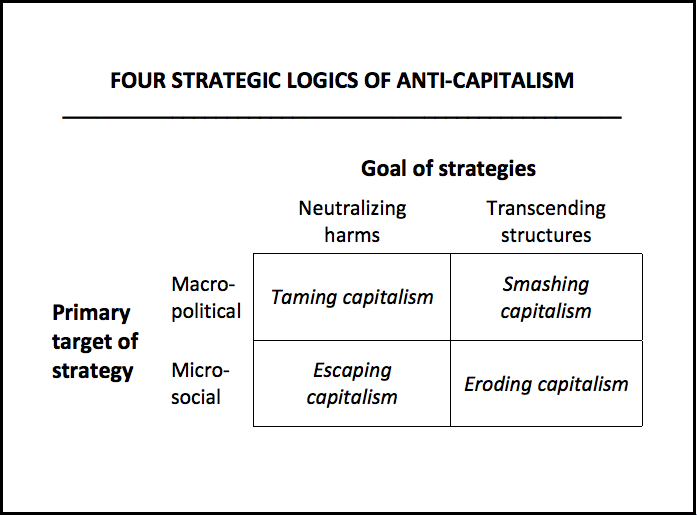
This is a nice piece by Erik Olin Wright about how to be an anticapitalist. Seems like all of us could do with some of these lessons.
7. The Quiet, Intentional Fires of Northern California
Indigenous people have set fire to forests for millennia, as part of their strategy in increasing the productivity of the forest as well as reducing the potency and possibility of large uncontrolled fires that in recent years have wrecked huge amount of havoc. One of the main reasons we’ve seen large fires lately has been the absence of controlled burns in small areas.

8. Not slashing emissions? See you in court
“A pioneer in sustainable innovation explains why she has spent the past decade fighting the first lawsuit to force a government to act on global heating.” Inspiring, and reinforces the fact that we can afford a little hope.

9. The climate crisis and the failure of economics
More climate change stuff. Economics says that some things are more expensive than others because they’re scarce and therefore there is a stark gap between supply and demand. Therefore, the price that the market sets for a good is a “correct” and “right” valuation. However, with fossil fuels, this has been subverted; we pay far less for our fuel than we really should.
How is it that a discipline fundamentally based on scarcity has failed to accurately price in the damage we’re doing to our most important, scarce resource: the environment? Naomi Klein writes that the climate crisis is “born of the central fiction on which our economic model is based: that nature is limitless.”
10. Should I give all my money away?
“Ask Umbra” is the advice columnist of Grist. In this column, she gives advice to writers on climate change. I found this issue quite insightful. The question is this:
“I have a well paid job. Should I donate my income post-living expenses to organizations working to fight climate change instead of saving?”
What would your answer be? Of course, there’s no “correct” answer to it, and it largely comes down to what you believe in.