Hello there. It’s a nice bright morning here at home, and I’m feeling a little giddy as I type it out. It’s almost issue #200, and I would like to do something special for it. Any ideas?
I missed last week’s issue because I got extremely busy, and couldn’t do the Kable justice. Anyway, with no further ado, here we are, and as always, please feel free to write back if you have anything to say. I love receiving replies, and I love starting conversations via the newsletter.
If you got this from a friend and want to subscribe, here’s the link. Also, if any of the links are paywalled and if you don’t want to pay for a subscription, try opening the link in incognito mode in your browser. This works if the website has a “soft” paywall. If that doesn’t work, you can access the website using a different browser on the same device, or use a different device altogether.
1. Letter to a Young Climate Activist on the First Day of the New Decade
This is penned by Rebecca Solnit, whose writing I admire. She writes to Galicia, and tells her to keep hope, repeating that “life wants to live”. What I love most, and reminds me of Brain Pickings’ ten learnings from ten years is to avoid “naive cynicism”. The whole piece also reminds me of Naomi Klein’s advice to the next generation of climate activists. To everyone out there fighting the good fight, thank you.
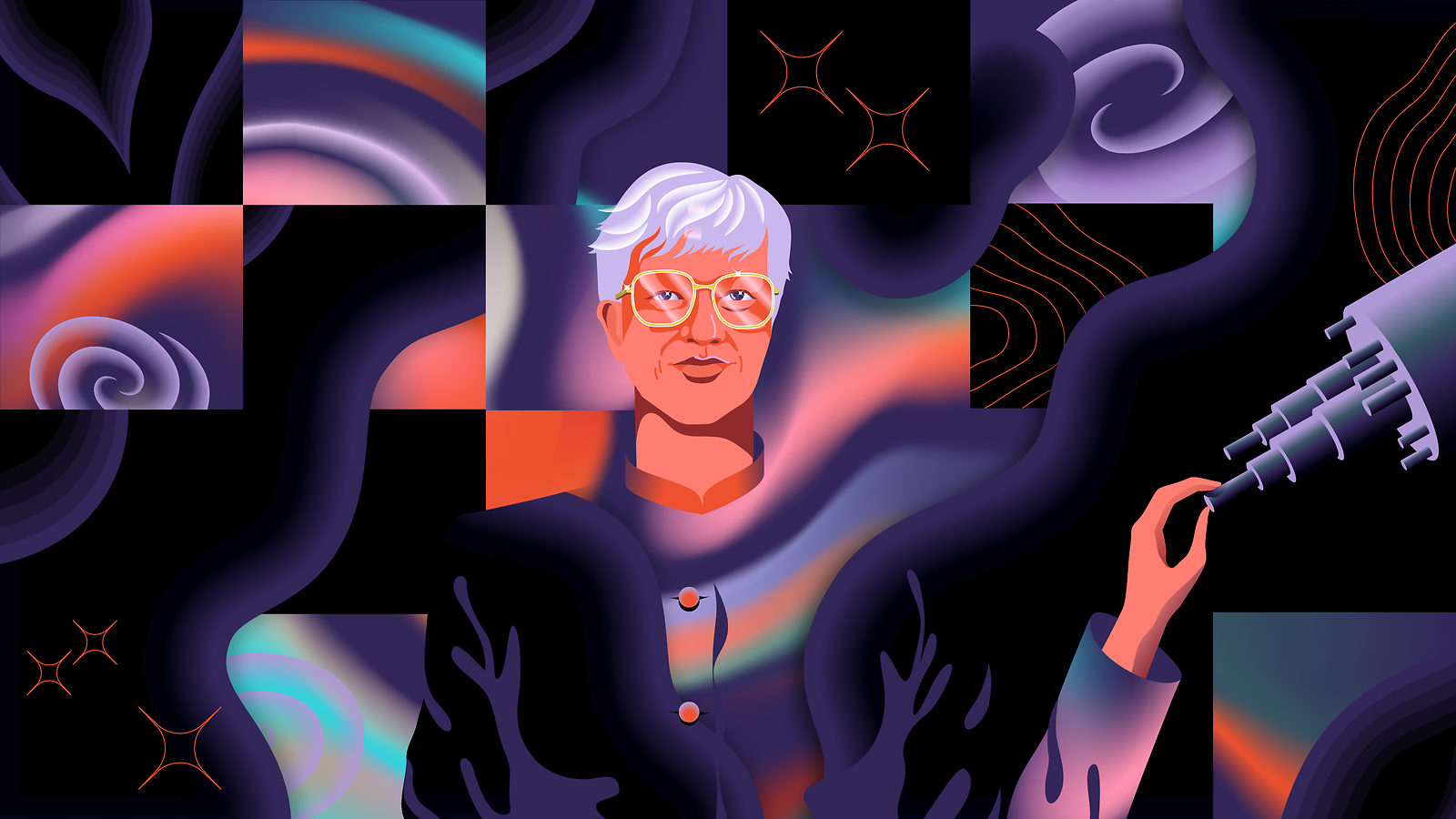
2. Vera Rubin, giant of astronomy
Vera Rubin is one of the giants in the fields of astronomy, and is best known for providing evidence for the presence of dark matter. This piece is a short profile of her by Symmetry magazine, and it’s quite nice. She is so inspiring.
Rubin was a role model, a mentor, and a boundary-breaker fueled by a true love of science and the stars. “For me, doing astronomy is incredibly great fun,” she said in a 1989 interview with physicist and writer Alan Lightman. “It’s just an incredible joy to get up every morning and come to work and, in some much larger framework, not even really quite know what it is I’m going to be doing.”
3. The Concept Creep of ‘Emotional Labor’
Arlie Hochschild, in her 1983 book The Managed Heart , talked in detail for the first time about “emotional labor”. This is a phrase that has become increasingly popular in the time since, and denotes “unpaid, invisible work we do to keep those around us comfortable and happy” (from a piece by Gemma Hartley). However, Hochschild tells us that modern use of the term is not exactly in line with what she had in mind. It feels like the term is being overused, which is not in itself a bad thing, but to me, it seems to be being applied to so many things that I can’t really keep track.
4. How our home delivery habit reshaped the world
Whenever Samanth Subramanian puts out a new longread, I read it. It’s that simple. Here he talks about how online shopping and home delivery has literally reshaped and modified cities around the world. It’s utterly crazy. Even ten years ago, I would not have imagined having one- or two-day delivery times being promised and delivered. However, the point Samanth brings up here is that we are becoming more and more disconnected with where our purchases are coming from, and that soon we will not even order anything by ourselves: Amazon and other companies will divine what we want, and deliver them automagically.
“I said: ‘They haven’t got any names on them. Who are they for?’” he told me. The packages held video games, it turned out: the newest edition of the annual Fifa series by Electronic Arts. “And they said: ‘Amazon knows, if you’ve bought the game for the last three years or whatever, that you’re likely to buy it again.’ So they’ve already got it packaged up for you, waiting for you to press the button. You do that, and they’ll stick your name on it, and it’s gone.”
5. In a Wisconsin village, the doctor makes house calls — and sees the rarest diseases on Earth
“When James DeLine became a rural doctor, he had no experience treating the Amish, and no idea he’d be at the cutting edge of genetic medicine.”
Just… wow. James DeLine has been the doctor of an Amish village for over 30 years now, and because of Amish rules on marrying within one’s community, they are increasingly susceptible to genetic diseases. By this turn of events, DeLine has become the world’s leading expert on a disease called “sitosterolemia”. This disease has only about a hundred worldwide cases, and over ten of those are in DeLine’ village of 750 people.

6. An Ode to Ugly Physics
How did mathematics and physics drift apart prior to their modern day reunion? And how did mathematicians gain an edge over physicists, if this was ever the case at all? In this letter, I would like to address these questions from a shamelessly revisionist point of view. I will argue that the deepest and most far-reaching ideas of physics are not the most elegant or beautiful, but the ideas that are confusing, not rigorous, improperly formulated, or, in fact, utterly incomprehensible to mathematicians.
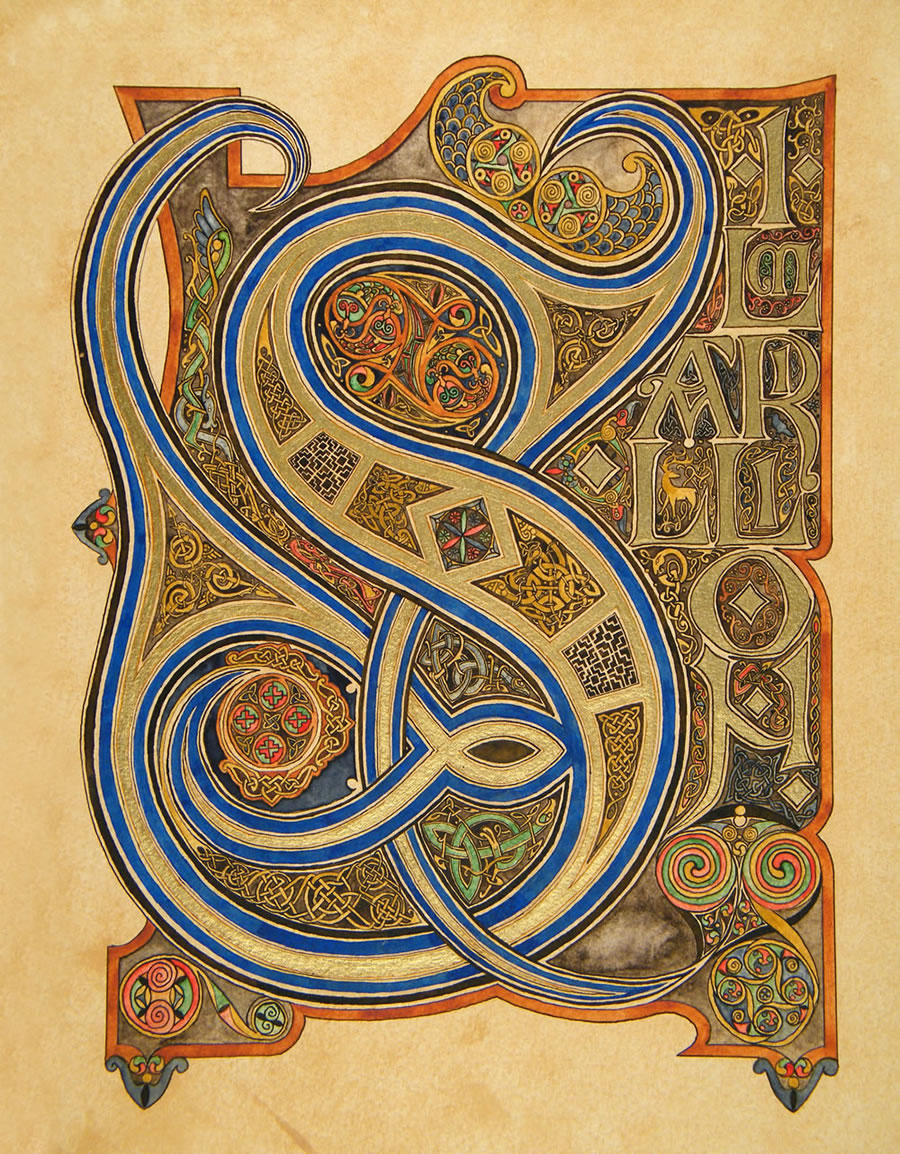
7. Interview with Benjamin Harff, upcoming Tolkien illustrator and creator of the Edel-Silmarillion
Good grief, this is so beautiful and sad and yet so happy at the same time. Look at the pictures!

8. Currency Design – Designing The Most Desirable Product
What can we learn from years/centuries of currency design? Money is one of the most challenging objects to design, because it needs to be unambiguous, accessible, and hard to duplicate. This is a lovely exploration of various currency notes in history, starting from ancient Chinese notes going all the way to experimental new US dollar designs. My favorite was the part about “notgeld”, which means “emergency money” in German and refers to money that was printed during Germany’s period of hyper-inflation. Just look at this:

9. A lost desi cotton heritage
Cotton is an important cash crop in India, and lately an increasing number of farmers have been switching to hybrid, and also genetically modified (GM), cotton seeds for better yields and easier application of chemical pesticides/herbicides. However, farmers are now finding that their best option may be to go back to native, or “desi”, varieties, because these are more attuned to local conditions and therefore more hardy. They may not provide the best yields, but they do provide a steady yield in both good and bad growing years. I’m hoping that these native varieties become more common, and that the government backs them too.
10. Three Sisters – Emergence Magazine
The three sisters refers to an elegant trifecta of crops grown by Native Americans. First, they plant corn which sends up long stalks. Under the corn they plant beans and squash. The beans, which send out vines, climb up the corn stalks. The squash vines sprawl on the ground and shade out any weeds, cover the soil, and prevent loss of moisture. Together, the three crops provide an almost complete diet.This is an aesthetically pleasing photo essay.
