Hello, dear reader. How are you holding up today? Some temporal magic has ensured that we’re already in February 2020. Alsoooo, this is issue #200. Honestly it feels quite surreal. I wanted to do something special for it, but then I’ve been lazy lately, and came up with a smart idea: since part of what I like about the Kable is its regularity, there’s going to be nothing special in this issue. And that’s what’s special. Huh.
It’s a funny feeling, though, because I remember writing issue #1 and thinking, “wow, it must be special to some day write issue #1000.” I laughed it off then, because who writes a thousand issues, but now I think I’ll actually get there eventually. Thank you for sticking around.
If you got this from a friend and want to subscribe, here’s the link. Also, if any of the links are paywalled and if you don’t want to pay for a subscription, try opening the link in incognito mode in your browser. This works if the website has a “soft” paywall. If that doesn’t work, you can access the website using a different browser on the same device, or use a different device altogether.
1. Mary Heglar on Leading with the Heart, not the Head
Mary Heglar became well known in online circles in 2019 when her essay I Work in the Environmental Movement. I Don’t Care If You Recycle became extremely popular. Here, she talks to The Open Notebook , a magazine that talks about science writing (it’s great!) about how she lets her writing be directed more by her emotions than her rationality, and how it’s difficult but also results in essays that people can actually relate to.
When I write, I think about the effect I want to have on my reader. I want their knees to buckle. I want them to think that they can read my writing standing up and then have to sit down. I want their spine to tingle. I want them to have goose bumps. I want them to be arrested. To have that effect on my on my reader, I want to force some vulnerability. And if I want to force my reader into this vulnerable position in which I believe their mind can be changed, and their heart can be opened, I need to do that to myself. I need to be very vulnerable myself. So you know, the essays I’ve written that people have told me have brought them to tears: They don’t know how many times I cried while writing.
2. Fall In
I discovered Matt Thomas’ blog Submitted for your Perusal and that’s where this piece is from. It’s from a while ago, and he talks about how we ought to follow external and seasonal cues to change our habits with the seasons. It’s quite lovely.
Now, I’m as interested in famous people’s daily routines as anyone. But at the same time, I feel it’s important to resist the tyranny of “the day.” What do I mean by that?
Well, we live in a world of seasons—and increasingly more variable and violent seasons at that—but productivity advice seems to always think in terms of the day, the week, the year, or five years, never the season, the sun, and the shadow.
3. Good Eats
I shared another piece from Inference Review a few weeks ago (An Ode to Ugly Physics) and here’s another one by none other than the one-and-only Vaclav Smil. He talks about how our food habits as a species change as we reach further stages of “development”. It’s scary, and as always with anything by Smil, there’s a lot of data and statistics.
4. An alternative argument for why women leave STEM: Guest post by Karen Morenz
It turns out that I’ve only shared pieces so far this week from smaller magazines and personal blogs. That’s great and heartening! This one is from Scott Aaronson’s blog, Shtetl-Optimized. Karen Morenz tries to (and does very well at) explain why women are increasingly leaving STEM jobs. Her conclusions are that (a) it’s not primarily sexism and discrimination (in the sense that we’ve improved that significantly), and that (b) a number of STEM jobs (especially academic ones) are incompatible with the ideas of work-life balance, starting a family, or job security.
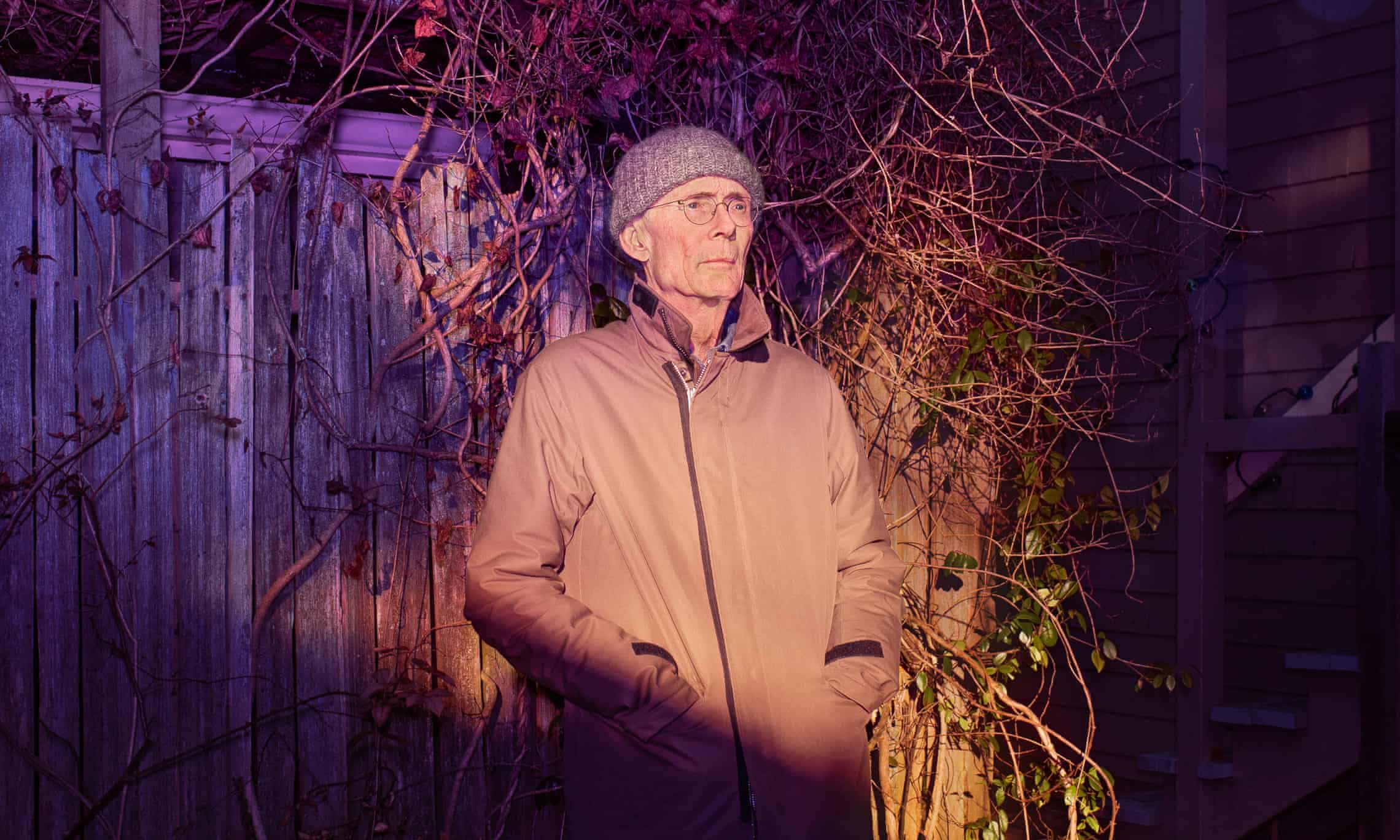
5. William Gibson: ‘I was losing a sense of how weird the real world was’
William Gibson is one good writer. This is a fun and nice interview.
Thus, as much as his books are populated with nanotech assemblers, haptic recon commandos, gunpacked ceramic Michikoids and all that sort of malarkey (he admits to being “loosey goosey” with the science), they aren’t weightless fantasies. His characters eat, and have love lives and in some cases have kids and spend most of the novel looking after them. Wilf – a principal protagonist in the future London of The Peripheral – spends most of Agency babysitting: “As the narrative went on I realised that what he mostly needed to do was mind the baby – otherwise he’s going to have to leave it with the nanotech pandas. And, you know, that’s the naturalistic part of it. That’s life.”
6. Why We Love How-to Videos
Ha! Possibly my favorite part of the internet is when every week, there’s a new long article I find about something that I never knew was important to me. And then someone tells me how it’s great and actually steeped in science and so on.
“We are built to observe,” as Proteau tells me. There is, in the brain, a host of regions that come together under a name that seems to describe YouTube itself, called the action-observation network. “If you’re looking at someone performing a task,” Proteau says, “you’re in fact activating a bunch of neurons that will be required when you perform the task. That’s why it’s so effective to do observation.”
7. The Man Who’s Going to Save Your Neighborhood Grocery Store
This is a USA-centric piece (as one of my friends once said online, “what isn’t?”) but it’s interesting and hopeful to read. Grocery stores were once impregnable fortresses, with unwavering demand and a guaranteed customer base. However, recently, local stores are being displaced both by national/international chains and online retailers. How do they cope? The architectural design firm based out of Los Angeles, Shook Kelley, consults with regional stores and tells them to stop being so generic, and to convert their store to a place where people not only buy things, but also experience them. Some of these ideas are wacky: for example, one store in Illinois, USA (Harvest Market) buys cream and churns its own butter. Needless to say, it’s a hit.
8. What Green Costs
Thea Riofrancos writes in Logic Mag about the “true” cost of moving to a green energy-powered economy. The basic point is: can we (or should we) use the climate crisis as an opportunity to totally rejig our energy supply systems globally? What that means is: instead of doing things as usual but just powering them using renewable power, should we instead “degrow”, be inspired by indigenous practices, and not just “solve” the “problems” in front of us? Why is all this relevant? Because our entire economy is based on exploitation of resources, and extracting minerals and other things to make batteries, solar panels, etc. is no different.
9. Between Solitude and Loneliness
(paywalled: New Yorker)
I have a sinking feeling that I’ve already shared this piece by Donald Hall once in the past, but who cares, it’s great and I don’t mind sharing it again.
10. Stop Believing in Free Shipping
(paywalled: The Atlantic)
Free shipping has ruined online shopping. It really has. There’s something going on in our psychology that completely resents the idea of paying for something, and then paying more for it to be shipped to us. But that’s normal, right? Possibly the biggest thing that Amazon has done to us and online retail is to normalize the idea of free shipping. It’s never “free”, it’s just cleverly packaged as a cost either to you, the shopper, or to the workers at Amazon (or whatever company you order from).