Helloooo. Here’s this week’s list. I have things to do at home this Saturday night so I’ll leave you to it. Toodleoo.
If you got this from a friend and want to subscribe, here’s the link. Also, if any of the links are paywalled and if you don’t want to pay for a subscription, try opening the link in incognito mode in your browser. This works if the website has a “soft” paywall. If that doesn’t work, you can access the website using a different browser on the same device, or use a different device altogether.
1. “I Fail Almost Every Day”: An Interview with Samin Nosrat
(New Yorker, paywalled)
Samin Nosrat is one of the most amazing people I know, and this New Yorker interview just vindicates the fact.
Because I’ve noticed that, if I fib a little, or exaggerate my feelings about something, people then are, like, “I love that thing, too!” And that feels terrible. So one thing that I’ve realized is ultra-important is making sure I’m surrounded by, and that I work for and with, people who are going to protect me from the forces that threaten the honesty and threaten the realness—wanting to be liked, wanting to be successful. Sometimes I’m that threatening force! So I need to have people I can trust to protect me from my own sick brain.
I love doing the homework on recipes and traditions and finding that stuff out. And I really love figuring out how I can best communicate this to you—how do I translate this to you? I’m excited to sit there and read and research. I love, as a reader, when I’m, like, Wow, there’s so much context here in what you’ve written, and I feel safer in your hands for it.

2. The terrorist inside my husband’s brain
(Neurology Journal)
This was just …sad. It’s an autobiographical piece written by Susan Schneider Williams, wife of late actor Robin Williams. Williams had Lewy body disease (LBD), which Susan refers to as the “terrorist” inside his brain.
3. A blizzard of “sustainability” labels
(Knowable Magazine)
This piece reminds me of Samamth Subramanian’s piece for the Guardian Is fair trade finished?. In the western world, a number of delicacies and luxury food goods are imported from poorer parts of the world, and some items have stickers on them saying “Fair Trade”, “Rainforest Alliance Certified”, or whatever. There are so many labels now… what do they really mean anymore?
4. Soil’s Microbial Market Shows the Ruthless Side of Forests
(Quanta Magazine)
“In the “underground economy” for soil nutrients, fungi strike hard bargains and punish plants that won’t meet their price.” This is amazing! Soil fungi send out fine threads that can reach places plant roots cannot. Therefore, plants make partnerships with these fungi: essentially these fungi (called mycorrhizae) are like an Uber for plants. They connect them to nutrients that they could not have gotten otherwise and take a cut out of it. However, it turns out that the relationship is more cutthroat and also more egalitarian than that of Uber: both parties punish the other if they don’t live up to their side of the bargain.
5. Philip Pullman on Children’s Literature and the Critics Who Disdain It
(Lithub)
In a similar way, I don’t think it makes any sense for someone else to decide who should read this book or that. How can they possibly know? Much better not to decide at all, and just let things happen. One of the questions I’m addressing this evening is that of what children’s and adult literature have got in common: one thing they have in common, plainly, is that both literatures, whatever they are, are read by both groups, whatever they are.
This talk reminded me of two things: Ursula K. Le Guin talks to Michael Cunningham about genres, gender, and broadening fiction (Electric Literature) and “Let’s talk about genre”: Neil Gaiman and Kazuo Ishiguro in conversation (New Statesman America, paywalled)
6. How shrubs can help solve climate change
(BBC)
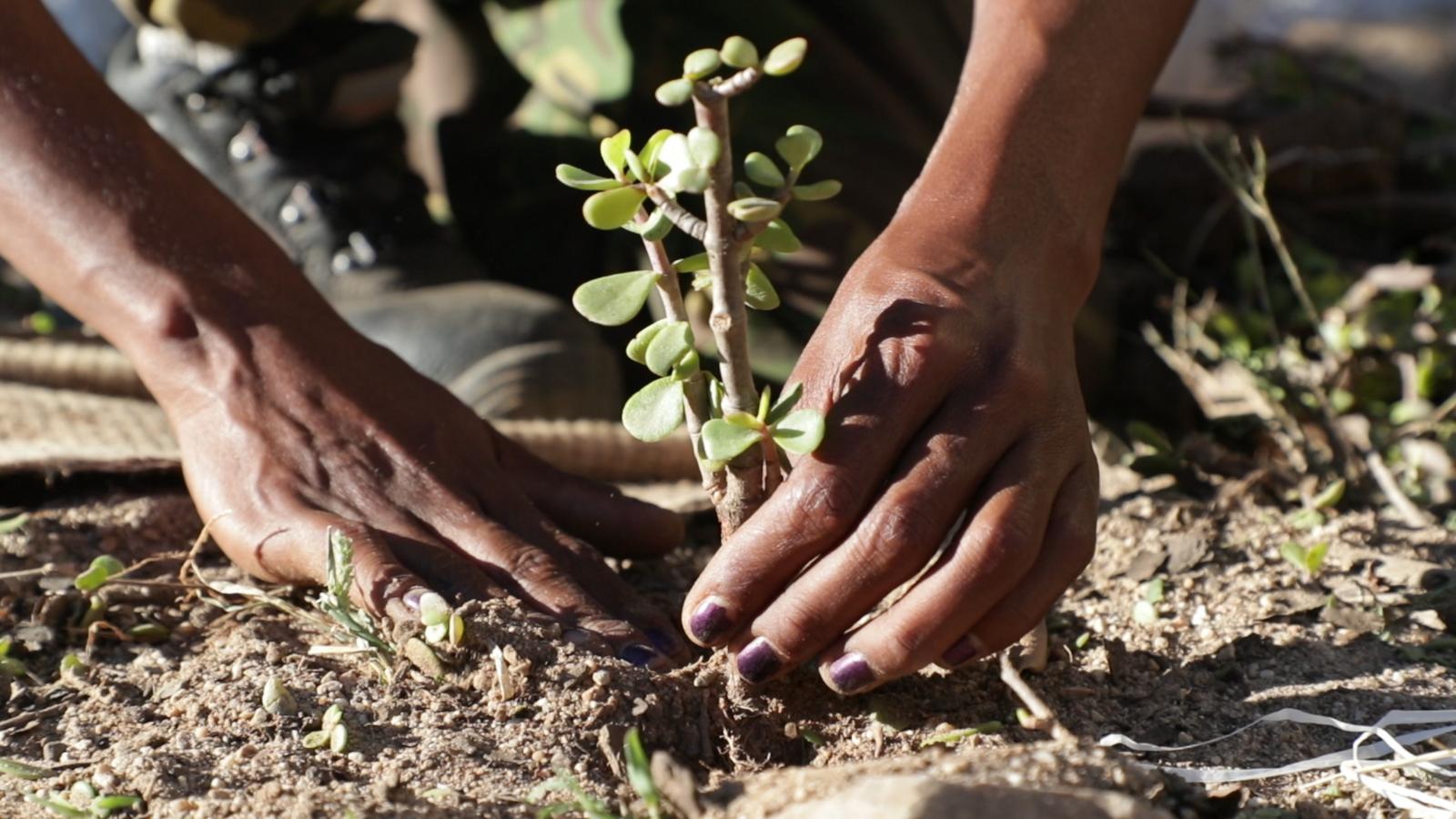
There is a shrub called spekboom that is indigenous to South Africa that is all set to play in important role in climate change mitigation. It’s an elegant solution that can actually be feasibly extended to a large scale, so that’s nice.
7. Investing Is More Luck Than Talent
(Nautilus)
Where do such massive differences in wealth come from? The positive narrative surrounding inequality might chalk them up to the talent and effort of high earners. Social critics will also cite the many ways that talent and effort can be frustrated by prejudices based on class, race, or gender. Both sets of factors are obviously relevant—but mainly at the lower and middle levels of the wealth spectrum, where people’s standings are largely affected by salaries and consumption. They cannot possibly be the whole story at the high end, where people’s wealth is primarily determined by capital gains or losses on investments. If the ratio of 50,000 were to hold for other traits, it would imply individuals who are 53 miles tall, have IQs of 5 million points, and live to be 4 million years old. Nobody is that much better than the typical run of humanity.
8. Why is it so hard to stop people dying from snakebite?
(Mosaic)
“Around the world, thousands of people die every year from snakebite – and there’s not enough antivenom to go round. But even if we had the antivenom we needed, would people use it?”
9. Good Sentences Are Why We Read
(Lithub)
Oh yes. The same way trees make up and capture the character of a forest, sentences do the same for novels and writing. Oh, this also reminds me of Ursula K. Le Guin, who said:
A good writer, like a good reader, has a mind’s ear. We mostly read prose in silence, but many readers have a keen inner ear that hears it. Dull, choppy, droning, jerky, feeble: these common criticisms of narrative are all faults in the sound of it. Lively, well-paced, flowing, strong, beautiful: these are all qualities of the sound of prose, and we rejoice in them as we read. Narrative writers need to train their mind’s ear to listen to their own prose, to hear as they write.
And from this linked piece:
A sentence is more than its meaning. It is a line of words where logic and lyric meet—a piece of both sense and sound, even if that sound is heard only in the head. Things often thought to be peculiar to poetry—meter, rhythm, music—are there in prose as well, or should be. When John Betjeman began a BBC radio talk with the sentence “We came to Looe by unimportant lanes,” he must have known it sounded better than “We drove to Looe via the minor roads.” His version is ten syllables with the stress on each second syllable: a perfect iambic pentameter.