1. Yan Lianke: What Happens After Coronavirus? - Lithub
This was a lovely thing to read. Yan Lianke, a professor of Chinese Culture at the Hong Kong University of Science and Technology, gave this e-lecture to his graduate students about how we, as a community, will remember the coronavirus.
If we can’t speak out loudly, then let us be whisperers. If we can’t be whisperers, then let us be silent people who have memories. Having experienced the start, onslaught, and spread of Covid-19, let us be the people who silently step aside when the crowd unites to sing a victory song after the battle is won—the people who have graves in their hearts, with memories etched in them; the people who remember and can someday pass on these memories to our future generations.
2. A giant crawling brain: the jaw-dropping world of termites - The Guardian
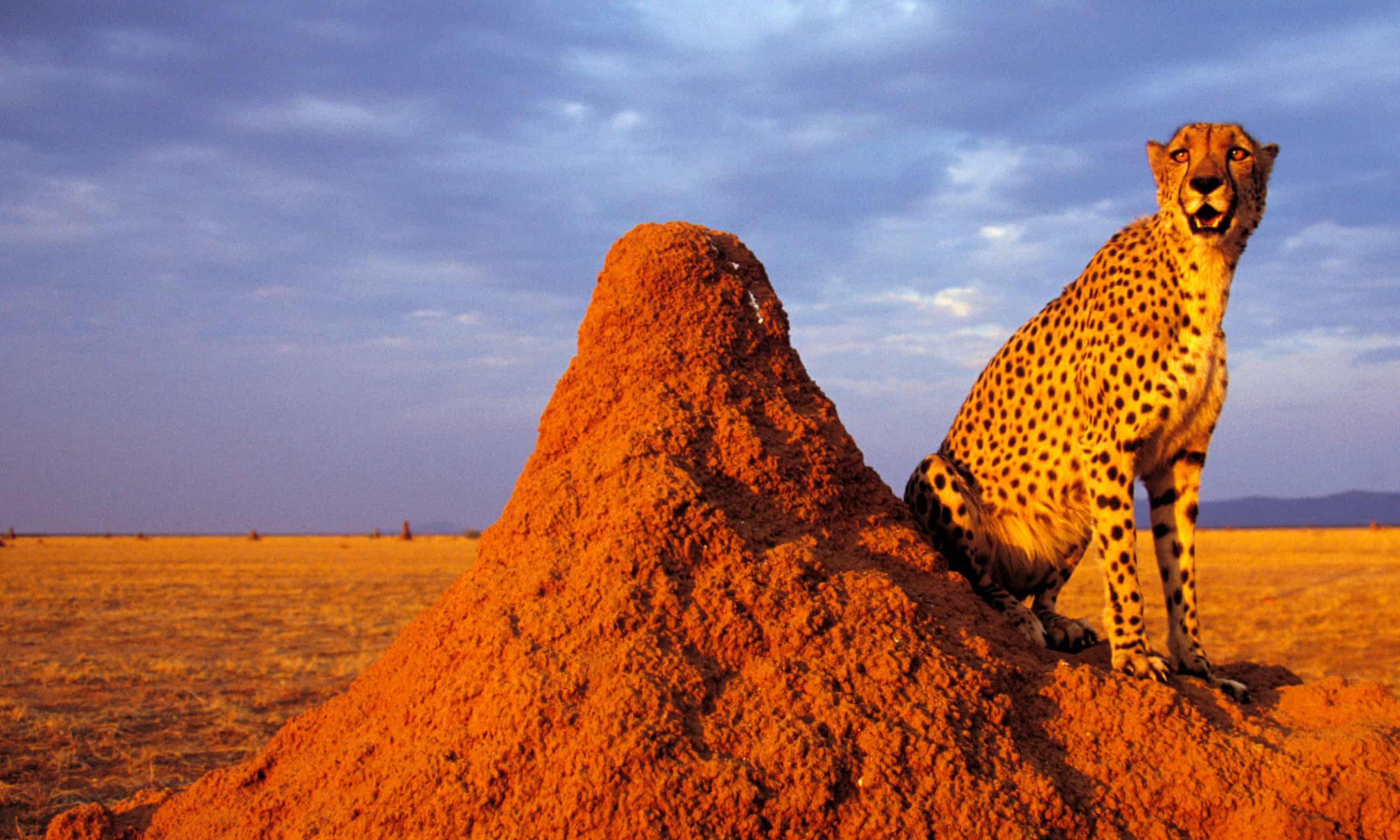
Eyeless, they use their antennae to feel for smoothness, and in the big tunnels they remove everything that is rough. They may even hear the tunnel’s shape.
Termites are often compared to architects for the way they build their mounds, but that is misleading because they don’t have plans or a global vision. What they really have is an aesthetic, an innate sense of how things should feel.
3. Talking About the Pain and Anxiety of Menstruation - Lithub
This is an adapted excerpt from Hysterical: Why We Need to Talk About Women, Hormones, and Mental Health by Eleanor Morgan.
Dad gave me the keys to go back to the house and take some ibuprofen. I made catlike sobbing noises the whole way. Back at the house, I lay on the sofa waiting for them to kick in. No one had mobile phones yet, so I couldn’t relay my woes to any friends on WhatsApp. Anguished emojis were years and years away. It was so quiet in that moment, apart from the pitiful cawing of seagulls (Why do they always sound so desperate?) overhead. Strangely, though, it wasn’t lonely. The pain spoke to me. It told me my human fabric had changed. As evidence of the encoding that happened that day, now, on most occasions that I hear seagulls, I will have flash visions of lying on that sofa holding my young, tortured belly.
4. The Genius and Modern Times of Bob Dylan - Rolling Stone
This is a 2006 interview of Bob Dylan that I quite enjoyed. Here’s an excerpt from the introduction:
It’s that voice, the voice of a rogue ageless in decrepitude, that grounds the paradox of the achievement of Modern Times, his thirty-first studio album. Are these our “modern tunes,” or some ancient, silent-movie dream, a fugue in black-and-white? Modern Times, like Love and Theft and Time Out of Mind before it, seems to survey a broken world through the prism of a heart that’s worn and worldly, yet decidedly unbroken itself.
5. The Western Elite from a Chinese Perspective - American Affairs Journal
“I am not an Evangelical Christian. I am a Chinese atheist who came to the West to study at the world’s best universities and, later, to work at one of capitalism’s greatest companies, Goldman Sachs.”
On the other hand, it seems odd that this should be the principal lesson of a Western education. In Communist China, I was taught that hard work would bring success. In the land of the American dream, I learned that success comes through good luck, the right slogans, and monitoring your own—and others’—emotions.
6. The Long, Loving Search for Betsy the Cow - California Sunday Magazine
Betsy the cow ran away from her Alaskan owner and brought a community together. Possibly one of the most bizarrely hopeful stories I will read this year, I think.
Betsy is not, as most people might assume by the fuss surrounding her, a human child. She is a cow. Specifically, she is a thousand-pound black-haired Scottish Highland cross. Her owner, Frank Koloski, has been looking for her for more than a year. The way Koloski tells it, he had gotten a batch of new yearling cows for the Father’s Day junior rodeo event last year. At this point, Betsy was one in a herd of eight, penned in the back of the arena waiting to participate in various events. Just before the rodeo was about to start, a kid accidentally left the gate unlatched. Betsy backed into it and immediately took off, while the rest of her herd stayed put. “I feel like she left me on my first date,” Koloski says.
7. I Am 35 and Running Faster Than I Ever Thought Possible - New York Times (paywalled)
Amazing. Also look at Why Are American Women Running Faster Than Ever? We Asked Them — Hundreds of Them.
That was the point. After months of work, my physical and psychological reframing had worked. It wasn’t an idea anymore. It was my plan. We don’t have many opportunities later in life to change who we are, without worrying about what other people think or upending wherever we’ve landed in our lives. We especially don’t have a lot of ways to do that physically. I had internalized a narrative about my body — that once I turned 30, there might not be much to look forward to. I didn’t know the opposite could be true.
8. A Text Renaissance
A nice piece from prolific and excellent blogger Venkatesh Rao about an ongoing renaissance in publishing text online these days. He talks about hyptertext publishing platform Roam, static websites, easy-to-run email newsletter services (like Substack), and Threaded Twitter. Admittedly, this is all a bit niche and the list might be criticized as catering to a particular in-group. Regardless, though, it’s useful and well-compiled. I’m optimistic and happy about so much text abounding on the internet right now.
9. An Interview with Peter Matthiessen - Believer Magazine
Oh look, more interviews. Peter Matthiessen is a unique writer, and by extension, this is a rather unique interview.
But in addition to that, I have an inner memory of flashes of light happening during my youth. I had a definite one on a troop ship going from the Golden Gate to Pearl Harbor. A twelve-day storm. And I was up on deck, I had fire watch, if you can believe it, and you couldn’t hardly hang on through the waves! But I’m glad I did, because I had a shelter under an Ellis, one of the landing craft, across the bow. And the rest of the ship smelled so bad, vomit, you know, it was awful. But during that time, there was one night when it was so incessant, these waves crashing. And it sort of—obliterated me. I was suddenly a part of the wave. There’s sort of an attempt to describe it in [Matthiessen’s third novel]__Raditzer , on the voyage out
10. Georgia Tech physicists unlock the secret to perfect wok-tossed fried rice - Ars Technica
What more is there to say?