Hello! How are you doing? I hope, if you’re able, that you’re staying at home and catching up on a few years of missed sleep (we both know that it doesn’t work like that, but let’s dream). Despite having “more” time on my hands right now, I’m doing less reading than usual. I think that having a packed schedule is much better for me because I do less procrastination. Anyway, all of this is to say that there are eight pieces instead of ten in this week’s list. Hope you have fun reading it.
Also, just wanted to say: this time can be lonely, and probably will be for most of us. If you want someone to talk, or vent, to, feel free to write back to me (just reply to this email). We’re in this together, so we better act like it.
If you got this from a friend and want to subscribe, here’s the link. Also, if any of the links are paywalled and if you don’t want to pay for a subscription, try opening the link in incognito mode in your browser. This works if the website has a “soft” paywall. If that doesn’t work, you can access the website using a different browser on the same device, or use a different device altogether.
1. Why Amazon knows so much about you - BBC
Wow, I really enjoyed this longform essay from BBC about the rise of Amazon as a company dealing in the most precious and portable good of all – data. Amazon has a ridiculous amount of data about your behavior, and it’s almost impossible right now to navigate the internet without touching something on an Amazon-run server every day.
2. I work in the environmental movement. I don’t care if you recycle. - Vox
I shared an interview with the author of this piece, Mary Annaise Heglar, a few weeks ago. This is the viral piece from June 2019 that got a lot of attention on the internet. It’s nice–the basic point is that individual actions, or the lack of them, shouldn’t be used to either judge someone or decide that “Yeah, ’cause there’s really no point trying to save the planet anymore, right?”. Nope.
I don’t blame anyone for wanting absolution. I can even understand abdication, which is its own form of absolution. But underneath all that is a far more insidious force. It’s the narrative that has both driven and obstructed the climate change conversation for the past several decades. It tells us climate change could have been fixed if we had all just ordered less takeout, used fewer plastic bags, turned off some more lights, planted a few trees, or driven an electric car. It says that if those adjustments can’t do the trick, what’s the point?
3. Trigger: The Life of Willie Nelson’s Guitar - Texas Monthly
This is a superb essay from 2012 about Trigger, possibly the most famous and idiosyncratic guitar in modern history. I don’t know much about Willie Nelson and haven’t listened to much of his music, but this essay made me get onto YouTube and watch him play with his trusty Trigger. It’s so bizarre you might think it’s crazy; he doesn’t get a new guitar and this one has a hole in it.

4. Chronicling The End Times on Tangier Island - Bitter Southerner
“Once, this Virginia island was known mainly for its crab harvest and its people’s distinctive speech. These days, magazines and newspapers send reporters to Tangier because the island is predicted to be subsumed by the effects of global warming. You might get a”snapshot” of Tangier with a couple of days’ reporting, but to know it truly, you’d have to follow the example of Earl Swift, whose book “Chesapeake Requiem” takes a long look at life on this beautiful, vanishing island in Chesapeake Bay.”
Lovely piece with excellent pictures as well.

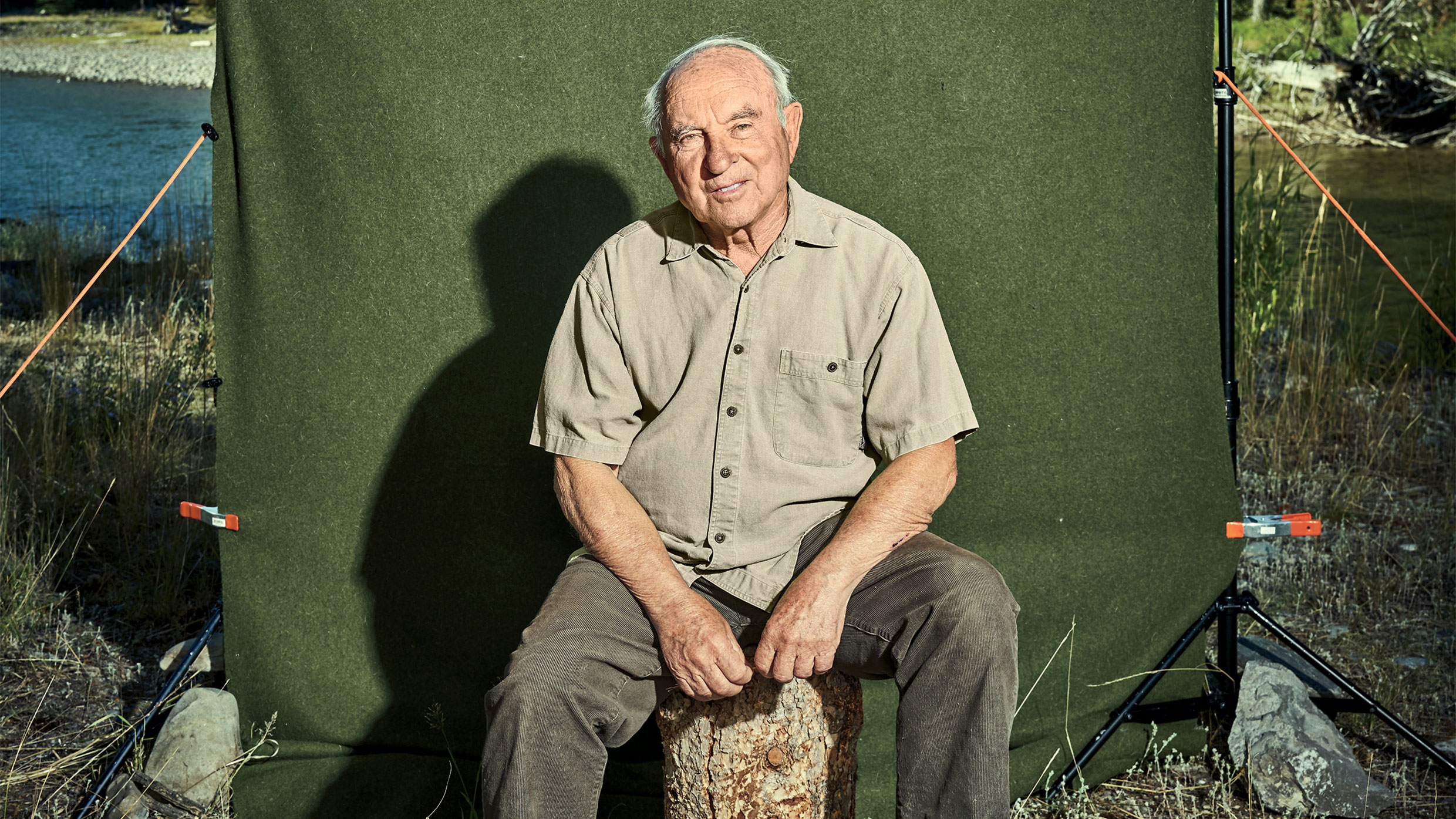
5. Patagonia founder Yvon Chouinard talks about the sustainability myth, the problem with Amazon—and why it’s not too late to save the planet
What a guy. I always enjoy reading Chouinard write or talk.
There is a book from the Henokiens, an organization of companies that have been in business for 200 years minimum. Of course there are hardly any American companies; they are either Japanese or European. How are they able to stay in business for 200 years? Well, they couldn’t grow 15% a year for 200 years, let me tell you that. [Laughs] They were able to diversify, and they’re not the same company as when they started. Some of them started out as a blacksmith’s shop, like I did. But they have purposely held back on growth for the sake of longevity.
6. Noah’s Rainbow - Raising children in an age of climate crisis - Business Green
I see this awkwardness, this conflict, this dialectic if you will, in so many of my peers. Humanity’s inherent hubris means every generation thinks it is special, that it sits at a turning point in history. But I remain absolutely fascinated by my coevals from the maternity wards of 1980 (and yes, that does mean I’m about to turn 40; and yes, this piece should be read as the self-indulgent musings of a newly middle-aged man fast approaching the likely mid-point of his existence).
7. Rock climbing and the economics of innovation - Richard Jones’ blog Soft Machines
This is interesting. Richard Jones discusses the role that advances in technology played in Alex Honnold’s solo climb of El Capitan in Yosemite National Park. He rebuts a point by John Cochrane that the solo climb is a feat driven purely by human ambition and not by any economic advancements or technological innovations. Jones, very nicely, breaks down a few things that played a role in making Honnold’s ascent possible.
Some economists love simple stories, especially when they support their ideological priors, but a bit of knowledge of history often reveals that the truth is somewhat more complicated. More importantly, perhaps, we should remember that technological innovation isn’t just about iPhones and artificial intelligence. All around us – in our homes, in everyday life, in our hobbies and pastimes – we can see, if we care to look, the products of all kinds of technological innovation in products and the materials that make them, that collectively lead to overall economic growth. Technological innovation doesn’t have to be about giant leaps and moonshots – even mundane things like shoe soles and ropes tell a story of a whole series of incremental changes that together add up to progress.
8. Here’s the typography of the next decade - The Outline
Apparently serif fonts are back, and they’re here to stay.

See you next week. -Kat.