Hello there, friend. Honestly, not much to say this week, so I’ll leave you with the list.
If you got this from a friend and want to subscribe, here’s the link. Also, if any of the links are paywalled and if you don’t want to pay for a subscription, try opening the link in incognito mode in your browser. This works if the website has a “soft” paywall. If that doesn’t work, you can access the website using a different browser on the same device, or use a different device altogether.
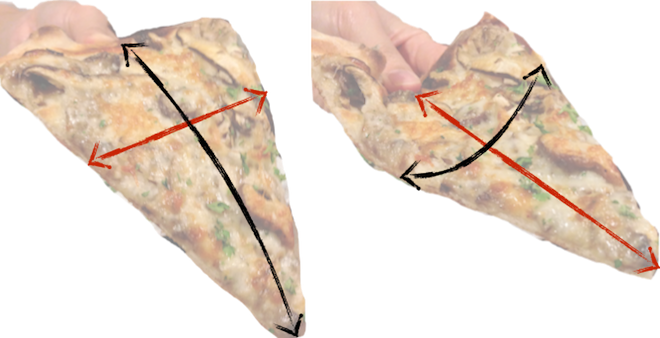
1. How a 19th Century Math Genius Taught Us the Best Way to Hold a Pizza Slice - Aatish Bhatia’s personal blog
This is a nice “nerdy” blog post talking about the mathematical idea of curvature. It starts with the question: why is a pizza slice more stable in your hand when you curve it with your grip? This leads to the definition of curvature as proposed by Carl Friedrich Gauss, a giant of modern mathematics. The basic idea is that you can get away with stability in one direction if you provide curvature in the perpendicular direction. Therefore, by curving the pizza slice along your fingers, you can enable it to stay flat in the direction you’re interested in.
2. John Horton Conway: the world’s most charismatic mathematician - The Guardian
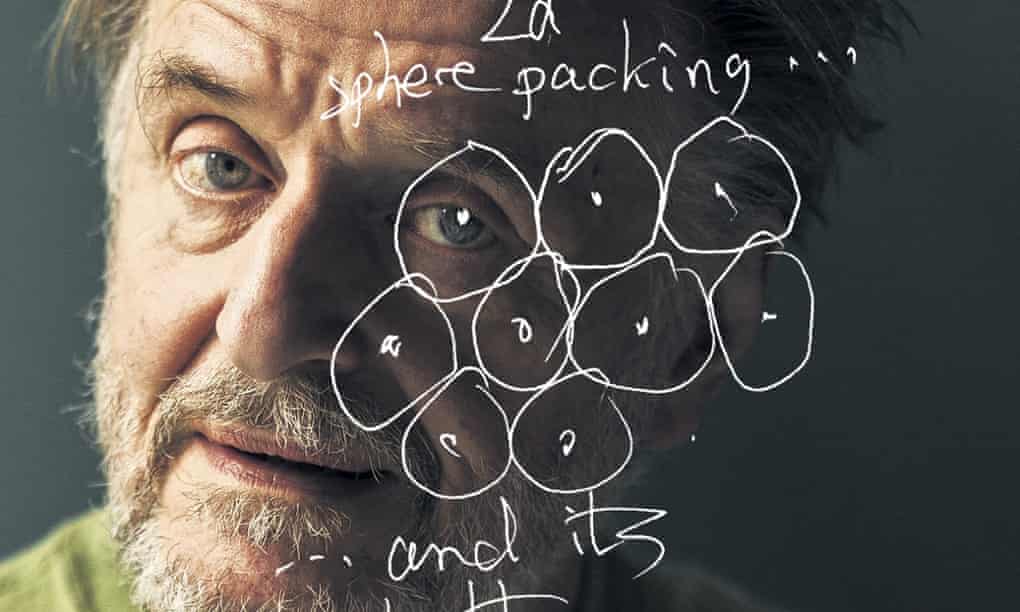
This is a 2015 profile of “the most magical mathematician in the world” (in the words of the late Sir Michael Atiyah). Conway died recently, and it’s been a nice time to go through his work and I’m realizing what a powerful mathematician he was.
Now 77, John Horton Conway is perhaps the world’s most lovable egomaniac. He is Archimedes, Mick Jagger, Salvador Dalí, and Richard Feynman, all rolled into one. He is one of the greatest living mathematicians, with a sly sense of humour, a polymath’s promiscuous curiosity, and a compulsion to explain everything about the world to everyone in it.
3. Radical Solutions - Damn Interesting
I hope you’ll indulge three (yes, three!) pieces about math/mathematicians in a row. But this is a long-ish biography of Evariste Galois, who invented the seminal subject of group theory (used a lot in modern physics) but also lived the life of a French republican trying to overthrow the government. His life is tragic yet full. He died at the age of 21 in a duel, perhaps due to a romantic interest not going very well. I took two group theory courses last year, and I must say, Galois was far, far ahead of his time.
With his grades plummeting, he was forced to repeat his entire third year. This cannot have been welcome news, but there was an unexpected upside. The third-year curriculum had just been changed, and would now introduce students to arithmetic and geometry alongside their continued study of the classics. Galois was about to meet mathematics. Few blind dates have gone so well.
4. Off our trolleys: what stockpiling in the coronavirus crisis reveals about us - The Guardian
Bee Wilson is one of my favorite writers (and her Consider the Fork is one of my favorite food history books). Here she writes about panic buying, stockpiling, and what we can learn about ourselves from it. Rather than being caused by people stockpiling huge quantities of some items, the current scarcity is caused more by the average shopper buying a little more than usual.
Uncertainty breeds fear, and fear makes a person wonder whether there is enough butter in the fridge. The restrictions on our movement in recent days and weeks, coupled with a daily drip-feed of unease, have been unlike anything most of us can remember. We can’t visit our elderly relatives or even find out whether we are infected or not, but we can at least stock our kitchens with sardines and long-life milk – or gin, as the case may be – to give us the sense that we are somehow prepared. As the Harvard epidemiologist Karestan Koenen says, “food buying helps us feel in control”.
5. Meet the Revolutionary Women Strumming Their Way Into the World of Flamenco Guitar - AFAR Magazine
“A former child prodigy travels to Spain to revisit the instrument of her youth—and to learn flamenco guitar from the tocaoras playing to the top of the male-dominated world.”
Such a fun read!
So I relax my wrist and follow Marta’s lead, and a few dozen tries later, I get it. Not just the rhythm of the rumba but the golpe, too, the trademark tapping of finger against guitar. “That’s it!” she exclaims, and we tamp our strings and play faster and faster until we’re strumming in unison and grinning widely at each other. And just like that, I’m no longer intimidated. I’m exhilarated and inspired and as in love with her as I am with my other two tocaoras. I want to cancel my return flight, stay in Spain, and spend every minute with these remarkable, revolutionary women.
6. The Great Tulsa Remote Worker Experiment - CityLab
This article is about an interesting experiment that is ongoing in the USA city of Tulsa, Oklahoma. A philanthropy is funding people to move to Tulsa if they can work remotely and can work from Tulsa. Participants receive $10k in their first year as well as a one year complimentary membership to a coworking space. This really turns things around in terms of how a city tries to attract people and/or money. Instead of inviting companies and industries to set up, Tulsa is inviting people instead. Obviously this is not a perfect one-size-fits-all solution, but I find it an interesting case study regardless of its outcome.
7. Fruit Walls: Urban Farming in the 1600s - Low Tech Magazine
Low Tech Magazine is another of my favorite online publications and in this 2015 piece, they talk about the “Fruit Wall” method of cultivating fruits in Europe. This is a practice where fruit trees are propped up against walls on their southern side. The walls create a warm microclimate for the trees as well as protect them from strong winds.
8. Wikipedia Is the Last Best Place on the Internet - Wired (paywalled)
Yet in an era when Silicon Valley’s promises look less gilded than before, Wikipedia shines by comparison. It is the only not-for-profit site in the top 10, and one of only a handful in the top 100. It does not plaster itself with advertising, intrude on privacy, or provide a breeding ground for neo-Nazi trolling. Like Instagram, Twitter, and Facebook, it broadcasts user-generated content. Unlike them, it makes its product de-personified, collaborative, and for the general good. More than an encyclopedia, Wikipedia has become a community, a library, a constitution, an experiment, a political manifesto—the closest thing there is to an online public square. It is one of the few remaining places that retains the faintly utopian glow of the early World Wide Web.
9. The high-stakes fight over Bolivia’s lithium - Protocol
An interesting study of the history and possible future of Bolivia’s lithium. Bolivia has huge lithium deposits which ideally it can leverage to get it on the global spotlight economically. However, a number of factors have prevented it from doing that so far: a high amount of magnesium that prevents easy lithium extraction, interfering foreign interests, back-and-forth on nationalizing the lithium industry and so on. I, for one, am not 100% in support of lithium and electric vehicles, precisely because lithium mining can be extremely exploitative both of the environment and of the local peoples. However, I do support a country using its natural resources to improve the quality of life of its citizens.
See you next week - Kat.