Hello there! A bit delayed this week, but as every wise bird says, “better late than never”. It reminds me of a conversation we had with our English teacher a long time ago in school: if the early bird gets the worm, then what’s in it for the worm to get up early? Therefore I profess my own wisdom: if you’re the bird, be early, and if you’re the worm, don’t.
I really like this week’s list, if I may say so myself. I don’t have anything else to say, so that’s all for now. Enjoy.
If you got this from a friend and want to subscribe, here’s the link. Also, if any of the links are paywalled and if you don’t want to pay for a subscription, try opening the link in incognito mode in your browser. This works if the website has a “soft” paywall. If that doesn’t work, you can access the website using a different browser on the same device, or use a different device altogether.
1. Inside the Massive, Elaborate Care Packages Filipinos Send Home - California Sunday
A large number of Filipinos work outside their home country and send back huge care packages called balikbayan boxes a few times a year. Filipino expats send about 5.5 million packages a year back home. These are elaborate, filled with all sorts of things. It’s a beautiful idea, and some might say that it’s more effective to just send money back home, but a package, even if it’s filled with the most mundane things, is something very special.

2. Will economists ever be as good at forecasting as meteorologists? - Tim Harford’s Personal Blog
What a spicy title! Will economists, ever? To be more fair, the weather is something that we don’t impact on a short-term scale, but the economy is a purely man-made thing. It’s always hard to predict something that you’re part of, and one where the prediction distorts the very future it predicts.
3. How the Coronavirus Revealed Authoritarianism’s Fatal Flaw - The Atlantic (paywalled)
It’s not clear why Xi let things spin so far out of control. It might be that he brushed aside concerns from his aides until it was too late, but a stronger possibility is that he did not know the crucial details. Hubei authorities may have lied, not just to the public but also upward—to the central government. Just as Mao didn’t know about the massive crop failures, Xi may not have known that a novel coronavirus with sustained human-to-human transmission was brewing into a global pandemic until too late.
--
If people are too afraid to talk, and if punishing people for “rumors” becomes the norm, a doctor punished for spreading news of a disease in one province becomes just another day, rather than an indication of impending crisis. Later, under criticism, Xi would say he gave instructions for fighting the virus as early as January 7, implying that he knew about it all along. But how could he admit the alternative? This is his system.
4. The King and I - ESPN Cricinfo
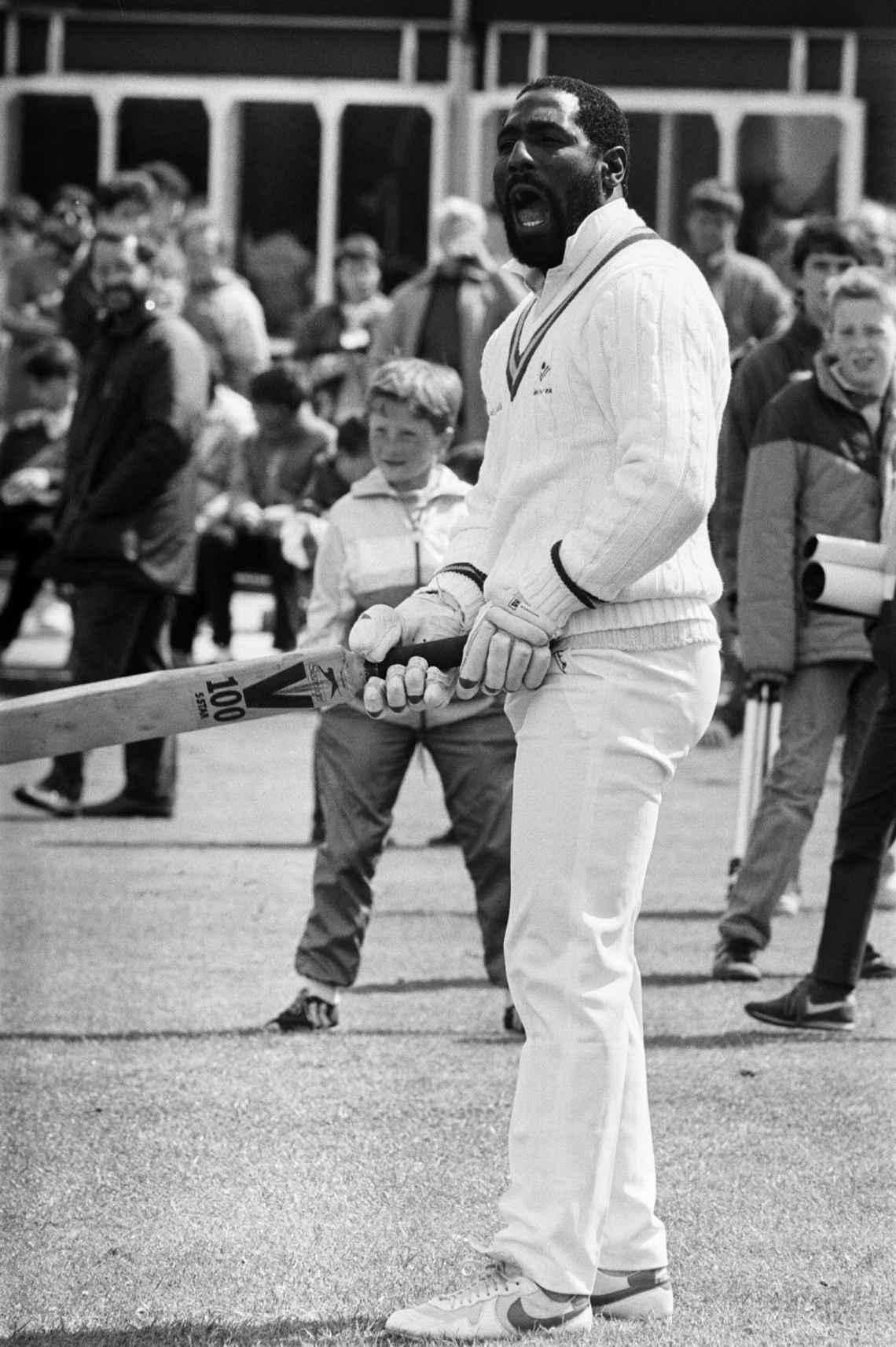
Whenever Mark Nicholas writes for Cricinfo, it’s something to behold. Here he reminisces about his times on and off the cricket field with legendary West Indian batsman Vivian Richards.
Sir Leonard Hutton once observed that Richards “goes on about being descended from slaves and cotton-pickers, but he walks to the wicket as if he owns the plantation”. Which was about right. Viv’s entrances were those of the Roman emperors setting out on crusade; his stays at the wicket, rights of passage. He came to slay all before him and mainly he succeeded.
His advice on batting was …rather simple, mostly because of his incredible talent and swagger:
“These fellas these days want to overcomplicate this thing which is batting. Come forward, come at the face of the man who challenges you, show him who’s boss. Be the boss, because if you don’t think you are, no one else will.”
5. Inside the Story of How H-E-B Planned for the Pandemic - Texas Monthly
Texas-based grocery chain H-E-B’s response to the current pandemic has been nothing short of fantastic. This is a nice, long piece from Texas Monthly about how H-E-B used its know-how to gather information from their global supply chain contacts, and then used that information to quickly adapt and make things smoother for both their employees and customers. It’s been breathtaking, frankly, and I don’t even shop there.


6. Blanking out - Sarah Werner’s newsletter
Sarah Werner here talks about blank pages in books, and what you can glean from them – odd crimps of the paper, things bleeding from the other side, and so on. It’s one of my favorite things to see someone make deep dives into a niche and almost esoteric thing.
Is it empty? Oh my goodness no! For starters, you’ve got some nice bleed-through of the ink from the recto side of the leaf. This is not unusual in printing: ink is dark, paper is light, and you can often see the reverse side, but you usually only notice it when one side has blank areas. Here you can clearly see the running title “Paradoxes,” some rulings, a block of text, a nice tailpiece and border, a signature mark and a catchword down at the bottom. (That catchword, “These,” is weird, you might be thinking, and you’re right, it is.)
7. It’s Time to Build - Marc Andreessen
This is an essay that has been making the rounds lately, and for good reason. It makes some good points: primarily that a majority of western institutions (institutions in the western world) are just… dysfunctional.
The problem is desire. We need to want these things. The problem is inertia. We need to want these things more than we want to prevent these things. The problem is regulatory capture. We need to want new companies to build these things, even if incumbents don’t like it, even if only to force the incumbents to build these things. And the problem is will. We need to build these things.
I also read this commentary on this essay from Vox: Why we can’t build which was nice.
8. An Intimate Look at Medically Assisted Death - Lithub
This is an excerpt from Diane Rehm’s 2020 book When My Time Comes , a book of conversations about medically-assisted-death. It’s a sensitive topic, and I think there can’t be a one-size-fits-all approach to it, so I appreciate being able to read of specific stories of how it can or cannot work. This excerpt is her talking about the medically-assisted death of her high-school sweetheart, Bill Roberts. It really is quite touching and poignant.
9. An Illustrated Guide to Seaweed Farming - Matters Journal
I’d earlier shared Matters Journal’s guide to silvopasture, and this piece is rather similar, except its about seaweed farming. I appreciated it, because I really had no idea how it worked. The illustrations are good and cute too.

10. America’s Fastest Ultrarunner and His Race Against Depression - Outside Online
content warning: depression, suicidal thoughts
This was… quite something. It’s a long article about Robert Krar, who is easily one of the best ultramarathon runners in the USA. He’s great when he runs, but sometimes he gets into a dark place in his head. He conducts running camps, and it seems like the bigger draw is for people to be able to talk to him about being depressed as a runner rather than learning about running itself. As someone who has been depressed on and off for many years now, I really loved this article/profile and the kinds of things it brought out. This particular paragraph basically destroyed me.
For many of Krar’s campers, including Wheatley, those videos finally put words to how they felt. They know about overwhelming hopelessness. How it has a weight to it that’s so immense they feel rooted to the ground. How life feels like it’s happening in slow motion, and the simplest tasks—sitting up in bed, emptying the dishwasher, putting one foot in front of the other—are overwhelming. They know after they finish a race, or anything they’ve worked hard for, that they should feel happiness, a sense of accomplishment. Relief. Joy. Something. But all they feel is emptiness. And often, if they do feel something, it’s anger. Or sadness. Or shame. There’s nothing to point to, no trauma to blame. And so it becomes this terrible additional burden of feeling awful about feeling awful.
See you next week -Kat.