Well, hello there! My apologies for missing last week. Things happened, and I wasn’t in the space to curate and write up an issue like usual. So I thought I’d just put it off to the following week, and here we are. Things are going alright now. How are you? I hope you’ve been able to take care of yourself and do the things that make you whole. I tend to a patch of vegetables that I am growing, and it has been saving me. I recognize the privilege that enables this enjoyment. I’ve been thinking lately about privilege, and this excerpt from Terry Tempest Williams’ book Erosion has me riveted:
_And you’ll say I did. You’ll say I walked across Africa with my wrists unshackled, and now I am one more soul walking free in a white skin, wearing some thread of the stolen goods: cotton or diamond, freedom at the very least, prosperity. Some of us know how we came by our fortune, and some of us don’t, but we wear it all the same. There’s only one question worth asking now: How do we aim to live with it?
I know how people are, with their habits of mind. Most will sail through from cradle to grave with a conscience as clean as snow. It’s easy to point at other men, conveniently dead, starting with the ones who first scooped up mud from riverbanks to catch the scent of a source. Why, Dr. Livingstone, I presume, wasn’t he the rascal! He and all the profiteers who’ve since walked out on Africa as a husband quits a wife, leaving her with her naked body curled around the emptied-out mine of her womb. I know people. Most have no earthly notion of the price of a snow-white conscience._ Well, that’s it. I’ll leave you with the list. Enjoy.
If you got this from a friend and want to subscribe, here’s the link. Also, if any of the links are paywalled and if you don’t want to pay for a subscription, try opening the link in incognito mode in your browser. This works if the website has a “soft” paywall. If that doesn’t work, you can access the website using a different browser on the same device, or use a different device altogether.
1. Against Advice - Human Parts
This useful and well-articulated essay has the subtitle “Most of the time, listening is enough”. That is indeed true for the most part, in my experience.
They learned that people are actually asking for a lot of different things when they ask for advice, few of which are actually advice. (I’ve noticed people unerringly seek advice from the person likeliest to give them the advice they want to hear; no one who really wants to go home ever asks me whether they should have another beer.) They’re asking for permission, reassurance, commiseration, or sympathy; they want to waive their own agency, outsource blame for their mistakes; to be told that they’re in the right, that their situation does indeed suck, to know they’re not crazy, that they’re not alone. Most of them simply needed to feel heard; a lot of people, it seems, don’t have anyone in their lives who listens to them.
2. The decline of universities, where students are customers and academics itinerant workers - Sydney Morning Herald
Now, bloated by a 20-year addiction to immense cash flow, glamorous buildings, corporate values, industry partnerships and a teaching model that is threadbare at best, our universities flap about like overstuffed geese on a deflating life raft. No one knows the future. Can these gross creatures even swim? Perhaps now is the moment for revolution.
Also see University Leaders Are Failing.
3. Getting to Know You, Getting to Know All About You - Roxane Gay on Medium
This is so, so lovely. Roxane Gay had been dating her fiancée Debbie Millman (who is also amazing!) long-distance for a while but due to lockdown/shelter-at-home orders, they have started living together in Los Angeles. As they’ve lived together for the first time, Gay talks about the aspects of Millman that she’s been learning about every day. It’s so, so nice.
In many ways, our relationship was a blank canvas before we started living together. We imagined what we might become without really knowing how to make it real. Now, each day, we add something new to the portrait of us and it is unexpectedly thrilling. You think you know a person, and then you live with them.
4. Reseeding the Food System - Emergence Magazine
This is a transcript of an interview with Rowen White, a Seedkeeper from the Mohawk community of Akwesasne and an activist for Indigenous seed sovereignty. It’s so good, and something I’m quite passionate about.
But I guarantee you that a lot of the people who grow our food, who have their hands in the earth, they do it because they care deeply. They wouldn’t be willing to get up day in and day out, to labor under the hot sun, and to do the work that they do if they didn’t love it deeply. […] Maybe by me being courageous enough to speak in those spaces where that’s not always talked about, maybe it opens a door or gives agency or courage to other people to say, “I have this yearning and this longing to infuse and to weave my spiritual connection and my cultural connection into this work.” I feel like the more of us who can do that and say that this is okay, and this is what we want—I feel like we will then see food systems change in the direction that we all really want it to go.
5. Radical Enough - The Rumpus
Honestly, I don’t know exactly what this personal essay by Louisa Pavlik is about, but it is piercing and powerful. She talks about her childhood, feelings about eating animals and animal agriculture, mental health, and relationships.
The forest might have been the only control in our variable relationship. The old-growth pine trees we walked through are still fixed in my mind, in my dreams. Remember when the forest burned and burned for weeks on end because a child threw a firework into a dry canyon? We watched the orange light flicker and the smoke billow at night from across the river. You’ve saved thousands of trees by not eating meat, an impressive raw number but only a molecule in a drop in the countless gallons of water that eventually put out the fires. Mere thousands of trees in the catastrophe of worldwide deforestation. Me: extreme skeptic or delusional idealist.
6. Young and Healthy and Waiting to Get Cancer - Nautilus
This is, honestly, a scary thing to read. I learnt about a particular genetic mutation called BRCA1. If a woman has this particular mutation, then she has a ~70% chance of having breast cancer by age 80. That is scary. In this piece, Lyndsey Walsh talks about her experiences after being diagnosed as having this mutation. Not only does she have to deal with the mutation, but also she is tangled up in the mysterious and opaque world of health insurance.
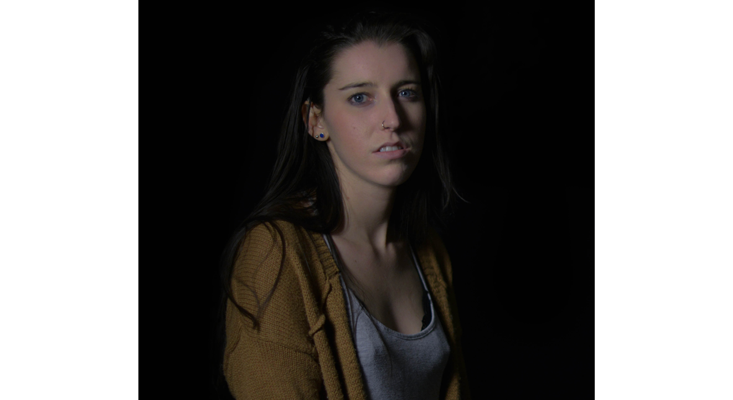
7. Inside the Flour Company Supplying America’s Sudden Baking Obsession - Marker Magazine
As someone who lives in the US and also bakes a lot of bread, this was such a nice thing to read. It’s about King Arthur Flour, one of the few large flour suppliers that is a bona fide good corporation to support. This is the story of how they’ve adapted to the pandemic and its ensuing increased demand for their flour, as well as disrupted supply chains.
8. Let’s Stay Together: Jamie Harmon’s “Quarantine Portrait” Series - Bitter Southerner


9. For Jeffrey Epstein, MIT Was Just a Safety School - Wired (paywalled)
Every time I read about Jeffrey Epstein and his connections to Harvard and MIT, I feel totally disgusted. The fact that he donated and funded so much research has colored my whole view of academia. This article talks about how before he donated to MIT, in particular their Media Lab, Epstein donated much more to Harvard until being kicked out after his conviction.
10. A Failure, But Not Of Prediction - Slate Star Codex
What a great post. Proves why Slate Star Codex is probably the best blog on the internet. This is a post from April talking about predictions about coronavirus, and particularly about wearing masks. It stresses about being generically good at probabilistic reasoning, and recognizing that there being a 10% chance of thousands of deaths and a global slowdown is a smoking gun. Even if that percentage was 1%, it would still be good to be prepared. Which is what institutions and governments did not do.