Hello there. I hope you’re having a good week. I’m a bit tired this week, and after writing the main text, I’m quite wiped out, so I don’t really have much to say. So here’s the list. Enjoy!
If you got this from a friend and want to subscribe, here’s the link. Also, if any of the links are paywalled and if you don’t want to pay for a subscription, try opening the link in incognito mode in your browser. This works if the website has a “soft” paywall. If that doesn’t work, you can access the website using a different browser on the same device, or use a different device altogether.
1. How the face mask became the world’s most coveted commodity - The Guardian
This is an old-ish piece (from April) by Samanth Subramanian about the freshly exploded global market for face masks. It goes into a lot of detail about how “meltblown”, a type of plastic, is the limiting ingredient in making N95 masks.
During their conversations, North Safety Products executives warned Olea to be careful. There were “interested parties” lurking outside its factory gates, ready to bribe truck drivers for their cargoes. Olea hired a security detail to ride alongside his truck of masks as it drove to the airport in Johannesburg. (He sent me a photo of the team: six grim men packing pistols and rifles, clad in camo and bulletproof vests. “They asked if I wanted machine guns as well. I thought not. We’re not invading Lesotho. Let’s keep it reasonable.”) In mid-February, two weeks after he placed his order, his shipment touched down in Hong Kong. Within six hours, the buyers he had signed up had collected nearly all of the masks. “Even if I’d had 5m masks,” Olea said, “I’d have sold out.”
2. Tim O’Reilly makes a persuasive case for why venture capital is starting to do more harm than good - TechCrunch
Tim O’Reilly here talks about the modern philosophy of venture capital, where investors are more focused on their investments having a good “exit” (being acquired by a larger firm) than on actual innovation.
The typical VC model is looking for this high-growth company with exit potential, because it’s looking for this big financial return from an IPO or acquisition, and that selects for a certain type of founder. My partner Bryce decided two funds ago [to] look for companies that are kind of disparaged as lifestyle companies that are trying to build sustainable businesses with cash flow and profits. They’re the kind of small businesses, and small business entrepreneurs, that have vanished from America, partly because of the VC myth, which is really about creating financial instruments for the wealthy.
3. India’s Comfort Food Tells the Story of Its Pandemic - The Atlantic (paywalled)
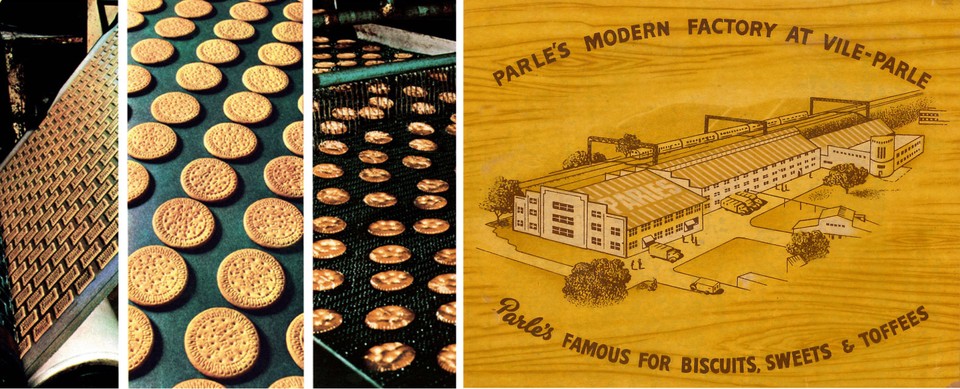
It’s interesting that this piece about Parle-G biscuits and their presence in locked-down India was published in The Atlantic. It’s a nice piece nonetheless, and talks about disruptions to Parle-G factories across the country, as well as the role the biscuits play in households and families across the wide range of incomes and classes.
Beyond the product itself, the people who make it illustrate the complexity and interdependent nature of the Indian economy, reliant at once on full-time workers and day laborers, not simply across the supply chain but often at the same company, even on the same factory floor. The Parle-G biscuit is, in many ways, bound up in multiple Indias—that of the formal and informal economy; that of big retail chains with their advanced supply chains and online stores, and mom-and-pop stores that have neighborhood credit systems; that of the rich, and the poor.
4. Notes on Karl Popper - Nabeel Qureshi’s blog
Karl Popper’s philosophy of the scientific method is what I know him most for. This is a nice essay giving an introduction to and feel for his overall philosophy. The base fact is that all knowledge we have is fallible, that is, it can always be proved false by observing something contrary to it. This means that we can never know the truth perfectly. Rather, the goal is to be less wrong as time goes on. Another thing he’s known for is the paradox of tolerance, which is that if a polity enforces the ideas of liberal democracy and free speech, then it necessarily must be intolerant towards ideas that endanger these.
5. Science is the belief in the ignorance of experts - Daniel Lemire’s blog
I think this is a nice (short) essay complementing the previous one. Again, scientific knowledge is not about believing absolute truths. We can verify theories only by testing them ourselves, rather than taking them as fact.
Science may sound irrational when you spell it out as a doctrine of doubt. If you follow the path of science, you are going to be playing with ideas that are either objectively wrong, or socially wrong, at a much higher rate than if you just followed the experts. But, for scientists, genuine scientists, the goal is not to be right as often as possible. There is no contradiction between “being a good scientist” and “being wrong”.
6. China’s Nightmare Homestay - Foreign Policy
This is a rather harrowing piece to read. It’s about Han Chinese who are sent to the Xinjiang province, where the Uighur Muslims live. The Uighurs are, according to the Chinese government, being “educated” and “de-extremized”. Part of the plan is to have regular Chinese civilians live with them, trying to influence the Uighurs and also reporting any behavior that belays practice of Islam and other non-Chinese-mainstream activities. It really is scary because a lot of the Han “relatives” (as they are called) think that they are doing a good thing, by helping the “extremist” Uighurs.
7. ‘Strong Opinions, Weakly Held’ Doesn’t Work That Well - Commonplace
I didn’t know about the origins of the phrase “Strong opinions, weakly held”, which I did learn about in this post. It then goes on to say that the phrase does not really make sense practically, and that it’s better to update your opinions gradually with new knowledge than to hold opinions strongly and then to pivot to a polar opposite one. Maybe it just sounds cool.
8. The French Way of Building Rapid Transit - Pedestrian Observations
Clearly one of my favorite blogs at this time. This post is about the Paris Metro, which has had an outsized impact on many rapid transit systems–not only in French cities, but also in former-French colonies that still rely on technical input from France. And if you’re a public transit nerd, or a map nerd, or just someone interested in how transit systems are developed and updated, this is such a fun post! Did you know that the Paris Metro uses rubber tires?!
9. What Graphs Reveal (If You Give Them Time) - Math With Bad Drawings
Very interesting! Ben, from Math with Bad Drawings , is plugging a project called Slow Reveal Graphs. The project is about how we can understand the stories graphs tell us as graphs unfold from plain to detailed. That is, what do we learn as each layer of a graph (labels, legends, etc.) is added?

10. Gardening Made Me Happier. It Will Work for You Too. - New York Times (paywalled)
One of my favorite people, Samin Nosrat, writes about one of my favorite activities, gardening.
When shelter-in-place orders were imposed in Oakland, I began planting seeds. As days and dates became increasingly meaningless, I learned to measure the passage of time by counting the number of leaves on a seedling, watching the sunlight hours extend little by little or noticing the growth of rhubarb stalks as they cracked through the winter soil. As observing the garden became both my watch and calendar, I felt my mood improving.