Lately, I’ve been struggling with something that has kept me from sending out this newsletter. It’s the fact that, as a curator, I (subtly, incrementally) change the opinion of whoever reads Kat’s Kable. And this thought terrifies me. I’m annoyed, upset, and angry that people can shape other people’s beliefs, mostly because this has been taken advantage of time and time again. And thus I’ve impulsively shirked away from enforcing my beliefs on anybody, because I’ve thought that to be a Bad Thing. And only lately has it dawned fully upon me, that my choice and curation here directly affects what a reader may think. This has caused a good deal of cognitive dissonance.
However, I’ve come to realize: that’s part of social dialogue. Talking to each other is one of the most natural things we do. And our values and beliefs and our knowledge all rub off on the people we talk to. Yes, some people have larger audiences than others, and these same people may take advantage of this mechanism to propagate ideas that may be considered to be bad, evil, or upsetting. But… I suppose that shouldn’t stop me from curating Kat’s Kable. I don’t want to actively make you think the way I do, or change your political alignment. I don’t even want to try to.
This hasn’t been the most cogent piece of writing, but I hope you’ll allow me (in the end, it is my newsletter, and I can write whatever I want. Ha!). The point in the end is: I’ve been confused, stymied, and I don’t want to see myself as someone explicitly molding your opinion.
If you got this from a friend and want to subscribe, here’s the link. Also, if any of the links are paywalled and if you don’t want to pay for a subscription, try opening the link in incognito mode in your browser. This works if the website has a “soft” paywall. If that doesn’t work, you can access the website using a different browser on the same device, or use a different device altogether.
1. The ‘solar canals’ making smart use of India’s space - BBC
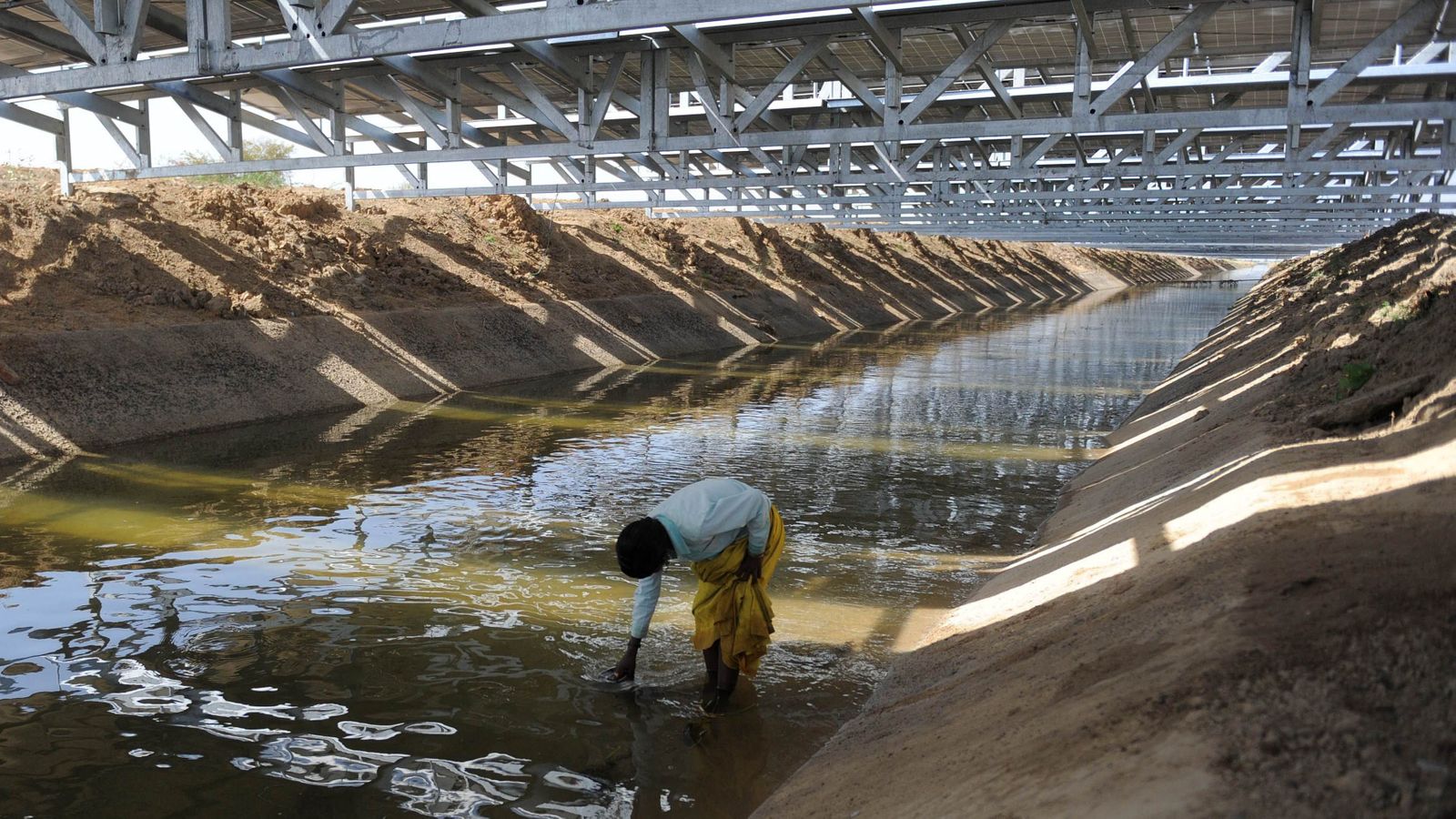
This article is about a pretty cool idea that is being executed in the Indian state of Gujarat. There are a number of canals used for irrigation during the dry season, and these canals are typically left uncovered, thus resulting in significant losses due to evaporation. The solution is to construct “solar canals”, that is, to cover the canals with solar panels.
2. Bari Nano Saniya Kamal’s newsletter
I really enjoyed this piece of writing, a mix of food, history and memoir condensed into the format of a single email newsletter. I’ve found it interesting now that longform content is migrating to email newsletters, and while I would’ve unequivocally supported that a year ago, now it seems a bit overwhelming. It’s still great, and reminds me of the golden age of blogs, but this time it doesn’t feel as decentralized.
The human love for chilies says otherwise. We are simultaneously stung and captivated by them. […] The mirchain become edible as they distribute the spiciness concentrated in them to the masala all around. The confinement of the cutting and chopping is answered with complete expansion. This distribution in space becomes a distribution in time and slowly builds up in the mouth in an audaciously spicy crescendo. As we rise to meet the challenge mirchon ka salan presents, in the span of a few bites curiosity gives way to surprise, then enjoyment. We are deepened by the experience, by what it says about the necessary abrasiveness of survival.
3. The TikTok War - Stratechery
This is a pretty old piece (from July 13th) given the fast-paced nature of policy and development regarding TikTok. However, I found it useful.
4. Silicon Valley’s Vast Data Collection Should Worry You More Than TikTok - Jacobin Magazine
This is a good article to read in conjunction with the previous one. The overall point is that, yes, all social media apps collect data, and TikTok’s data is sent back to the Chinese government. This article says:
All of this is made worse by the Chinese government’s increasingly repressive, borderline genocidal nature, making its control of information and private data all the more perilous. It’s these worries that have united everyone from the hard right, to China hawks more generally, to even some progressives.
And none of this is unreasonable. We should be worried about private companies and governments potentially collecting data on millions of unsuspecting people and censoring content they don’t like. But those based in China represent just a sliver of that threat.
5. The Green, Magical Wild World of Alexis Nikole Nelson, Forager and TikTok Star - The Kitchn
I’ve been following Alexis Nikole Nelson on Instagram for a few months now (she’s @blackforager) and she is a delight. I enjoyed this interview where she talks about foraging, being online, and her experience walking through public places. Not only is she incredibly fun (watch some of her videos on Instagram/TikTok), but she also comes across as wise.

6. How One Man Created The Biggest Virtual Pub Quiz In The World - Esquire
That’s not all, either. Losing the pub he’d long dreamed of owning in early March had Flynn browbeaten, and like many in the country the initial shock of lockdown got him lower. But the runaway success of the Virtual Pub Quiz rejuvenated his interest and showed that there’s an appetite amongst the public for quizzes. He wants another shot at it. “My ultimate aim, and I haven’t started talking to people about it yet,” he sheepishly admits, “is in a couple of years’ time to get a bar again, but have it be a trivia bar.” There’d be a big live quiz on a Thursday night, augmented by mini-quizzes throughout the week, and board games for the daytime. Put it in a touristy spot and there could be a market for that, Flynn reckons. “My wife thinks I’m mad, as always,” he says. “But you know, she supports me with whatever madcap schemes I come up with.”

7. ‘Why Do My Friendships Always Fade Away?’ - The Cut
This is from Heather Havrilesky’s Ask Polly column, which is a bit of a hit or miss for me. But this question and the ensuing answer, oh gosh, it hit home.
Are you starting to see a theme here? I felt like everyone else deserved EVERYTHING from me, but I didn’t think I deserved anything from anyone else. I treated myself like a service provider. I offered up my premium bundle of services and I still wondered if I was really worth it. Just last fall, my friend from high school (who lives in my city now, thank God) said something to me like, “When are you just going to accept that your oldest friends love you? When are you going to trust that we care and we’re not skeptical of you and we’re not going to stop caring?”
8. If you like it then you shoulda put a price on it - Minimum Viable Planet
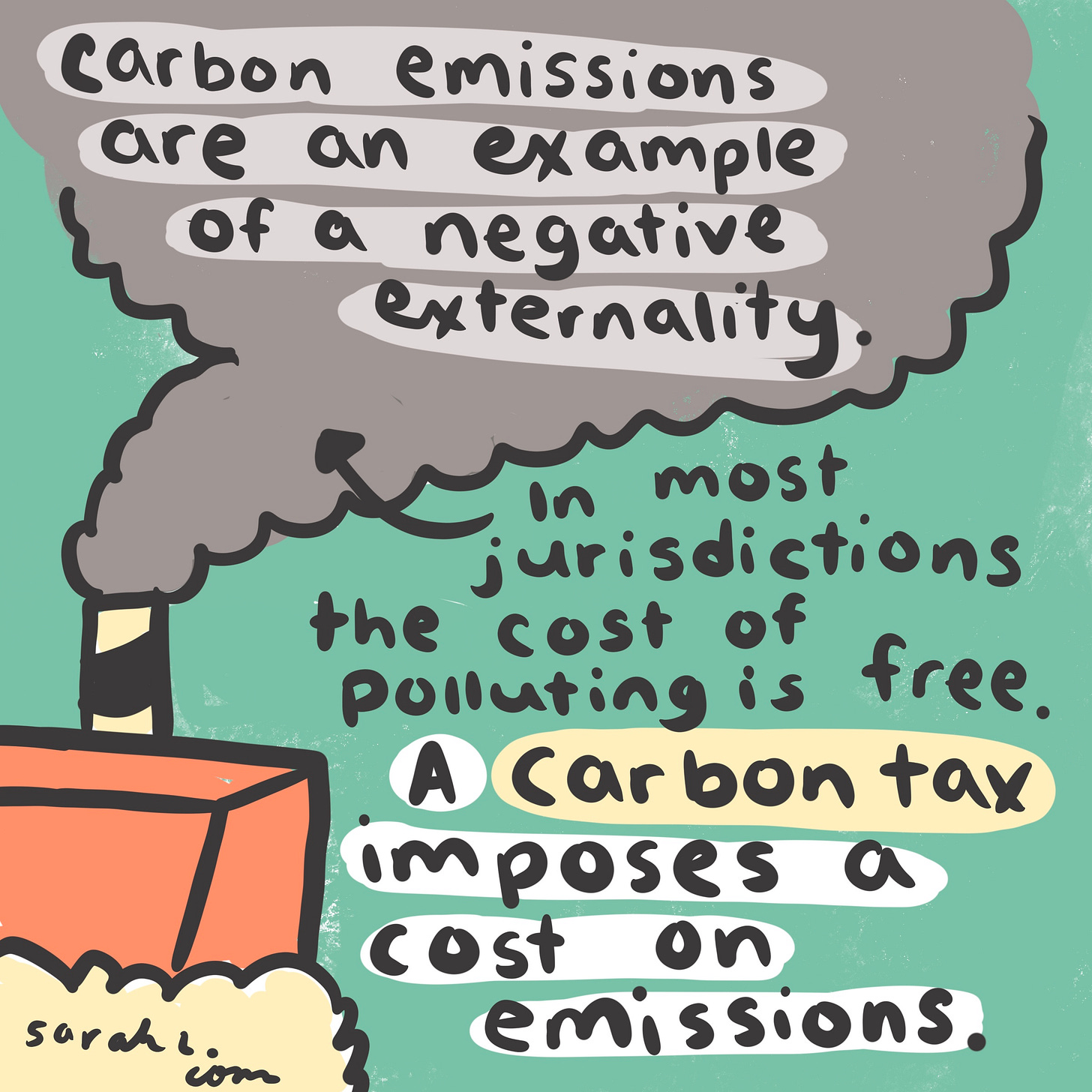
This is a good intro to carbon taxes and how it means that we price in the externality of carbon emissions.
9. Good Science Is Good Science - Boston Review
I share Medawar’s pragmatic vision of scientific reasoning. Scientists must resist the temptation to excessive skepticism: the kind that says no evidence is ever quite good enough. Instead they should keep their eyes open for any kind of information that can help them solve problems. Deciding, on principle, to reject some kinds of information outright, or to consider only particular kinds of studies, is counterproductive. Instead of succumbing to what Medawar calls “habitual disbelief,” the scientist should pursue all possible inputs that can sharpen one’s understanding, test one’s preconceptions, suggest novel hypotheses, and identify previously unrecognized inconsistencies and limitations in one’s view of a problem.