Hello there, this is Vishal and here’s another issue of Kat’s Kable–your favorite (isn’t it?) weekly roundup of ten longform articles from the corners of the internet. This week I saw something from Alan Jacobs’ blog that I found really interesting: when you read the news online, think of it as something being said by Gollum. I don’t know how often this is going to be useful, but it made me think for a little bit. Anyhow, with that aside, here’s what I have for this week’s list. Hope you enjoy.
If you got this from a friend and want to subscribe, here’s the link. Also, if any of the links are paywalled and if you don’t want to pay for a subscription, try opening the link in incognito mode in your browser. This works if the website has a “soft” paywall. If that doesn’t work, you can access the website using a different browser on the same device, or use a different device altogether.
1. A Tale Of Two Ecosystems: On Bandcamp, Spotify And The Wide-Open Future - NPR
Really interesting opinion piece by Damon Krukowski in NPR. Spotify and Bandcamp both represent almost polar opposites in the online music space. It seems to me that Bandcamp cares a lot more about artists than Spotify does, and is run with a much more human touch. Spotify is run in a much more regular-corporate fashion, with more focus on numbers and things that can be measured. It’s telling that Bandcamp co-founder Ethan Diamond likens his business more to Etsy than to any other music platform.
Ethan Diamond’s indifference to the time and money spent by users off his platform would be anathema to Daniel Ek. I am sure any Spotify employee who suggested that their users just type “math rock” into Google would have their desks cleaned out by the end of day. The differences are so extreme, Bandcamp may not just be the anti-Spotify; it may be operating in an entirely different world. I asked Diamond what digital businesses he feels a kinship with now, the way he did with blogging services when he started the company. He didn’t name a music platform.
2. Advice for newsletter-ers - Robin Sloan’s blog and [On Being a Good Newsletterer](https:
//craigmod.com/essays/on_writing_good_newsletters/) - Craig Mod
Both nice pieces about how to approach and execute personal newsletters. Both Craig Mod and Robin Sloan have enjoyable and wholesome newsletters, so I take their advice seriously. Sloan’s #1 tip is to divide your newsletter into seasons, i.e. only commit to a year (or some other duration) at a time. It apparently makes it easier. And Craig Mod has a bunch of pieces of advice that all seem equally useful and noteworthy. So! If you’re writing or starting a newsletter (aren’t we all), these might be useful. And even if you aren’t, well-thought-out and kindly-given advice is always nice to see.
3. Brian Eno’s Music for Anxious Times - New York Times (soft paywalled)
Excellent profile of Brian Eno. I admire him and his work a lot, and use his co-created Oblique Strategies technique often (I made my own index cards).
And I thought, “What do I do with music?” Well, I use it to make the space that I want to live in. What I generally wanted was an atmosphere. That might be an “up” atmosphere, like sometimes all day I would have Fela Kuti playing. But then sometimes, I would listen to only the slow movements of string quartets. So I started to think, I imagine a lot of other people are doing this as well. Ambient really was a way of saying, “I’m now designing musical experiences.” The emphasis was on saying, “Here is a space, an atmosphere, that you can enter and leave as you wish.”

4. Post capitalism and post scarcity - Casey Handmer’s blog
I recently found Casey Handmer’s blog, and I’ve been enjoying it. This is a pretty cool piece about post-scarcity, and how Jevons paradox (the idea that making something cheaper or more efficient increases consumption, so there is no net gain) doesn’t apply when things are so ubiquitous that nobody thinks about their price. Honestly, I don’t know too much about this.
Post capitalism is not a return to manual labor-driven agricultural societies, nor centrally-planned communism. Post capitalism goes hand in hand with post scarcity, a state where the natural abundance of every fundamental human need obviates the need for profit-driven capitalist finance mechanisms to carefully allocate available capital. Where more capital no longer buys a better experience (e.g. everyone has the same iPhone), its productive capacities can be more cleanly separated from basic human necessities and focused on the core infrastructure of material abundance.
and
Post capitalism cannot be achieved by artificially restricting the ability of the market to do what it does best – enable peaceful cooperation between mutually disinterested strangers. Post capitalism is achieved when capital itself becomes irrelevant due not to crippling shortage, but embarrassing abundance.
5. Gender games: The complex issue of sport categories and why they matter - Daily Maverick NZ
Sports categories have come under immense scrutiny of late, particularly about whether trans women should be allowed in women’s sport. I found this piece to be a very level-headed take on the topic. The basic idea is that women’s sports leagues are a sports category, similar to how particular weight classes exist as separate categories within boxing. I still don’t know what to think about it all, so I am just glad that I’m not the one making any of these decisions.
6. Problems With Paywalls - Slate Star Codex
Good points being made about why paywalls are just bad. First is that often, paywalled articles have clickbaity titles. I’m sure all of us have seen that. The second is that people start talking about paywalled articles online, and something that becomes part of the discourse is unavailable to non-subscribers–reinforcing online echo chambers and decreasing overall diversity of opinions. And there are some more, plus some suggestions on how to make things better. Of course, this article doesn’t go into aspects of what the alternatives to paywalls might be; it’s written mostly from a reader’s perspective.
7. 30 Years Ago, Romania Deprived Thousands of Babies of Human Contact - The Atlantic (soft paywalled)
This is just.. so sad. And yet, so instructive. I’ll forewarn you; it might leave you with a sense of uneasiness that lasts more than a few days. There was actually a “Home Hospital for Irrecoverable Children” in Romania. It was full of children, but they were totally deprived of human contact. It was terrible, but I think we can learn a lot about the importance of human contact retrospectively from it.
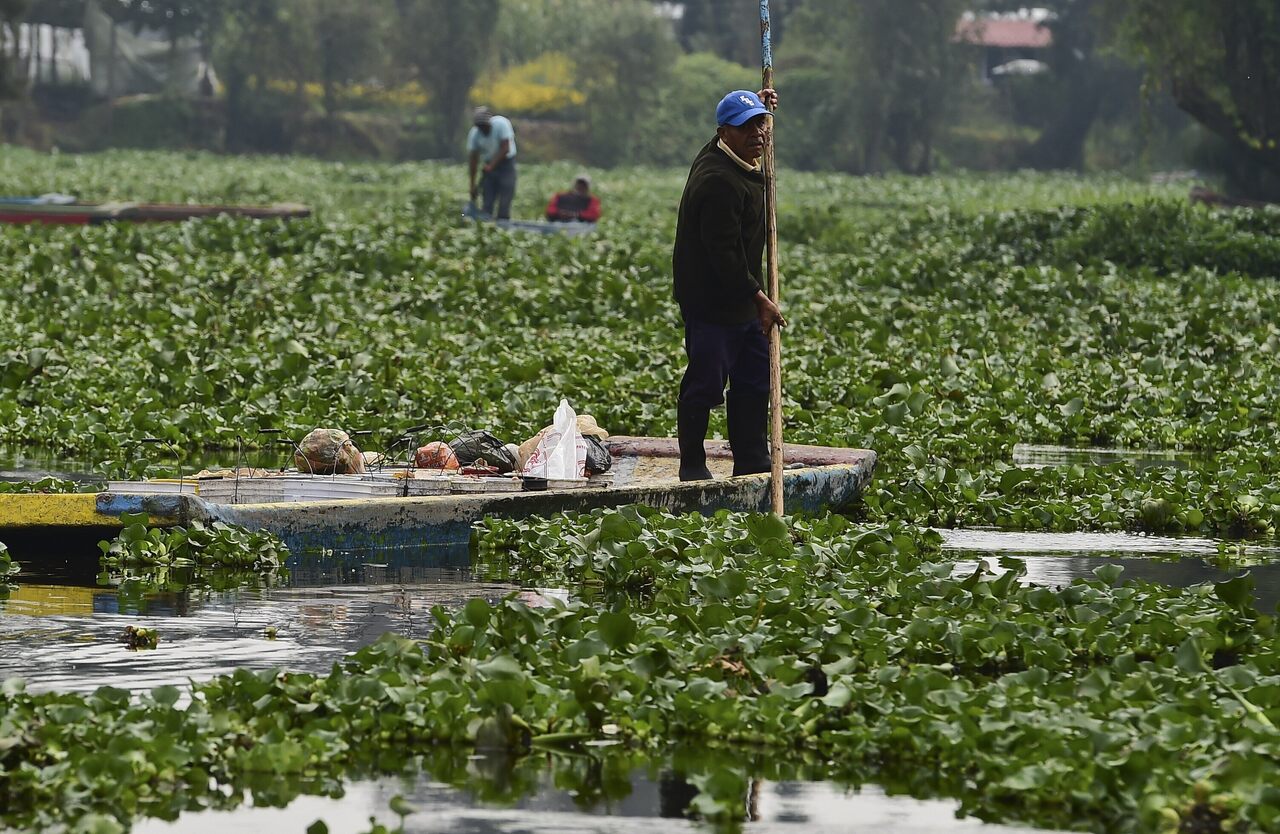
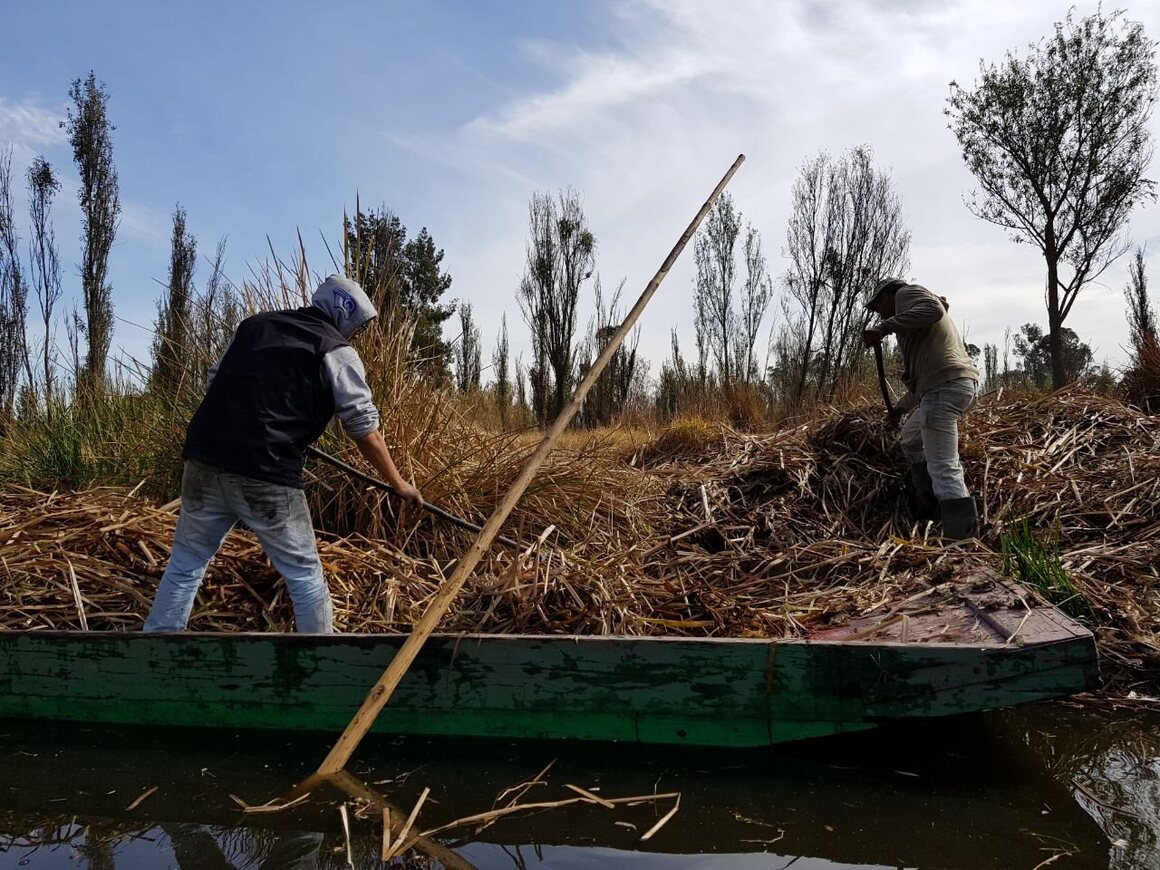
8. In Mexico City, the Coronavirus Is Bringing Back Aztec-Era ‘Floating Gardens’ - Atlas Obscura
Fun stuff! This is so interesting. Urban sprawl + canals + a large lake region south of Mexico City = floating gardens. Who would have thought!? The pictures in this piece made me happy.
9. In a shrinking world, what will we pass on to our children? - Boston Globe
There’s a specific role I want to play in this child’s life, and it has everything to do with the world this beautiful, curious little boy has entered: one shaped by a climate in decline, deeply scarred by one pandemic and more sure to come. I want to help teach him about his place in a vast and wondrous ecosystem. When he’s older, I have dreams of taking him to museums and botanical gardens — which are hauntingly empty as I write this. Because he is a little Black boy, more than anything I want to make him know that this world belongs to him.
I want to teach him how to recognize a beautiful day, a happy moment, and then how to notice each sensation — the smell, the feel, the sight — and breathe it in for at least eight seconds. Memorize it. Treasure it. When he realizes why he needs that skill, when he understands how deeply he’s been betrayed, I want him to bring his questions to me. I’m already practicing my answers.
10. Growing up with Murali - Cricket Monthly
This year, I’ve started reading a lot more writing about cricket, and it’s been quite fun and rewarding. This might be the standout, mostly because it’s more about people and less about the sport itself.
“Ten years after he retired, a reflection on what Muttiah Muralitharan has meant - and means - to a nation.”
I was besotted by that killer turn, of course, but there was something more profound. I was becoming conscious. Of what, I was not sure exactly, but I knew I began to have this question asked of me: “Are you Sinhalese or Tamil?” At the time, this was the question, and in many ways it still is. Some inquirers were startled to learn I was half of each. Even more tellingly, others offered a thin smile and an “Ah, eka kamak na” [That’s not a problem] upon learning of my mother’s ethnicity. I began to realise one half of me did not carry the same value as the other. Subconsciously Murali became the buttress for this flagging 50%. He may not have been their favourite player, but none of the other kids could deny he was the best bowler in the team.
