Hello there again. This is Kat and here’s another issue of Kat’s Kable. It’s been slow-going here for me, with reading specifically and with life in general. Reading, though, has proven to be a solace and a balm as always. This week I finished reading The City of Dreaming Books by Walter Moers, which is the kind of book that is so fantastical and whimsical that you almost have to set your brain aside. I loved it. Anyhow, that’s all from me now–I need to go have lunch. Hope you like this week’s list.
If you got this from a friend and want to subscribe, here’s the link. Also, if any of the links are paywalled and if you don’t want to pay for a subscription, try opening the link in incognito mode in your browser. This works if the website has a “soft” paywall. If that doesn’t work, you can access the website using a different browser on the same device, or use a different device altogether.
1. How Eugenics Shaped Statistics - Nautilus
This is a pretty interesting and illuminating read. Much of modern statistics derives from the work of Fisher, Pearson and Galton–all three of whom were bona fide eugenicists. This essay goes into the time and place that enabled their eugenicist science, as well as how notions of statistical significance etc. were born of it.
Ideally, statisticians would like to divorce these tools from the lives and times of the people who created them. It would be convenient if statistics existed outside of history, but that’s not the case. Statistics, as a lens through which scientists investigate real-world questions, has always been smudged by the fingerprints of the people holding the lens. Statistical thinking and eugenicist thinking are, in fact, deeply intertwined, and many of the theoretical problems with methods like significance testing—first developed to identify racial differences—are remnants of their original purpose, to support eugenics.
Also see Ronald Fisher Is Not Being ‘Cancelled’, But His Eugenic Advocacy Should Have Consequences.
2. The Island That Humans Can’t Conquer - Hakai Magazine
Life here grows back, grows over, forgets. Not invincibly resilient, but determined and sure. On Hall Island, I see a songbird nesting in a cache of ancient batteries. And red foxes, having replaced most of St. Matthew’s native Arctic foxes after crossing on sea ice, have dug dens beneath the Loran building sites and several pieces of debris. The voles sing and sing.
The island is theirs.
The island is its own.

3. The Man Who Carried Computer Science on His Shoulders - Inference Review
This is a biography (of sorts) of Edsger Dijkstra, whose life and work is very interesting. Computer science as an academic field is new, and thus its history I find more fascinating and “modern” than other fields. I think it’s clear to everyone that Dijkstra played a pivotal role in shaping the field in its early years, and I think this essay does a good job in bringing that out. I think it’s not necessarily in number or impact of scientific results that his worth be measured, rather it’s by his “guidance”–sometimes welcome and oftentimes unwelcome (or ill-received).
4. Sri Lanka’s fairy-tale story of 1996 - The Cricket Monthly
I was barely a year old when the 1996 men’s cricket world cup took place. I’ve read a few things about it, though, and this one is quite a treat. Sri Lanka, which barely had a functioning national cricket system/board, somehow won a tournament beating the best countries in the world, all while discovering the strengths they had as a team. It was magical.
5. The ancient fabric that no one knows how to make - BBC
Very cool! This is about “Dhaka muslin”, a type of cotton fabric woven so thin that even when draped with seven layers of it, someone could take you to be naked. It was the most expensive fabric of its era, and the process involved 16 distinct steps, and a number of specialized implements. Due to colonization and industrialized competitors to it, it died out and the specific cotton used to make it is considered lost. However, there is also an undergoing project to hopefully rediscover and recreate this magical piece of art.

6. Labels - Fifty Two
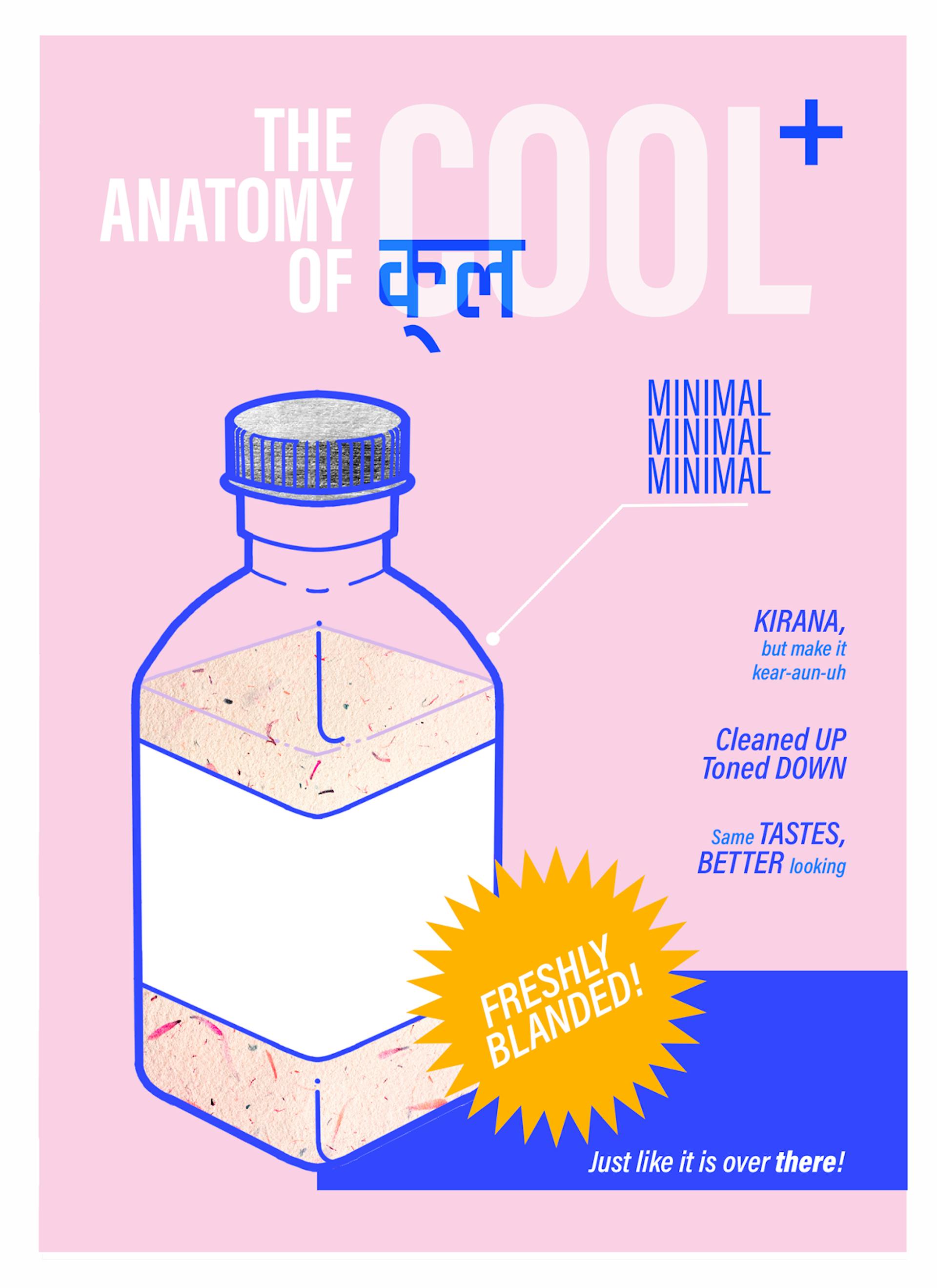
I am in love with the features from Fifty Two. I’m behind on the latest few, but I read all of them. This one I enjoyed quite a bit. It’s about packaging and labels of food items, and in particular about how packaging is changing in India with an increasing number of people moving to more “hip” and artisanal products. The illustrations are wonderful also.
This comes at a cost. Aesthetics have always signalled quality, class and ethics, but to accommodate how this works in 2020, we have altered an existing native language. What’s funny is that we may have been achieving much more in the first place. For example, hyperlocal production has long been a fact of Indian life. Yet, new-age organic brands position geo-locality as both exotic and the main node of the brand story. On the jam labels of a brand called Kumaoni, for instance, the distant hills appear foreign, thanks to their nondescript, digitised neutrality.
7. The rich v the very, very rich: the rebellion at Wentworth golf club - The Guardian
This is quite something haha. It really is funny, where a golf club is taken over by a foreign corporation and members are asked to re-enroll by paying a debenture of £100,000. The original members then embarked on a campaign to prevent the club from falling into new hands. In some sense, you can consider it to be a David vs. Goliath story, except that David is not so tiny.
The ongoing clash between Yan Bin and his club’s members has witnessed several dramatic phases: threats, lawsuits, duplicity, negotiations, truces, even death. But the tale isn’t just about the preposterousness of the wealthy. Rather, it’s impossible to learn about all this turmoil – in a place called “the Island”, for crying out loud – and not see it as an allegory. […] But since the 1980s, Wentworth has been reshaped – just like England itself – by money: first the wealth of the homegrown 1%, which considered itself immune to the turmoil of change, but which then found itself subject to the whims of the globalised capital held by the 0.001% like Yan Bin. The saga is familiar: a small locality unsettled by the arrival of an outsider. Except that the outsider is a transnational holding corporation, and the locality is Wentworth Estate, a slice of England overtaken by the world.

8. Water is Life - Alpinist
Such a touching story, about the southwestern US, the tribes who call it home, and their poignant relationship with water (which mostly comes from snowmelt). I love stories told like this–there is a sense of care and concern that permeates through them.
The story of the Navajo people is written into these landscapes, and we are reminded in our songs of this connection. But we are also living on a warming planet. For the many tribes in the Southwest, the future of the ecosystems and the cultural traditions that depend upon snowpacks and snowmelt is also uncertain. The loss of snow will inevitably impact ceremonial cycles, languages and sacred histories. Certain medicinal plants are harder to find, now, having migrated farther upslope to cooler temperatures. On some slopes, the plants have run out of elevation to gain, forcing me and my relatives to travel farther north to other mountain ranges to find them. Some elders say that when we lose connection with the land, the land will die and so will we. Now, as a heating climate reshapes the landscape, their words carry even more weight.

9. A Pandemic Year for Women: Notes on negotiating the coronavirus crisis as a healthcare worker - First Post
Here’s another piece written with care and concern. It’s a touching and heartbreaking account of a doctor in India working through the pandemic. Sigh.
I wonder if we only remember the things we form a narrative about. In the face of overwhelming odds, when thinking about your material conditions could be debilitating, you simply stop making a narrative about your present reality to your own self. You go to work, go through the motions of the day, come back home, drown out the noise in the latest distraction, hope for some sleep, get back up and keep going the next day because forming a narrative, making sense of what you are living through, isn’t a luxury you can afford at this moment. It can’t hit you, not now; you cannot take days off because you are not given the option of taking days off. I think some part of your brain senses this, and stays clear of thinking too much (or at all) about your reality that has suddenly turned incomprehensible.
10. Moving in Sync Creates Surprising Social Bonds among People - Scientific American
Ahhh this was very nice to read. I think it’s intuitively clear to us that moving in sync with others, across a number of activities, makes us happy and quickly creates bonds. There’s also a bunch of scientific studies that have been done to analyze this effect, and the results are heartening. It’s one of those things where you feel, “well this is obvious, did we need a study do prove it?” but it also helps, I feel, to study and validate it.
See ya. Stay safe.-Kat.