Well, hello there! This is Vishal (Kat) and here I am with another issue of Kat’s Kable. It’s a nice Sunday morning here, and wherever and whenever this reaches you, I hope you’ve had a nice weekend. I had a weird week but yesterday was quite great and today has been nice so far as well. I’m feeling a bit rusty, still, and writing the newsletter isn’t feeling as natural as it was, but I don’t know if that’s because I’m being more deliberate with it or whether I’m just out of touch. Either way, time will tell.
As always, feel free to write back if there’s anything you’d like to say. Just reply to this email. I’m off now to make another cup of tea and finish this week’s laundry. I might take a nap after that.
If you got this from a friend and want to subscribe, here’s the link. Also, if any of the links are paywalled and if you don’t want to pay for a subscription, try opening the link in incognito mode in your browser. This works if the website has a “soft” paywall. If that doesn’t work, you can access the website using a different browser on the same device, or use a different device altogether.
1. What We Learned Doing Fast Grants - Future (Andreessen Horowitz)
This is pretty interesting. Through the Mercatus center at George Mason University, a number of grants were given out to expedite research for COVID-19. This was a good step overall, because traditional routes for obtaining funding in science take a …long time. For something like COVID, fast grants like this are a great boost, and they also expose the demerits of the science funding system as it exists (mostly in the US, but I think this applies to other places also). I’m not sure if such a model can work all the time, or in all scenarios–but this is a nice writeup and I think there’s things to learn from programs like this.
2. Checkpoints - Robin Sloan’s blog and [Sad YouTube:
The Lost Treasures Of The Internet’s Greatest Cesspool](https://www.buzzfeednews.com/article/markslutsky/how-the-youtube-comments-section-became-our-cultures-secret) - Buzzfeed
Lovely! I enjoy Robin Sloan’s writing a lot, and consider it a privilege of sorts that we’re allowed to peek into his brain’s curious workings. Here he writes about YouTube comments, specifically “checkpoint” comments where people gather to reflect on their lives.
I was chatting about these videos with a few internet acquaintances, and someone proposed (I’m paraphrasing) that it is precisely the inconvenience of the system that makes the activity appealing. You can’t “subscribe” to anyone’s checkpoints; you can’t search through them; you can hardly even sort them! So, the baseline experience is to see a checkpoint once, and never again. There is, perhaps, safety in that; an invitation.
and
Without any of the traditional publicity mechanisms, everything depends on “foot traffic”. You could post an unsearchable, unsortable checkpoint on a custom website… and no one would ever read it. Attaching it to a YouTube video — even an obscure one — feels, perhaps, like writing a message on a wall in a crowded city. You are basically assured that, eventually, someone will pass by and read it; you are likewise assured that you won’t know who they are, nor they you.
3. Blue-Collar Brilliance - The American Scholar
Ah this was so nice. Jobs that are deemed “unskilled” are often not. This is an ode to the quick, on-the-job, and definitely “skilled” work that goes on in almost all blue-collar jobs. I’ve also noticed, in my own small way, how different my “cerebral” job is (of doing research in physics and math theory) is from working in the garden (all about observing and making small, subtle decisions) and cooking (lots of hand-eye coordination, learning to trust my judgement and knowing how to use my sense together). One of these is valued higher by society, and may be harder, but that doesn’t mean that working with my hands is a lowly thing to do.
Our culture—in Cartesian fashion—separates the body from the mind, so that, for example, we assume that the use of a tool does not involve abstraction. We reinforce this notion by defining intelligence solely on grades in school and numbers on IQ tests. And we employ social biases pertaining to a person’s place on the occupational ladder. The distinctions among blue, pink, and white collars carry with them attributions of character, motivation, and intelligence. […]
But here’s what we find when we get in close. The plumber seeking leverage in order to work in tight quarters and the hair stylist adroitly handling scissors and comb manage their bodies strategically. Though work-related actions become routine with experience, they were learned at some point through observation, trial and error, and, often, physical or verbal assistance from a co-worker or trainer. […] In fact, our traditional notions of routine performance could keep us from appreciating the many instances within routine where quick decisions and adjustments are made. I’m struck by the thinking-in-motion that some work requires, by all the mental activity that can be involved in simply getting from one place to another: the waitress rushing back through her station to the kitchen or the foreman walking the line.
4. Pop-Up Newsletters are the Greatest Newsletters - Craig Mod’s website
With most creative work, the trick is to focus on habit formation. Somewhat counterintuitively, don’t aspire to be someone who writes a book — don’t be a sucker waiting for “inspiration” — instead aspire to be someone who writes on schedule. Books naturally flow from rigorous writing habits.
I’ve talked to many creative folks who have burned out. Usually, the burnout happens from having bitten off too much of an undefined thing. So my usual advice for someone who wants to get into the newsletter game is to set a goal with a clear finish line, and one that isn’t years out. Pick a frequency (daily? weekly? monthly?), slap an end date on it, stick to the schedule like your life depends on it and call it a “season.”
A pop-up newsletter is a superpower — readers tend to be more excited to subscribe to something that ends, and writers tend to be more motivated to commit and bring their best self knowing that it doesn’t drag on forever.
5. How Venture Capitalists Are Deforming Capitalism - The New Yorker (soft paywalled)
The title of this article makes it sound like it’s about all venture capitalism, which it well might be (I don’t know), but this piece is mostly about WeWork and the train-wreck that it was. I’m sharing this quite late (it’s from late 2020) and a bunch of you may have already read it. One thing that I’ve learnt, though, is that venture capital firms earlier acted as a sort of “mentor” to the companies they funded: not only did they provide money, but they also got a seat at the table (literally), played an active role in shaping the company’s policy, and advised its founders. These days apparently, VCs have become “founder-friendly”, which means that founders are given free reign. This is not necessarily a good thing, which people found out the hard way with WeWork. The article ends on a somber and cynical note (which I’m not sure is representative of all venture capitalists), which I’ll leave you with:
For decades, venture capitalists have succeeded in defining themselves as judicious meritocrats who direct money to those who will use it best. […] Rather, V.C.s seem to embody the cynical shape of modern capitalism, which too often rewards crafty middlemen and bombastic charlatans rather than hardworking employees and creative businesspeople. […] Neuner went on, “When you get involved in the startup world, you meet all these amazing entrepreneurs with fantastic ideas, and, over time, you watch them get pushed by V.C.s to take too much money, and make bad choices, and grow as fast as possible. And then they blow up. And, eventually, you start to realize: no matter what happens, the V.C.s still end up rich.”
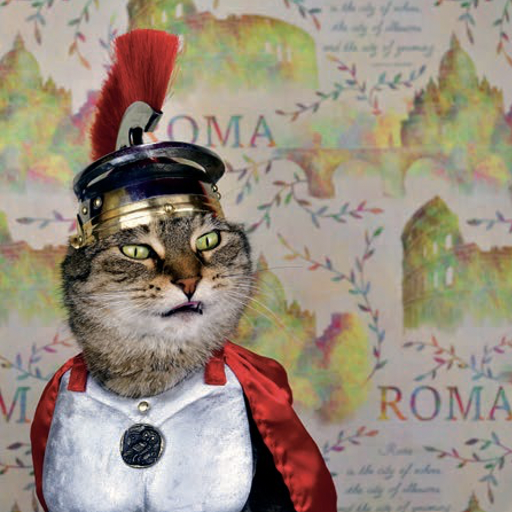
6. In Which a Cat Narrates Feline History in the Age of European Conquest - Lithub
This is quite funny–it’s an account of some of the history of Europe through the lens of cats.
And as we prospered in these new communities, our triumph in the end turned out to be even greater than the mighty Caesar’s. It’s true, my friends! I don’t wish to embarrass the Imperial Throne too badly, but it was left to Rome’s felines to complete the conquest of which Trajan had only dreamed; consider that his army was stopped by warring tribes and never succeeded in breaching Scotland . . . but we did. And by cuddles and purrs, rather than blood and steel. But we pressed on further still, forging boldly ahead on merchant ships toward Scandinavia, to those rugged northern climes from which the mighty Vikings would emerge.
7. A sci-fi writer got meta about gender. The internet responded by ruining her life. - Vox
This is about a weird and harrowing series of events that took place after the magazine Clarkesworld published a short story by Isabell Fall called “I Sexually Identify as an Attack Helicopter”. The title of the story itself is a take on an internet trope that’s considered offensive to transpeople. Despite Fall’s short story receiving critical acclaim and even being nominated for a Hugo award, the story caused a huge and amorphous mass of criticism online, much of it toxic. The story is wild, and what is sad is that because of the vitriolic reaction to it online, Fall withdrew the story from Clarkesworld, checked herself into a mental health facility, and decided to stop writing as Isabell Fall (that’s not their real name). This piece goes into the details of the whole saga, as well as comments on the role that social media (especially Twitter) played in dehumanizing Fall. It’s sobering, but I think important to read.
8. The History of Poop Is Really the History of Technology - Wired (soft paywalled)
You might find this gross, but I found it fascinating. It’s an excerpt from Harold McGee’s book Nose Dive: A Field Guide to the World’s Smells , and it’s about …poop. Specifically, it’s about our relationship with manure. A big reason why the smell of animal excrement is well-studied is because CAFOs (concentrated animal feeding operations) release huge amounts of it, which is both dangerous and bad-smelling.
9. Our Mind-Boggling Sense of Smell - Nautilus (soft paywalled)
I suppose this piece from Nautilus is a sequel of sorts to the previous one. Our sense of smell is truly mind-boggling. We can sense hundreds (or thousands) of volatile molecules. A big reason the neuroscience of smell, or olfaction, has not been well studied to date is that scientists often used the same models or techniques used to study human vision. Smell, however, works very differently. One really interesting thing I learnt when reading this is that it only takes two synapses (connections between neurons) for information about smell to reach your brain from the air inside your nostril. In some sense, this makes smell a much more direct sensation than, say, vision.
10. Minimal Maintenance - Lapsus Lima
I think I was pointed to this essay via the Sentiers newsletter (highly recommended!). The main idea of this essay is that slowing down growth, or scaling down generally, is a positive thing in the sense that it gives us more time and resources to maintain and preserve what we actually have. It’s interesting perspective, and the sense I got was that a critique of our current economic trajectory isn’t to be seen as a call for shrinking down, but rather as an opportunity to re-evaluate our priorities.
See you next week.-Kat.