Hello there! Here’s Kat with another issue of the eponymous Kat’s Kable. I missed last weekend coz… things, and this week has been busy too. I finished a project today (or at least a big part of it) and I have no meetings tomorrow, so even though it’s Thursday, it feels like Friday. I’m tired now, so I’ll be off to work on a jigsaw puzzle for a bit. See ya. As always, feel free to write to me by replying to this email.
If you got this from a friend and want to subscribe, here’s the link. Also, if any of the links are paywalled and if you don’t want to pay for a subscription, try opening the link in incognito mode in your browser. This works if the website has a “soft” paywall. If that doesn’t work, you can access the website using a different browser on the same device, or use a different device altogether. Another, slightly involved, method is to try to disable JavaScript and reload the page. This works on some websites for me.
1. Delicious biryani, compliments to the robo-chef - Rest of World
This article is about “cloud kitchens”: a commercial cooking space made only for delivery orders with no space to sit in and eat. They are becoming more prevalent as food delivery is increasing in popularity in India. These cloud kitchens are becoming increasingly automated too, which is what this article focuses on. There are a bunch of companies that make specific machines, robots almost, that can perform repetitive kitchen tasks. I suppose it’s pretty cool and futuristic, but the purist in me is trying to tell me that there’s something missing when a dish isn’t made by an actual person.

2. Thingifying the world (ii) - ldmce
This is pretty interesting, although during parts of it I did wonder, “huh, do I even need this?”. It starts by considering a sign in a bookstore that says, “Umbrellas are non-refundable” and tries to make sense of it. Indeed, non-refundability is not an inherent property of the umbrella. The sign is short for, “We won’t refund your money for an umbrella bought here”, but assigning the value of nonrefundability to the umbrella makes it easier. However, does it have philosophical or semantic implications?
3. A Most Mischievous Bird Of Prey - Noema Mag
“Like humans, striated caracaras love novelty, hate boredom and want to know how the world works. Minds like that offer many rewards — but they also come with great risks.”
I enjoyed this quite a bit.
It’s this earnest, playful quality, not their rarity or remoteness, that caught and held me; above all, striated caracaras seem disarmingly conscious, and they crane their necks to peer at everything with keen but slightly dubious interest.
and
The thrill of seeing them never fades, and the feeling seems oddly mutual: Even after I’ve helped trap them with snares, weighed them in burlap sacks, taken blood samples from their wings and attached identifying rings to their legs, I’ve watched them ruffle their feathers and walk right back toward me, as if compelled by a single burning question: WHAT ARE YOU?

4. Opening a Small-Town Bookstore During the Pandemic Was the Craziest Thing We Ever Did - Texas Monthly
Ryan Holiday talks about starting an small bookstore with his wife in a small town outside Austin, Texas. It’s pretty crazy, but also pretty great!

5. How COVID broke the evidence pipeline - Nature
“The pandemic stress-tested the way the world produces evidence — and revealed all the flaws.”
Carley compares the time before and after COVID-19 to a choice of meals. Before the pandemic, physicians wanted their evidence like a gourmet plate from a Michelin-starred restaurant: of exceptional quality, beautifully presented and with the provenance of all the ingredients — the clinical trials — perfectly clear. But after COVID-19 hit, standards slipped. It was, he says, as if doctors were staggering home from a club after ten pints of lager and would swallow any old evidence from the dodgy burger van on the street. “They didn’t know where it came from or what the ingredients were, they weren’t entirely sure whether it was meat or vegetarian, they would just eat anything,” he says. “And it just felt like you’ve gone from one to the other overnight.”
6. Thriving Together: Salmon, Berries, and People - Hakai Magazine
This is really lovely. Jess Housty of the North American Heiltsuk Nation talks about her family’s tradition of harvesting salmonberries each year.
In my mind, salmonberries have always embodied community: their flowers nurture pollinators and their berries feed creatures of every size, winged and limbed. Salmon, laid at their feet, attract teeming insects to nestle into the soil and among the fallen leaves in the undergrowth. The space the plants hold invites you, as poet and essayist Wendell Berry writes, to “put your ear / close, and hear the faint chattering / of the songs that are to come.” In their ecology, their poetry, and their lessons about reciprocity, wild salmonberry thickets, and the salmonberry gardens we actively tend, are home to diversity and abundance; we are fortunate to have so many pathways to understand their gentle might.

7. The Tyranny Of Time - Noema Magazine
“The clock is a useful social tool, but it is also deeply political. It benefits some, marginalizes others and blinds us from a true understanding of our own bodies and the world around us.”
Bit of a rambly piece, I thought, but nice nonetheless. It’s about various aspects of standardized time and the role it plays in our lives. We live our lives by clocks and alarms and hours of work. “Clock time” is a purely human intervention, and it includes concepts like minutes and hours. I do agree with the fact that organizing and living our lives using manmade notions of time distances us from the natural progression of time. The piece ends with connecting climate change and our faulty way of thinking about it with the way we think about time. That didn’t make full sense to me.
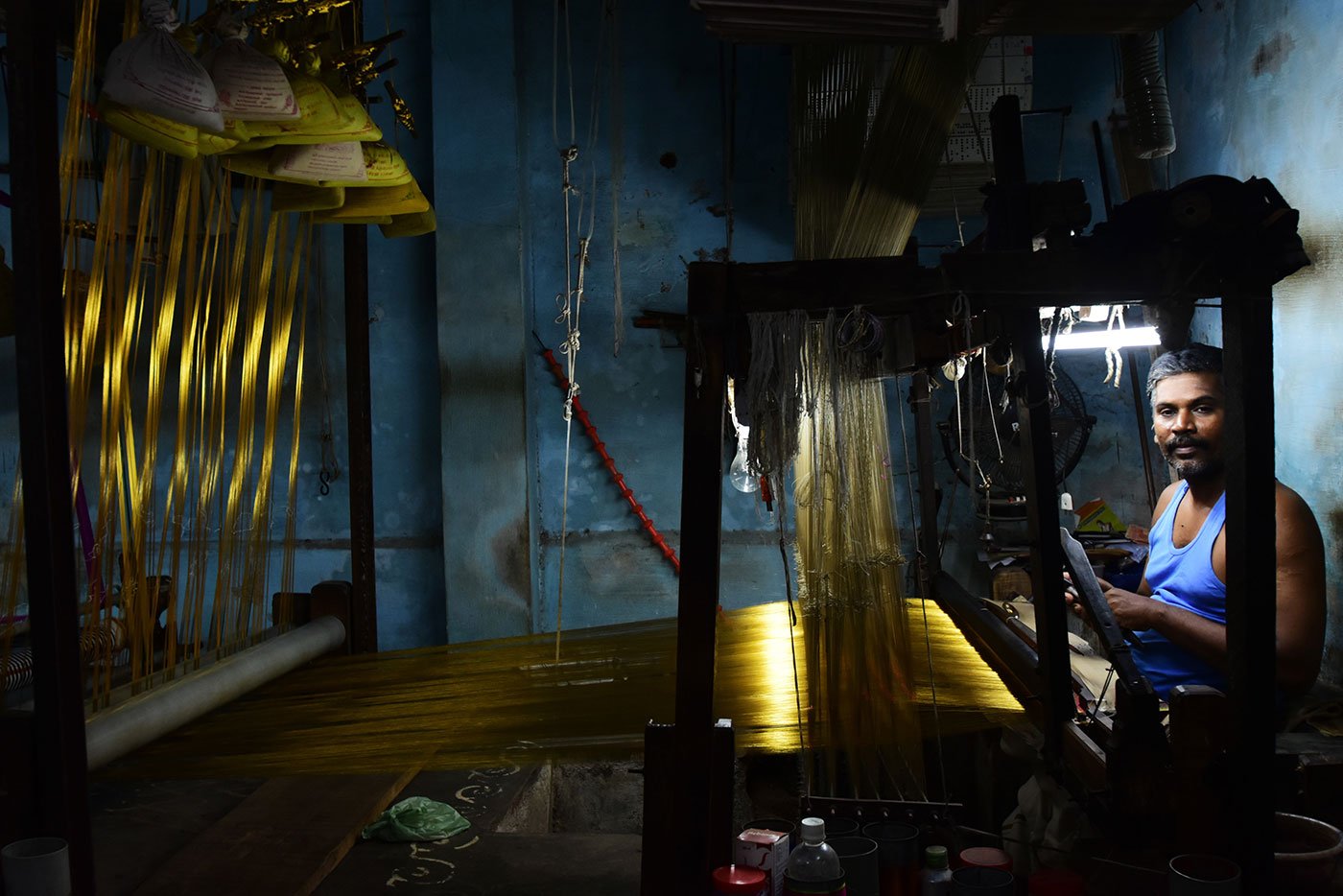
8. Labouring at the looms of Onnupuram - People’s Archive of Rural India
This photoessay has lots of nice pictures. It’s about weavers and weaver cooperatives in the town of Onnupuram in Tamil Nadu, India.
9. Fund people, not projects III: The Newton hypothesis; Is science done by a small elite? - Nintil
If we go by citation metrics alone, then we see that the most influential papers of a generation tend to mostly cite other influential papers. This begs the question: how much do the other “less important” and less cited papers matter? That’s what’s addressed in this essay, and it’s actually quite thought-provoking. This of course has practical considerations; if all research is not “useful”, then why not cut funding to some of it? If you’re interested in the way research works and think about how we prioritize what we fund, this might be up your alley.