Well, hello there! This is Vishal with yet another issue of Kat’s Kable. I had a busy but nice weekend and hence didn’t send out the newsletter then. It’s been a bit of a strange week. I’m feeling fine and a bit of not-fine at the same time. Writing the Kable always does help, though. It sits me back down into a rhythm and routine that is comforting. I’ve also started thinking about all the things I have in my apartment that, over the next three months, I have to gift, give, donate, or throw away. I feel a bit like Bilbo at the beginning of The Lord of the Rings. It’s a nice thought.
Anyhow, that’s enough rambling from me. I’ll leave you with this week’s list. As always, feel free to reply and write back with whatever you like. I’d love to hear from you.
If you got this from a friend and want to subscribe, here’s the link. Also, if any of the links are paywalled and if you don’t want to pay for a subscription, try opening the link in incognito mode in your browser. This works if the website has a “soft” paywall. If that doesn’t work, you can access the website using a different browser on the same device, or use a different device altogether. Another, slightly involved, method is to try to disable JavaScript and reload the page. This works on some websites for me.
1. The lost lionesses - BBC
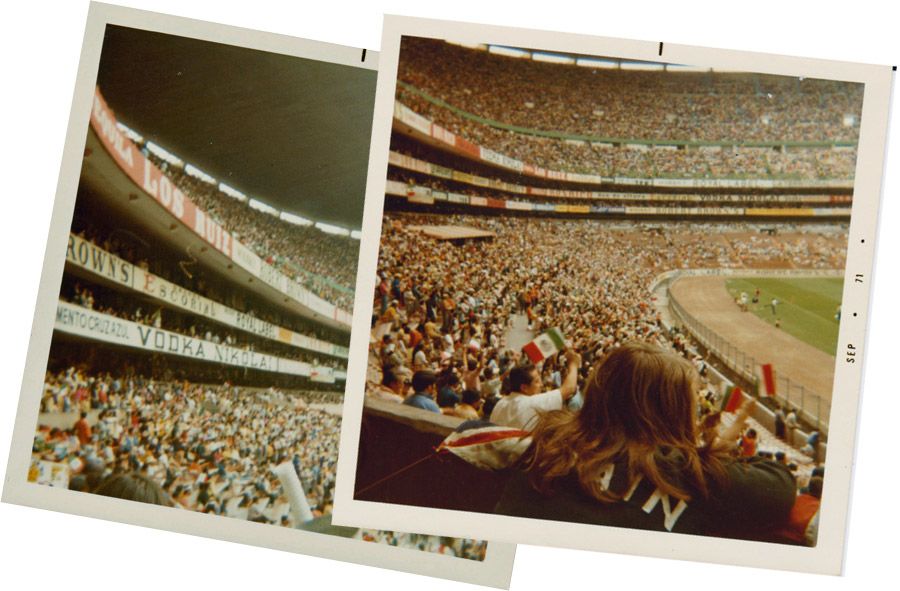
Wow! I had no idea about the woman’s football team that “represented” England in the 1971 Women’s World Cup. Their story is interesting and the players who formed the team were mostly teenagers who never played outside England. The team, though, was not looked upon favorably by the Women’s Football Association (WFA) and this resulted in some major tussles later. This whole piece is nice and wholesome but also leaves a sense of sadness about what “could have been” had women’s football been accepted in a better way.
2. Whitewashing Organics - Atmos
A lot of the debate regarding organic vs. conventional agriculture products focuses on the nutrition density of the food as well as the environmental impact of growing it. However, something that’s not often considered is the very human cost of adverse health effects on farmworkers. Farmworkers are often temporary immigrants who do not have much agency, and organic growing methods are far more benign to them as they work in fields.
3. Machine Learning: The Great Stagnation - Mark Saroufim’s Substack
A bit of a technical post that dovetails with something else I shared recently: AI’s Google Colord Glasses. This post has an accessible introduction and basically talks about the bloated and low-risk world of machine learning academia. It’s quite blunt and a bit cynical but from my personal experience, much of it rings true.
4. Smell You Later: The Weird Science of How Sweat Attracts - The Walrus
This is… weird and yet also fascinating. It’s an excerpt from a book The Joy of Sweat: The Strange Science of Perspiration by Sarah Everts. The excerpt is mostly about a dating event in Moscow where the only criterion to match with someone is scent, i.e. you work up a sweat, collect samples of your body odor, and leave it for people to sniff. It sounds strange but hey, if you don’t want to do it, you could still read about it.
But there’s a big difference between identifying a familiar smell and deducing new information about an unknown person from that person’s body odour. Accurately intuiting invisible facts about a stranger on the basis of that person’s aroma would require either that we have learned odour X corresponds to characteristic Y or that humans have some sort of inherent, genetically encoded knowledge that odour X corresponds to characteristic Y. Furthermore, deducing anything from somebody else’s body odour would require that we lean in and sniff them, an activity that is considered both awkward and creepy in most social circles.
Or is it?
5. Confessions of a Michelin Inspector - Luxeat
This is an interview with Chris Watson, who used to be a Michelin Guide inspector (how glamorous!). The link contains the transcript but you can also listen to the original audio interview as a podcast. Watson talks in detail about his job and lifestyle as a Michelin Guide inspector, about how restaurants are awarded a star (or two or three), and talks about some critiques and future directions of Michelin stars in general. Overall quite cool.
You know, sometimes people ask me, what makes you a good Michelin inspector for the guide? It’s about the volume of meals you eat, not anything else. That is what enables you, if you eat every day in Michelin star restaurants, to talk knowledgeably. When I go socially, friends occasionally ask “tell me about this…”. It’s about eating at El Bulli one night and Can Roca the next and then you can talk, cause nobody does that except Michelin Inspectors, and extremely rich people who obviously don’t move in the same circles.
6. Why every child you know has a pop-it - The New Statesman
“Pop-its and other fidget toys are selling in their tens of millions. Why are they so popular, and what do they tell us about growing up in a world of screens?”
“My opinion is people are fidgeting when they can’t do other things, in the absence of enough sensory stimulus,” says Isbister. Most people in Victorian England worked outdoors, and sitting still at a desk was a new skill that had to be learned. But modern society has arrived at the opposite end of this spectrum; the technology around us has “flattened our sensory landscape”. In the drive to make every action faster and easier, much of the manual work of everyday life has been designed out of it. […] We’ve been accidentally stripping our world of all its tactile appeal.”
7. No Meetings, No Deadlines, No Full-Time Employees - Sahil Lavingia’s blog
Sahil Lavingia is the CEO and founder of Gumroad. Here he talks about how he runs the company: no full-time employees and no meetings and no deadlines. It sounds pretty crazy so he details how it’s done. The interesting thing is that as Sahil began to feel burnt out, he moved to Utah and used as his motto, “freedom at all costs”. And it seems like the natural corollary of that rule is that you cannot have deadlines or meetings.
8. Exhausting dialogue and conversational shortcuts - Austin Kleon’s blog
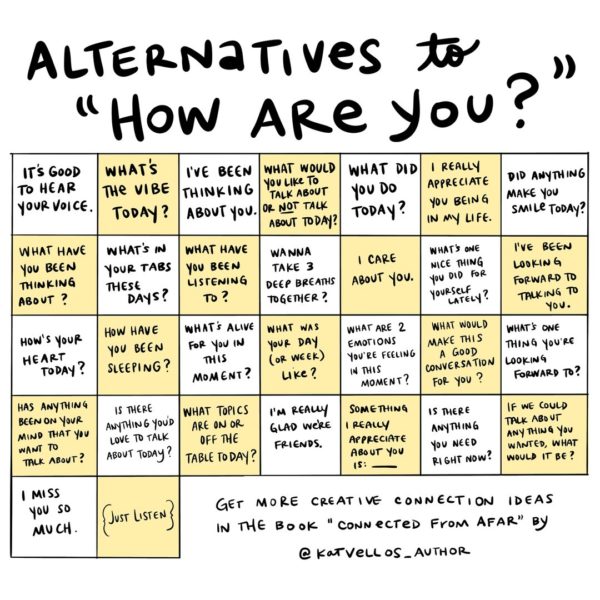
This really spoke to me. I’m not a big fan of opening conversations with, “How are you?”, primarily because in the majority of cases, a serious answer isn’t expected. Austin Kleon starts there, but then goes on a couple of fun tangents about conversations in general. What I love a lot is this illustration by Kat Vellos that he includes:
9. The staying power of Arrival - The Long Shot (on Substack)
Arrival is one of my favorite movies. The reason for that is funny. I don’t know too much about movies, so when I’m on a long-haul flight, I browse movies in alphabetical order, find the familiar poster of Arrival , and watch it again. It helps that it’s a wonderful movie. This post is an ode to the movie, and in particular how you can watch it multiple times.
Rewatching movies is a lot like understanding the Heptapods’ written language. Once you understand it, you know how everything ends even before the ending arrives. You’re watching the beginning again, but you’re not watching it the way beginnings are intended to be watched. You’re watching it unfold, but with the ending burrowed in your mind, so that you can see how the pieces fall into place instead of only looking at the puzzle upon completion. When the ending comes, it doesn’t arrive as a surprise, but as an ending you’ve seen coming for two hours. But you watch it again anyway. You embrace the journey. You welcome every moment of it.
10. Queer Time: The Alternative to “Adulting” - JSTOR Daily
Queer scholar Jack Halberstam’s 2005 book In a Queer Time and Place argues that “queer uses of time and space develop… in opposition to the institutions of family, heterosexuality, and reproduction.” Queerness itself is “an outcome of strange temporalities, imaginative life schedules, and eccentric economic practices.” It is inflected by time-warping experiences as diverse as coming out, gender transitions, and generation-defining tragedies such as the AIDS epidemic. That is, queerness is constituted by its difference from conventional imperatives of time.
Cya! -Kat.