Well, hello there, reader. This is Vishal, and it’s been some time since I’ve sent a “proper” issue of the Kable. I’ve had various things going on, not the least of which was my PhD thesis. I expect to have more time and energy now! I have lots and lots of things to catch up on, and I’m very excited to be able to do so. I’m pretty happy with this week’s issue, and as always, love it if you write back.
If you got this from a friend and want to subscribe, here’s the link. Also, if any of the links are paywalled and if you don’t want to pay for a subscription, try opening the link in incognito mode in your browser. This works if the website has a “soft” paywall. If that doesn’t work, you can access the website using a different browser on the same device, or use a different device altogether. Another, slightly involved, method is to try to disable JavaScript and reload the page. This works on some websites for me.
1. Hot Streaks in Your Career Don’t Happen by Accident - The Atlantic (soft paywalled)
This is pretty cool! A “hot streak” in your career is when you enter a period of fecund productivity and creativity, churning out high quality work at a high rate. How do we get these to happen in our lives? A good strategy to do so is something that might be familiar to machine learning-researchers, “explore and exploit”. In other words, keep flitting from topic to topic until you find something that you align with and are good at. Explore, then exploit. And repeat. This reminds me of a few things: Austin Kleon’s commentary on this piece, and a few things I’ve shared in the past on the newsletter (I think). The Streak of Streaks by Stephen Jay Gould (1945) and Is Your Streak About to End? The False Belief That Can Drive Both Gambling and Anxiety from Angela Chen at The Catapult.
2. The True Cost Of Posto - Whetstone Magazine
“Posto” refers to poppy seeds. They are an integral part of Bengali and Bangladeshi cuisine. They are essentially a byproduct of the opium poppy plant, in the sense that once the opium is extracted from the plant, the seeds are quite harmless and are okay for regular consumption. Just like tea in India, poppy seeds too have a gravity to their history. Entire wars were fought between Britain and China for opium. This is a nice piece that taught me quite a bit about this history, and the social history of this important food item.
It is in the entanglement of a brutal origin story and its present-day colonial legacy that I now find myself trying to place this specific facet of my food memories. Food is no doubt a source of comfort and familiarity; reclaiming food stories and traditions can be an act of ownership and care for communities. But food is also a site where power relations have historically played out — between those who labour to produce it, those who can afford it, and those who can wax nostalgic about it. The danger of a single story about food — one woven from nostalgia — is that it crowds out the less palatable and more disquieting stories about these entrenched power relations and our own ignorance of and complicities in sustaining them.

3. To Be a Field of Poppies - Harpers Magazine
Ah, heehee, I like it when two consecutive pieces in an issue have a rough theme connecting them. Anyway, this is not really about poppies. It’s about human composting, namely the process of converting human remains to soil. It’s really quite.. expansive. This essay focuses on the cleverly named company Recompose, and “natural organic reduction” in the US state of Washington.
4. The Mind of John McPhee - New York Times (soft paywalled)
I’m reasonably sure I’ve shared this profile of the writer John McPhee once in the past (it’s from 2017), but I think it’s worth a reshare. McPhee is one of my favorite writers. He writes “narrative nonfiction” and his prose is artfully constructed.
McPhee has built a career on such small detonations of knowledge. His mind is pure curiosity: It aspires to flow into every last corner of the world, especially the places most of us overlook. Literature has always sought transcendence in purportedly trivial subjects — “a world in a grain of sand,” as Blake put it — but few have ever pushed the impulse further than McPhee. He once wrote an entire book about oranges, called, simply, “Oranges” — the literary cousin of Duchamp’s urinal mounted in an art museum.
5. Let’s Change the Way We Talk About ‘The Catcher in the Rye’ - Fresh Lens (soft paywalled as it is a Medium publication)
I tried to read The Catcher in the Rye when I was in undergrad, and I couldn’t/didn’t want to finish it. I think that’s a bit of an injustice to the book, and reading this piece (it’s pretty long so I skimmed through parts of it) has made me change my mind and at least go back to give the book another chance. The author of this piece, Mike B., says that there are four recurring hot takes made about the book, and he refutes each of them. The four are, very briefly, that (a) Holden (the protagonist of the novel) is just a whiny brat, (b) teenagers can’t pick up on the subtleties of the novel and thus one should read it as an adult, (c) readers hate Holden coz people hate teenagers in general, and (d) Holden is a true intellectual calling out the hypocrisy of the world.
6. Computers and Creativity - Molly Mielke’s website
Lovely, lovely long essay about how computers can be tools for creative thoughts and actions. It starts with some history of how even the most specific of gadgets and computers were used by artists to push creative boundaries, and how that theme has continued with computers to this day. However, we are at a stage now where making computers more amenable to creative progress and pursuits requires new, collaborative software. In some sense, Google Docs was one of the first “true” multiplayer software platforms. Of course, the piece itself goes into a lot more detail than this brief summary I just wrote.
The value of computers is not inherent; it is what we are able to do with them that makes them valuable. But what we can do with computers is often limited by the depth to which we are able to think creatively, translate these thoughts into computationally articulated work, and then share that work with others. For this reason, digital tools that foster creativity and collaboration hold immeasurable power. So how can we push digital creative tools to their full potential as co-creators, thus harnessing the full power of creative thought and computational actualization to enable human innovation?
7. How To Kill Your Tech Industry - Logic Magazine
Wow.. I only read this yesterday, and haven’t really looked up other sources, but the premise of this article is that the UK’s tech/computer industry petered out in the 1960s and 70s due to sexism. That is, the best computer programmers were women, but due to biases and social norms about who could or couldn’t be at a top position in a company, those women were either denied promotions or else forced to retire early. Essentially, this meant that the UK didn’t use its best talent, and it diluted what standards for acceptable employees. This eventually resulted in the UK government investing deeply in centralized mainframes (which would need fewer programmers to run) instead of the up-and-coming decentralized smaller computing machines.
8. The world’s species are playing musical chairs: how will it end? - Nature News
Ooh this is so so interesting. We’ve been warned of a biodiversity collapse for some time now, but the worst has not seemed to come to pass. More specifically, the overall diversity of species in the world seems to be stable and okay-ish. However, at a local level, ecosystems around the world seem to be in a state of flux, and hence the term “the world’s species’ are playing musical chairs”.
So, scientists naturally assumed that they would find precipitous declines in biodiversity nearly everywhere they looked. But they haven’t. And a consensus is emerging that, even though species are disappearing globally at alarming rates, scientists cannot always detect the declines at the local level. Some species, populations and ecosystems are indeed crashing, but others are ebbing more slowly, holding steady or even thriving. This is not necessarily good news. In most places, new species are moving in when older ones leave or blink out, changing the character of the communities.
9. They Carry Us With Them: The Great Tree Migration - Emergence Magazine
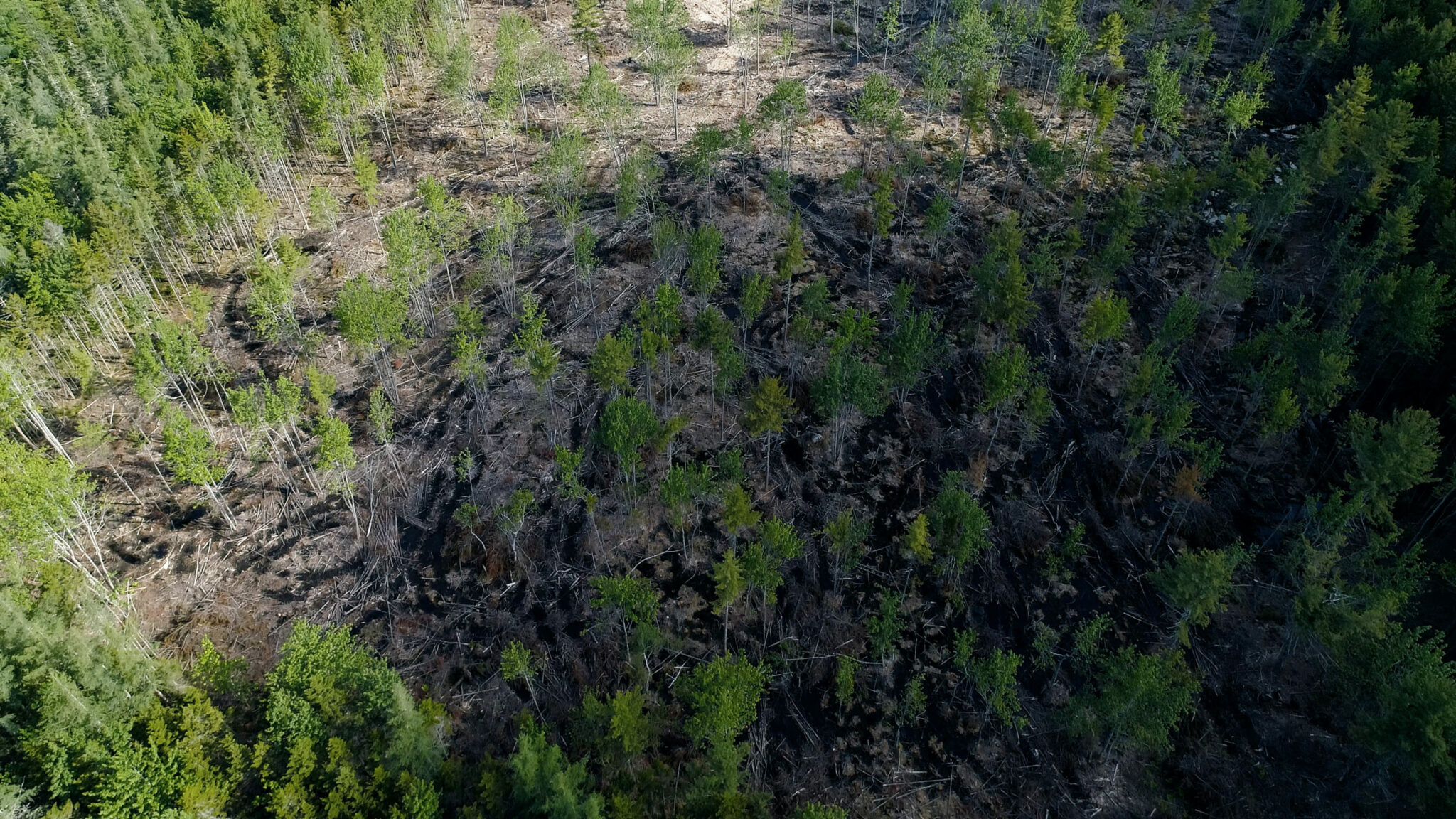
Speaking of species and changes in population etc., here is a feature from the always-good Emergence Magazine. It’s about tree migration generally, and specifically about the trees in the New England part of the US and Canada. Trees are (in the Northern Hemisphere) moving northwards and upslope as winters are getting warmer. The whole thing is so beautiful and gorgeously put together.
10. A Whale’s Afterlife - The New Yorker (soft paywalled)
What happens when we study a whale’s decaying body at the bottom of the sea?
We knew, broadly, what had happened in the preceding three years. For denizens of the seafloor, a whale fall is like a Las Vegas buffet—an improbable bounty in the middle of the desert. Rosebud had delivered about a thousand years’ worth of food in one fell swoop. The first animals to pounce had been scavengers, such as sleeper sharks and slimy, snake-like hagfish. In the course of about six months, they had eaten most of the skin and muscle. Inevitably, the scavengers had scattered pieces of flesh […] As Rosebud came into view, we saw colorful microbial carpets light up the screens—plush white, yellow, and orange mats, each a community of microbes precisely tuned to their chemical milieu. The whale’s towering rib cage had become a cathedral for worms, snails, and crabs, which grazed beneath its buttresses.
See you again soon! This weekend, hopefully? -Kat.