Well, hello there. This is Vishal with another issue of Kat’s Kable. I have much more time on my hands these days, which means I’ve been doing a lot more reading, both online and offline. I think that reflects in the selection of articles too, since having more to pick from means I generally pick better ones. Another thing I’ve been doing lately is collecting similes from books and other things I’ve been reading. There’s something called The Simile Museum run by Allegra Hyde which I really like, and so I decided to do it myself too. I finally transcribed and put up my collection on my website.
That’s it from me this week, so sit back and enjoy this list of ten good things to read. As always, feel free to respond to this email if there’s anything you’d like to say.
If you got this from a friend and want to subscribe, here’s the link. Also, if any of the links are paywalled and if you don’t want to pay for a subscription, try opening the link in incognito mode in your browser. This works if the website has a “soft” paywall. If that doesn’t work, you can access the website using a different browser on the same device, or use a different device altogether. Another, slightly involved, method is to try to disable JavaScript and reload the page. This works on some websites for me.
1. A Rant About “Technology” - Ursula K. Le Guin Archive
This is a short comment by Le Guin about what constitutes technology in both her work and in science fiction more generally. It’s a response to a critic saying that in Le Guin’s work, “technology is carefully avoided”. The retort is something quite nice, that technology isn’t just the swanky new and sophisticated stuff, instead it’s “the active human interface with the material world.” This also reminds me of Bee Wilson’s book Consider the Fork , which is about kitchen tools and appliances (even something as simple as a fork) that we use on a day to day basis but don’t appreciate as “technology”.
Its technology is how a society copes with physical reality: how people get and keep and cook food, how they clothe themselves, what their power sources are (animal? human? water? wind? electricity? other?) what they build with and what they build, their medicine - and so on and on. Perhaps very ethereal people aren’t interested in these mundane, bodily matters, but I’m fascinated by them, and I think most of my readers are too.
2. The Weight of Our Living: On Hope, Fire Escapes, and Visible Desperation - The Rumpus
This is a long essay from 2014 written by Ocean Vuong. It’s a personal essay about some existential questions centered around Vuong delving into the aftermath of the death of his uncle. I don’t know quite how to describe it, but I was touched.
I speak of poetry only because it is the medium that I am most intimate with. But what I mean to say is that all art, if willing, can create the space for our most necessary communications. The character in the novel, the brush strokes in the painting, its tactile urgency, the statue of the Madonna made from birdseed, partly devoured and narrowed into a yellowed sliver in the rain. I want to believe there are things we can say without language. And I think this is the space the fire escape occupies, a space unbounded by genre or the physical limitations of the artist’s tools. A space of pure potential, of possibility, where our desires, our strange and myriad ecstasies can, however brief, remain amorphous and resist the decay actualized by the rational world.
3. How Philosophers Think - David Perell’s blog
This is a nice insight and piece of writing from David Perell. He studies philosophy with a tutor, and it seems to me like a meta-study. Rather than delve into the philosophy itself, I think his major takeaway is to tweak his thinking and make it more similar to how philosophers dissect ideas. The two main things, in my opinion, is (a) to strip arguments to their atomic elements, and (b) to identify what might be unconscious assumptions being made to prop up an argument.
The way he dissects ideas reminds me of something the smartest kid in my middle school class used to do. On the weekends, he’d take computers apart and put them back together, so he could understand how they work. He rarely reconstructed them in the same way he dismantled them, though. For the joy of play and the pursuit of efficiency gains, he searched for new ways to reconfigure the machines. Every now and then, he’d find a performance improvement that even the designers didn’t consider. But usually, his risks didn’t pan out. Even when he reached a dead end, he always learned something about why computers are made the way they are.
4. Seeds of Doubt - The New Yorker (soft paywalled)
I almost didn’t want to share this because I have lots of views and it’s hard to get all that nuance across in a single paragraph. The article is from 2014 and it’s about Vandana Shiva, an advocate for food sovereignty. It’s specifically about her crusade against genetically modified crops. The part of her argument that I agree with is that allowing for ownership of specific seeds and genetic strains is bad and against openness. However, it also seems like, in many parts of the world, people can be helped with access to superior, genetically modified plants. Part of her advocacy is dogmatic. I do feel, though, that this piece does a good job of going into a lot of the details, not only of Shiva’s views, but also of agriculture more broadly.
5. Children in the Garden: On Life at a 3,100-Mile Race - Longreads
I’ve shared writing by Devin Kelly in the past, and it’s been great. This new essay of his is just as good! He writes here about a unique race that takes place in New York City. The goal of the race is to run 3,100 miles, but all of that distance is covered in repeated laps of a single block of the city. More than athleticism, the race is an exercise in mindfulness, generosity and joy.
That day, and each day after that I saw him, he wore a makeshift crop top printed with the race’s name, and his legs moved with the same powerful tenderness of an elephant’s. You could tell they respected the ground they landed upon. The first time I saw him, he also saw me, and his eyes — which are so blue that they leave an ache in the back of your throat — briefly met mine before they dropped back to the ground. He put his hand to his heart and nodded my way, and for a second I could not breathe at all. I felt unquestionably in the presence of someone whose capacity for gentleness far exceeded mine, and I stood there — alone, slightly cold, leaning against a soccer field’s chain link fence — wondering if I should change my life.
6. The speed of science - Works in Progress
This is a nice post commenting on the speed and nature of scientific research right now. Not only does it critique the current system (too slow, it’s hard to replicate or verify past studies, ineffective peer review, p-hacking to show statistical significance), but it also points at new directions and solutions which can make things better.
7. Morris Chang: Foundry Father - [IEEE Spectrum](https:
//spectrum.ieee.org/morris-chang-foundry-father)
Morris Chang is the founder of Taiwan Semiconductor Manufacturing Co. (TSMC), which has been in the news a lot in the recent past because of the global chip shortage. That’s probably how I found this profile of him, because it’s from 2011. TSMC is a one-of-a-kind company, or at least it was when it was founded. “Fabless” semiconductor companies are those which don’t have their own fabrication facilities, so they design chips and then outsource the manufacturing to foundry companies, like TSMC. TSMC has become massive and hence very important to the global digital electronics sector. Reading about Changs’s life and journey was quite cool.
8. The disastrous voyage of Satoshi, the world’s first cryptocurrency cruise ship - The Guardian
Ha! This was quite something. I learnt about the seasteading movement, which is an attempt to live in dwellings in the sea. The idea is that then you are not subject to the laws of any country, and thus gives you maximum freedom. Also, if you want to create a new country now, it’s hard to do it within the territorial confines of current countries. However, you could make new nation-states on the high seas. A trio of people attempted to do this off the coast of Panama on a cruise ship, and faced a lot of setbacks. This is their story and it’s funny in some aspects and quite sad in others. This also kinda reminded me of Sealand, about which I shared an article a long time ago: Meet the Caretakers of Sealand, the World’s Most Stubborn Micronation.

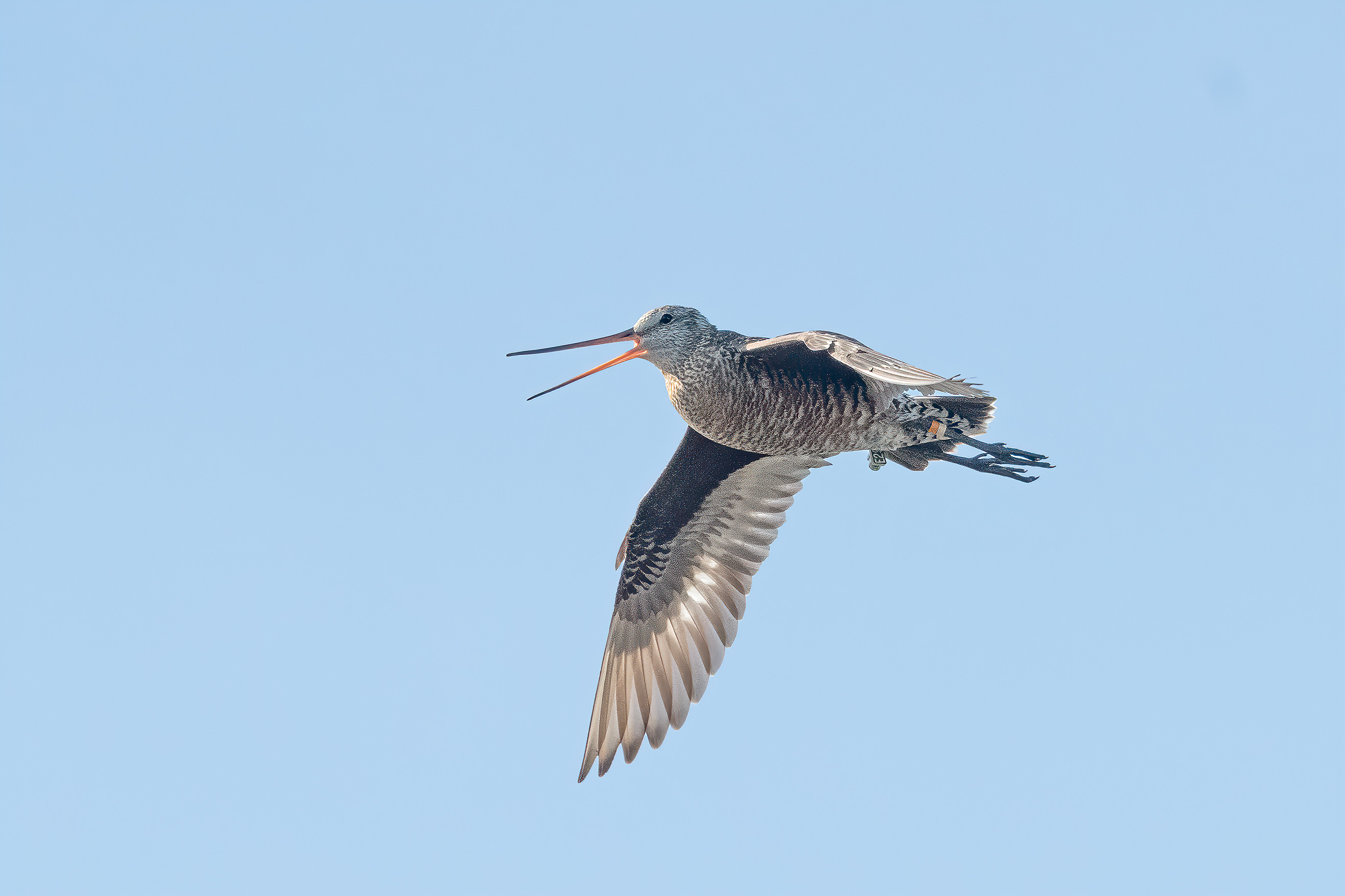
9. This Wonder Bird Flies Thousands of Miles, Non-Stop, as Part of an Epic Migration - Smithsonian Magazine
Oh wow. This article is about the Hudsonian godwit, a migratory shorebird. Its migration is, as the article title says, epic. One of the cool things I learnt about these birds (and I think birds in general) is that they burn fat in a much more efficient manner than humans. Also, burning fat releases energy and water, and they’ve developed ways to use their water. Thus, not only are their fat reserves calorie reserves, but they’re also a canteen. This too is crazy:
There are other adventures in avian plasticity as godwits prepare for departure. Research suggests that bar-tailed godwits double or triple the size of their pectoral muscles, their heart and their lungs ahead of migration to better power their flight. To compensate, they shrink their gizzards, livers, guts and kidneys. After they arrive at their destination, their bodies readjust. As they head north to breed, the testes of red knot sandpipers grow to 30 times their winter size to supply ample testosterone for singing and other fun things. Some birds grow new neurons ahead of their journeys to supplement the hippocampus, which helps with navigation.
10. Inside the Super Positive Community of Competitive YouTube Water Drinkers - Vice
Well, what can I say. This was fun to read and it’s always heartening and nice to see people form unique and offbeat communities online.
See you next week.–Kat.