Well, hello there. This is Vishal with another issue of Kat’s Kable. I wanted to send this out a few days ago, but all of a sudden I’ve been tired this week. It’s not a bad tiredness, it’s mostly physical and characterized by an overall lack of energy (rather than lack of motivation). It definitely feels welcome when I compare it with the dullness of feeling depressed. Apart from reading stuff online, I’ve been working my way through Terry Pratchett’s Discworld books. So fun and escapist. I’m enjoying myself. As always, feel free to reply to this email and tell me what you think! Or how your week was. Or just say hi.
If you got this from a friend and want to subscribe, here’s the link. Also, if any of the links are paywalled and if you don’t want to pay for a subscription, try opening the link in incognito mode in your browser. This works if the website has a “soft” paywall. If that doesn’t work, you can access the website using a different browser on the same device, or use a different device altogether. Another, slightly involved, method is to try to disable JavaScript and reload the page. This works on some websites for me.
1. On Death and Love - Emergence Magazine
“As Melanie Challenger examines the belief in human exceptionalism that has devastated life on this planet, she wonders if our desire to outrun death is hindering our capacity to love.”
Well, I really loved this. It is morbid in some ways but also vibrant.
Among the many lessons Hannah taught me that day, and in the days to come, was the significance and seriousness of grief in human lives—which is another way of saying the significance of love in our lives, because it is the fever of our attachment to one another that charges grief with its intolerable brilliancy.
2. On Survival: the Dead, the Sapling, and the Ancients - Emergence Magazine
I generally prefer not to share two pieces from the same source in any single issue of the newsletter. Well, this time I’m bending that rule because I think this essay goes well with the previous one. It’s by ecologist Lauren Oakes who studies yellow cedars that grow in Alaska (and are dying out). She writes nicely about managing the science and “nonscience” aspects of her work. Of course, as an ecologist studying a species of trees, her work has to be structured a certain way. However, catalyzed by discussions with geologist Greg Streveler, she tries to blend into her work the nonscience part of her experiences and interactions. I thought this was pretty cool. One can argue that a scientist’s work can become less objective, but in the end, scientists too are humans and it is important to acknowledge and include the subjective. I was struck by one thing that Streveler says to Oakes:
“My interest in science has been capped a bit,” he’d declared, “because I’ve wanted to have energy to develop some of the nonscience parts of myself that I thought were atrophying.”
and also this written by Oakes herself:
Speaking about the trees more personally than scientifically also felt risky—as if I couldn’t be an ecologist and also share what it was like to live for months amidst graveyards of individuals killed by the warming world. Or acknowledge the grief that simmered inside me as I crawled around mosses and shrubs, searching for seedlings under dead giants. Or describe the sweet smell of cedar, that sense of admiration I secretly savored in the presence of relics. So I didn’t know what to say.
3. The Medieval Influencer Who Convinced the World to Drink Tea—Not Eat It - Atlas Obscura
Well, thank you Lu Yu for getting people to drink tea instead of using it to caffeinate soups. I’m writing this issue of the newsletter while nursing my usual brew of green tea, and while I’m not thrilled by the idea of chewing on tea leaves or simmering it in soup, I would like to try them out, I think. There’s also a tea leaf salad, though, and I think that would be rather nice.

4. Reinventing the toilet - Mosaic
Feeling kinda sad sharing this knowing that Mosaic has shut down now. This is a 2017 piece about a company called Loowatt, which makes closed-system toilet systems. That is, they make toilets that flush without water, store the waste in a sealed bag, and then pick it up to convert it into fertilizer and biogas. In 2017, they were building up their presence in rural Madagascar, where sewage systems in most rural areas didn’t exist.
5. After She Escaped Her Strict Religious Community, There Was No Turning Back - Runners World
Wow! This is such a story. It’s about Connie Allen, who was born into an ultra-Orthodox Jewish family in New York City. Her life was quite something, and the interesting thing for me was learning that her orthodox Satmar community lived the way they did because of the Holocaust, and that everything they do “is under the lens of trauma and fear”. Connie is now a runner, having completed four marathons. Her story is both sad and inspiring.
6. A Short History of Bi-Directional Links - Maggie Appleton’s website
Most of the internet we use features unidirectional links, which means that we know when one webpage links to another one, but we don’t usually know which pages have linked a page we’re currently on. That’s hard to do because there are both some technical and social issues, like taking care of privacy. But bidirectional links can work when privacy is not an issue, like when it’s between a single person or team’s notes. And it’s quite fascinating. I’d like to set up a system like this for myself too.
7. J. Kenji López-Alt Says You’re Cooking Just Fine - The New Yorker (soft paywalled)
I’m a big fan of Kenji’s body of work online, especially his YouTube videos of late. If I want to cook something new and he has a recipe online, that’s the one I follow. Well, in this interview, he talks about that and how it’s hard for him to deal with the fame. He says,
I do find it frustrating that people take everything I have to say so seriously. I understand it, but I grapple with it. It’s surreal. It’s a weird thing to acknowledge to yourself—that people take your words seriously. You have to be really careful about what you say. And then, even when you try to be really careful, there are always ways that people are going to get angry.
This is something that struck me quite a bit, since it’s kinda how I feel about having an audience in general. Of course, my audience is about a thousandth as large as Kenji’s, but in spirit I feel similar things about, for example, saying things on this newsletter sometimes. Another cool thing he says in this interview with Helen Rosner:
The technique is something that has wide applications. It’s a method, as opposed to a recipe, which is just the one thing. If I ask my phone, “How do I get from here to the post office?,” it gives me a recipe to the post office. I can just stare at my phone and see how many feet I have to walk this way, which way I turn, and then I get to the post office. Whereas learning a technique is like being handed the map. It allows you to choose other destinations—it allows you to choose alternate routes. That’s basically the difference to me: a recipe is turn-by-turn directions, a technique is a map.
8. Abundance - Ryan Moulton’s blog
Well, this is a short essay that takes you places. The author first starts off by talking about examples of incredible amounts of abundance found in his region in the natural world. He writes about it so well!
Whenever you witness true abundance, it seems insane. It is incredible in the original sense of the word. It is not constrained by needing to seem possible. It is something that can’t be, and yet is. It is a wave that never crests. It is a wild YOLO war whoop made flesh.
He then compares this to Silicon Valley, which is such an unpredictable and unexpected place considering the abundance of innovation and technology there.
9. The Day My Wartime Cat Went Missing - New Lines Magazine
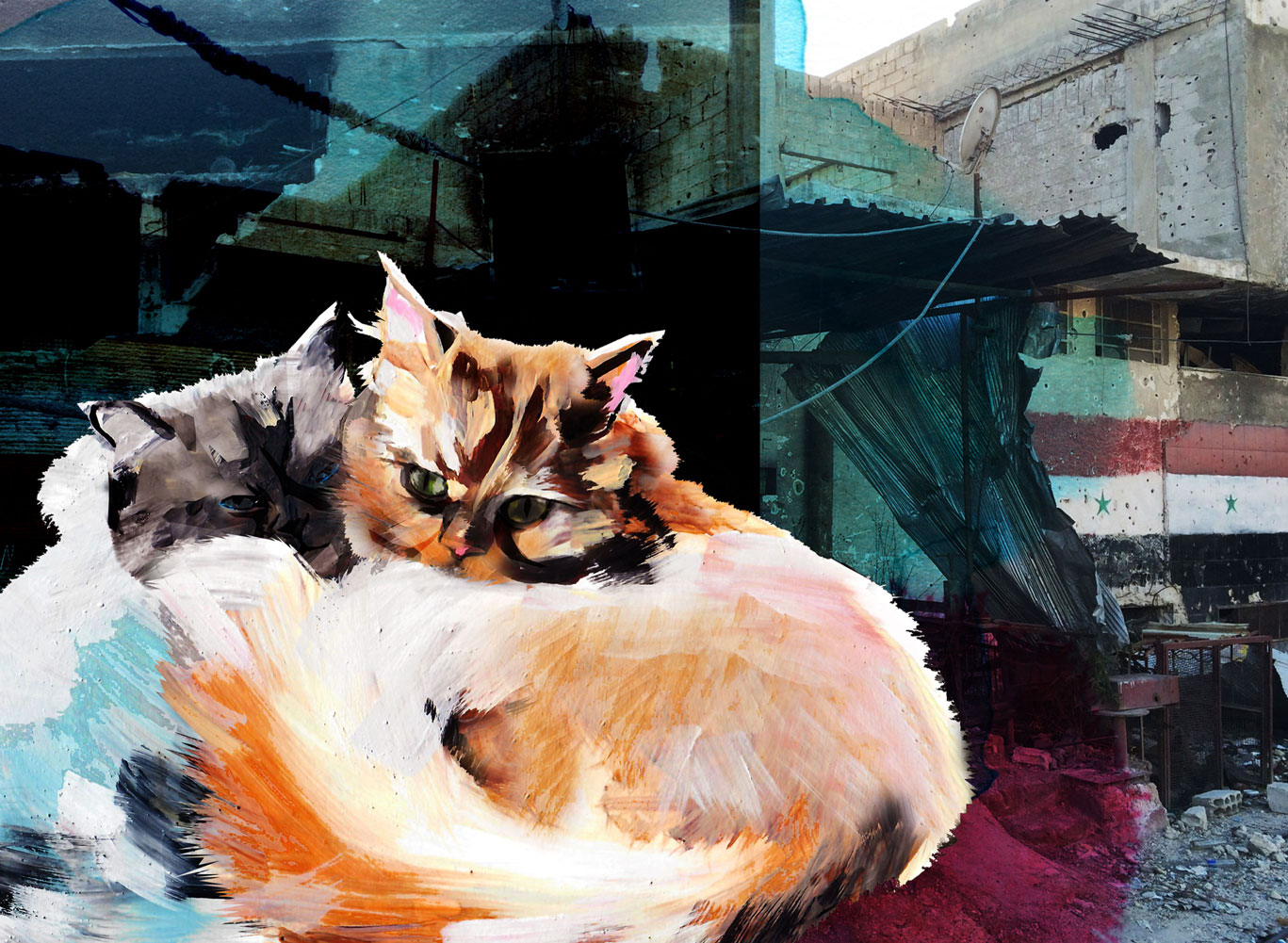
Really lovely story of cat companionship across countries. Rasha Elass now lives in Washington DC, but used to live in wartime Syria and the UAE. She has two cats, Pumpkin and Gremlin, and this personal essay is about how she managed her life with them. So sweet.
10. The creator economy - Nadia Eghbal’s blog
Nadia Eghbal’s blog posts are almost always worthwhile to read. Here she talks about being a “creator” on the internet and using that to make a living.
I have a growing fear that maybe we’re all just a little too overresourced and understimulated, taking part in the constant onslaught of more content and degenerate internet pranks, whether it’s making a video or blog post, or an NFT or a DAO. While media is an important, influential part of culture, I’d hate to see “being a creator” become synonymous with entertainment, where people are never intrinsically motivated to explore any of its potential beyond that.
and
I struggle to find meaning in the creator economy, in its current form. Without any deeper purpose in mind, aspiring to be a “creator,” as a career move, is almost tautologically devoid of cultural meaning and impact.