Hi there! This is Vishal with another issue of Kat’s Kable. A bunch of you replied to the newsletter last week which has left me feeling happy, and also with the realization that it might be nice for me to share more personal stuff, perhaps? The past week was weird, and tiring and also stressful, in a number of different ways, and I’m trying to shrug that off right now. On the plus side, I baked some cool desserts (a peanut tofu-based mango cheesecake, blue coconut milk pudding, and a tried-and-tested chocolate cake for friends) and experimented with different tofu-making methods (which is still ongoing). I also ordered dried rice koji online! I am excited about using it to start a batch of miso. I’ve always thought of miso as a “level” of sorts.. in the sense that once I made miso, I’d become a more confident person with regards to fermentation. I’m also going to start looking for jobs seriously in the next two weeks. I don’t have a concrete sense of what I want, so I’m going to make flowcharts and lists and untangle some of that in my head.
I’m feeling tired, so that’s all for this week. As always, reply whenever you like to any of my emails. I love hearing from you.
If you got this from a friend and want to subscribe, here’s the link. Also, if any of the links are paywalled and if you don’t want to pay for a subscription, try opening the link in incognito mode in your browser. This works if the website has a “soft” paywall. If that doesn’t work, you can access the website using a different browser on the same device, or use a different device altogether. Another, slightly involved, method is to try to disable JavaScript and reload the page. This works on some websites for me.
1. The Rise and Fall of Internet Art Communities - Artsy
Aha, I really liked this historical deep dive into art communities on the internet. Right now, most artists (are forced to) use Instagram, whereas earlier there were less-commoditized and more personalized art platforms and forums. Further, there was more of a clear demarcation between personal web pages and social platforms. Obviously, that is now not the case. I think broadly, this article describes the evolution from “web1” (more webpages and decentralization) to “web2” (most things on the internet happen on closed platforms).
2. Cryptonomicon - Harper’s Magazine (soft paywalled)
This was both fun and funny to read. Will Stephenson writes about his dabblings into bitcoin and other cryptocurrencies, which was followed by him attending a “Bitcoin maximalists” conference in Miami (of course). The whole thing is quite surreal. I also found another nice simile for my simile collection:
The moment I stepped off the plane at Miami International Airport, I was enshrouded in a kind of muggy, tropical torpor that I would wear for the next several days like a heavy coat.
3. Annie Dillard’s Classic Essay: ‘Total Eclipse’ - The Atlantic (soft paywalled)
Wow! So good. This is from August 2017, when I too was fortunate to see the same solar eclipse as Dillard sees and describes in this essay.
I turned back to the sun. It was going. The sun was going, and the world was wrong. The grasses were wrong; they were platinum. Their every detail of stem, head, and blade shone lightless and artificially distinct as an art photographer’s platinum print. This color has never been seen on Earth. The hues were metallic; their finish was matte. The hillside was a 19th-century tinted photograph from which the tints had faded. All the people you see in the photograph, distinct and detailed as their faces look, are now dead. The sky was navy blue. My hands were silver. All the distant hills’ grasses were finespun metal which the wind laid down. I was watching a faded color print of a movie filmed in the Middle Ages; I was standing in it, by some mistake. I was standing in a movie of hillside grasses filmed in the Middle Ages. I missed my own century, the people I knew, and the real light of day.
4. Silent Eye Contact - Narrativemancy
Wow, also quite cool. Marie, the author of this blog, talks about her experience in an adult club in Berlin carrying a big sign saying, “Silent Eye Contact”. She had quite the singular experience for the next few hours. This made me think how much I shy away from establishing or maintaining eye contact with anyone in my life.. even people who I consider to be close to me.
5. Walking While Black - Lithub
Thanks to a friend, S, who sent me this long and hard-hitting personal essay by Garnette Cadogan from 2016. Cadogan, a Black man, grew up in Jamaica, where his experience of walking was.. intense, for lack of a better word. He was often considered crazy to walk in some parts of Kingston, the capital, because of how unsafe it was. However, when he moved to America, walking became unsafe in a very different way. That is, it became dangerous to him because people viewed him as dangerous. I really appreciate the clarity and honesty with which he’s written this essay.
6. Grieving His Mother’s Death, Ocean Vuong Learned to Write for Himself - TIME Magazine (soft paywalled)
This profile (of sorts) of Vuong really makes me want to read his novel On Earth We’re Briefly Gorgeous asap. It’s wonderful and he comes off as a sensitive, caring and also such a talented person. He talks a lot here about his relationship with his mother, and how the poetry collection he wrote after her passing, Time is a Mother , is the only book that he’s proud of. This is because he thinks he compromised nothing and gave himself totally to the writing of the book. I’d shared an essay by Vuong just a few weeks ago too, The Weight of Our Living: On Hope, Fire Escapes, and Visible Desperation.
7. Sign of the times: Mumbai’s typographical treasures - The Guardian
So fun.

8. When the Mongols Set Out to Conquer the World, There Was Only One Limiting Factor: Grass - Historynet
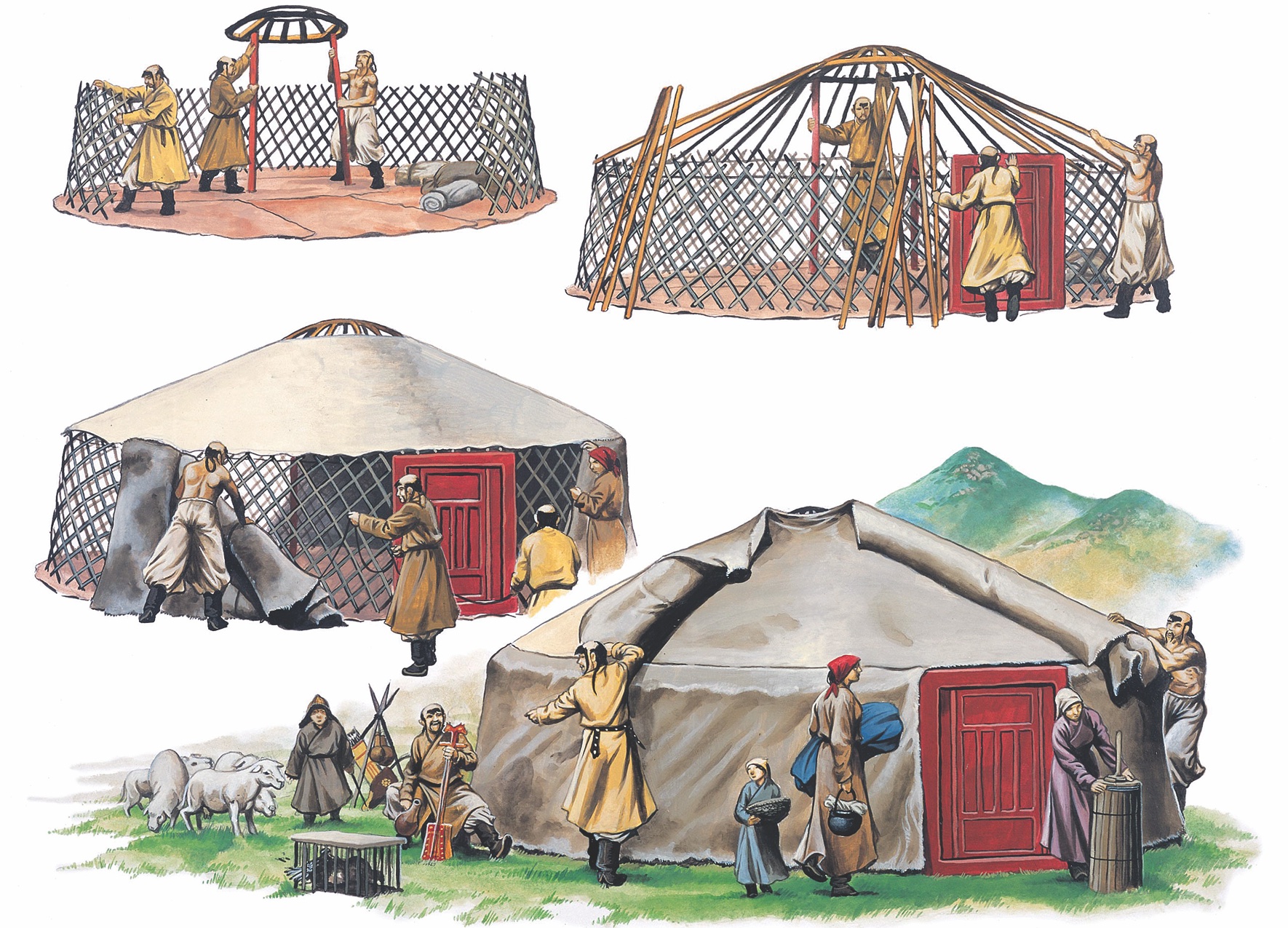
Reading this deep dive into the operational strategies of armies, both historical and contemporary, reminded me of how I like to read about history. The Mongol armies of the past used unique tactics, specifically that of splitting up their cavalry into smaller autonomous units. This particular feature was mostly done because if the army marched as one, there wouldn’t be enough pasture for their horses and sheep. Phew. The rate of growth of grass essentially informed their battle strategy, and that has percolated even into Russian battle strategies upto the last century.
9. Cyanotypes of British Algae by Anna Atkins (1843) - Public Domain Review
This isn’t something I usually share (it’s not longform text by any means), but I enjoyed looking at these cyanotypes from a long time ago. A cyanotype is a type of photograph/printing method, where a light-sensitive chemical is applied to the object in question and then left to develop in the sun. I also found out that a new friend I made makes cyanotypes as a hobby! So I am also quite excited to learn from them.

10. Decentralising Digital: Artefacts from Hopeful Futures - Branch Magazine
Very interesting. This is an exploration of technological devices and systems that may come to pass with a more decentralized internet, especially in rural areas. This is put together by the organization Decentralizing Digital, which works in rural areas in the Indian state of Karnataka. I love the hopepunk kind of optimism in the devices presented, as well as the examples of how they’re used. The illustrations are cool too! My description really doesn’t do justice to this project. Here are pictures of two of their devices/artefacts: the “Solinga” voice assistants, and a low-tech mesh WiFi hotspot.


See you next week.-Kat.