Hi there! This is Vishal with yet another issue of Kat’s Kable. Things got away from me over the weekend and thus I’m a few days late here. I’ve been itching to get back to my old Sunday schedule, but every Saturday it feels like I would have to push myself to get the newsletter out on Sunday. And I’m not in the mood to push myself one bit these days. So mid-week issues it is. I’m happy to take my time with the curation and not “force” links in so that I can get to ten links per issue. I’ve also had lots of thoughts which aren’t fully fleshed out, so instead of waiting to write them as proper essays, I’ve put them up in half-baked form on my website. You can take a look here if you’d like, and of course if there’s anything you’d like to say about them, please reach out to me by email, or just reply here.
I’ve been doing a lot of baking and fermenting, as is my wont, and it’s been nice for me to do so as I’ve felt slightly off these past few weeks. Cooking, fermenting and baking, in my opinion, are great things to do because even if you just follow a formula or recipe, you are still “creating” something and deriving the joy and satisfaction of bringing a thing, albeit small, to completion. Also! I’ve been experimenting in the kitchen. I’ve been in a tofu-making phase, and I wanted to know if one can make tofu with other legumes, not just soy. People on the internet said that it would be difficult, as soy alone has the protein + fat makeup that allows for the milk to curdle with a coagulating agent. But! I tried making tofu from peanuts, as they are closest to soy in terms of their fat and protein profile. And it works! I was very proud of myself for that. Today I baked a cake by combining a few recipes off the internet and a vague memory of a cake I ate two weeks ago. This is nice.
I’ve also been teaching myself the ukulele via online tutorials, and it’s nice. The other day I finally got to the point where I could play four chords and switch between them so that they were all recognizable, and I couldn’t stop laughing and grinning to myself because it felt so good. Ecstatic. That’s all I have to say for now. Enjoy this week’s list :)
If you got this from a friend and want to subscribe, here’s the link. Also, if any of the links are paywalled and if you don’t want to pay for a subscription, try opening the link in incognito mode in your browser. This works if the website has a “soft” paywall. If that doesn’t work, you can access the website using a different browser on the same device, or use a different device altogether. Another, slightly involved, method is to try to disable JavaScript and reload the page. This works on some websites for me.
1 We Can Do Better Than “Same, But Electric” – Climateer (on Substack)
For each application of fossil fuels, the question we should be asking is not “how can we simulate the same result using batteries and an electric motor”? Instead, we should ask “if we weren’t wedded to a century plus of fossil-fuel-based assumptions, how would we approach this problem”? We’re starting to find surprising answers, and many of the surprises are positive. We should be trying as many creative solutions as we can, especially in sectors – like shipping – that currently seem hard to crack. For every success, there will be multiple failures, but as far as the planet is concerned, it’s only the successes that matter.
2. Estate - Fifty Two
Phew! This was quite the read. It’s about a long-standing movement in the Indian state of Bihar to carve out the independent country of Kolhan. Even now, the region of Kolhan has a sort of weird legal status because it adheres to the Wilkinson Rules. The Wilkinson Rules are an artifact of India’s colonial period, and they codify the manner in which tribal laws could be enforced, albeit with British oversight. These rules are still in effect in Kolhan now, and over the decades they’ve been instrumental in justifying secessionist movements, and perhaps most tellingly in Kolhan. I had a lot of fun reading this.
3. How TrueCaller built a billion-dollar caller ID data empire in India - Rest of the World
I still remember how thrilled I was with the Truecaller app back in, say, 2012? Only a few years later did I realize how dubiously the app operated, and started to dislike it very much. For those who don’t know, Truecaller is a caller-ID app that lets you identify the owners of unknown phone numbers when they call you. They do this by collecting the stored contacts of all their users. Basically, to be identified by Truecaller, all that needs to happen is that someone with you in their contacts needs to install the app. Learning more about the nitty-gritties of the operations of Truecaller just makes me feel icky, especially when I realized that Truecaller operates differently (in a way more respectful of privacy) in places like Europe.
4. Green growth vs degrowth: are we missing the point? - Open Democracy
Nice piece (from 2020) that seems quite.. balanced?
For some this is a compelling and entertaining debate. But it is not going to be settled in a timeframe that is useful for maintaining a habitable planet. In the meantime, these adversaries are in danger of delivering a major own goal. Because the more time we spend in nerdy (and sometimes venomous) exchanges about decoupling, the less time we have to build the broad-based movement we need to take on the vested interests who benefit from the status quo.
The part I like is when the author, Beth Stratford, lists out things that underline the fact that there is lots of common ground to agree upon, despite the fact that you may lie on either extreme of the green growth/degrowth spectrum.
5. Why Have Female Animals Evolved Such Wild Genitals? - Smithsonian Magazine
OK wow. I learnt from this article that female genitalia haven’t been studied much (especially in, say, birds) because we’ve primarily only focused on male genitalia historically.
A world opened up before Brennan’s eyes: the vast variety of animal vaginas, wonderfully varied and woefully unexplored. For centuries, biologists had praised the penis, fawning over its length, girth, and weaponry. Brennan’s contribution, simple as it may seem, was to look at both halves of the genital equation. Vaginas, she would learn, were far more complex and variable than anyone thought. Often, they play active roles in deciding whether to allow intruders in, what to do with sperm, and whether to help a male along in his quest to inseminate. The vagina is a remarkable organ in its own right, “full of glands and full of muscles and collagen, and changing constantly and fighting pathogens all the time,” she says. “It’s just a really amazing structure.”
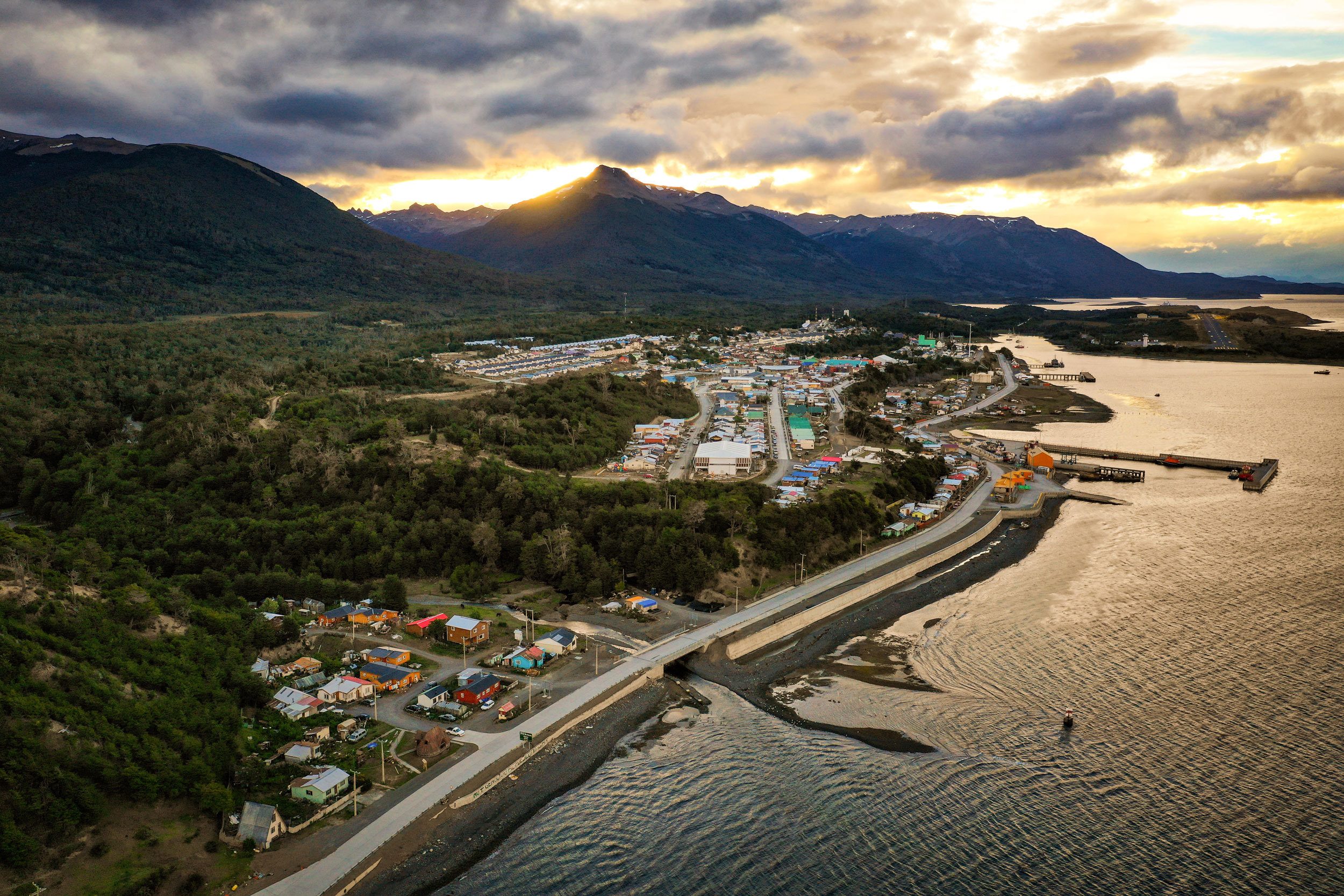
6. Declared Extinct, The Yaghan Rise in the Land of Fire - Hakai Magazine
“The Indigenous people of Tierra del Fuego were once relegated to historical oblivion. Now, archaeologists are helping them pursue deeper stories about their ancestors.”
I enjoyed this long (~7000 words) exploration of the Yaghan people, who live near the southernmost tip of South America. European colonizers and missionaries were quick to declare the Yaghan extinct once they had killed and converted a number of them. However, a few Yaghan remain, and now they are using legal avenues of environmental protection to preserve and maintain the lands that they have lived on for a long, long time.
7. A day in the life of (almost) every vending machine in the world - The Guardian
Ha, this is quite fun, as you might imagine. Vending machines are cool and in my opinion, so human. Like, a very unique and specific thing that we make and put in human-made spaces.

8. Why I Walk - Walking the World (Substack)
This article did the rounds a few weeks ago, and for good reason. It’s an ode to walking, and why walking is a wonderful way to experience a place, whether new or old. It also has beautiful pictures. The way the author, Chris Arnade, talks about tourism especially was relatable to me. Walking affords a non-touristy peek into the place you’re in, as compared to being on something faster (like a car).
Because walking forces you to see a city at its most granular. You can’t zoom past anything. You can’t fast forward to the “interesting parts.” It is being forced to watch the whole movie, and more often then not, realizing the best parts are largely unseen by tourists.
Walking also changes how the city sees you, and consequently, how you see the city. As a pedestrian you are fully immersed in what is around you, literally one of the crowd. It allows for an anonymity, that if used right, breaks down barriers and expectations. It forces you to deal with and interact with things and people as a resident does. You’re another person going about your day, rather than a tourist looking to buy or be sold whatever stuff and image a place wants to sell you.
9. Have iPhone Cameras Become Too Smart? - The New Yorker (soft paywalled)
I like many of Kyle Chayka’s pieces, and this one was quite thought-provoking. I’ve been playing around with a DSLR we have at home, and my phone takes “better” pictures than it right now, given that it’s a beginner. However, the DLSR feels more… it makes me feel like there’s less between the object and the photo. It doesn’t feel like that with the phone camera. This is what Chayka is exploring in this essay, about how the machine learning in modern phone photography is making photos seem “too real”, in a way. This also reminds me of Craig Mod writing in his newsletter, Roden, about cameras, specifically regarding this article:
Because this is how I think of my camera: Quiet, a deliberate extension of the eye with a neutral gaze, allowing me to quickly define all aspects of exposure, satisfying to hold and use. A “true” tool that readily bends to the will of the artist/artisan/craftsperson.
In this sense, an iPhone and a Leica are incomparable. An iPhone’s default is to know what you want. It’s a good default for its billions of users. Defaults are important, and I understand the difficulties, sometimes, in defining them. So the overprocessing that Chayka brings up has never irked me. Overprocessing is precisely the role of the smartphone camera. I’m at peace with most of what my iPhone sensor captures and rarely want more control.
10. A few things to know before stealing my 914 - Hagerty Media
I’ll end this issue with a fun read that’s also been doing the rounds on the internet. Norman Garrett collects old and fancy cars, and one of them is a Porsche 914. It has lots and lots of issues, so here he is giving a potential thief a list of instructions on how to drive the car, plus where to leave it once frustrated so that Garrett can pick it up easily.
If you press onward without taking a break, you may re-enter first. This is how the car mocks you for your lack of skill, but sometimes it is the only path forward. Once you are ready to again try for second, I can offer some advice. One trick that works is to declutch the transmission, pull the lever from the first-gear position, enter into the aforementioned neutral zone, and then rapidly wig-wag the shift knob side-to-side along a lateral axis. If you move the knob quickly enough, the transmission will be out-smarted and cannot anticipate your next move. It is at this time that you should re-attempt to enter second, and most likely you will do so. Surprise is your best weapon against this transmission.
and
By now you’ve certainly noticed the smell. That is the aroma of Mobil 1 oil being boiled off of long sections of horizontal exhaust pipes, which were cleverly encased by the factory with a second shroud of oil-holding chambers. They filled with oil during my last drive and you are now operating a small thermal refinery that is making light short-chained vaporous hydrocarbons from what was once $8-a-quart oil. They are being conveniently routed to the cabin through carefully formed channels in the heating system, plus the rust holes in the floor provided by Mother Nature herself over the past few decades.
