Hello there! This is Vishal with yet another issue of Kat’s Kable. I liked writing a long introduction last week, but this week I just don’t have the headspace for it. I have been reading, though, which is good and a large part of what keeps me grounded in the world. I’ve been reading Scale by Geoffrey West, and I’m finding that my general skepticism of popular science books has tempered my enthusiasm. I still am enjoying the book, though, and yesterday I learnt a crazy fact while reading it. Each human being produces/recycles approximately their own body weight in adenosine triphosphate (ATP) every day for their metabolic purposes. That is quite remarkable.
Anyhow, enjoy this list, and tell me what you’re reading too? I’ve been quite closed off for a couple of weeks now, which has resulted in my Pocket and Instapaper lists becoming quite close to empty. I go through these periods of looking inwards and looking outwards at the world, and I am very ready now to switch back to looking outwards. I don’t know if it makes sense to you, but it makes a lot of sense in my head.
If you got this from a friend and want to subscribe, here’s the link. Also, if any of the links are paywalled and if you don’t want to pay for a subscription, try opening the link in incognito mode in your browser. This works if the website has a “soft” paywall. If that doesn’t work, you can access the website using a different browser on the same device, or use a different device altogether. Another, slightly involved, method is to try to disable JavaScript and reload the page. This works on some websites for me.
1. It’s Africa’s Century—for Better or Worse - Foreign Policy
This was a bit of a mind-opening read. The author, Adam Tooze, starts with saying that India and China ascending economically is more of a rectification of the inequality brought about by European colonization efforts. However, Africa as a continent is about to dominate large parts of things happening in the world, and this is going to be a more novel thing.
2. Indian Biscuits: 1947-2022 - Vittles (on Substack)
Vittles is, for good reason, one of my favourite newsletters to read. They’re based in the UK, but this memorable issue is about biscuits in India! Wheat-based biscuits became popular in India only after WW2, due to foreign aid and also the Green Revolution that led to large-scale cropping of wheat. This cute and picture-filled article had me reminiscing for the time I used to eat lots and lots of Little Hearts (small sugared French palmiers, to be exact and fancy). It also reminded me of my relief when I found out that Hide and Seek biscuits were accidentally vegan and thus would continue to be a part of my life.
3. When my husband left me, I headed for the kitchen – here’s how comfort food can save the soul - The Guardian
Bee Wilson’s writing is so good, and this piece by her is also very personal and clearly close to her heart. She starts off by giving her own definition of “comfort food”:
People talk about “comfort food” as if it were a kind of trivial indulgence. But this is missing the point. True comfort food isn’t sticky toffee pudding on a cosy night in, or sausages and mash on a crisp cold night. It’s the deeply personal flavours and textures you turn to when life has punched you in the gut. Comfort food should really be called trauma food. It’s what you cook and eat to remind you you’re alive when you are not entirely sure this is true. At least, this is how it has been for me.
She later talks about how cooking certain dishes for herself and her kids kept her going in the middle of her separation from her husband. It’s quite touching and I appreciate her vulnerability.
4. Can Motherhood Be a Mode of Rebellion? - The New Yorker (soft paywalled)
I haven’t yet read Jia Tolentino’s essay collection Trick Mirror , but after reading this piece from her about motherhood and her personal experiences, I feel like I will fill that book-shaped hole in my life immediately. I loved this part in particular:
Caregiving was humiliating and transcendent and unending, and I was unnerved by how quickly it could decimate me. Even with a partner who did eighty per cent of everything not related to breast-feeding, I could be scorched to a brittle skeleton by a mere half hour of my baby’s screaming. I needed not only my partner but our parents, our friends, and the mercy and labor of strangers, desperately. During nap time one day, I left a note for myself: “Maybe I eventually should write about caregiving, how I can only care for her because I’m being cared for, how we have to make of ourselves and our situations a soft place for others to land.”
Tolentino talks both about her personal experience mothering her newborn, as well as about literature on the topic that has guided her opinion, in particular the books “Like a Mother” and “Essential Labor” by Angela Garbes. I think this was an important thing for me to read, mostly because it opened my mind (and heart) to things I will never experience.
5. Ten Thousand Years of Patriarchy - Alice Evans’ website/blog
Well, wow. This essay is a concise history of some aspects of gender dynamics in different human societies over the course of a few millennia. There’s lots of different things explained and analyzed, which I appreciate, in particular the different arcs taken by Western and many non-Western societies (many of which were matrilineal). Of course, it is not a complete picture and I haven’t verified all the claims with a critical eye, but I still think this is a cool (albeit long) summary to learn a few things from.
6. The endless debate about spoilers keeps us consuming boring art - Vox
Interesting. The overall point made in this article is that spoiler-dominated conversations about media keep us hooked onto the same old story arcs, and also select for shocking, surprising or boring plots. Further, they don’t reflect how storytelling worked for us for years, centuries even: we listened to stories and enjoyed them even if we knew what was going to happen. This is something I relate to regarding re-reading books. There are books that I will happily read twenty times over my lifetime, and so the notion of a “spoiler” barely matters. I don’t think it takes away from my enjoyment. In fact, on the contrary, it means that the spoiler-proof works of art have much more going for them (stylistically, emotionally, whatever) than just plots with shock-value.
7. On NYT Magazine on AI: Resist the Urge to be Impressed - Emily Bender on Medium
This is a response to Steven Johnson’s NYT piece A.I. Is Mastering Language. Should We Trust What It Says?. Johnson’s article is about GPT-3, a large language model developed by OpenAI which can generate impressive paragraphs of perfect English, hold conversations and a few other cool things. However, Bender argues that Johnson’s article is too optimistic and makes the claim that AI models like GPT-3 are intelligent without really defining what intelligence is. I find this back-and-forth quite instructive for someone who is not able to keep up with the field’s rapid developments (like me).
8. “Dislodged” by Josh McColough - The Missouri Review
“In “Dislodged,” Josh McColough expertly weaves together the narrative of a father-daughter road trip with a commentary on the delicate balance of human needs and a vulnerable environment.”
So good! In the middle of 2021, McColough and his daughter drive the west coast of the USA, from Seattle to San Fransisco. They are stuck at a particular point on Highway 101 which is damaged by landslides. McColough writes really nicely about his experience of being stuck there, while also using that as a starting point to veer off into a few other directions.

9. The lost Jews of Nigeria - The Guardian
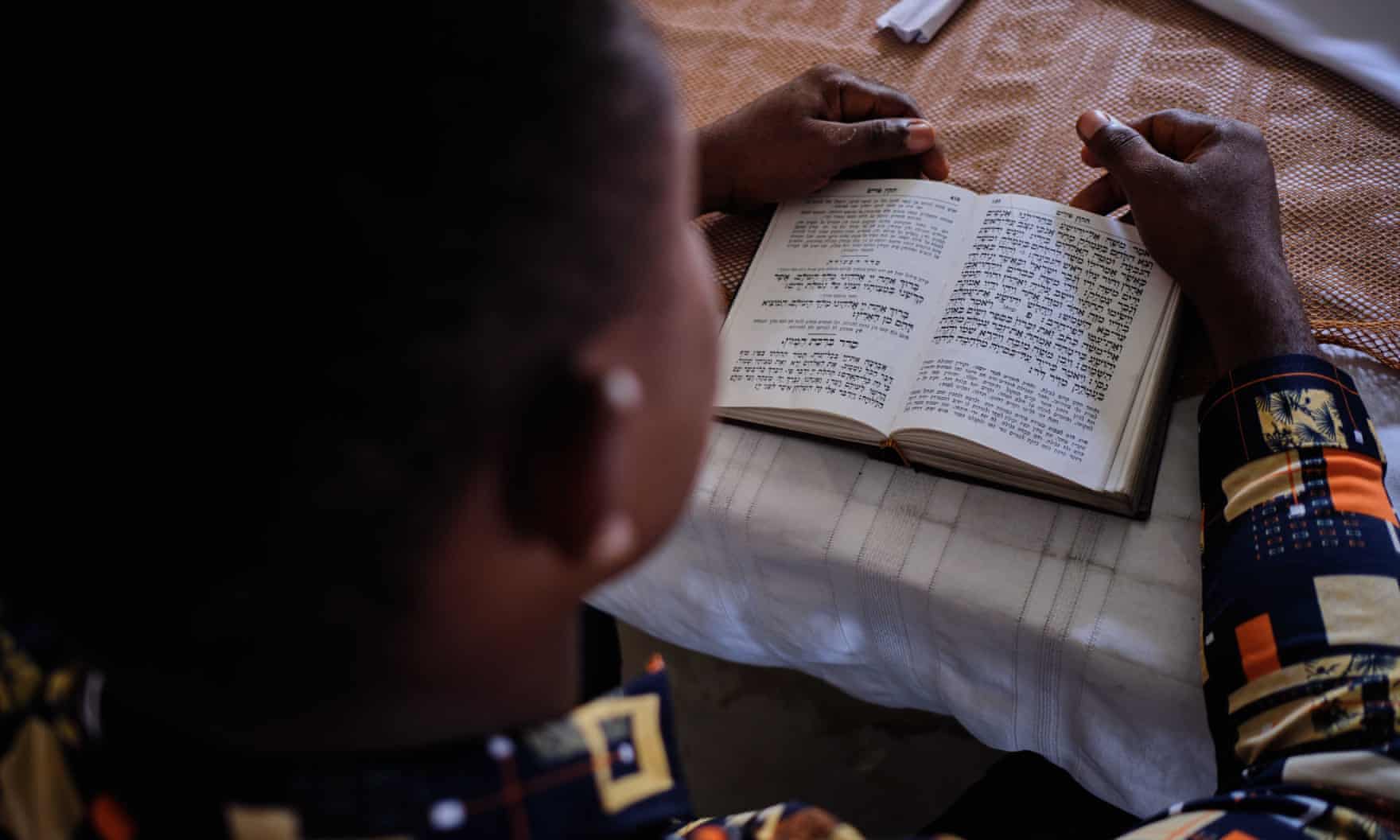
Another excellent longread from Samanth Subramanian. He talks about Jewish communities among the Igbo community in Nigeria. Nigeria is roughly divided along a north-south line as Christian and Muslim. For some Igbo people, embracing and converting to Judaism is a way to resist the colonial influence on the religion of their country. It’s quite fascinating, especially considering that Israel doesn’t officially recognize the fledgling Jewish community there. What’s also cool to realize is that the Igbo Jews are probably the world’s first “internet Jews”. Despite wanting to convert to Judaism, they had no idea of how to actually practice the faith. They learnt all of that from the internet.
10. Studying the Antlion Taught Me How to Be Human - Catapult
I like personal essays which are about something in the world, but at the same time about the author in a tangentially related way. This is one of them. Ambika Kamath talks about antlions! Antlions are super cool insects and I saw them for the first time this year in March. Or rather, I observed them for the first time in March. In their larval stage (which lasts most of their life), antlions dig holes and wait for insects to fall in. As an insect gets stuck, the antlion then throws up sand to draw it further in.
It has taken me decades to find the words to describe this experience of living at a distance, and when I found the words, I immediately understood why I had loved antlions. Growing up, I felt as though I lived at the bottom of a deep hole, the rest of the world bustling along on the surface far above. To talk to me, to get to know me, anyone who cared would have had to talk into the bottom of the hole, their voices raised just enough that our conversation was bound to be an inconvenience. The hole was too deep even for light; when people told me I was beautiful, I couldn’t believe them. Without any light and from so far away, how on earth could they see me well enough to know?

See you next week.-Kat.