Hello hello! This is Vishal with another issue of the Kable. I skipped last weekend’s issue as I had fallen sick for a few days. I’m fine now, and thus here’s another issue of the newsletter with good things on the internet for you to read. In the mix today are two short stories which I basically come upon by chance. That’s reminded me of how much I enjoy reading short stories, and I’m going to search for new ones to read now. If you have any specific recommendations, please tell me!
If you got this from a friend and want to subscribe, here’s the link. Also, if any of the links are paywalled and if you don’t want to pay for a subscription, try opening the link in incognito mode in your browser. This works if the website has a “soft” paywall. If that doesn’t work, you can access the website using a different browser on the same device, or use a different device altogether. Another, slightly involved, method is to try to disable JavaScript and reload the page. This works on some websites for me.
1. Why We Haven’t Solved Everything - Be Wrong (a Substack newsletter)
This was an interesting read. It’s about the progress we’ve made as a species in the last few hundred years, but more specifically it’s about the problems that we haven’t been able to solve. The author of this essay says that we’ve made progress on solving (a) problems of scarcity and (b) coordination problems. However, there is another class of problems known as “human-complete” problems which we’ve made the least progress on. His definition for them is “Human-complete problems are the ones where the optimal solution requires them be re-solved by each individual”, which I don’t fully get but I think the idea is that these are specific problems where people’s agency needs to be put first. That’s why they are messy too. I found this line of thinking to be quite interesting and instructive.
2. Learning To Be Detritivores - Sanctuary Asia
This is a nice personal essay by Yuvan Aves, a teacher, activist and naturalist. He talks about detritivores–creatures that consume dead or decaying plants–and how they enable the cycle of life. He then segues to talking about his own life and traumatic childhood, and how he was inspired to turn his struggles into inner growth just like a detritivore would do.
_C-1100_1654504563.jpg)
3. Lost birds and the people who watch them - The Verge
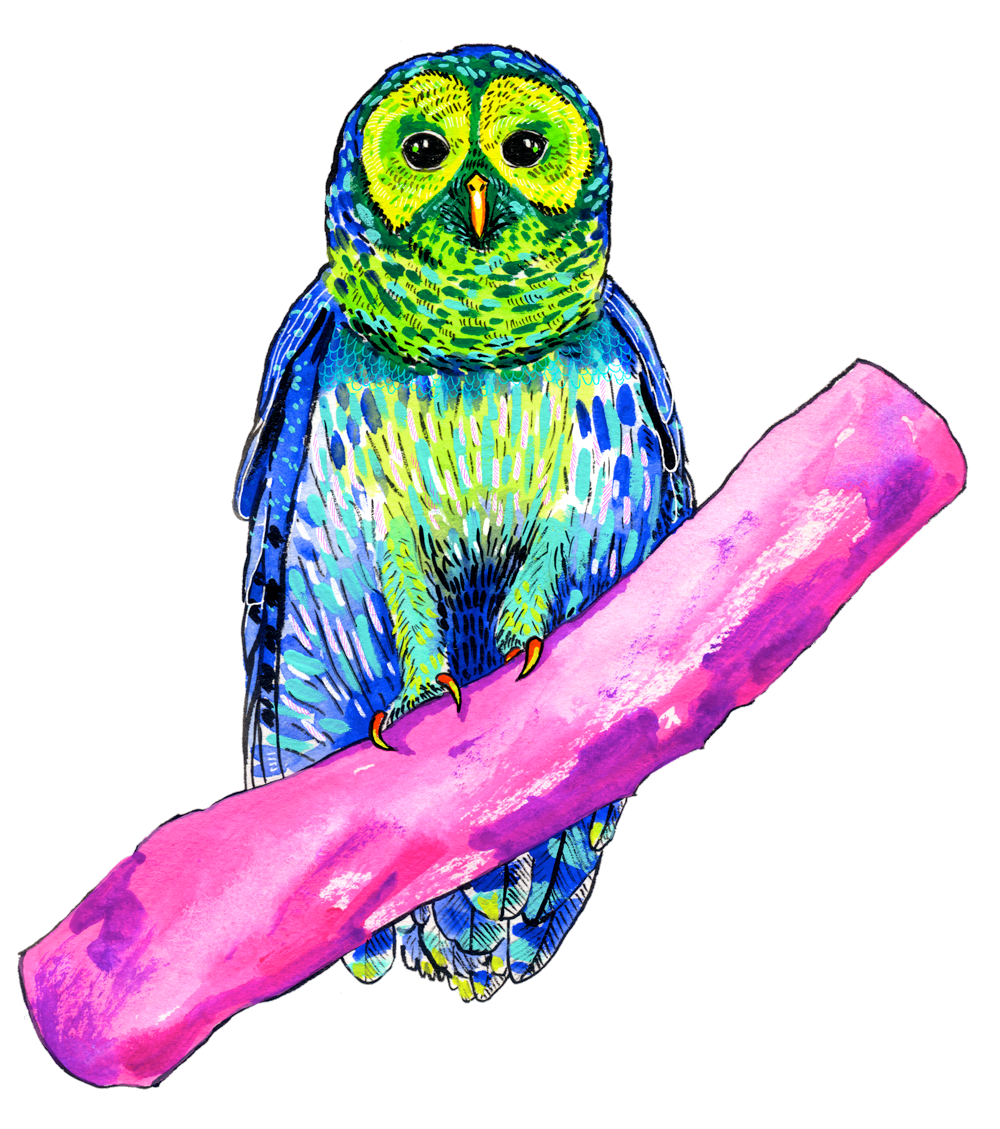
I enjoyed this! It’s about birders in the US, and about citizen-science birding apps like eBird and Merlin.
Several people I spoke to compared the app to Pokémon, in the sense that they were motivated “to catch them all.” But in many ways, eBird is the flipside. Where Pokémon Go, the popular mobile iteration of the game, takes all of its massive stores of player geolocation data and sells it to — who else? — advertisers, the data collected by the Cornell Lab of Ornithology is made publicly available and used for scientific research. In contrast to surveillance capitalism, this is, perhaps, surveillance naturalism.
4. The Folded Puzzle - The New York Times (soft paywalled)
This isn’t a longform piece, but it’s super fun nonetheless. It’s about a sort-of almost-crossword puzzle which you need to print out and fold into the right shape to solve. There was a lot of thought that the creator, Malaika Handa, put into designing this, and it’s oddly thrilling to read about it and perhaps try it out for oneself. I love this design-stage prototype of the puzzle:

5. Man of Culture - Fifty Two
I was quite tickled when one of my friends saw the title of this article and sent it to me. The protagonist is Surendra Segal, an Indian scientist who played a pivotal role in recognizing the medical capabilities of a life-saving drug called Rapamycin. The molecule was found in soil samples from Easter Island. When these soil samples were sent to labs around the world, Segal discovered that the soil microbes synthesized a molecule with high antifungal and antibiotic capabilities. This article explores some of Segal’s life, as well as the other people instrumental in research surrounding rapamycin. It’s really quite touching and also a nice scientific story.
6. The Limit - Short story by Christian Wiman
One of the aspects of curating Kat’s Kable I like the most is how I expose myself to all sorts of writing. Most of the time it’s recent stuff from the usual suspect magazines and newsletters, but once in a while I’ll find something truly extraordinary. This short story by Christian Wiman (published in the Threepenny Review) is unbelievable. It’s so emotionally heavy and sad. It’s also masterfully written. I recommend it highly and I think I’ll read it again as soon as I finish writing this issue.
7. The Way We Live Now - Short story by Susan Sontag (The New Yorker)
Well, as luck would have it, I have two short stories back to back. This is one by Susan Sontag from 1986, and it follows the AIDS crisis in New York City. It centers around one unnamed man who is sick and in and out of the hospital. It’s told in fragments of conversation about him by a large number of friends. It is also sad, and funny in parts the way some sad things are, and really nicely put together. I didn’t realize that it is considered a seminal work about the epidemic, but I can see why it is.
8. The Woes of Being Addicted to Streaming - Pitchfork
Interesting perspective on why the author doesn’t like streaming music. Using an app like Spotify is strange, I think. That’s what the author of this piece feels too. His view is that of an “active listener” or as I would say, a “serious” consumer of music. He says that for most people, streaming apps are great–lots of music for a fixed price in an app that works well and legally, what more can one want? But he says there’s a nagging feeling of being a hack every time he opens Spotify. I kinda get it, and I think it’s important to have this discussion mostly for financial reasons–it’s hard for a small artist to make any sort of money on streaming platforms.
I feel unsettled when I stream music on Spotify. Maybe you feel that way, too. Even though it has all the music I’ve ever wanted, none of it feels necessarily rewarding, emotional, or personal. I pay a nominal fee for this privilege, knowing that essentially none of it will reach the artists I am listening to. I have unfettered access to an abundance of songs I genuinely love, along with an abundance of great songs I’ve never heard before, but I can’t shake the eerie feeling that the options before me are almost too perfect. I have personalized my experience enough to feel like this is my music, but I know that’s not really true—it’s simply a fabricated reality meant to replace the random contours of life outside the app.
9. An innovative report on old technologies - Issue Journal
This is an interview with Kris De Decker, the founder and author of Low Tech Magazine, articles from which I have shared often on the Kable. I enjoyed this quite a bit and it was cool to read about his perspectives on a bunch of things.
10. How koji adds magic to Indian food - Mint Lounge
Ooh! I bought rice koji for the first time a few months ago, and started a batch of miso and have also made amazake. It’s been really interesting to ferment with koji, as it’s very different from the usual things I ferment. What is especially exciting is the way in which some fermenters in India have taken on the job of applying koji to enhance the taste of Indian food, and it’s very exciting.
See ya next week.-Kat.