Reader, this is a momentous occasion! This issue marks six years of Kat’s Kable. I am pleased with myself and very happy that I’ve brought the newsletter to this point. What I am particularly happy about is that the newsletter has stayed the same --the format is the same, the way I go about it is mostly the same, and the spirit of it is definitely the same. Thank you for being here and part of the journey, which I plan to continue indefinitely.
I also have a favour to ask. I’m currently looking for and applying to jobs in the climate space in India. I’m an engineer and physicist who is comfortable doing research, learning new things (the Kable is a testament to that, I hope), coding, analyzing data and more generally working in a variety of technical roles. If you are hiring for something like this, or if you know someone working in this space, I’d greatly appreciate if you get in touch. Just reply to this email, as usual.
If you got this from a friend and want to subscribe, here’s the link. Also, if any of the links are paywalled and if you don’t want to pay for a subscription, try opening the link in incognito mode in your browser. This works if the website has a “soft” paywall. If that doesn’t work, you can access the website using a different browser on the same device, or use a different device altogether. Another, slightly involved, method is to try to disable JavaScript and reload the page. This works on some websites for me.
1. A Farmer’s Quest to Beat California’s Waves of Drought and Deluge - Wired (soft paywalled) This is a long and interesting read about the water issues that are plaguing (and have plagued) California. The rivers of California have mostly been converted to glorified canals now, and the vast majority of their water comes from snowmelt from the Sierra mountains. Once every few years, there is a flood year, and one intrepid farmer, Don Cameron, is trying to make use of that by deliberately flooding his fields so as to recharge the underground aquifers. This was initially seen as crazy, because excess waterlogging can starve plant roots of oxygen and kill them. However, Cameron found it worked well, until the idea caught on and he was caught in legal battles with other water boards in the state. It seems to me like it’s a preview of issues that California will have to deal with to a much greater extent in the future.

2. ‘Wallets and eyeballs’: how eBay turned the internet into a marketplace - The Guardian
I like to read about the history of the internet, and eBay was one of the first big online “platforms”. It was also one of those rare companies that survived the deflation of the big internet bubble around the turn of the millennium. Its founder, Pierre Omdiyar, is a staunch libertarian and believed in the power of the market to make his auction marketplace effective and fair to all users. He claimed that the other internet platforms cropping up at the same time saw internet users as merely “wallets and eyeballs”. The funny thing, though, is that most internet media companies now see users as just that. And eBay was one of the early examples that paved the way for contemporary internet giants. I also liked this paragraph:
None of the metaphors we use to think about the internet are perfect, but “platform” is among the worst. The term originally had a specific technical meaning: it meant something that developers build applications on top of, such as an operating system. But the word has since come to refer to various kinds of software that run online, particularly those deployed by the largest tech firms. The scholar Tarleton Gillespie has argued that this shift in the use of the word “platform” is strategic. By calling their services “platforms”, companies such as Google can project an aura of openness and neutrality. They can present themselves as playing a supporting role, merely facilitating the interactions of others. Their control over the spaces of our digital life, and their active role in ordering such spaces, is obscured. “Platform” isn’t just imprecise. It’s designed to mystify rather than clarify.
3. Nick Kyrgios, the Reluctant Rising Star of Tennis - The New Yorker (soft paywalled)
Nick Kyrgios played the men’s Wimbledon final last weekend. It is always fascinating to watch him–he generates his electric tennis best when he is highly strung emotionally, but this also means that he is toeing the line when it comes to being rude, boorish etc. on court. After watching the final, I wanted to read more things written about him, and I found this 2017 essay that was written just before Wimbledon that year. It’s so fascinating; both so much and so little has changed.
4. Resistance - Fifty Two
“In the mid-1970s, a remarkable cohort of women found themselves in Bombay. They believed there was more to science than labs and male geniuses. Some of them would pioneer the cause of feminist science studies in India. These are the women who paved the way for themselves.”
Quite inspiring, but also sobering. It reminds me of something I shared two years ago in issue #200: An alternative argument for why women leave STEM.
Stories of science in India are often told as stories about lone heroes, or a small band of brothers. This cohort is different. They may have had ruptures with science, but they still retained their capacity for wonder. “You must be introduced to science’s magic before you learn to critique it”: this is what Chayanika tells her students. That is why this story contains transformations and discoveries, words often heard in the sciences, along with love and solidarity, which are not. It’s also why I turned to Chayanika when I wanted to learn more about how to “do science” in an unequal society.
5. The Empty Brain - Aeon
Robert Epstein is a psychologist and he has written an interesting essay here about how we’ve tried to understand our brains using the analogy of computers. Part of this definitely comes from recent advances in artificial intelligence, and in making machine learning models that mimic human intelligence. This leads to us thinking that our brains work in similar ways that those models do, and there might be some truth to that, but Epstein is here to dispel this notion. It seems like the technical term for this is the “information processing” metaphor for human intelligence, and it is almost all-pervasive in studies of intelligence. Epstein thinks that it is time for this notion to be put to rest.
6. Secrets of the Book Designer: On Typography, Painting, and Finding That Single Visual Moment - Lithub
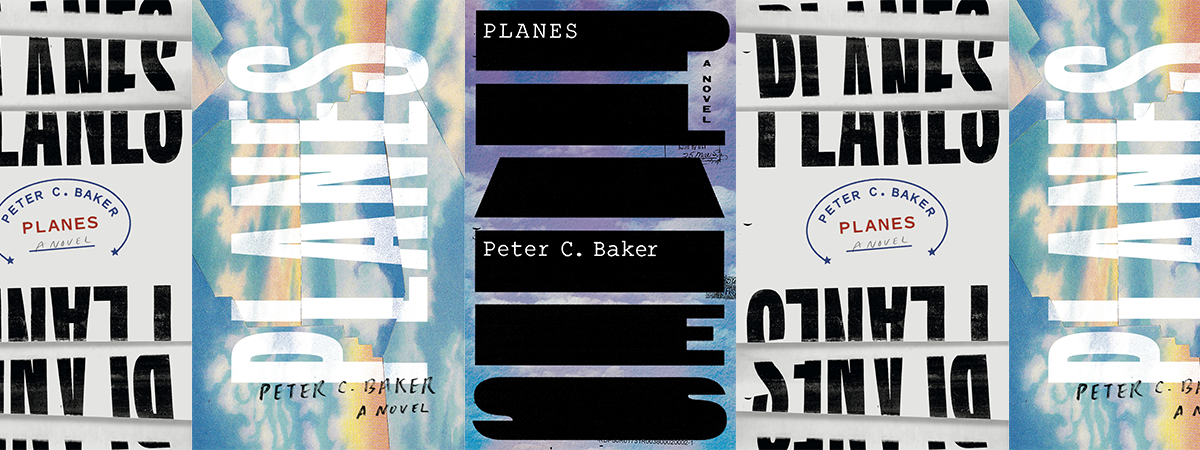
I love this! Peter C. Baker wrote a book, Planes , and Linda Huang was assigned to make the book’s cover. Here is an interview between them, where Barker interviews Huang about the cover-making process. I don’t think I’ve ever read something like this. If I were a cover artist being interviewed by the author of the book, I’d be nervous! Also it’s taken me some time to realize the amount of work and thought that goes into the making of a book cover.
I quickly started toying with the idea of planes of existence, or a flat surface connecting two points—symbolic of the two narratives that unfold, connecting the two female protagonists. Combining this idea with redaction and black sites led me to the final cover direction. I was hoping to convey both elegance and brutality by stylizing the title this way, and the black shapes are also reminiscent of a blueprint for something vaguely militaristic or industrial—themes relevant to the novel.
7. Chewed and Rolled: How Cats Make the Most of Their Catnip High - The New York Times (soft paywalled)
Heehee, this is funny and nice. Also I will not think twice when it comes to sharing articles about cats (especially when they have pictures). When cats roll in and damage catnip plants, the plants then release compounds called iridoids. Iridoids both induce the high that cats feel from catnip as well as repel bugs like mosquitoes. Ha!

8. Sifting myths from facts in the experiment called Auroville - Livemint (soft paywalled)
I stumbled across this nice article by Deepa Reddy (who runs paticheri, one of my favourite Instagram accounts) about Auroville, where she lives. Auroville is a township near the city of Puducherry in India. It’s also a contentious topic and place, with its population consisting heavily of people from outside the local area. The article itself is the review of a book, Better to Have Gone by Akash Kapur. Kapur was born in Auroville, and hence his account is interesting–he obviously has fond memories of the place, but also critiques aspects of it that aren’t that great.
9. The Joy of Cryptozoology - The New Atlantis
Aha, another book review. I like this particular class of book review, where I can learn something and be entertained by just the review. There are far too many books around for me to read, and reading a part-summary part-critique of a book is sometimes enough. Cryptozoology is the search for animals whose existence is disputed, like the Loch Ness monster. Just so, there is a creature called the Jersey Devil, a “repository for inchoate bogeyman fantasies and woodland panics” (I love this phrase). Learning about and studying the myths that people believe in gives us an insight into the people themselves, which is very cool. Finally, it turns out that this essay is a sort of two-books-in-one review, as it also delves into conspiracy theories and people’s interactions with them as detailed by another book– Suspicious Minds by Rob Brotherton.
10. The Whale Dying on the Mountain - Hakai Magazine
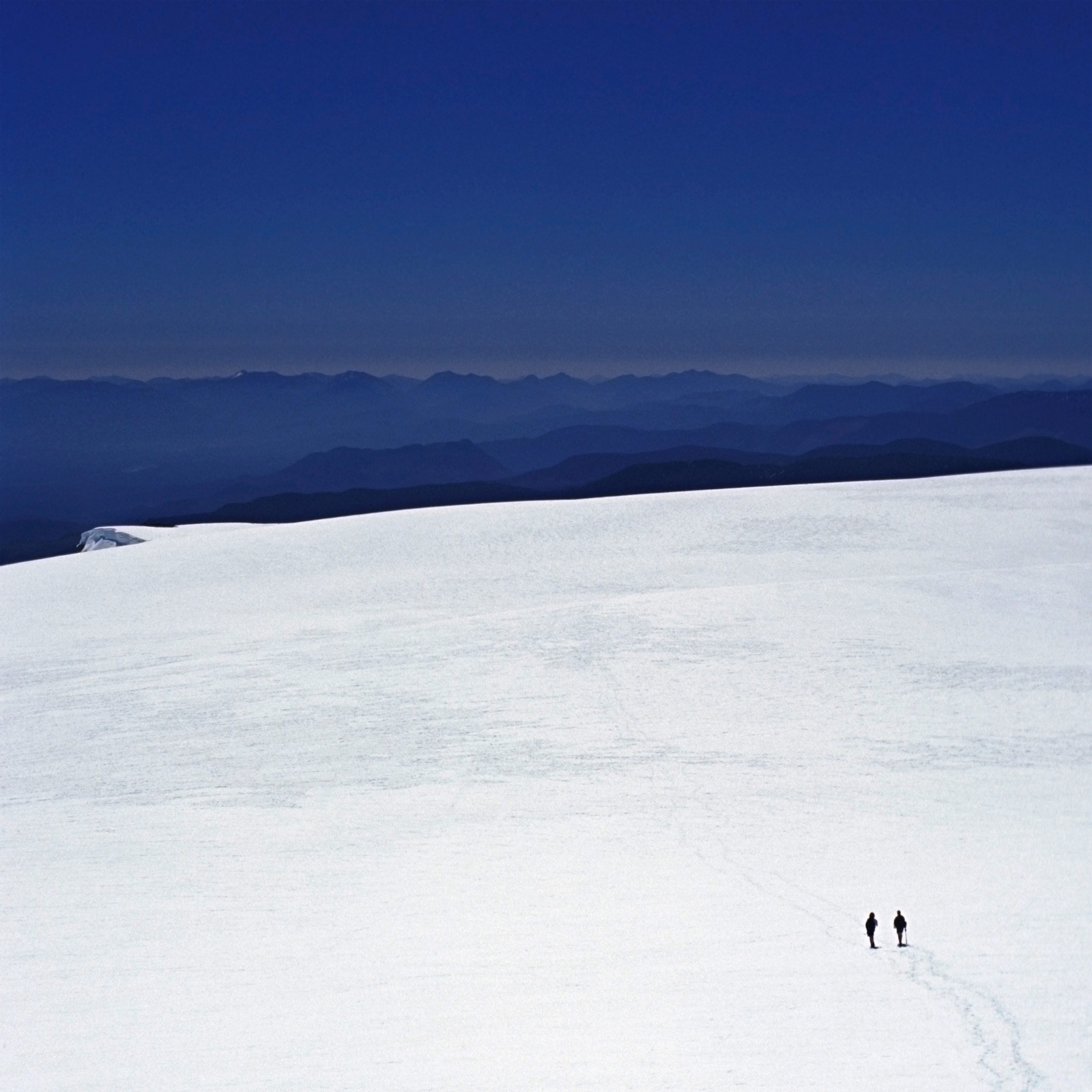
Ah, I like that this article about the Comox Glacier in British Columbia, Canada connects in a way to the previous one. A big glacier warps the space around it, and affects the people who live nearby in so many ways. As it shrinks, recedes and is subject to climate change, the people around it are also subject to these changes. The article also talks about the folk indigenous to that land, and how they have thought of the glacier as a being, rather than as a thing. That reframing is quite powerful, and accords agency and importance to the animate but non-living things of the world. As we stand, however, it is quite certain that the glacier will soon become a thing of the past.
See you next week.-Kat.