Hello there! This is Vishal with another issue of Kat’s Kable and this issue is reaching you midweek because of a woman–Agatha Christie. I’ve started reading her murder mysteries again, and am going through them at a pleasing rate of one per day. In other words, I’m enjoying my last few weeks of being unemployed. I’m about to get back to reading The Mysterious Affair at Styles , so I bid you adieu. Enjoy this week’s list, per usual!
If you got this from a friend and want to subscribe, here’s the link. Also, if any of the links are paywalled and if you don’t want to pay for a subscription, try opening the link in incognito mode in your browser. This works if the website has a “soft” paywall. If that doesn’t work, you can access the website using a different browser on the same device, or use a different device altogether. Another, slightly involved, method is to try to disable JavaScript and reload the page. This works on some websites for me.
1. Wimbledon 2022: A missing Swiss in an English summer - Mint
Rohit Brijnath here writes about how it feels to have a Wimbledon without Roger Federer, after 22 years of his participation in it. This kind of article is bound to do well among tennis (or particularly, Federer) fans, so.. yeah, here I am sharing it. I think that when people write about Federer now, they’re in a strange place: they can’t write about his career exclusively in the past tense, since he hasn’t retired yet. However, he’s functionally quite retired, and I get the sense that people can’t really write what they want to.
2. The art of the T20 finisher - The Cricket Monthly
I liked this long article about the role of the “finisher” as a batter in cricket. Right now, it’s one of the most valuable roles a person can play in the limited-overs formats of cricket. This is a nice in-depth read about the way the finishing role has evolved in cricket, especially in the recent past and the advent of T20 leagues across the world. The other interesting thing, to me at least, is how the usual statistics (average, strike rate etc.) are not very relevant anymore and have been superseded by other metrics that quantify the “impact” a cricket player has.
3. How to Make Sense of Scents - The New Yorker (soft paywalled)
Phew. I loved this essay by Rachel Syme about scents and fragrances. There’s a lot of history and a bunch of different perspectives here, and it reminds me of how.. subjectively we are forced to think of smells. It also reminds me of the weird and wonderful fact that we cannot actually ever know exactly if our sensations match another persons’. That is really quite private and individual, and we go on living our lives mostly believing other people’s descriptions and forging our reality, which is a mix of what we sense and what we expect based off of what other people have said. I’ve been stuck on this paragraph for a few minutes now; I think I have more to say on this topic, but it will take some time to figure out and I’ll save it for another time.
“This is a dance of fairies, in the deep of a forest where all is about light and shadows”; “a twilight summer sky, a glaring garland of bare incandescent bulbs, larded fruit pies, some musk from the crowd”; “my 5 year old son told me it smells disgusting, like ‘something dead.’” The desperate maximalism of these adjective pileups has a kind of poignancy. Smell—bodily and human yet invisible and heady—defies our expressive capacities in a way that other senses don’t. In our clumsy efforts at the ineffable, there is both passion and melancholy.
4. Cast Away - Fifty Two
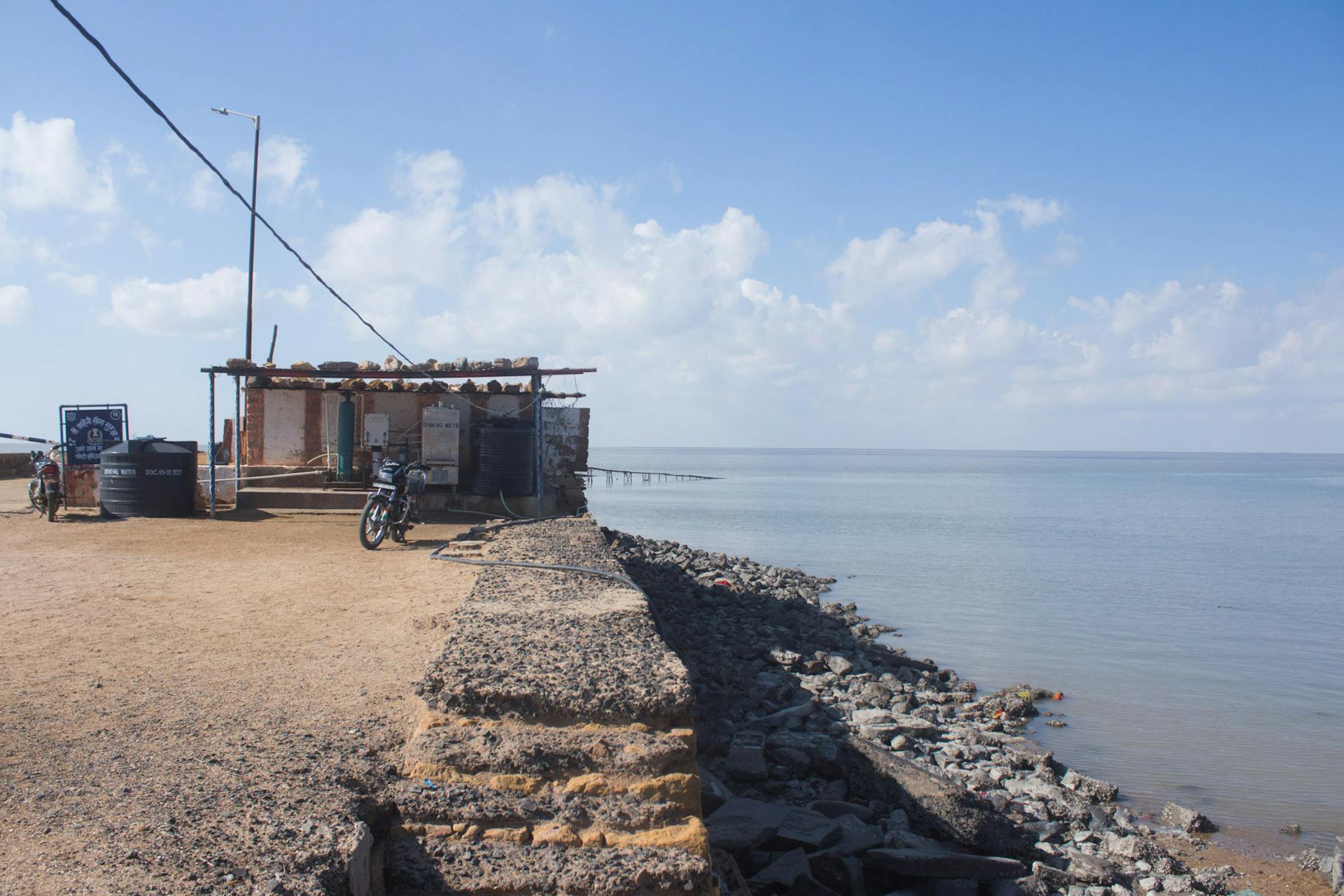
This is a sobering account of fisherfolk near the India-Pakistan border who venture too far out, and are then apprehended and captured by the coast guard or police of their not-so-friendly neighbour country.
5. All Tomorrow’s Fables: How Do We Write About This Vanishing World? - Lithub
Writing about the environment, and climate change in particular, is something that has changed significantly over the past few decades. This change is what Daegan Miller explores in this essay/book review. Miller begins with talking about Rachel Carson’s The Silent Spring. However, this essay focuses primarily on a collection of 19 essays called The World As We Knew It: Dispatches from a Changing Climate. I enjoyed the way Miller explores the essays in this collection: there is much to admire, but the essays also reveal some blind spots of human understanding and connection, and in particular the way climate change is a “hyperobject”, which means that it’s so large in scope that we can never step outside for a balanced or objective perspective. I’m not sure I’ll read the essay collection, but I still enjoyed this piece very much.
6. Steve Jobs: The Next Insanely Great Thing - Wired
Phew. This is a 1996 interview of Steve Jobs that feels like stepping into a time machine. What I’ll share with you is an excerpt shared by someone I follow on Twitter about the way Jobs’ family obsessively discussed amongst themselves about what washing machine to buy. But no, I think it’s worth reading in full, because there’s a lot of good stuff here, and it’s also a cool insight into how Jobs was thinking back then when he was at NeXT and not at Apple.
We spent some time in our family talking about what’s the trade-off we want to make. We ended up talking a lot about design, but also about the values of our family. Did we care most about getting our wash done in an hour versus an hour and a half? Or did we care most about our clothes feeling really soft and lasting longer? Did we care about using a quarter of the water? We spent about two weeks talking about this every night at the dinner table. We’d get around to that old washer-dryer discussion. And the talk was about design.
7. A Mirror of Nature - Inference Review
The Antikythera Mechanism, an astronomical calculator found in a first-century BCE shipwreck, has proven to be mechanically more sophisticated than anything known from the subsequent millennium. While many are amazed at such a discovery, a more appropriate response would be admiration, for the mechanism fits well into its historic context. Indeed, the ancient scholar Cicero offered contemporary accounts of similar devices, which he saw as embodying the peak of human ingenuity. But the significance of the Antikythera mechanism extends beyond the elegance and complexity of its design. It may also represent a major development in our understanding of the universe.
8. Fizzy milk or crunchy cheese, anyone? The food of the future - The Guardian
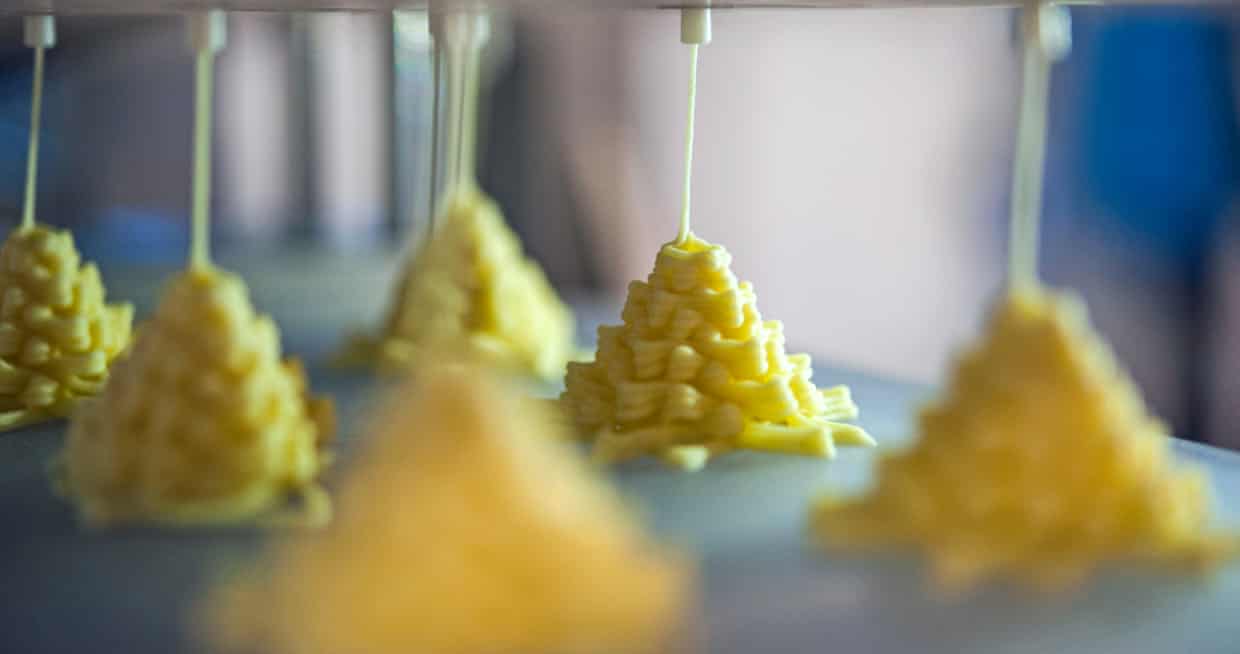
Whelp. Arla, a Danish dairy cooperative, is contending with the changing food preferences of people around the world. Dairy isn’t in as much vogue as it once was, and that obviously is concerning news to them. They are experimenting with different… form factors for all the milk that they have access to. For example, a fizzy milk liquid which is all whey and no fat. Or a yogurt “jerky”. This article explores Arla’s work in constructing new foods, but also similar efforts by other European companies. This all sounds so crazy to me! But at the same time, our diets are so different than they were even twenty years ago. So who knows what they’ll be like in the decades to come? And honestly, personalized 3D printed pasta (picture below) sounds pretty appealing to me.
9. There’s no such thing as a tree (phylogenetically) - Eukaryote Writes Blog
This post was doing the rounds on Twitter this past week, and that’s because it’s very interesting. It reminds me of this other article (from 2018) I shared on the newsletter at some point, Scientists Still Can’t Decide How to Define a Tree. Essentially, a “tree” is not a well-defined category of plants. In some sense, all plants evolve to become trees. Trees are a natural end-point of the evolution process, and plants from a number of different evolutionary paths will end up becoming tree-ish. To be more technical: becoming woody is an adaption of the secondary growth habit of plants. There is a common genetic structure in herbaceous plants that when activated or tweaked, makes the plant woody.
10. Where is Seaweed in India’s Culinary Canon? - The Locavore
Oooh so interesting. I’ve never heard of seaweed being used in Indian cuisines, but it seems obvious that small coastal communities should use it to cook and eat. It’s just.. there, and it smells nice, and tastes good too. I suppose that since it’s a foraged ingredient, it’s also one that has resisted entering the mainstream food discussion. So it’s nice that people are talking about it now, and nice that perhaps seaweed will get some recognition in the broad conversation about food. More importantly, it is also an opportunity for the local seaweed foragers and cultivators to enter the narrative.