Hello hello there, reader. This is Vishal with another issue of Kat’s Kable, with ten good things to read from the corners of the internet. I inadvertently took a week or two off, which was nice. I haven’t been up to a whole lot lately, but I’m taking it easy before I embark on some changes in life. Which is exciting! As always, do enjoy this week’s list and if you’d like, feel free to write to me by replying to this email.
If you got this from a friend and want to subscribe, here’s the link. Also, if any of the links are paywalled and if you don’t want to pay for a subscription, try opening the link in incognito mode in your browser. This works if the website has a “soft” paywall. If that doesn’t work, you can access the website using a different browser on the same device, or use a different device altogether. Another, slightly involved, method is to try to disable JavaScript and reload the page. This works on some websites for me.
1. Method Singing - Van Magazine
The Russian actor-director Constantin Stanislavski developed his “System” in the early 20th century for actors to follow, and this was one of the foundations of what we now know as method acting. He was also involved in opera, and attempted to bring his acting methods to opera singers too. It sounds quite strange, if you ask me, and I don’t know how well-liked Stanislavski or his methods were in opera. However, a lot of the new things he espoused have also become commonplace in modern opera.
2. The Indigenous Food Cafés Transforming Local Cuisine - Yes Magazine
Ooh this is so nice. This article is about cafes in Meghalaya, India, which are focusing on serving indigenous and indigenous-inspired food after years (or decades!) of serving mainstream “market food” like rice, dal and potatoes. It’s really fun to learn about the different special cuisines that emerge in different parts of the world–each a function of the climate, the soil, the people who live there, and so on.

3. How Parents’ Trauma Leaves Biological Traces in Children - Scientific American
It is generally accepted knowledge that parents’ (and families) trauma gets passed down to children. Earlier, this was thought to arise from people’s interactions within their families, but new research shows that some of the trauma can also be passed on via epigenetics, or alterations in the way that genes function. For example, the child of a parent(s) who has PTSD is likely to have a very low level of cortisol, which is a hormone that regulates our stress levels (very surprising!). This article is more of a literature review and research summary, and while I haven’t read any more in detail about the findings, they seem really fascinating.
4. What Do We Hope to Find When We Look for a Snow Leopard? - The New Yorker (soft paywalled)
I enjoyed this article by Kathryn Schulz from last year about Peter Matthiessen’s The Snow Leopard and the newer The Art of Patience by Sylvain Tesson. I read The Snow Leopard back when I was a teen, and I think that my age obviously played a big role in the way I understood the book. I liked the way Schulz commented on various aspects of Matthiessen’s work and writing, and also the way she describes how her relationship with the book has changed in the years since she first read it (as a teen, just like me!).
I don’t begrudge anyone this sentiment. Like Matthiessen and Tesson, I go to the wilderness in part because it fosters in me a state of mind difficult to replicate anywhere else: a rare blend of exhilaration and serenity, brought about by the vast difference between my everyday life and the high mountains I love—how distant, literally and otherwise, they feel from human society. But the obvious corollary is that the peace I find in nature is a fragile one, dependent on the illusion of utter remove. […] More bluntly, I have sometimes succumbed to an ugly feeling common to many of us who love nature: the sanctimonious sense that everyone but me is using it wrong.
5. From aardvark to woke: inside the Oxford English Dictionary - The New Statesman
Something I knew but hadn’t realized the import of was that the Oxford English Dictionary’s last published edition was in… 1989. The team behind it planned to complete the next edition by 2005, but they still haven’t! It’s fun to read about the behind-the-scenes work that goes into making, maintaining and monetizing a dictionary. Another interesting thing is that the OED makes much of its revenue from subscriptions to OED.com (apart from having sizeable funding from the Oxford Uni Press).
6. Grid Scale Energy Storage Deployment by Technology Type: Part 1 - Sarah Constantin’s Substack
This is nice! I’m always interested in knowing more about climate change mitigation and in particular renewable energy. We’ve got to a point in many countries (including India) where installing new renewable energy is cheaper than non-renewable. However, we’ve still not got to the point where renewable energy is as reliable as non-renewable. A big reason for that is that we don’t yet have large grid-scale storage systems. This is a nice overview of what we have already.
7. How I Became a Knife Steel Metallurgist - Knife Steel Nerds
Oof. I only recently discovered this blog, run by Larrin Thomas who lives in the USA. His dad makes damascus steels and Thomas ended up going to graduate school to study steels himself. He works professionally now on automobile steels, but he also loves high-carbon knife steels, which he blogs obsessively about. And he’s developed steels himself! Just with support via Patreon, he’s done research to develop a new steel called CPM-MagnaCut. Amazing! You can read more about the MagnaCut steel in his other blog post about it.
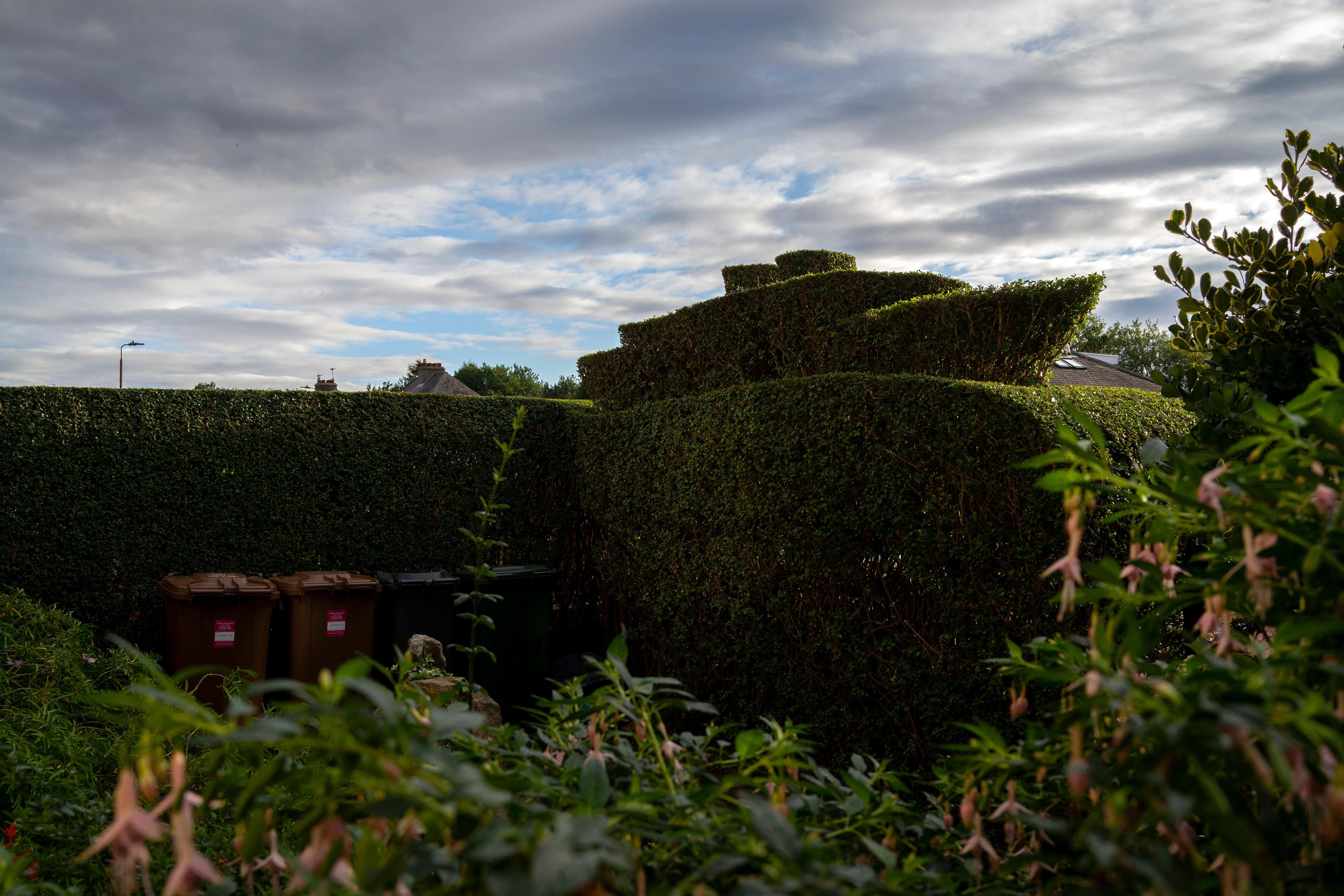
8. How Hedges Became the Unofficial Emblem of Great Britain - Smithsonian Magazine
Lots of nice pictures and a pretty insightful writeup too!
Hedges are also an admirably versatile metaphor. In Brexit Britain, they are a barrier. In Covid Britain, they are a frontier: this far but no farther. Most of all, in a Britain battered by recent economic and political storms, they are a much-needed hug. Other nations love their hedges, too, of course, but only in Britain do they seem so bound up with national identity. The hedge speaks to the romantic idea of the country as a green and pleasant land, but its cheerful dullness undercuts this notion before we get too carried away. Our souls are in those hedges and those hedges are in our souls.
9. Documenting India’s Distinctive Birdhouses - The New York Times (soft paywalled)
Again lots of nice pictures :)

10. MBS’s $500 Billion Desert Dream Just Keeps Getting Weirder - Bloomberg (soft paywalled)
Earlier, I’d only heard in passing about Neom, Saudi Arabia’s new and upcoming megacity. This feature from Bloomberg has a lot of details about the project, and about the general vibe it’s going for + the general vibe of the way people are going about building it. It’s totally crazy! There’s a lot of money going into it and that’s the only way to pull something like this off.. it’s so outlandish. A $500 billion desert megacity that’s designed to be super sustainable and futuristic.. I don’t know how much of it makes actual sense and how much of it is coming from the dreams of a single person (Saudi’s crown prince MBS). For example, this is where they’re going to build a ski area (yes, you read that right).