Well well. Hello there! This is Vishal bringing you your favourite newsletter Kat’s Kable. When I left you mid-November last year saying I was shutting up shop for the year, I didn’t imagine being away for so long. It’s been a nice break, though. I have done some passive brainstorming (code for: I have avoided thinking about it seriously) about what I want the Kable to be. I’ve realized that I want the newsletter to have more of me in it; so far, I’ve served as a conduit for and curator of good writing from the internet. However, it’s been responsive, without too much proactiveness from my side. This felt good, because I think that as I’ve grown older in the past ten years, I’ve actively tried to carve out more of my own space, and this seems like another step in that direction. It sounds pretty vague, though, so I’ll have to figure out the specifics as I go along. If you have any thoughts about it, please let me know (you can always reply to this email). :)
Kat’s Kable has always been a sort of flywheel giving momentum and continuity to my online reading. I read longform articles because I run the Kable, and I run the Kable because I read lots of longform. When I took the break in November, I quickly fell off the reading bandwagon. What was incredibly satisfying, though, was realizing some time in January that I missed it! The lack of the Kable in my life made me feel antsy, like I finally realized I was missing a part of myself. I didn’t know it in November, but I think I was waiting for this sort of confirmatory feeling before restarting.
And finally! Why am I writing the newsletter right now? Why this week and not the next? I was in a used bookstore last weekend and I found a book called THE CAT’S TABLE which I obviously bought and interpreted as a sign that I had to resume the Kable asap. So here we are, with the same Kable as usual, but a different me and a different (and evolving) ethos to the newsletter.

If you got this from a friend and want to subscribe, here’s the link. Also, if any of the links are paywalled and if you don’t want to pay for a subscription, try opening the link in incognito mode in your browser. This works if the website has a “soft” paywall. If that doesn’t work, you can access the website using a different browser on the same device, or use a different device altogether. Another, slightly involved, method is to try to disable JavaScript and reload the page. This works on some websites for me.
1. Sound - Bartosz Ciechanowski’s website
I shared Bartosz Ciechanowski’s interactive explanation of how a mechanical watch works in issue #278. He has made another one! How lucky we are. I enjoyed this one too, and had a different experience from the mechanical watch piece because I actually do understand how sound waves work (much better than a watch, at least). Of course, this is best enjoyed on a larger screen.
2. If you wish to make a toaster from scratch, you must first invent the universe - The Prepared
This is an interview with Thomas Thwaites, who set out to make a toaster from scratch for his master’s thesis. And by scratch, it’s literally from metal and fuel! It’s really inspiring and the interview is fantastic. What I loved the most was his “Harmless Car” project, whose chassis made from woven willow stalks. This also reminds me of Ben Stokes’ tiny projects, which I’d shared about in issue #275.
Then the question becomes, “Okay, well, if this can’t be a completely harmless car, well then who do I want this car to harm?” I’m curious about exploring that question, which speaks to how all designed objects, all manufactured objects, have this innate dimension of justice built into them. So facing that head-on forces me to consider: who do I want this to help? Who do I want this to harm?

3. The Body on a Long Walk - Craig Mod’s newsletter Ridgeline
I’ll just leave you with this wonderful opening:
Few things feel better than a body twenty days into a good long walk. When structured well, the activation of all the muscles feels like booting up lost life — light and sound and texture and touch. Like you had previously been operating at some minor percentage. But here, now: Fullness. Swim in that river. Let the fish nibble your noggin‘. Chomp a freshly picked persimmon. Say hello to every living thing. The quadriceps and gastrocnemii wait like eager dogs, ready to snap at any mountain you might throw to them.
4. The Disappearing Art Of Maintenance - Noema Mag
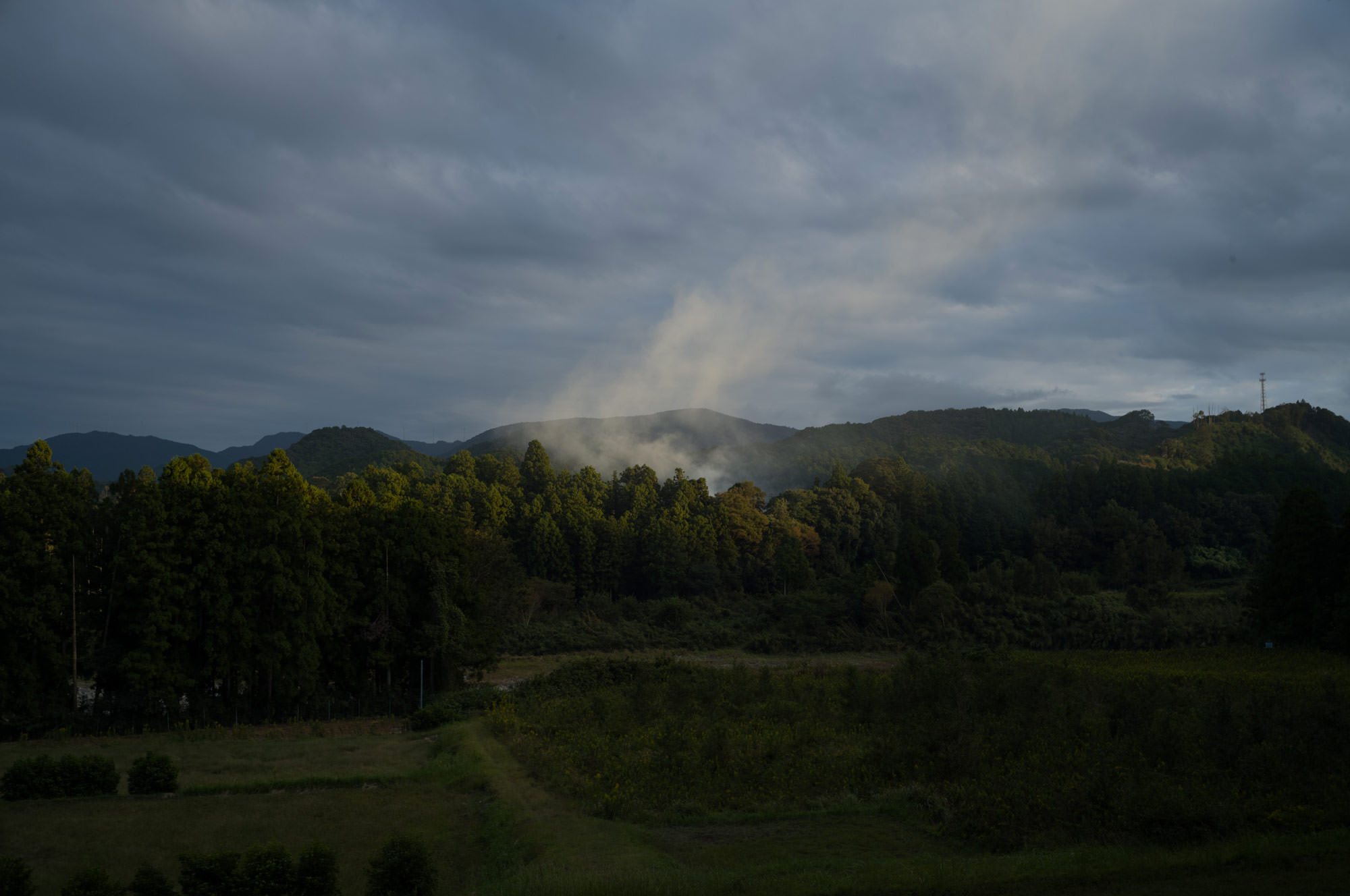
This reminds me a lot of The Maintenance Race which I’d shared in issue #292. This article is about thinking of maintenance as a… sort of broad thing to be valued and incorporated into our economic/industrial/everything systems. Which I guess, yeah, obviously! Maintenance is great.
But first maintenance has to be valued outside of austerity, and right now it’s unclear if our current economic system is capable of that. […] Perhaps maintenance, rather than sustainability, is the more useful framework for a green transition, because it can account for how human infrastructure is now deeply entangled with the environment in the age of the Anthropocene.
5. How the ‘Diamond of the Plant World’ Helped Land Plants Evolve - Quanta Magazine
I loved this! It’s about sporopollenin, which is a chemical that protects pollen from the outside elements. It’s extremely strong–it protects the DNA inside the pollen and spores of plants and mushrooms from light, heat, cold and dehydration. It’s also proven to be hard to understand or reverse-engineer. It’s not an overstatement to say that plants (and by extension, us) would not be able to live on land if not for sporopollenin. Research in recent years (which is what this article is about) has gotten us closer to understanding this mysterious “super”-material.
6. The Future is Noisy - Return.Life
Interesting. I think I didn’t quite understand the unified theme here that the author is hinting it. But it is an interesting piece nonetheless. It’s about noise, distractions, and music, and how we humans have found ways to make ourselves heard. It draws upon a lot of different influences, which I particularly enjoyed.
7. Stone Skipping Is a Lost Art. Kurt Steiner Wants the World to Find It. - Outside Online
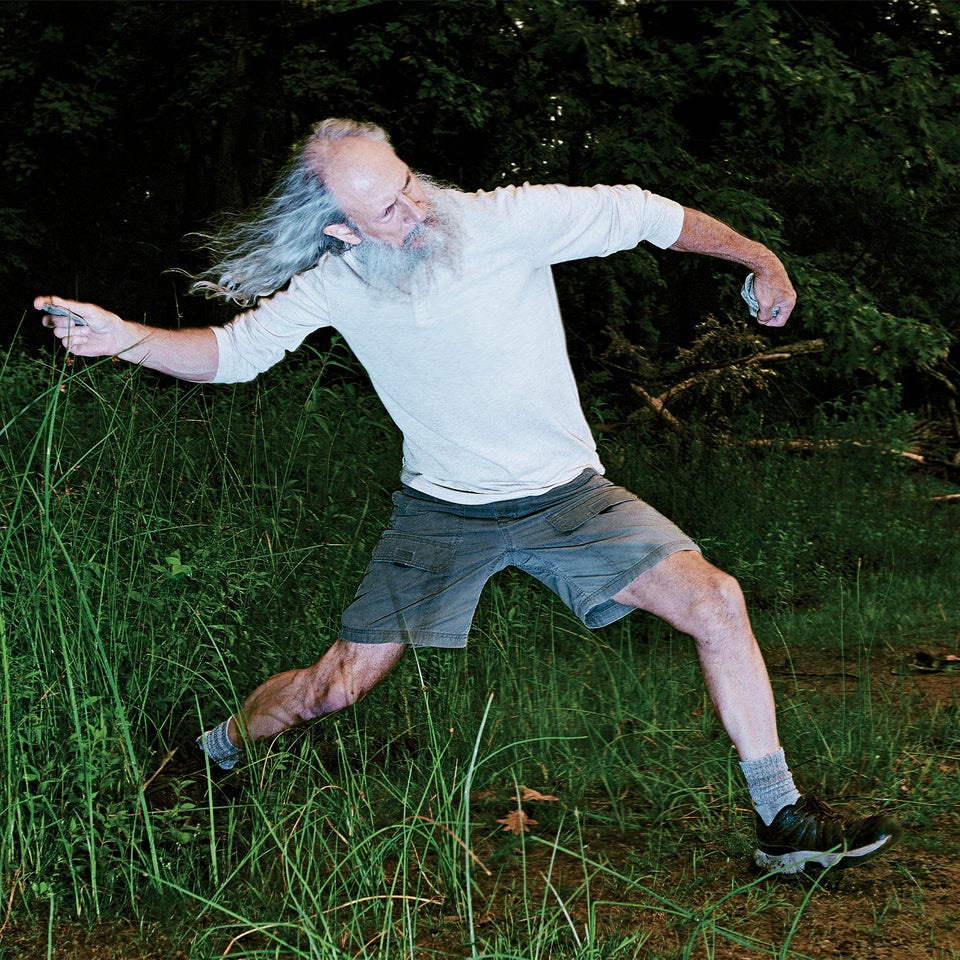
Well. Wow! First things first–if you haven’t watched Kurt Steiner skip stones, then please rectify that: this is his world record throw (the video quality isn’t very good) and a better quality video. What a person! There is obviously a lot of thought and obsession that goes into becoming a top-class stone skipper, ranging from going to Lake Erie every year to collect the perfect stones to taking time off from October to March in a self-declared “psychic recovery phase”. Steiner even keeps a few stones in reserve if he’s “feeling it” to break a record or if he needs to throw something amazing to win a championship. It’s just incredible. I loved reading this.
8. Metafoundry 75: Resilience, Abundance, Decentralization - The Metafoundry newsletter
This is a great post that seems like it’s about climate change but it’s about something much broader–progress, what we will do with more and more access to energy, and why it’s important to realize that we have access to finite amounts of matter but unlimited energy.
Mitigating climate change is often framed as requiring money, effort, and sacrifice to keep something bad from happening, usually to other people. But we finally have the tools we need to create something new and better—to transform our technological and infrastructural systems into ones that are resilient and sustainable, that open up new possibilities for how we can use and repurpose materials, and that, not incidentally, have the affordances to scaffold a more just, equitable society. We are living at the cusp of remaking ourselves from a primitive species that gets most of our energy from literally setting stuff on fire, and that just junks stuff when we’re done with it, into an species that fits harmoniously into a planetwide ecosystem, that uses energy from the sun, harnesses it for use and to fabricate what we need to thrive, and then returns those materials to the common pool to be used and shared again.
9. Living With Wolves - Catapult
This is an autobiographical piece by Nikki Kolb, who talks about signing up to be a caretaker of wolves at Wild Spirit Wolf Sanctuary. I enjoyed reading about her quick immersion into a world totally new to her.

10. The third magic - Noahpinion (Noah Smith’s blog)
A funny thing I realize as I type this is that this is very much an essay you’d stereotypically expect from someone like me–engineer and physicist by training, big believer in science, etc. Well, anyway. Noah Smith says that the first two “magics” humans developed was history and science. I think of it as the written word + science. Anyway, these two pillars got us a long way. However, we’re now faced with the fact that there are vast swathes of the world (mostly our world) that we cannot explain as elegantly as we do using science–things like psychology, economics, and so on. Can we still control these systems without understanding them fully? This is what AI, or more specifically neural network-based models, promises.. flexible and large models that contain, in a convoluted or uninterpretable way, an understanding of these other fields. That’s what Noah Smith is positing as “the third magic”. It’s a romantic way of putting it.