Hello there, reader. This has been quite a dramatic issue of the Kable, I have to say. I was almost not going to write it this week, as I’ve not been feeling very mentally energetic. I got around to writing it, though.. and then I overwrote the entire file with a blank one! This happens because of the system I use to write: I have a script that creates an empty markdown file, then I edit the markdown file, and then I have a script that exports that to HTML for Mailchimp. After doing steps 1 and 2, I did step 1 again. Alas for my folly. However, this ended up being a fun exercise. The newsletter took me about 75 minutes on the first go, and only 20 on the second because I knew exactly what to write and quote.
It’s doubly funny because piece #6 of this issue is literally about rewriting, and how that’s a skill to hone to become an “advanced” writer. So here I am, rationalizing my error by saying that it was the universe’s way of pushing me to become a better writer. I must say, I’m glad that’s the message I took when I could have easily thought, “well, the universe doesn’t want me to write the newsletter this week and that’s why I overwrote the file”. So much for the universe, though. Here is this week’s newsletter, both despite and because of the universe. I now have dinner to cook, and a fermentation experiment to taste (I’ve made two bottles of ginger beer and one of them has a teaspoon of rice koji and I want to see what difference it makes).
As always, reply to this email if you have anything to say. I love hearing from you.
If you got this from a friend and want to subscribe, here’s the link. Also, if any of the links are paywalled and if you don’t want to pay for a subscription, try opening the link in incognito mode in your browser. This works if the website has a “soft” paywall. If that doesn’t work, you can access the website using a different browser on the same device, or use a different device altogether. Another, slightly involved, method is to try to disable JavaScript and reload the page. This works on some websites for me.
1. A New Approach to Spotting Tumors: Look for Their Microbes - The New York Times (soft paywalled)
This is really interesting! You can spot tumours effectively not just by spotting tumours in their entirety, but also by identifying the microbial colonies that associate with them. Not only does this herald an advance in cancer diagnosis, but it also is a technique to better design cancer therapies, by using microbes that interact with tumours in specific ways.
2. Fermented Code: Modeling the Microbial through Miso - Serpentine Galleries
This was great! It continues the mini-theme I’ve got going on microbes. It’s an essay/meditation on microbial fermentation, and computational approaches to modeling microbial colonies (like the one that exists in a crock of miso). Here’s my favourite part.
Indeed, fermented foods have a way of making time observable, even edible. First there is the now of packing the crock, punching vegetables under brine, or kneading starter into autolysed dough. This is done in anticipation of some future moment days, weeks, months, or even years ahead. And as the miso, kimchi or sourdough matures, another timescale unfolds, measured in the reproductive lifespan of yeasts, in the proliferation of bacterial lives, in cycles of latency and efflorescence. This is what produces a ferment’s unique flavour and aroma. Fermentation allows us to taste time, but it is a hedge, too, against time. […] Fermentation is a controlled entropy that transcends the inevitability of rot. It slows, prolongs and preserves.
3. In Jordan an Ancient Bread Tradition Rises Again - Atlas Obscura
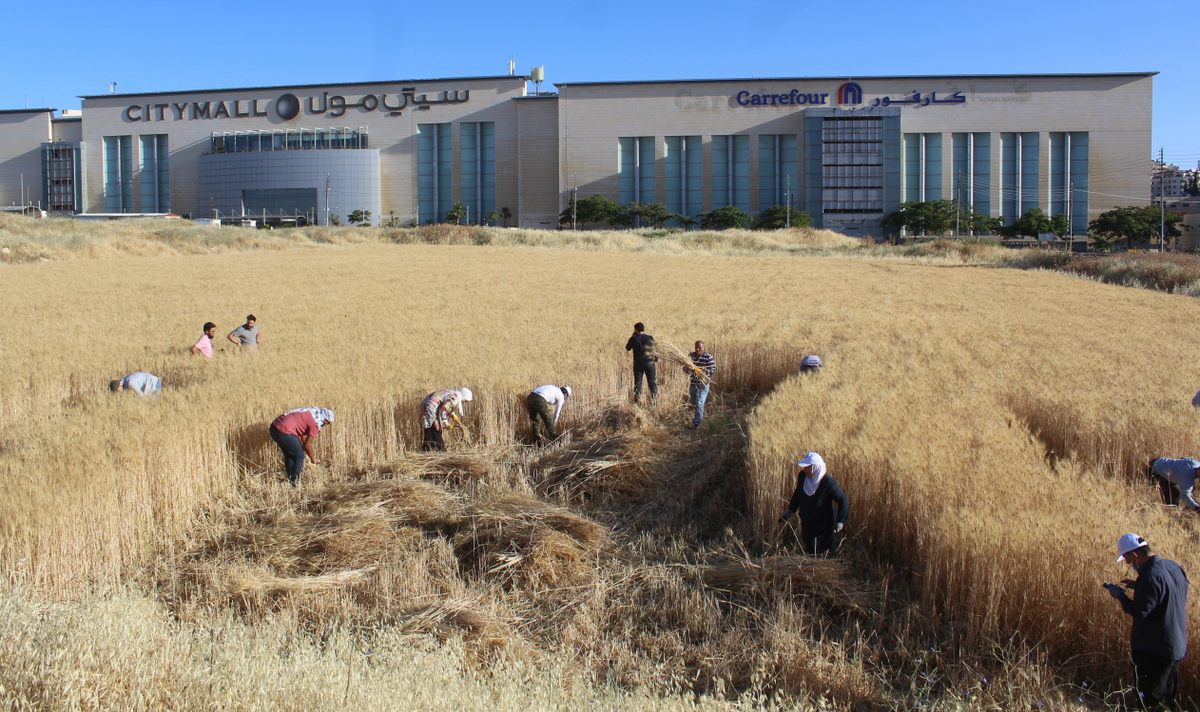
More microbes and cultures and tradition–this article is about the Al Barakeh Wheat Project in Jordan which is reviving the culture of growing and eating Jordna’s heritage durum wheat. Over the past two generations, Jordan has gone from a country growing more wheat than it could eat to one importing white flour from European countries. This is sad, and that’s what the project is aiming to turn around. Not only is it trying to revitalize the growth of such wheat, but it is also working on the supporting elements: stone wheat mills, getting bakeries to use the heritage durum, and most importantly, getting people involved.
4. The Himalayas’ ancient earthquake-defying design - BBC
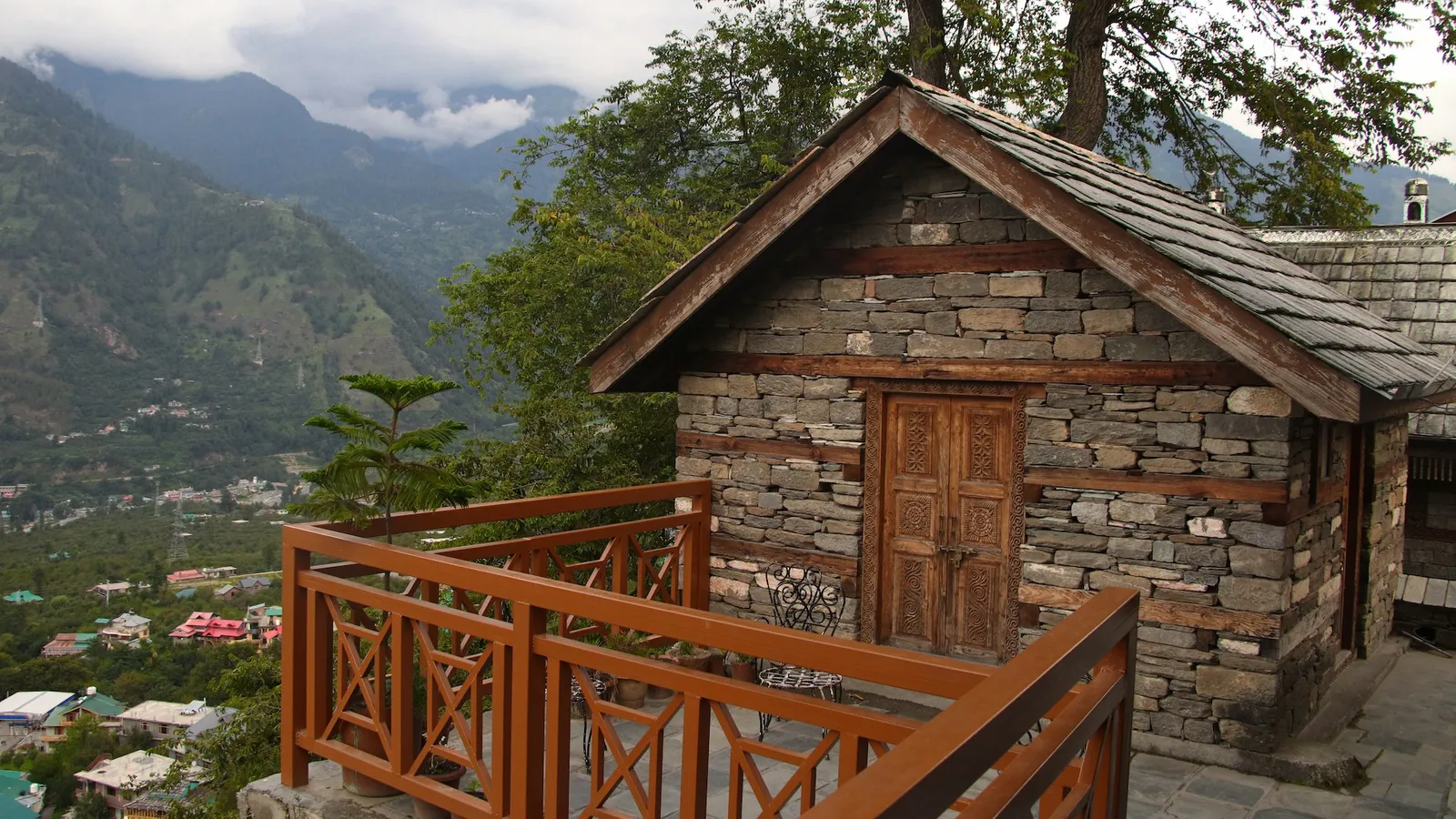
More ancient traditions–this one, though, doesn’t have anything to do with food and microbes, and more to do with construction. It’s about the kath kuni style of architecture and building in the Himalayas. Kath Kuni structures are defined by interlocking layers of deodar wood and local stone. The stone provides weight to the structure and the deodar wood provides the flexibility that keeps such houses safe during earthquakes. All of this is done without mortar! It’s very cool, and also very beautiful.
5. The Musicality - Charles Schifano’s Substack
I enjoy reading about the rhythm and lyricality of prose. Here, Schifano argues that we shouldn’t separate the style and the substance of writing:
Implicit to this assumption is the claim that what Fitzgerald writes about is distinct from the voice that he uses on the page. It is the claim that there’s some core meaning that’s intrinsic and enduring and that’s not contingent upon what’s visible—in novels and paintings and every aspect of life. Thus you have to scratch the polish from the surface, it seems, to find the true substance. The polish is a mere distraction or flourish, an incidental aspect of appearance, a patina atop what’s real, even though simply walking around the world makes this a tricky assumption to justify. Doesn’t the architecture of a building quite clearly shape the experience and potential of a building?
Also please enjoy these other pieces about the lyricality of prose that I’ve shared earlier: On a Wonderful, Beautiful, Almost Failed Sentence By Virginia Woolf (from Kable #100!), Good Sentences Are Why We Read and A Writing Lesson from Ursula K. Le Guin.
6. What are some tips for advanced writers? How do you push your writing into ‘excellency’ territory? - Quora
Well well, I never thought I’d be sharing Quora answers on the Kable, but this answer by Venkatesh Rao is really nice and also a good juxtaposition to the previous essay. Rao claims that to become an advanced writer, you have to get in 10,000 hours of rewrites. Many of us do spend hours and hours writing, whether it is emails or chats, but we do not do much high-intensity rewriting with those tasks. I find this really funny now.. as I accidentally deleted this issue after fully writing it, and now am having to rewrite it from memory while sharing an article about rewriting. The irony (or not).
7. Why shaving dulls even the sharpest of razors - MIT News
This is really cool–the steel that shaving razor blades are made of is about 50 times harder than human hair, yet the act of shaving dulls the razors. This shouldn’t be possible based on our vanilla understanding that a soft object shouldn’t quickly dull a hard one. However, it happens because the act of shaving introduces micro-cracks in the steel where there are deformities, and those then add up to yield chips, which then translates to a dull blade.
8. On Mr. Beast And Being Alone In A Circle For 100 Days - Cold Healing (a Substack newsletter)
I don’t know too much about Mr. Beast, but he is one of the top YouTubers in the world right now. This article starts off summarizing a video where Mr. Beast asks a participant to live alone in a circle (with a house in it) for a hundred days in order to win $5,00,000. It’s really quite rad, and I don’t know whether I mean this in a positive or negative sense.
The internet has broken us free from the monoculture of TV networks that dominated the twentieth century. […] It’s terrifying that a man spent one hundred days in a small circle in an empty field. It’s even more terrifying that this is solely at the whims of a single former Minecraft YouTube creator who happened to find the perfect niche to build a platform and happens to have a perfect sense for what his millions of anonymous viewers want from a video. Now, things are exciting and interesting. […] In the future, content is ruled by algorithmic desire, and those best suited to steer on the seas of the algorithm’s waves and whims.
9. Why Musicians & Other Creative Professionals Will Soon Get Their Revenge on the Old Guard - Ted Gioia’s Substack
I often share Ted Gioia’s writing, because he is a good writer and often has his pulse on things in the music and entertainment world. You can almost consider this article to be a sequel to #8 above–it’s about how wildly popular internet stars are going to be able to identify and pick talent, and amplify them using their huge platforms (there are YouTubers now with over 100 million subscribers!). This is a step change from what we have currently–with record labels and other industry incumbents acting as the power brokers. It is indeed a brave new world we are heading towards.