Hello there, reader, and welcome to another issue of Kat’s Kable, albeit one coming to you post an ignominious break last weekend. I simply did not have the energy or motivation last weekend, and to be honest, it has been scarce this weekend too. Yet here we are, another Sunday, and another issue of the Kable.
I’m discovering fascinating things about the tempo of my reading. A few years ago, I was quite steady and consistent in the rate at which I read things, and I derived comfort from that. These days, however, my reading has been peaking and troughing much the way the Mumbai monsoon has delivered the same amount of rain while transforming to a bimodal distribution with two sharp peaks. I now have phases during which I read a lot, and phases where I hardly read. I don’t think about this change as “good” or “bad”, but more a response to where I am both situationally and mentally. I’m sure life will bring me back to a more consistent tempo at some point, which too won’t last forever.
All of that means.. I sometimes just don’t have the ten articles I need for the newsletter. It’s a strange feeling, as I never had those issues in the past. But it is what it is, and also what’s prompting some of my thoughts about changing up the format.
That’s all from me, and now I’ll leave you with the ten articles for the week. As always, just reply to this email if you have anything to say.
If you got this from a friend and want to subscribe, here’s the link. Also, if any of the links are paywalled and if you don’t want to pay for a subscription, try opening the link in incognito mode in your browser. This works if the website has a “soft” paywall. If that doesn’t work, you can access the website using a different browser on the same device, or use a different device altogether. Another, slightly involved, method is to try to disable JavaScript and reload the page. This works on some websites for me.
1. Labour of love - The Roof is on Phire
I enjoyed this blog post/essay on the concept of work and our relationship to it. I’m just going to leave you with the opening paragraph, which will do more to get you to read it than any summary I write :)
The concept of “work” is a Rorschach test, an inkblot that you can project pretty much anything onto. There are definitions that speak of a meaningless Sisyphean grind inside an oppressive and cruel economic system designed to extract the maximum possible short-term value from all its constituent parts. There are also definitions that evoke the sincere joy of putting care and attention toward something worth nurturing, and shepherding its growth through consistent, deliberate effort. Your definition of work probably says more about you than the actual concept itself.
2. The Strangely Beautiful Experience of Google Reviews - Longreads
I don’t know if this is the norm, but when I’m bored and on the internet, I’ll go explore Google Maps, and if I zone in on an area, then I’ll also read reviews of some establishments. I was so glad to see that Will McCarthy wrote an entire feature on the wonderfulness of Google reviews! They are so all-over-the-place, ranging from one word reviews to entire essays about what certain places mean to people. This also reminds me of something I shared in issue #244 about YouTube comments: Sad YouTube: The Lost Treasures Of The Internet’s Greatest Cesspool.
I slept under the overpass that night, and in the morning, I wrote a review: “Reasonably good bridge. A little loud for sleeping.” I gave it four stars. After I set off on my bike, I couldn’t stop thinking about it. Because of Google Reviews — because multiple people took the time to review this squat bridge in the middle of nowhere — I felt like I was part of some shared human experience, the newest member of an obscure club. Maybe the other reviewers would disagree, but this moment felt powerful, like seeing other people’s names etched into a park bench or finding yourself deeply moved by the graffiti inside a public bathroom stall. But it was also weird: This tool for consumer reviews had become a digital guestbook for anything and everything in the world.
3. The Last Member of an Uncontacted Tribe - The New Yorker (soft paywalled)
This was a fascinating article about a man who was the last surviving member of an uncontacted Indigenous tribe in the Amazon rainforest. FUNAI, Brazil’s federal bureau of Indigenous affairs, attempted to contact him for many long years, and always kept a watch on him, but he retreated deeper and deeper into the forest, even shooting arrows at his watchers. This story made me feel a whole bunch of emotions.. ranging from awe to sadness and melancholy.
4. An Education Through Earthsea - New Republic
Everyone who spends more than a day talking to me will quickly find out that I am a huge huge fan of the writer Ursula K Le Guin. Her fantasy novels run quite differently from the “usual” tropes of fantasy, and focus more on internal battles and turmoil than just external events. Earthsea is probably Le Guin’s most popular work of fantasy. It spans five books written over 20+ (!) years, starting off as a young-adult fantasy and eventually graduating to a more mature, introspective and morose theme. It’s one of my all-time favourites; in fact, I just re-read the books last year.
To return to Earthsea today is to encounter a different kind of fantasy work, where knowing oneself is a painstaking, ceaseless endeavor. It is an end in itself, not a means for characters to engage in bigger, supposedly more consequential issues. It is what the story is about, and the wonders Earthsea offers are scaled accordingly, to the sublime horizons of a life.
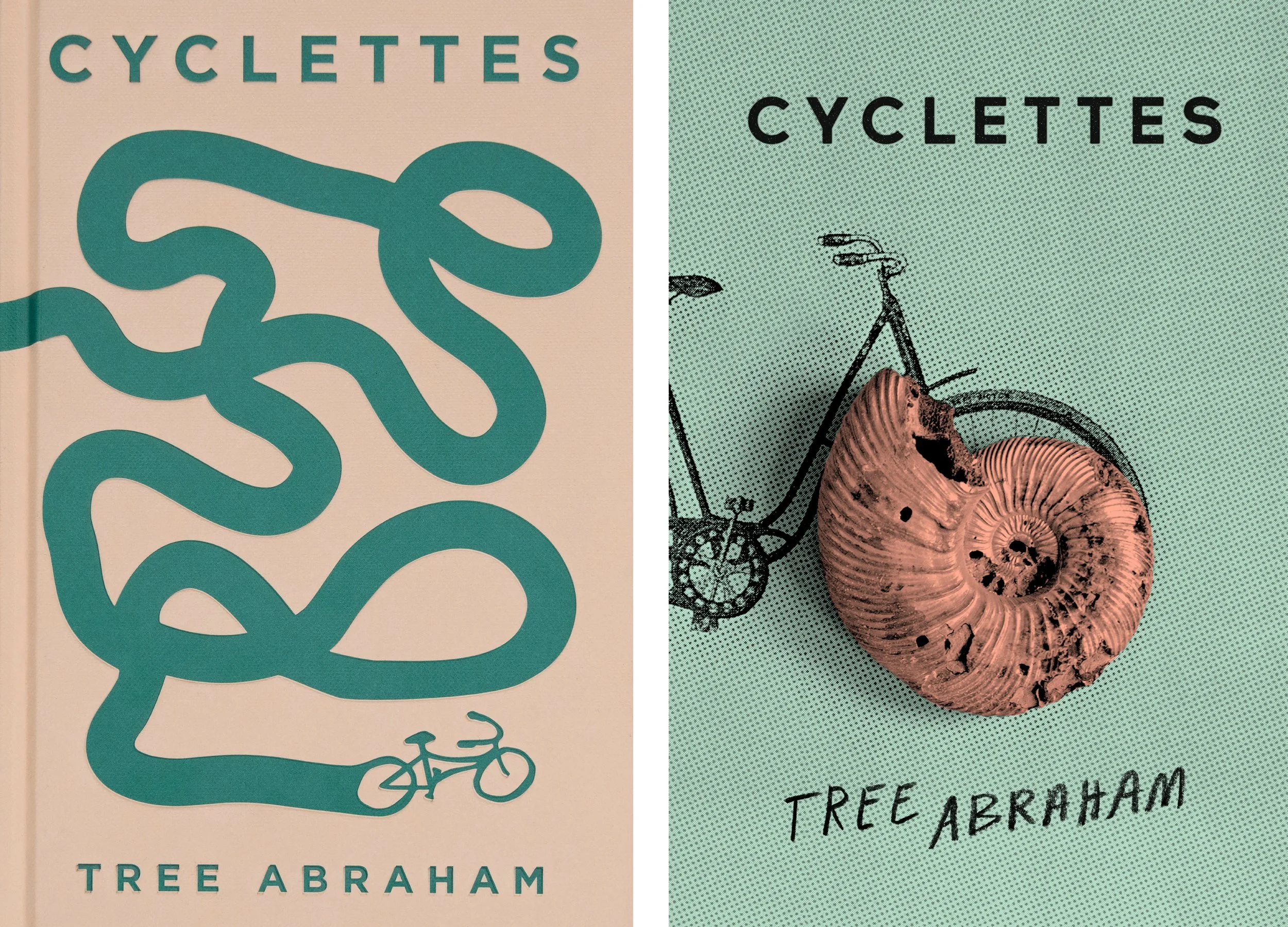
5. Tree Abraham on Designing the Cover of Her Own Book, Cyclettes - Spine Magazine
I enjoyed reading this quite a bit–Tree Abraham talks about designing the cover of their own book. It was interesting to read about how Abraham felt challenged to integrate the cover of the book with the abundant visual imagery scattered through the book itself. Their intimacy with the work both acted as an accelerant and a roadblock through the design process. The article itself has lots and lots of wonderful pictures too!
6. The Ghosts of Antarctica Will Haunt the End of the World - CNET
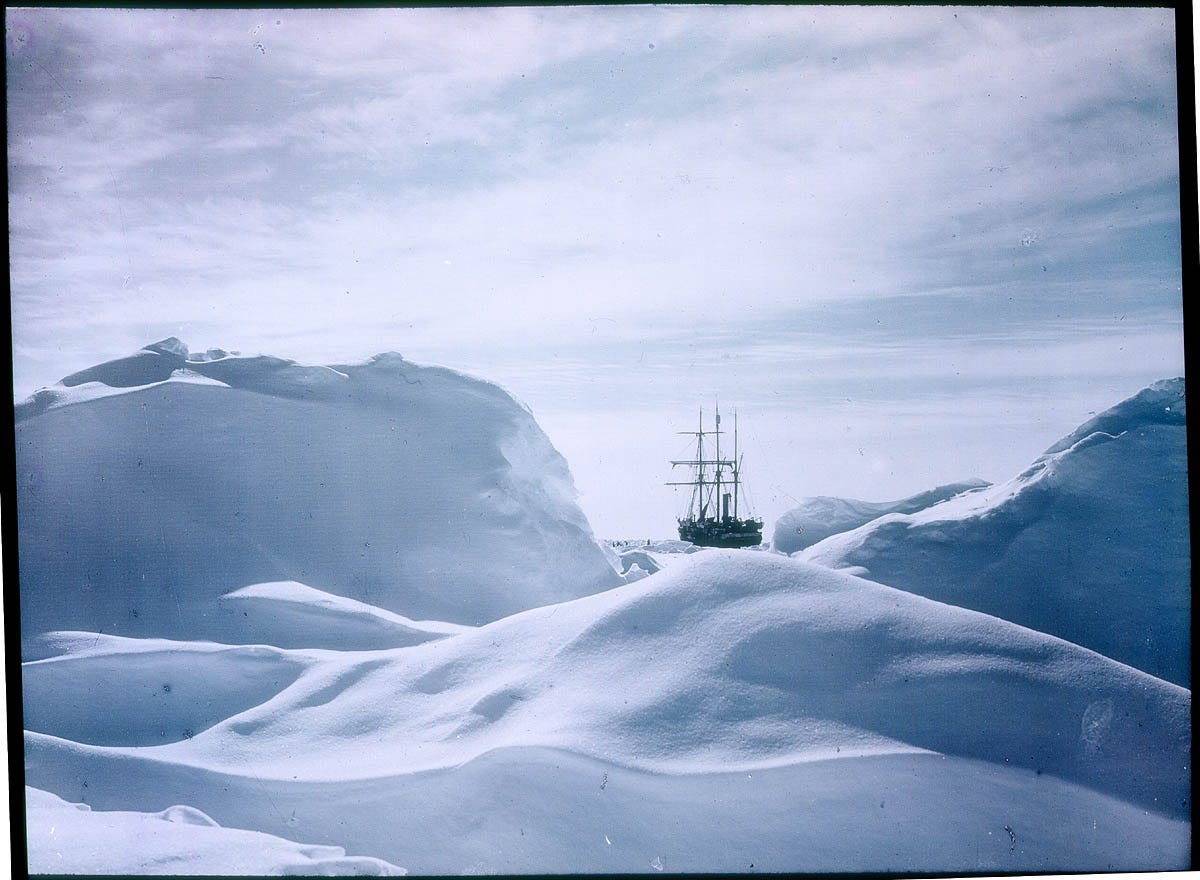
Jackson Ryan, the writer of this article, was a guest of the Australian Antarctic Division during the first voyage of the RSV Nuyina. Here, he writes about his experience in Antarctica–very haunting and eerie for the most part. I did enjoy it, though, as it’s an engaging read, with lots of the qualities you’ll love from good travel writing.
7. The Limitlessness of Grief - Elle Magazine
This is beautiful–Marisa Renee Lee writes about her relationship with her mom and in particular on how the relationship has been shaped with the grief of losing her to illness some years ago. Even though it’s been fifteen years since her loss, the emotions still ring true and affect her life. What I like the most about this personal essay, though, is that Lee’s relationship with herself in this context has evolved over the years, and she’s switched over to leaning on what she did have rather than what she’s missing out on now.
This also prompts me to share something that I wrote on my blog a few years ago about the grief of losing friends and the way my internal narrative (and coping mechanisms) has changed to a more wholesome one over the years. You can read it here.
8. ChatGPT Is a Blurry JPEG of the Web - The New Yorker (soft paywalled)
Ted Chiang, one of my favourite contemporary sci-fi writers, here writes about Chat-GPT, which of course I’m sure you’ve heard of in some capacity or the other. In short, it’s a revolutionary chatbot powered by a “large language model”, which enables it to converse just like a human, understand the context of conversations, and generally it’s able to successfully come off as a human with decent competence and good command over language. Chiang here describes it as a “blurry JPEG”, in the sense that it’s a lossy reproduction of the entire internet, and that its shortcomings may lie in the way it represents and stores the data it learns from (partially).
9. The ‘Perpetual Broths’ That Simmer For Decades - Atlas Obscura
This article about perpetual broths–basically, broths which are used everyday but never used up entirely, so a part of them can trace back years or even centuries. To me, this borders the line between weird and wonderful. I honestly don’t know if there is any benefit to preserving a broth beyond a couple of days, especially since unlike a sourdough or yogurt starter, fermentation isn’t desired here. Anyhow! These are in use in a few cultures around the world, both European and Asian, and their use itself is fascinating to learn about.
10. Creatures That Don’t Conform - Emergence Magazine
Wonderful essay that’s in praise of slime molds, which are fungi except that they also behave a lot like… animals too. They are ethereal and scarcely believable creatures, going through four life stages, the first of which involves them moving around in the soil like animals. Finally, of course, they erupt into colourful and appealing fruiting bodies, and this article has many many wonderful pictures of them. They are also super common, and they play an important role in the recycling of nutrients and life forms in our soils. I find it quite humbling that despite the commonness of these wondrous organisms, we still don’t know much about them.

See you next week.-Kat.