Friends, countrymen.. thank you for lending me some digital real estate on your phone or computer. This is Vishal with another issue of Kat’s Kable, albeit during the middle of the week. This is one of those weeks when I had my list of ten articles ready to go even before the weekend rolled around. Well, in a classic case of overcompensation, I delayed and delayed actually writing the issue itself and right now I don’t even have the defense that it’s still Sunday in America. Anyhow, here we are, and it’s a nice list again, with some mini-themes and loose connections between some consecutive articles I’ve shared.
This past weekend I’ve been reading Sherlock Holmes stories again. I was telling a friend earlier today that I’ve read each Sherlock Holmes story at least five times. And as for my favourites, like The Speckled Band or The Red-Headed League , I’ve read them at least fifteen times each. I enjoy the comfort of the stories, and what’s even more intriguing, I think, is that the stories teach me to pay more attention to details and to the world in general. Holmes misses nothing, whether it is the wear and tear of your clothes, the ink stains on your hands, or the nature of mud on your boots. The other thing that re-reading any book gives me is a sort of barometer for myself. I’ve written about this earlier, when my friend Rohini asked me to write an issue for This is my newsletter. What I mean is that the book stays the same, an anchor, and my reaction to it each time tells me how I am, how I am feeling, etc.
So yeah! I love to re-read books. My routine-loving mind feels comforted. Tell me, do you like to do it too?
If you got this from a friend and want to subscribe, here’s the link. Also, if any of the links are paywalled and if you don’t want to pay for a subscription, try opening the link in incognito mode in your browser. This works if the website has a “soft” paywall. If that doesn’t work, you can access the website using a different browser on the same device, or use a different device altogether. Another, slightly involved, method is to try to disable JavaScript and reload the page. This works on some websites for me.
1. The Charming Bloke Who Dominates GeoGuessr - The New Yorker (soft paywalled)
GeoGuessr is a fun online game that’s built on top of Google Maps + Street View: you’re dropped into an unknown spot, and based on what’s around you from the Street View, you guess where you are. It’s fun! And what’s cooler, to me at least, is the subculture that’s spawned where people play Geoguessr and stream themselves playing. Tom Davies, a young man from the UK, became one of the first popular GeoGuessr streamers. He still does it, and his stream is quite fun, despite him not being at the top of the game anymore.
All games imitate reality, turning activity that might otherwise constitute practically oriented work—hitting targets, lifting large burdens, running 26.2 miles from one town to another with important news—into an abstract, quantifiable competition. During lockdown, GeoGuessr was a way of stretching the muscles we use when we get lost and find our way home. And, like travel itself, the game consistently shows us how little of the world we actually know, but also how similar “vibes” can be across borders and oceans—how familiar the unfamiliar can be.
2. Something About the Present - Longreads
I’ve shared essays by Devin Kelly in the past because I love his writing. And while we’re at it, his newsletter, Ordinary Plots, is also fantastic: he walks you through a new poem every week in his signature careful and caring way. I had a bit of trouble wrapping my head around this essay, but it is still nice and I always enjoy Kelly’s way of writing and of interacting with the world.
There is something about the heart I cannot shake. I don’t mean about feeling. There will always be something about feeling I cannot shake, or even begin to describe. But there is something about the heart — my heart, and maybe yours — that looms over me each day. I think this is because I cannot control it. Right now, as I type this, I am breathing slowly, breathing deeply through my nose, and I feel my heart beat less frequently as a result. But even here, I am not controlling the actual beating of my heart, just its frequency. No. There is something about the heart. It beats until it doesn’t. I don’t give or withhold permission. To live my life is to accept — in this one, life-giving ongoingness that occurs right at the heart of me — that I am not the center of this story.
3. A Loosely Guided Tour of a Place Called Belonging: A House of Many Rooms - Coonoor and Co.
I’ve admired Pankaj Singh’s writing, and I’m mostly exposed to it on his Instagram. This is a longer-form essay, and to some extent I think it nicely couples with the previous piece above. Singh talks about his travels and focuses on the people and experiences he’s met in different parts of India. Again, I love the way he sees the world and shares that perspective and worldview (literally) with us.
To dear friends and strangers, who are in between places, who are on their way, those who have little to long for and more to leave behind, those who find themselves stuck, the ones that “failed to germinate”, those who always dream of elsewhere places, those who don’t know where to go and the ones that do but don’t know how to – my deepest wish for them is that they be granted the grace of being allowed to listen to the voice that has always, always called to them. Just like this little godwit that trusted the voice enough to shrink its organs in order to sustain the longest flight ever recorded, simply to arrive in a place of warmth and nurture.

4. How Universal Are Our Emotions? - The New Yorker (soft paywalled)
Interesting perspective. This article focuses on the research of the Dutch psychologist Batja Mesquita, who has built a body of work studying different cultures’ approaches to emotions. It starts from the fact that there are words for certain emotions in some languages that simply do not have faithful translations in other languages. What does that mean? Can those emotions still be universal across cultures, if some cultures don’t even have the vocabulary for it? It’s obviously interesting to think about. Mesquita also talks about and explores two different models of emotions: MINE (Mental, INside the person, and Essentialist) and OURS (OUtside the person, Relational, and Situated).
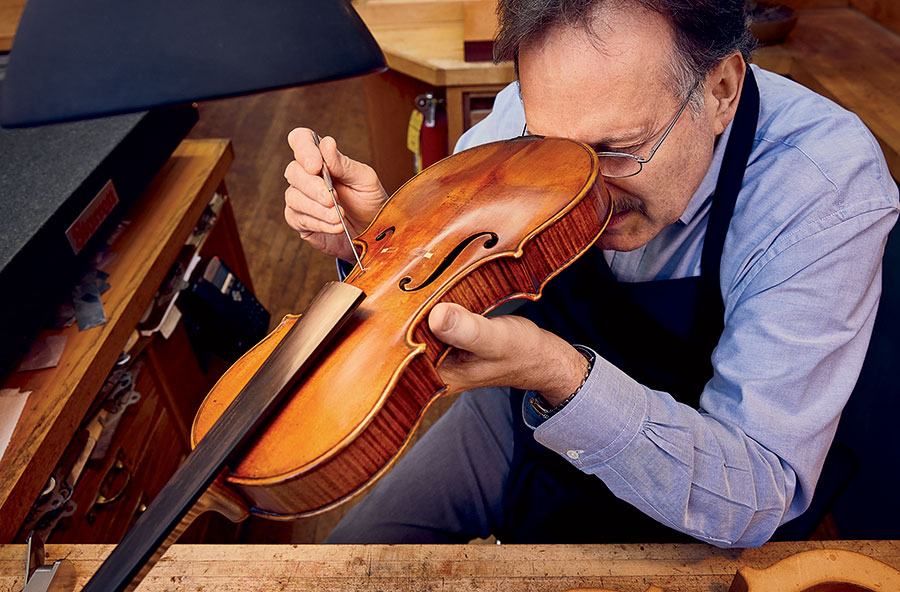
5. The Man Who Fixes the World’s Finest Violins - Chicago Mag
Wow! This is wonderful and a good break from the long list of introspective essays I’ve shared so far. It’s about John Becker, woodworker par excellence and the world’s foremost authority on repairing and taking care of violins. The article itself has an alternative title, “The Violin Doctor”, and that’s what he is. I enjoyed reading about him and his work.
Among the tools is a thin, curved piece of metal that resembles something a dental hygienist might use to scrape plaque. This is what Becker uses to place the sound post. He’ll do so in one swift, balletic movement, with only small adjustments thereafter. No hesitation. No backtracking. He seeks a moderate tension, neither tight nor loose, and his confident gesture reflects decades of practice. Becker’s precision at this even garnered him a nickname from violinist Nigel Kennedy: the Postmaster.

6. The Li(ttle) ion that could - Honest Energy (on Substack)
This is a really long post, but super informative and well done. It’s a deep dive into lithium-ion batteries, their history, their subtypes, advances made in the technology, and the various drawbacks still associated with them. Also, batteries are simply amazing. More on that in the next article too…
7. I like big batts - Honest Energy (on Substack)
I don’t think I’ve ever shared two articles from one publication back to back like this, but well, there’s a first for everything. This is another post about batteries, this time though it’s a general one about electrochemical energy storage in general. I think the fundamental thing here is that making batteries is just difficult , in the sense that it takes real ingenuity to contain energy in the potential energy of a chemical reaction in a controlled manner. And we’ve figured it out (or at least we’re in the middle of doing it)!
8. Is ‘Green Capitalism’ Total BS? - Wired (soft paywalled) and [Growth For What:
The Shaky Promise Of Green Capitalism](https://defector.com/growth-for-what-the-shaky-promise-of-green-capitalism/) - Defector Magazine
Well, yeah, what are we developing tons and tons of batteries for right now? For a transition of our current energy system to one powered by renewables as a way to combat the looming threat of climate change. This obviously brings up the question of, are we solving this the right way? An extractive economy with possibly the wrong incentives got us here, so should we rely on more growth (albeit green) and the same capitalistic system to get us out of it? Are there other fundamental issues that we’re just skirting under the carpet? This also reminds me of Green growth vs degrowth: are we missing the point? which I shared in issue #273.
9. Objects of Despair: The 10,000-Year Clock - The Paris Review
This is a piece from 2019 by Meghan O’Gieblyn as part of her column Objects of Despair , where she examines contemporary artifacts and their place in our lives and societies. This essay is about the 10,000 year clock built by the Long Now Foundation, with the aim of telling the time accurately for far longer than any clock we have built. I love the way O’Gieblyn talks of the way she thinks of the clock, as a stable object, as an aspirational device, almost giving it a life of its own. Truly, an artifact like this serves as a fulcrum for all sorts of projecting of human emotions. It also reminds me of this essay by Brian Eno The Big Here and Long Now which I may have shared on the newsletter at some point (I don’t remember).
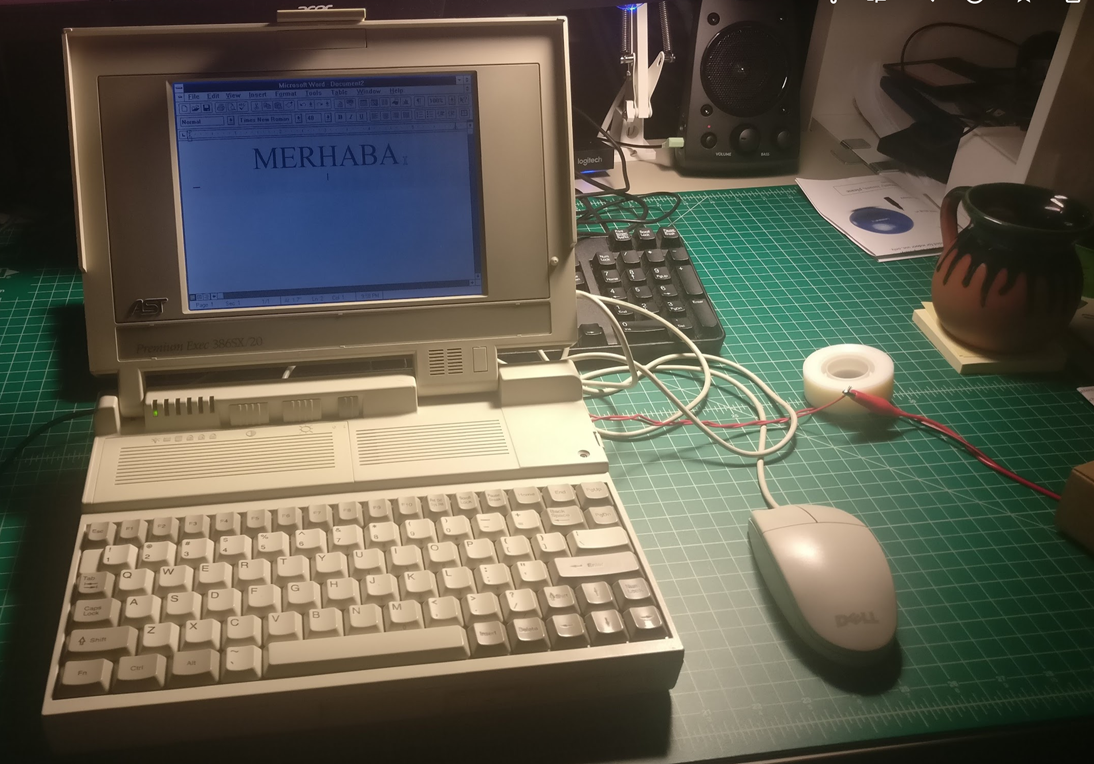
10. The best writing tool I ever used is a laptop from 1992 - Iskender Kushan’s blog
My nerdy self enjoyed this very much. Kushan is a writer and also a procrastination monkey. He’s figured out a way to write efficiently while paying full attention to his writing, and it’s by using an old, old laptop which can do very few things. But it can run Word, and it can export files to floppy drives, and that’s all you need, you know.