Reader, hello again, and once again we meet on a Monday. I am feeling very good about myself right now, as I just made very nice rotis. I’ve been working on my roti skills for a week now, and (surprise surprise) it appears as though it’s just a matter of practice. I can feel myself be calmer when making them now, not use as much dry flour as insurance against mistakes, and also not panic when I know something’s gone wrong. A metaphor for life, I suppose?
I haven’t been reading very much of late, but I’m glad to say I continue to read enough to sustain the Kable at a level of quality that I like. I’m about to start the book Piranesi by Susanna Clarke which a colleague at work kindly gave me. Well, before I do that… I have a reel to post! I am embracing this “Instagram content creator” phase I’m having because I’m actually having fun. I joke with my friends that I am contributing to the species-wide attention deficit situation caused by Instagram reels, and honestly, I don’t know if it’s a joke or not. Such modern times, much wow.
With a full stomach and a cup of tea by my side, I will leave you to this week’s list. I’m quite happy with it. I hope you are too.
If you got this from a friend and want to subscribe, here’s the link. Also, if any of the links are paywalled and if you don’t want to pay for a subscription, try opening the link in incognito mode in your browser. This works if the website has a “soft” paywall. If that doesn’t work, you can access the website using a different browser on the same device, or use a different device altogether. Another, slightly involved, method is to try to disable JavaScript and reload the page. This works on some websites for me.
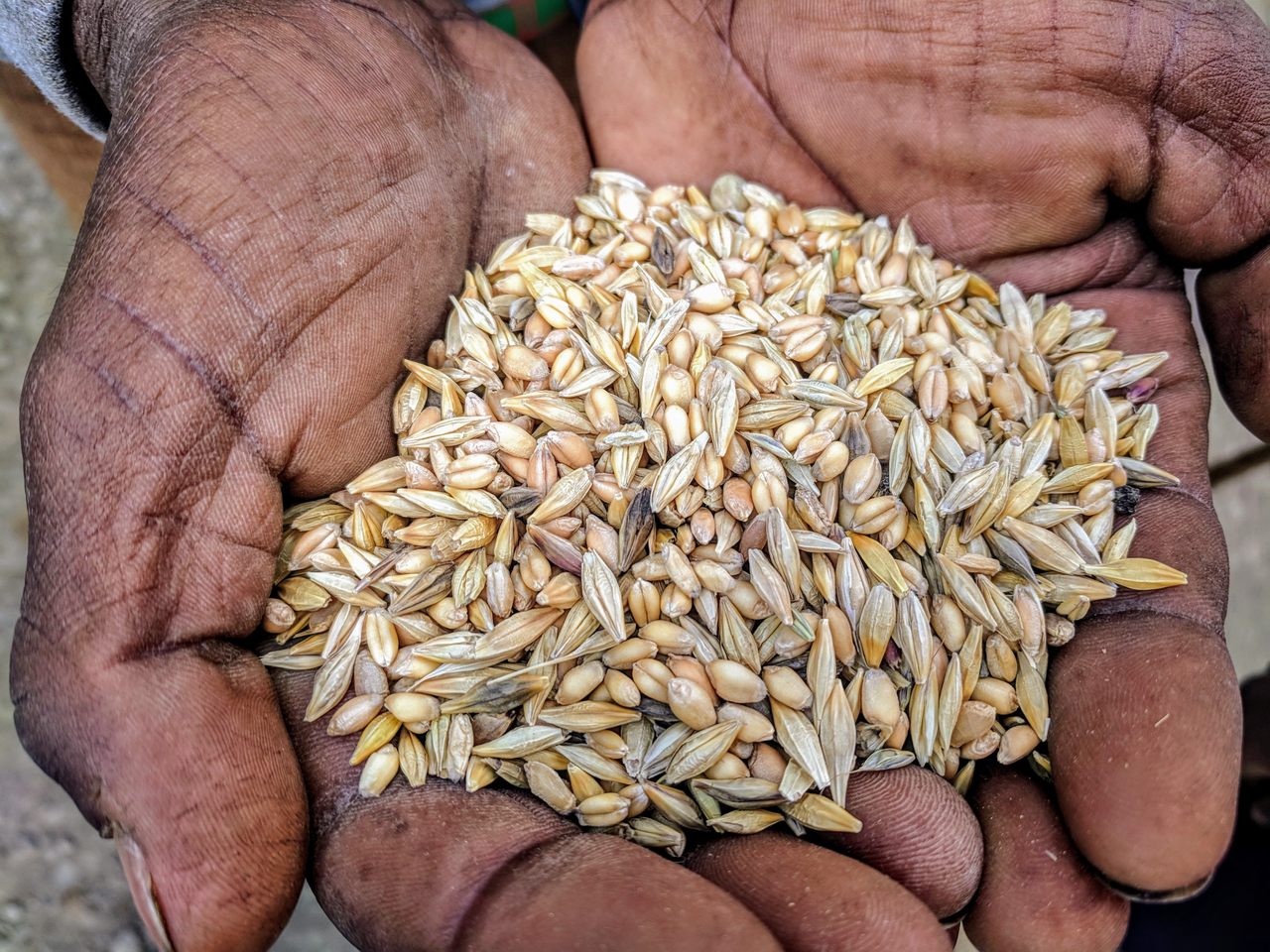
1. This Nearly Lost Ancient Grain Tradition Could Be the Future of Farming - Atlas Obscura
This article is about “maslins”, which you can also consider to be landraces. They are crops that are not a single variety and not even a single species. Rather, they are a group of crops that are sown and grown (and even harvested and processed) together, giving them more nutritional diversity and increased resilience versus external stressors. This article talks about the maslins of Ethiopia, where they’re even more important because the highlands create so many different microclimates, each of which is conducive to a different landrace/maslin. I loved reading about them.
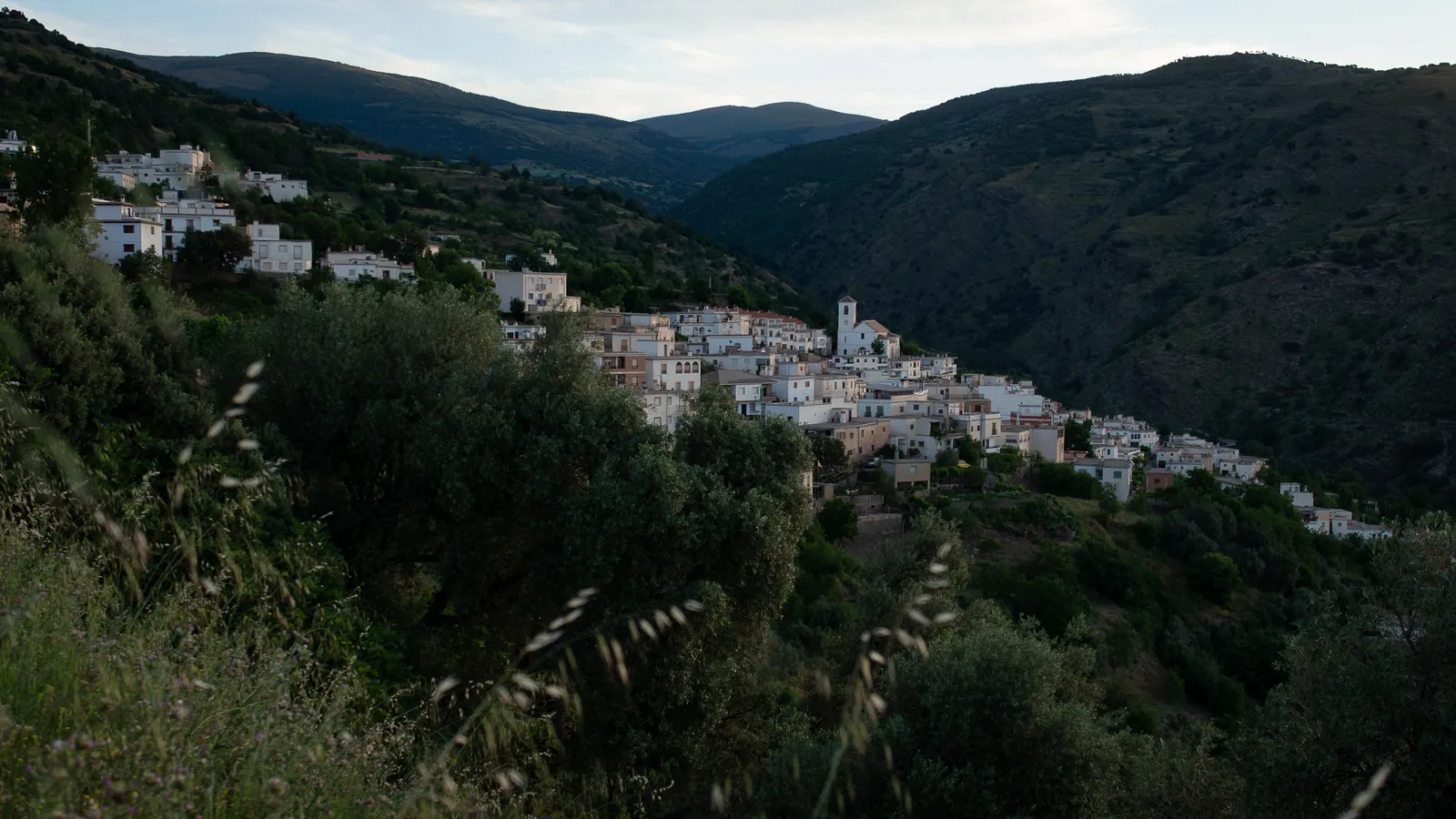
2. The Moorish invention that tamed Spain’s mountains - BBC
Another article about an old and wise practice to increase a community’s resiliency. I like this a lot. The Sierra Nevada mountains (in Europe) are very dry, and some towns have adapted to this by constructing artificial channels called _acequia_s that bring snowmelt down to human habitations which would otherwise go into the headwaters of rivers in the region. So cool!
3. The Kashmiri Chef Foraging on Precarious Soil - New York Times (soft paywalled)
Another article about regions and cultures. This one is about Prateek Sandhu, a renowned chef from Kashmir. He became the face of the restaurant Masque, and used the platform to elevate Kashmiri cuisine and center foraged ingredients. I love the idea of foraging for ingredients and then presenting them in a way that combines everyday food and fine dining. Well, of course, with some of the usual reservations I have about fine dining in general. It’s a nice profile of Sandhu, though, and quite inspiring.
I wasn’t sure at first how these rich dishes matched the rest of the tasting menu’s elegantly diminutive bites, which seemed designed to tease out a feeling rather than merely sate. Then came katlam, a flaking flatbread ready to shed tears of butter, and a bowl of chicken broth for dipping that was stained with curry leaf oil. When I tasted it, there was a low, sour throb announcing the presence of green walnuts. I recalled their trees, and the dusky rain and the family of bears. Once the bread was gone, I took a spoon to the broth, then finally lifted the bowl straight to my lips. Now you are in Kashmir.

4. Superhistory, Not Superintelligence - Ribbonfarm
I’d shared Beyond Hyperanthropomorphism in issue #295. That essay was about how to judge modern machine learning/artificial intelligence models, and it refers to this earlier one by the same author too. This essay talks about something easier to understand, to some extent: modern machine learning models are amazing because they know so much. They have access to so many facts that it would take a regular human hundreds of years to get to that level. So when we use and interact with models like GPT-3, what we’re really accessing is super-_history_.
5. The Curse of Gerrymandering — & the Mapping Software Behind It - Map Happenings
Ha! I remembered vaguely that I had shared something about gerrymandering a while ago on the Kable. And reader, I am right. I shared The Gerrymandered Font all the way back in issue #181 (pre-pandemic, would you believe!). Anyhow, here is another article about it, with some indicative and useful maps. Gerrymandering is the practice of reshaping voting districts to change electoral results.

6. These Gorgeous Photos Capture Life Inside a Drop of Seawater - Smithsonian Magazine
Gorgeous gorgeous photographs. This one, for instance, is a sea cucumber.

7. Pete Sampras Is Doing Just Fine - Sports Illustrated
Sports Illustrated runs a series called “Where Are They Now?” which explores the post-sports careers of some of the most illustrious sportspersons of recent past. This one is about Pete Sampras, and it was quite enjoyable. I chuckled loudly at this part:
At the peak of his considerable powers, Sampras was an exquisite player. Period. He had no interest in the celebrity aspect of the job. He enjoyed press conferences, glad-handing sponsor parties, promotional appearances and the other duties that attend being a superstar, much the same way cats enjoy bathing.

8. Forgetting the apocalypse: why our nuclear fears faded – and why that’s dangerous - The Guardian
An interesting article, possibly aimed at people my age? The premise is basically this: nuclear war, even if it takes the form of a few isolated events, is something to be very very wary of, and now that very few people alive have memories of Hiroshima and Nagasaki, or the Cuban missile crisis, we as a collective refer to nuclear war as a “dead” or “empty” metaphor. The author cites the example of Vasily Arkhipov, the Russian officer who defused the tense Cuban missile crisis, and says that a big reason Arkhipov was able to do that was because he’d
served aboard a nuclear-powered submarine whose reactor coolant system had failed, exposing the crew to radiation and killing 22 of his 138 shipmates. “He’d seen with his own eyes what radiation did to people,” his wife told a historian. “This tragedy was the reason he would say no to nuclear war.”
So, basically, how are we to accurately judge the risk of such a catastrophic event when we lose living memory of it? The author cites the example of the Holocaust, which took place at the same time as Hiroshima and Nagasaki, and has stayed in our collective conscience because of it becoming enshrined as a cultural artifact. Why, he asks, have we not done the same for nuclear attacks?
9. Fluid Dynamics Explains Some Traffic Jams - Inside Science
This piqued my nerdy brain. Traffic flow can be modeled as a fluid, thus allowing modelers and scientists to invoke all the machinery of fluid dynamics to explain strange behaviour. MIT professor Berthold Horn says that the stream of traffic is a liquid which “thickens” once there is more than a certain concentration of cars on a road. Fascinating. So it’s not exactly a traffic “jam”, it’s more like a traffic “cornstarch slurry”.
10. What was it like to grow up in the last Ice Age? - Aeon
Anthropologist and archaeologist April Nowell writes about how historians and archaeologists have (sort of) ignored children when looking at old sites and constructing narratives around early human societies. Here she talks about how if we think about and interpret field observations in different way, we can learn quite a bit about children’s behaviour and role in society 14,000 years (ish) ago. I also liked the way this was written, quite engaging.
The future of studying the past may well lie in our continued efforts to reconstruct the lives of these Ice Age influencers. They were children who loved and were loved; who experienced hunger and pain, but also joy; who played games, made art and occupied ‘secret spaces’; who listened to stories and made music; who learned to hunt, gather and fish; and who produced ceramics, stone tools and, sometimes, little footprints in soft mud.