Hi there, reader. This is Vishal with another issue of Kat’s Kable. My apologies for missing last week’s issue. I was busy with work stuff and did not have the headspace to write the newsletter (though I did have the time). Anyhow, we are back now.
Something interesting happened to me while writing this issue. I was typing out at home, hammering on my mechanical keyboard when I realized that some keys were getting entered twice when I typed them. I tried changing some of the basic settings on my laptop but the problem wasn’t fixed, and my only recourse was to change the pressure with which I hit each key on the keyboard. It made for a quieter and very different experience.
This reminds me of another of my random mindfulness techniques, where sometimes I do a regular activity at home, but I try to do it as soundlessly as possible. This can be, say, reorganizing my cupboard, or even prepping before I cook a meal. The act of reducing noise automatically slows me down, makes my touches more careful, and increases the duration of each tactile interaction. It’s really fun, and I think it’s good to do once in a while.
I somehow find it easier to do “mindfulness” activities while doing something, rather than while trying to do nothing. Meditation is not as calming as zoning out and focusing on chopping a bowl of veggies for a ferment. Well, it’s good enough, I suppose, to know what works for me and then to incorporate that in my life.
With no further ado, I’ll leave you to this week’s articles. As always, feel free to write back in (unless you are one of the weird Russian bots that somehow gets into my list).
If you got this from a friend and want to subscribe, here’s the link. Also, if any of the links are paywalled and if you don’t want to pay for a subscription, try opening the link in incognito mode in your browser. This works if the website has a “soft” paywall. If that doesn’t work, you can access the website using a different browser on the same device, or use a different device altogether. Another, slightly involved, method is to try to disable JavaScript and reload the page. This works on some websites for me.
1. The Very Bacterial Caterpillar - Small Things Considered
This is not exactly a longform article and it’s also not what I usually share on the Kable, yet it is super cool and interesting. This is a blog post by Jennifer Frazer about certain caterpillar-shaped bacteria that live in the insides of our mouths. Unlike most bacteria, these are multicellular; however, their biggest magic trick is that they live in a world that’s 90 degrees tilted from all other bacteria, that is, they divide longitudinally rather than transversely. All inside our mouths! And we’re just finding out!
2. How Food Powers Your Body - The New Yorker (soft paywalled)
Another human biology article: this time it’s about the complex mechanism by which food becomes energy in our bodies. It’s obviously something that we rely on for our every action, and outside of some basic knowledge of mitochondria, ATP, and the Krebs cycle from my school days, I did not know much of the specifics.
And it’s not really that hard to grasp. Nowadays, even those of us who skipped A.P. Bio are conversant with genes; thanks to the pandemic, we may even know what we’re talking about when we use words like “protein” and “mRNA.” Lane argues that our DNA literacy is actually a form of genetic chauvinism. The secret of life isn’t entirely written in our genes; it also has to do with how we pull energy out of the world—with our ongoing, lifelong slow burn. Understanding the Krebs cycle is worth it because it helps you better understand what it means to be alive.
3. Is This Mountain Biking’s Greatest Uphill Achievement? - Bicycling magazine
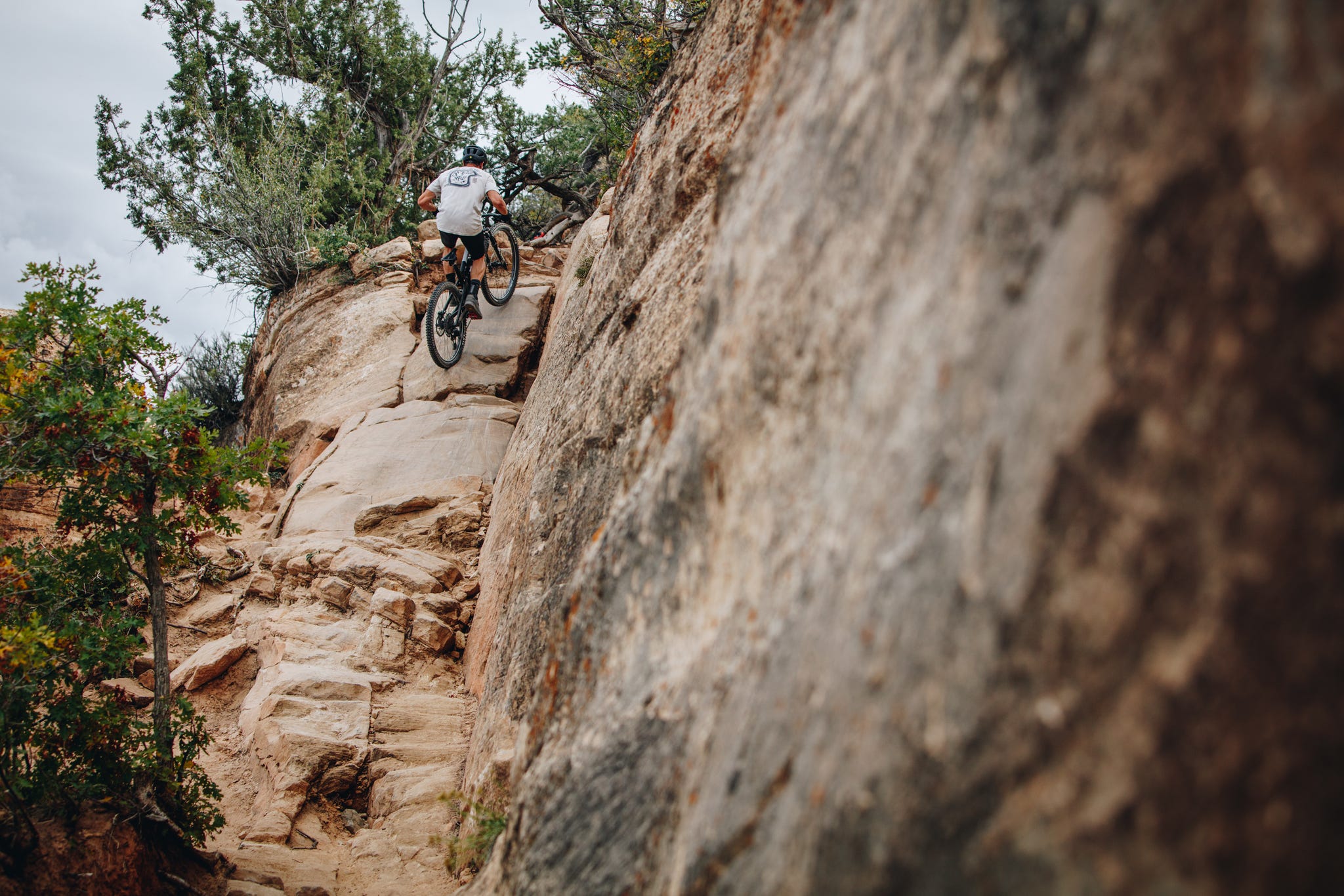
I loved this! It’s about a mountain biking trail in the American state of Utah called The Whole Enchilada, and nobody has ever climbed it uphill on a bike. Until Braydon Bringhurst, who seems to be an amazing and crazy person. What I loved was the deep dive into his story, particularly the mental techniques he used to effectively navigate some of the toughest parts of the course. What makes the uphill climb absolutely crazy to consider doing is the fact that it combines a need for long-duration endurance as well as explosive bursts of energy for some of the toughest stretches and jumps. To train in such a way so as to combine the two, while navigating injury issues too.. it’s incredible.
Where other athletes might have spent themselves on more practice, Braydon focused his energy on dislodging the mental splinter. “I can do this,” he told himself. “I’ve got this.” All night, he visualized his 5-trick run, which ended with the Switch 1080. By the time he slipped through the starting gate on the day of the competition, he’d landed the trick hundreds of times in his mind. He helicoptered through the air, spinning too fast for his mother to recognize. She saw the human blur and thought, Oh dear. I don’t know if Braydon can beat this guy. He nailed the trick and won the national title.
4. The not-quite-redemption of South Africa’s infamous ultra-marathon cheats - Business Insider
Well, wow. I didn’t know about this story at all. It’s about Arnold and Sergio Motsoeneng, two brothers who pulled off a ninth-place finish in one of South Africa’s most important post-apartheid races, the “Comrades”. However, they pulled it off by cheating, where each of them ran one half of the race and exchanged clothing in one of the portable toilets mid-race. It’s an interesting story, which they only attempted because of the prize money the Comrades had to offer.
5. If a tree falls in a city - Soup Magazine
I took a tree walk with Sananda Mukhopadhyaya in Mumbai a few months ago, and it was both fun and instructive. Here she writes about urban trees, and what it takes for them to survive in a city, especially one as cramped and crowded as Mumbai.
Probably the same things you and I dream of in Mumbai- footage space and light. Like us, trees make for a community of migrants who have come here from far away places to call it home. And like most folks in this city, trees too need to hustle and make a “living”.
In a city struggling for space, trees moonlight as advertisement posts for drivers, domestic workers, key makers and most commonly masseurs. Besides this, they are also prolific wire holders, and if you look closely at a typical Mumbai neighbourhood tree, you are likely to see wire coiled up within its branches or trailing down its trunk. In this season of festivities, they work all night as fairy light holders and are likely to be found posturing as marionettes to Chinese paper lamps at wedding banquet halls.

6. IKEA (The Non-Expert advice column) (The Morning News) and [IKEA’s Crimes Against Cartography](https:
//www.londonreconnections.com/2022/ikeas-crimes-against-cartography/) (London Reconnections)
Two fun fun pieces about IKEA. The first is a humorous response (in the form of instructions for a game!) to a question asking how to deal with IKEA addiction, and the second is a systematic takedown of all the reasons why IKEA’s layout/cartography is in sharp contrast to the simple, clean and effective layout of good public transit. I enjoyed reading both of them.
7. The Blackstone rebellion: how one country took on the world’s biggest commercial landlord - The Guardian
Blackstone, one of the world’s largest asset managers, is also the world’s largest commercial landlord in history. Blackstone has a ~$320 billion real estate portfolio. It has been steadily acquiring tons of real estate for the past two decades or so, leading to the “financialization” of real estate, as it is called. In most geographies, Blackstone faced little pushback; Denmark, though, proved to be quite the exception. This longread from the Guardian is about that pushback.
8. The Vjosa: Portraits of Life on Europe’s Last Wild River - The Independent Photographer
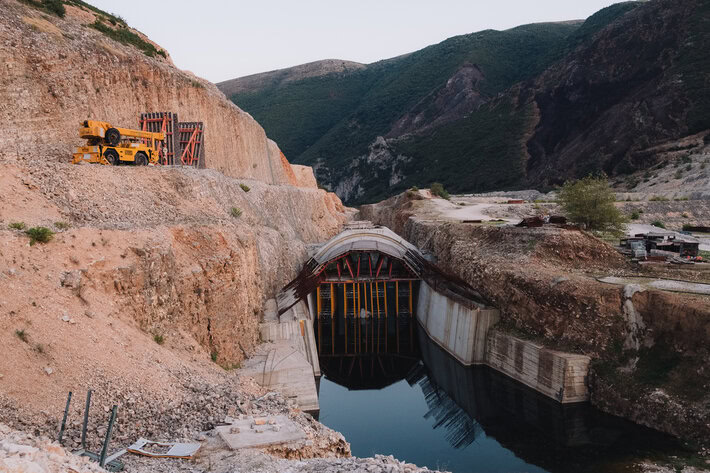
With this lovely photo-essay, we move to a markedly different part of Europe, the Western Balkans, and in particular Greece and Albania. The Vjosa is considered to be Europe’s “last wild river”, in the sense that it flows uninterrupted without any dams or power stations on it. That, however, may not be the case for much longer. The Vjosa, and by extension the people living by it, have faced numerous existential threats in recent years. This photo-essay has some lovely and poignant photos.
9. America Doesn’t Know Tofu - Asterisk Magazine
I loved this essay by George Stiffman exploring various different kinds of tofu in China! Outside of China, in the West, or even in India, I suppose, we know of tofu as cotton tofu and silken tofu, and we use it in a set number of ways. Tofu, though, can take many forms, each of which are best prepared in their own ways, which Stiffman compares to different cuts of meat which are each prepared in their own ways. I enjoyed reading about his story of exploring different vegan food in China during his study-abroad semester, and as a vegan myself, I very much enjoyed reading about the different kinds of food that he got to try (and learn how to make too!). My favourite part, though?
The city of Jinan in Shandong Province, around 250 miles south of Beijing, served a one-of-a-kind seitan called ǒumiànjīn 藕面筋, or lotus wheat gluten. The texture can only be compared to osteoporosis: Silky, gelatinous shells contained what once was whole tissue but now was just holey.
10. The Year in Naps - Hazlitt
This is an old piece, from 2019, where Bud Smith looks back on his year and finds it to be characterized by naps. While working on his writing, he also worked full-time at a petrochemical plant. His work timings necessitated post-work evening naps. It’s an interesting life, and of course even more interesting to read about through Smith’s writing.