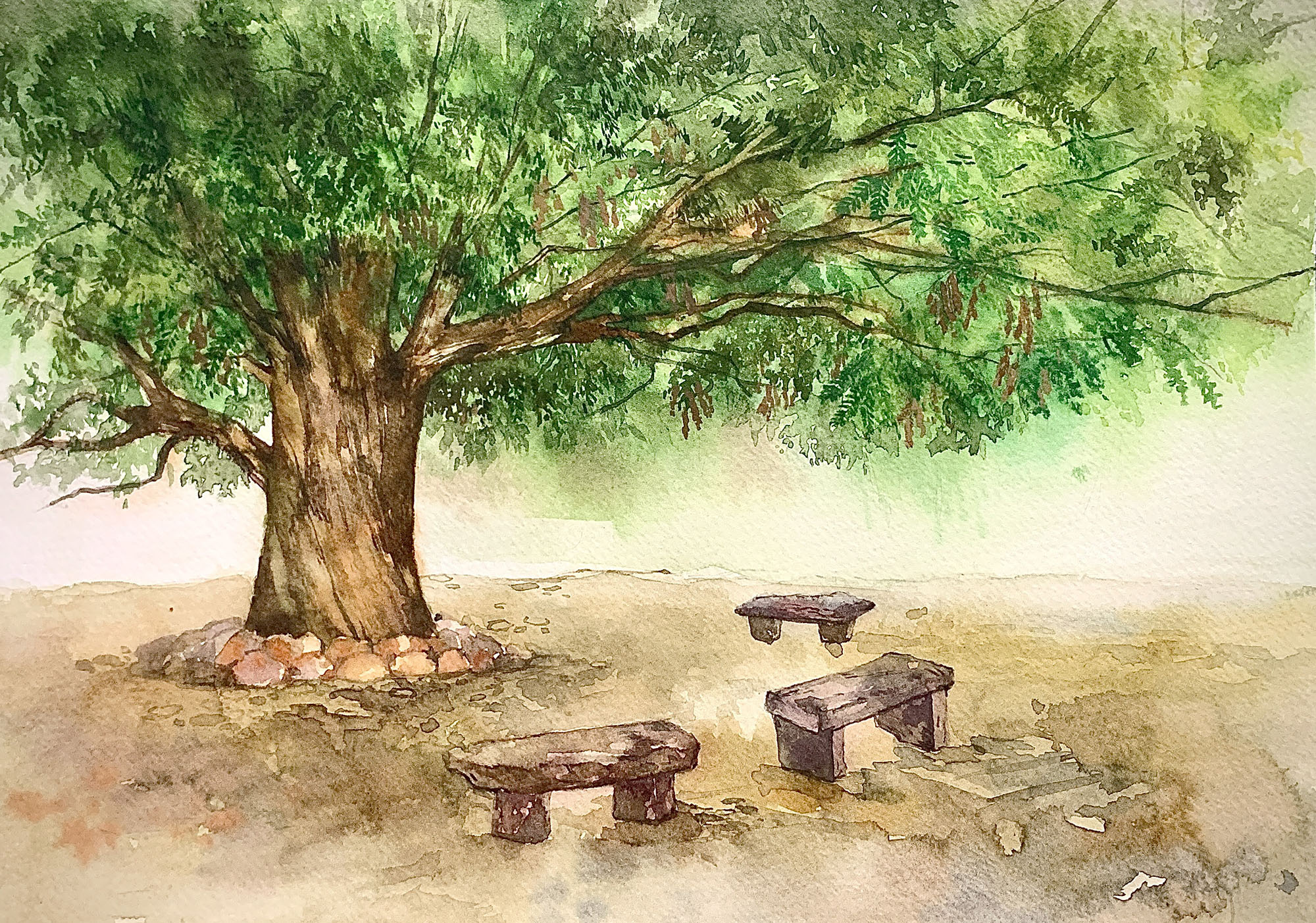
Hello, dear reader, this is Vishal with another issue of the Kable. I don’t have a whole lot to say today because as soon as I hit send on this email, I’m going to go take a nap. I’ve been spending too much time in front of screens and I think it’s starting to affect me. So I’ve started juggling again and who knows, I might even pull out the ukulele tonight and begin again after my (multiple) previously aborted attempts to learn to play it. It really does feel weird because even though the world is a big place with so much to see and do, I tend to spend much of my time looking at my phone or laptop. Hmph.
As always, there are ten things to read and enjoy (which I hope you do!).
If you got this from a friend and want to subscribe, here’s the link. Also, if any of the links are paywalled and if you don’t want to pay for a subscription, try opening the link in incognito mode in your browser. This works if the website has a “soft” paywall. If that doesn’t work, you can access the website using a different browser on the same device, or use a different device altogether. Another, slightly involved, method is to try to disable JavaScript and reload the page. This works on some websites for me.
1. The unsung heroes of the Apple Watch are its hidden buttons - The Verge
Oooh. I’ve never used or I think even touched an Apple Watch, but now I want to play around with this feature. Apple developed an entire ecosystem around easily swappable bands for their watches, and they did this by coming up with an entire new manufacturing altogether and a really clever, no-magnet, method to detach and attach watch straps. So cool! This is the assembly:

2. Collections: Roman Roads - A Collection of Unmitigated Pedantry (Bret Devereaux’s blog)
There’s never a big gap between Devereaux’s posts on the Kable. I enjoyed this essay about the Roman road system. The other thing I wanted to share about his blog is something that Robin Sloan wrote in his newsletter. Sloan shared the essay on Cleopatra and commented:
Here is a post about Cleopatra from Bret C. Devereaux, notable for its disciplined uncertainty. Not just disciplined: passionate! That’s not a feeling generally associated with uncertainty, right? Yet here it’s plain.
[…] There’s a way in which the modern media environment — maybe all media environments ever — pushes against “I don’t know”. In an interview, any kind, it’s weirdly difficult to say “I don’t know” and leave it at that. The statement hangs in the air … the pressure builds … and the words come — any words, really, a haze of well-maybes and if-thens to fill the silence. If you haven’t noticed this before, listen for it; it’s ubiquitous, and sort of darkly hilarious.
3. Recipe for Disaster: The Formula That Killed Wall Street - Wired (soft paywalled)
Pretty fascinating essay from 2009, right after the recession, talking about the “Gaussian copula”, a formula invented by David X. Li that was used indiscriminately to assign AAA ratings to a lot of securities that shouldn’t actually have received that rating. The technical issue was that it didn’t really take correlations into account properly (and thus didn’t consider the fact that so many homeowners would default on their mortgages), but the more fundamental issue was that fund managers and bankers found it incredibly easy to use the formula as it gave them a single number using which to assess risk (which is simply not true).
4. The Problem With Stories - 3 Quarks Daily
Hmm this is interesting and honestly something I have strong opinions about. The author, Thomas Wells, also runs the blog The Philosopher’s Beard from which I’ve earlier shared We Should Fix Climate Change, But We Should Not Regret It (issue 286) and There Is No Such Thing As Countries (issue 269). This post, though, is different. Wells argues that our minds run on stories and narratives (very true) and thus rational thinking is not the core that guides our thought processes and decisions. He then proceeds to say that we need to reduce the weightage we give to narrative-driven decisions in our societies, to which my main response is, “I thought stories are what make us human in the first place”. So… yeah. I don’t know. The scientific part of my mind says, “yeah, of course we have to eliminate the biases and act scientifically!” but that’s not the only part of my mind at play here.
5. We Need to Translate More Armenian Literature - Electric Literature
I’d shared a piece by Garen Torikian, He Who Fishes just last week. Here’s another, which I enjoyed, and thought fun to juxtapose with the previous essay.
Translating literature, in any language, is a never-ending task. And we need more translations from minority languages not because we seek inclusion into cannons and anthologies. We need them to assert our very existence. This practice goes beyond just the neglect of Armenian literature. […] We, the descendants of the displaced, must undertake these acts of remembrance and preservation not only to honor our mothers and fathers and unbroken lineage of survivors. We do so to inspire our brothers and sisters whose stories have been buried by the machinations of conquest. We do not only tell ourselves stories to live; we tell others our stories in order to survive.
6. How Humans Are Learning to Speak Whale - Atmos
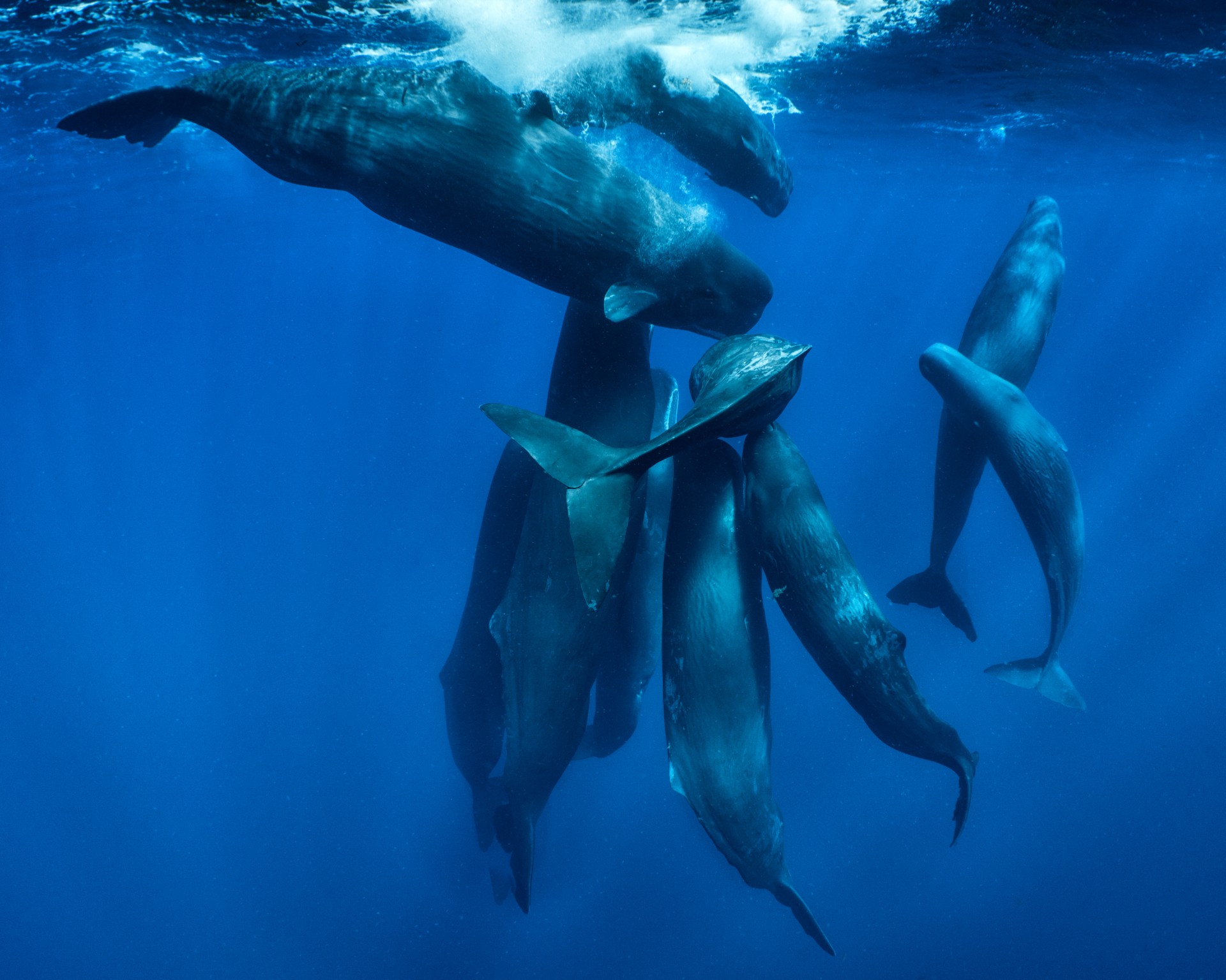
Ha! A trifecta of connected articles. Moving from stories to translating between languages to translating between species. I enjoyed reading about this effort to record and comprehend the sounds whales make off the western coast of North America.
The spectrogram from that evening is dense with Veirs’s annotations: “clicks, slow, overlap;” “S04, faint;” “whistle, upsweep;” “cool whistle + click sequence.” Something about the tentative, exploratory nature of those labels recalls Mystery and his long-ago vocalizations into the unfamiliar medium of the air: the record of a curious intelligence encountering something possibly significant and definitely wondrous, but not yet knowing quite what it means.
7. The strange survival of Guinness World Records - The Guardian
The Guinness Book of World Records began in 1955, and has obviously gone through a number of changes over the years. You might wonder, what role do the records play in a world where people can go viral entirely on their own via social media? It’s a good question, and that’s where this article starts.
It is strange to think of Guinness World Records – a business named after a beer company, which catalogues humanity’s most batshit endeavours – as the kind of entity that could sell out. At first glance, it seems like accusing Alton Towers or Pizza Express of selling out. But the deeper I delved into the world of record breaking, the more sense it made. In spite of its absurdity, or maybe because of it, record breaking is a reflection of our deepest interests and desires. Look deeply enough at a man attempting to break the record for most spoons on a human body, or the woman seeking to become the oldest salsa dancer in the world, and you can find yourself starting to believe that you’re peering into humanity’s soul.
8. A Radical Seed-Breeding Project Could Help Southern Farmers Adapt to Climate Change - Civil Eats
“The Utopian Seed Project is growing dozens of types of okra in one North Carolina field, creating genetic collisions that build new, resilient varieties. The group is working to adapt more food crops to the changing climate.”
What I found super interesting about this is how the project is creating “ultracrosses”, basically, growing a bunch of varieties together, getting them to cross indiscriminately, and saving seeds from the result. This results in more of a “landrace” than a single variety, but the premise to do so is to maximize genetic diversity and unlock traits that will be needed in an altered climate.
And on a broader scale, Adeeb hopes the ultracross can help people embrace the value of diversity. She compares the mix of okra to the human family, which also spread to the world from Africa.
“In that pool of genes lies the future,” she says of both okra and mankind. “Hopefully, we’ll be able to adapt to all the things that Mother Nature throws at us because of our misbehavior. She’s thinking about drop-kicking us the way she did the dinosaurs, but maybe we can make amends and show her that we really do respect her.”

9. Inside Superiority Burger: The Buzziest Restaurant in America - GQ
“How did chef and former punk drummer Brooks Headley turn his all-vegetarian vision for a rock and roll diner into the season’s hottest new restaurant?”
Rollicking fun. And really good photos.
All the same, to say that Superiority Burger is clearly Headley’s baby would be an understatement; better to say that it feels like his very guts have been spilled out into the world in restaurant form. This, like many aspects of Superiority Burger, feels like a throwback, to a time of more unabashed enthrallment with the mad visions of personality-filled chefs. […]
“It all flows through him,” says Sheryl Heefner. Heefner is a veteran of Eleven Madison Park, Union Square Cafe and others, who joined Superiority Burger in 2017 and is now managing partner and general manager of the new restaurant. “There’s just something about his life history, and the way he views history and culture—it all comes together into this intersection of art and music and food. This place is his voice. It’s his thoughts.”
.jpg)
10. Foraging – In Forests And Beyond - Coonoor and Co.
An essay by my friend Shruti Tharayil, founder of the Instagram page and platform Forgotten Greens, about her experiences foraging with locals in the Eastern Ghats of Andhra Pradesh. I love her observations and the way she sees the world. The illustrations are wonderful too!