Hello, reader, and welcome to another issue of Kat’s Kable. I had to skip the newsletter last weekend, but here I am again on a Sunday, all according to schedule. These days I just haven’t been reading , you know? No new books, not too many new articles, and it isn’t gnawing on me like it usually would. “Just a phase”, I tell myself like I usually do. And it’s usually true, so never really a cause for concern.
I’ve started juggling again, in an attempt to do more of the things that bring me joy, and also because of the simple fact that juggling is fun aside from whatever benefits it may have for hand-eye coordination or mindfulness or whatever. I think I’ve lost control on some of the tricks I knew, so it’s back to the boring basics for now. No complaints though. I miss being bored.
Anyhow, that’s all in terms of preludes and nocturnes personal updates in this issue. Hope you enjoy the list below! It’s all good stuff (per usual) along with my tolerable (I hope) commentary.
If you got this from a friend and want to subscribe, here’s the link. Also, if any of the links are paywalled and if you don’t want to pay for a subscription, try opening the link in incognito mode in your browser. This works if the website has a “soft” paywall. If that doesn’t work, you can access the website using a different browser on the same device, or use a different device altogether. Another, slightly involved, method is to try to disable JavaScript and reload the page. This works on some websites for me.
1. Is this ‘age of the delta’ coming to an end? - Knowable Magazine
The last few millennia have seen many river deltas form, which has played an important role in the establishing of human civilizations. However, one of the fundamental learnings from geology is that lakes and rivers are transient, and this article talks about how our current glut of river deltas may soon be on the downswing. Part of it is due to climate change, but a major part of it is just the periodic cycles that the Earth’s topography is subject to.
2. Seaflooding - Tomas Pueyo’s Substack
Ha, I thought it would be fun to juxtapose this proposition with the previous article. Pueyo talks about areas like the Mediterranean, which used to be a low-lying desert until a pathway to the ocean opened up and filled it with salty water. This changed the local climate, drawing moisture, rain and generally making the area around it more comfortable. He argues, should we not be doing this in other places too, like the Dead Sea? I know it sounds pretty preposterous, but it is still interesting to think about.
3. The Western Elite from a Chinese Perspective - American Affairs Journal
A 2017 article by Puzhong Yao about moving to the UK from China and going to work at Goldman Sachs after graduating from the University of Cambridge. He has some interesting observations about the difference in cultures and work. I found this paragraph quite interesting,
Warren Buffett has said that the moment one was born in the United States or another Western country, that person has essentially won a lottery. If someone is born a U.S. citizen, he or she enjoys a huge advantage in almost every aspect of life, including expected wealth, education, health care, environment, safety, etc., when compared to someone born in developing countries. For someone foreign to “purchase” these privileges, the price tag at the moment is $1 million dollars (the rough value of the EB-5 investment visa). Even at this price level, the demand from certain countries routinely exceeds the annual allocated quota, resulting in long waiting times. In that sense, American citizens were born millionaires!
and this one to conclude the essay too:
On the other hand, it seems odd that this should be the principal lesson of a Western education. In Communist China, I was taught that hard work would bring success. In the land of the American dream, I learned that success comes through good luck, the right slogans, and monitoring your own—and others’—emotions.
4. Come rains, and it’s time for ‘shevala’ - The Mint
I enjoyed this exploration of the hyper-seasonal vegetable ‘shevala’ in the Konkan region of Maharashtra. I’ve not been lucky enough to eat it yet, though. It makes a lot of sense that the monsoon throws up thousands and thousands of new shoots of plants in foragable forests. Shevala is one such stalk, coming from the dragon stalk yam.
5. The Case Against Travel - The New Yorker (soft paywalled)
This article did the rounds a couple of months ago, and in typical Kat’s Kable fashion, I only got around to it last week. While I generally agree with the points made by the author of the article, it does feel like one of those pieces that could just be two paragraphs. (I also feel like many people may disagree with the premise entirely). Anyway, the basic premise is: most tourists go to places while hoping to be changed by those places, and instead inflict more change on the place itself. Further,
The tourist is a deferential character. He outsources the vindication of his experiences to the ethnologist, to postcards, to conventional wisdom about what you are or are not supposed to do in a place. This deference, this “openness to experience,” is exactly what renders the tourist incapable of experience.
6. What I Won’t Eat - Asterisk Magazine
The essay has the subtitle, “A reflection on ethics, animal cognition, and chocolate cake.”, which obviously drew me in immediately. I myself have been vegan for 6+ years now, but my views on the subject have evolved quite a bit in the intervening time. I enjoy ambiguous takes on the subject, which is what this essay is. The author’s dilemma stems from three fundamental tenets, which they helpfully lay out: (1) Suffering is bad., (2) Any plausible diet in my current society will entail some suffering and some death. and (3) I’m a person with limited means, energy, and knowledge, and I’m strongly in favor of my own survival and flourishing.
7. Dispatches: Life on an Alaskan Crab Boat - Men’s Journal
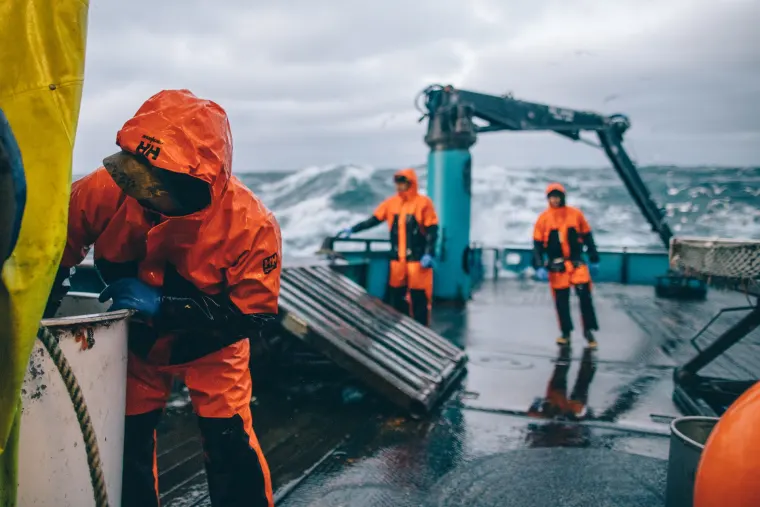
Well, I don’t eat crabs (see above article, ha!), but I really enjoyed this photoessay by Andy Cochrane where he details spending a winter week aboard a crab boat in the Bering Sea off the coast of Alaska.
8. What It Takes to See 10,000 Bird Species - Outside Online
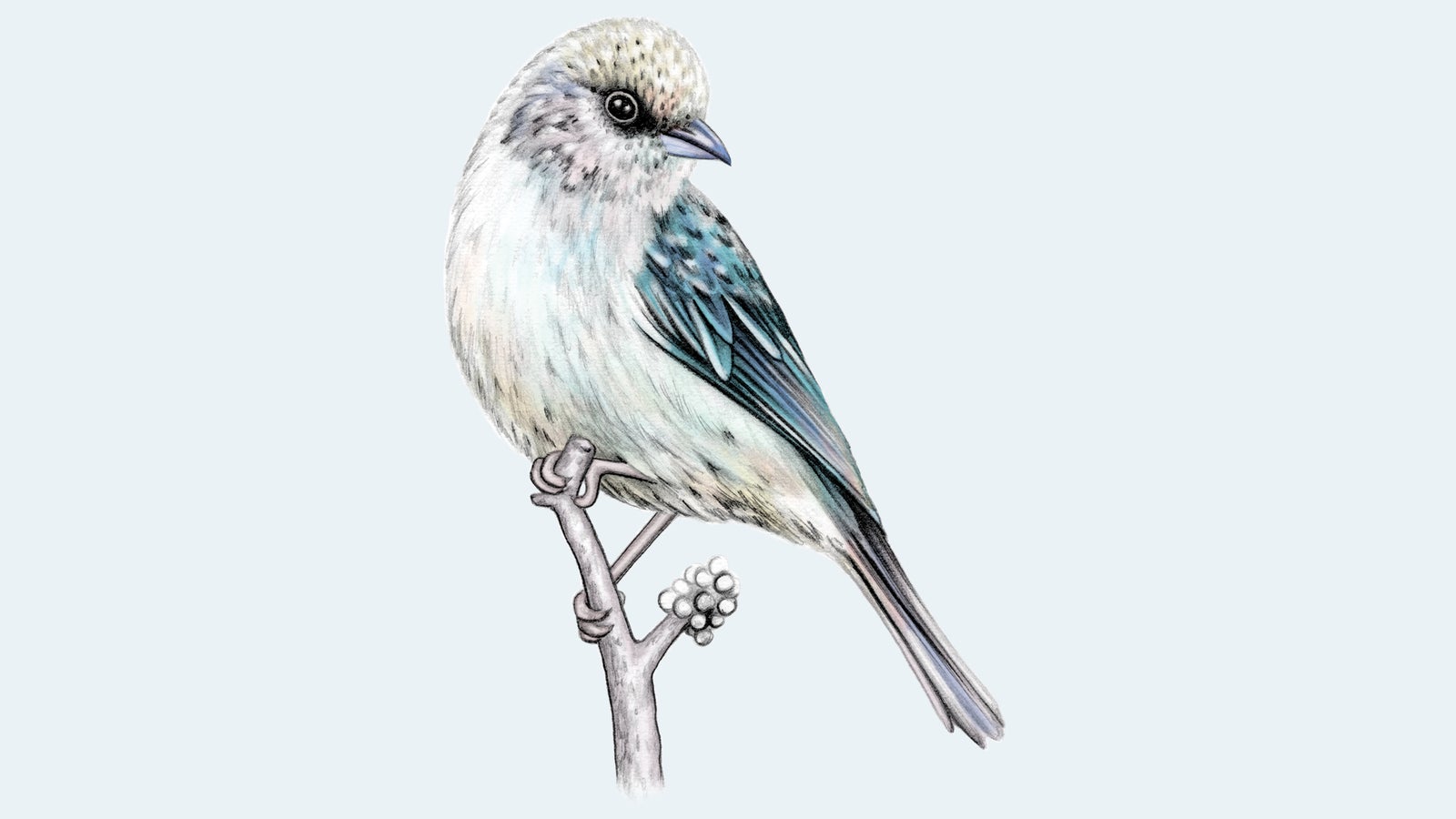
As I’m slowing down a bit as I type, I realize how many good articles I’ve shared from Outside Online magazine. Love it. Of course, the scope is limited to America and Americans, but the stories are top-notch. This one is about Peter Kaestner, a birder who has traveled around the world for decades to be the first birder ever to hit 10,000 species. It’s a pretty fun story, although what I found funniest is that scientists every once in a while split a single species into multiple ones, and right now that’s what gets Kraestner more species’ on his list. Take, for example,
At press time, there is only one known person in the world with more species—by just two—on their life list than Kaestner: Claes-Göran Cederlund, known as CG, who is dead but still racking up species from the grave as taxonomic authorities update world bird lists.
9. Zapier: The $7B Netflix of Productivity - Sacra
Shifting gears now to startups and money, which is also more representative of my current line of work. Zapier is a cloud service that lets you interconnect various services you use without writing any code. I use its cousin, IFTTT, a lot for compiling the newsletter (e.g., I get it to update a Dropbox file each time I “favourite” an article on Pocket). Zapier is a weird startup in the sense that it’s raised very little venture capital funding (unlike IFTTT!) compared to the amount of revenue it generates. This article dives into some of the financials of the company as well as its strategy, and what Zapier can do to sustain the advantage it has as other internet apps and platforms compete in indirect ways.
10. Timing is Everything - Fabrice Grinda’s website
Fabrice Grinda is another stalwart (I think?) of the startup world, having personally invested in over 200 companies. Here he writes about the “temporal disjuncture” of “The future is already here, it’s just not evenly distributed.”, and how he’s generally been right in many of his predictions, but not in the time taken for them to bear out. Which is what explains the title of his post.
I am not sure if there is a real takeaway or “so what” from this blog post. […] I am rather good at predicting how the future of technology will play out. However, because I can easily imagine this future, I believe it will happen very soon, while culture and institutions move slowly, and things end up playing out over decades. As a friend told me: “entrepreneurs confuse the present with the future. Their conception of it is so realistic that they often think they’re already there.” Perhaps as my thoughts on AI are highlighting, I am now correcting for that in my investing behavior, if not in my fundamental optimism.