Hello there, reader, and welcome to another issue of your favourite newsletter, Kat’s Kable. As always, it’s got ten good long-ish articles about a myriad of topics for you to read and enjoy. I definitely enjoy doing all the background work that the newsletter entails: finding articles, reading them, saving a bunch in my shortlist, and then picking ten every Saturday to then summarize on Sunday and then share. Phew.
Not much from my side this week, except that I’ve started reading Richard Rhodes’ The Making of the Atomic Bomb (a few years late, I know). It’s 900 pages long so I expect it to keep me occupied for a couple of weeks at least. I also watched the Oppenheimer movie last night and thought it was pretty good. I personally wished it would have been more science-heavy rather than legacy-heavy, but oh well.
I’ll leave you with the list now. Do enjoy!
If you got this from a friend and want to subscribe, here’s the link. Also, if any of the links are paywalled and if you don’t want to pay for a subscription, try opening the link in incognito mode in your browser. This works if the website has a “soft” paywall. If that doesn’t work, you can access the website using a different browser on the same device, or use a different device altogether. Another, slightly involved, method is to try to disable JavaScript and reload the page. This works on some websites for me.
1. A Good Prospect - The Drift Magazine
Phew, this is a really long article, but quite pertinent and instructive. Nick Bowlin goes to the world’s largest mining conference, organized by the Prospectors & Developers Association of Canada (PDAC). Mining, once seen as a destructive force upending entire ecosystems and communities, is trying to pivot via a, “you can’t decarbonize without us and our copper and lithium and nickel”. Nobody at the conference questions the need for extracting evermore quantities of metals from the earth’s crust, though. So, yeah.
2. Could an Industrial Civilization Have Predated Humans on Earth? - Nautilus
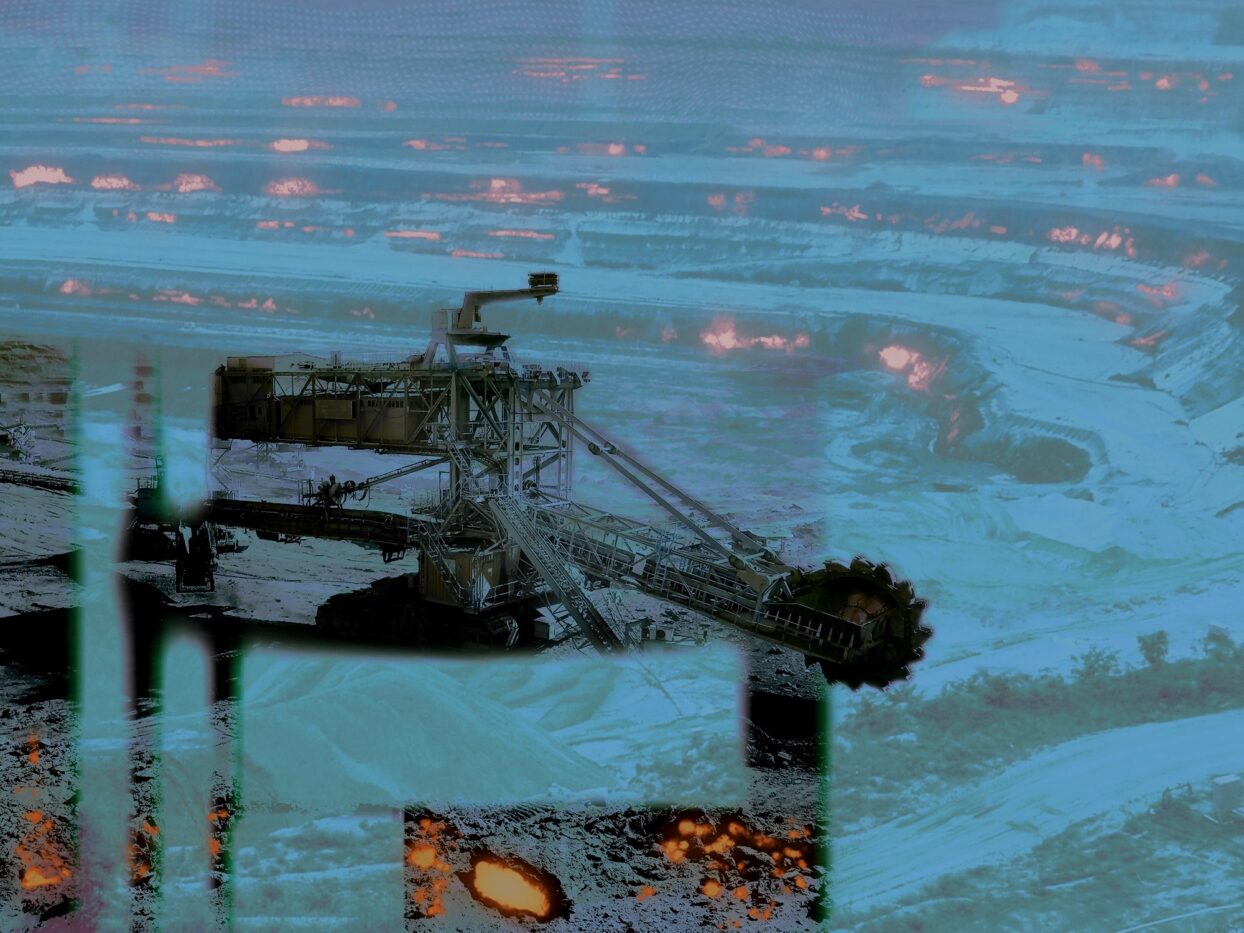
Interesting article, especially put together with the previous one, I think. I’m also reminded of an article I read way back in 2018: Was There a Civilization On Earth Before Humans?. The basic premise is: if there was an industrial civilization before us, would we be able to detect it purely from the geological record? In terms of certain isotopes being abundant, or some metal deposits being depleted where they’d been mined? It’s a controversial question, mostly so because we can’t answer it definitively.
3. Leeches with Jobs - Grow by Ginkgo
Wow! This is another example of indirectly measuring and inferring things from incomplete information or inaccessible areas. Gene sequencing provides us with an easy way to identify different species, which helps to measure the biodiversity of an area. However, if you never see the animals themselves, how do you get their DNA? By picking up leeches and sequencing the blood that they contain. Ingenious. I found this part pretty interesting:
We are not there yet. Airborne eDNA sensors are still being developed, sequencers need to improve their accuracy, bioinformatic pipelines must reduce false positives, and joint species distribution models have to incorporate landscape topology — but when we do get there, the real question is whether our society will be ready to make the most of this information. Just as nowadays we routinely skim the entire human genome for disease prognosis, we will one day scan entire ecosystems to monitor their health. Should these data streams be government initiatives or private sector services? Who will own the data and will we be able to trust them?
4. Sao Paulo: The City With No Outdoor Advertisements - Amusing Planet
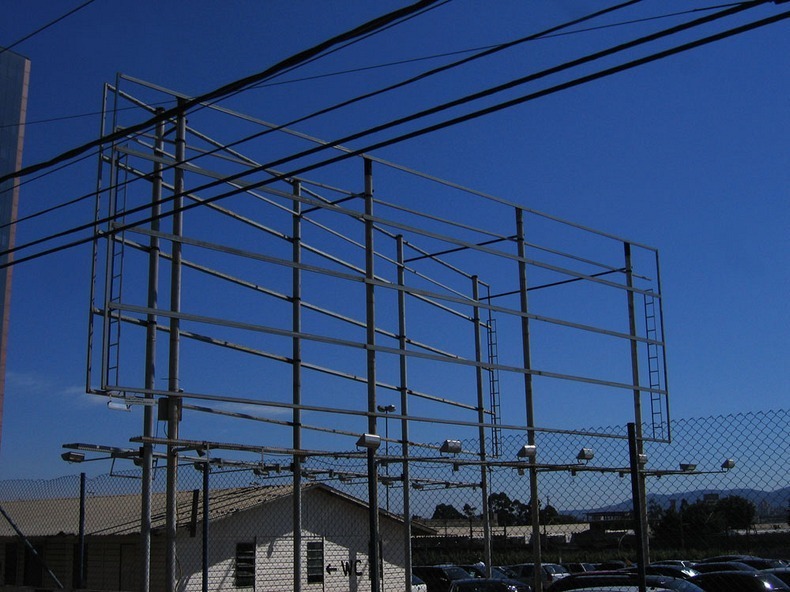
Not a longform article, rather a collection of pictures of Sao Paulo post 2006 when the city’s Mayor outlawed large advertising billboards. The pictures are eerie, particularly because I’ve lived all my life in urban contexts and haven’t ever seen a hoarding-free area.
5. Heat Pumps—The Well-Tempered Future of A/Cs - IEEE Spectrum
Just last week I’d shared an article about new air conditioning technologies (The search for an AC that doesn’t destroy the planet) and here’s another article on the same theme.
Heat pumps eliminate the first of those sources altogether—no natural gas needed—and offer pathways to reducing the other two sources of climate-forcing emissions. Heat pumps are also compatible with natural refrigerants with lower climate impacts. They can consume less electricity than conventional central air conditioners, and their heating modes can be more cost-effective than gas furnaces in some climate zones. Plus, heat pumps offer the possibility of emissions-free power, depending on the local electricity supply, because they are electric.
6. If We Want a Shift to Walking, We Need to Prioritize Dignity - Streets.MN
Very America-focused (the blog is called Streets of Minnesota), but I think it’s a good framework. If you want to promote pedestrianism, you have to make sure you design for users’ dignity, and not leave it at, “I’ve done enough to make it walkable”. There’s a hierarchy of needs, with the three levels being compliance, safety and dignity. Compliance (here it means compliance with the Americans with Disabilities Act) alone is not enough to guarantee usability, as in many cases town planners will simply remove facilities to ensure compliance. In order to incentivize and promote walking, we have to design with dignity in mind.
7. The man who won the lottery 14 times - The Hustle
Well, well. This is the story of Stefan Mandel, who escaped from Romania (after winning a lottery to pay his way) and found lotteries around the world where the jackpot was higher than the cost of buying enough tickets to cover all possible combinations. The only thing stopping him then was the operational execution of it all: printing all those tickets and getting them registered. Phew. What a story.

8. Obituary for a Quiet Life - The Bitter Southerner
Well, Mandel’s life above was anything but quiet. This obit of Ray Harrell is quite the opposite, and super sweet and thoughtful.
When the notable figures of our day pass away, they wind up on our screens, short clips documenting their achievements, talking heads discussing their influence. The quiet lives, though, pass on soundlessly in the background. And yet those are the lives in our skin, guiding us from breakfast to bed. They’re the lives that have made us, that keep the world turning.
and
All around us are these lives — heads down and arms open — that ignore the siren call of flashy American individualism, of bright lights and center stage. I’m fine right here is the response from the edge of the room, and that contentment is downright subversive. How could you want only that? the world demands. There’s more to have, always more.
9. Storm Chasing in Tornado Alley - National Geographic (registration required)
The thrilling adventure of storm-chasing. One of my regrets from my time living in America was that I’d never seen a tornado. There were a few tornado warnings where I lived, but I never ended up seeing one. This is a story of people chasing storms, in particular to insert probes in the ground to measure the speed of winds inside tornadoes. Crazy and gripping.
The sky is now rotating majestically, and a confused bird flies into our windshield with a thump, leaving a stain of blood and feathers. And then a triangle of cloud lowers and sharpens into something pointier and leaner. It gathers into a funnel like an elephant’s trunk, with the texture of soft gray cotton. It whirls like an apparition, no more than two miles (three kilometers) from us, looking alien in the landscape, as if a spaceship had landed. So, it’s happening—after three years of futility. I’m finally going to see a tornado.

10. Is Wine Fake? - Asterisk Magazine
“Is wine fake” is a contentious question and a clickbaity title. However, the real question being asked here is, “a $100 bottle of wine isn’t 10 times better than a $10 bottle. But is it actually any better at all?”. In fact, some expert tasters can’t even tell if a wine is red or white if they’re blindfolded.
Wine is not fake. Wine experts aren’t fake either, but they believe some strange things, are far from infallible, and need challenges and blinded trials to be kept honest. How far beyond wine you want to apply this is left as an exercise for the reader.